


A flat tire at 6 a.m. or a clogged airbrush mid-project both come down to the same thing: you need compressed air, fast, without dragging a garage-sized tank out of storage. That’s where mini-air compressors earn their shelf space. They slip into a trunk, a craft drawer, or under a workbench, yet still handle tires, paint jobs, and workshop cleanup. This roundup sorts five genuinely useful options by what they’re built for, so you can match one to your actual workload instead of guessing.
A Fast Comparison Of The Options

Master Model C16-B Mini Airbrush Air Compressor (Black)

TIMBERTECH Airbrush Compressor AS18-2 Basic Mini

SERVOMASTER Portable Cordless Tire Inflator

CRAFTSMAN Portable 12V Tire Inflator with Digital Gauge & Auto Shut-Off
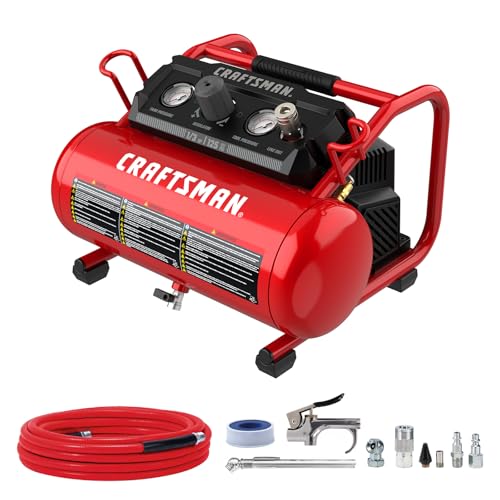
CRAFTSMAN 2 Gallon Portable Air Compressor 1/3HP Max 125 PSI
A Closer Look At Each Pick
The C16-B is built around one idea: keep the whole airbrush setup small enough to live on a desk. It runs off a 12V DC core with a direct plug-in 110V AC adapter, so there’s no tank to fill and nothing to drain between sessions. Compared with the Timbertech unit further down this list, it’s the more stripped-back option, which is exactly the appeal for casual use.
In practice, that suits someone doing nails, cake detailing, or occasional model touch-ups rather than hours-long spray sessions. The six-foot braided hose gives you real reach around a workspace, and braided lines tend to resist kinking better than thin plastic ones.
Notable Gains
- Desk-sized body fits shelves, drawers, or a crowded craft table without rearranging anything
- Braided six-foot hose lets you move freely while working instead of dragging the unit along
- Plug-in power means zero warm-up waiting compared with tank-style compressors
- Simple operation makes it an easy first compressor for anyone new to airbrushing
Things To Consider
- Without a tank or auto-stop cycling, long continuous sessions may push a light-duty motor harder than hobby-grade units tolerate
- Owners commonly report these compact pumps run audibly, so quiet environments like shared apartments can feel the noise during evening work
Who It Suits Best
Beginners and occasional airbrush users who want the smallest possible setup for nails, cakes, or models.
Where A Sibling Pick Shines
Anyone spraying regularly will get longer, steadier sessions from the TIMBERTECH AS18-2, whose auto-stop takes the strain off extended use.
Where the Master C16-B keeps things minimal, the AS18-2 adds the two features serious hobbyists actually notice: a 4-bar pressure ceiling and automatic shutoff. Auto stop means the motor switches itself off once pressure builds, then restarts as you spray. That single behavior extends motor life and cuts noise dramatically during detail work.
The adjustable output matters too. Fine lines and soft gradients, the kind tattoo artists, model painters, and makeup professionals depend on, need steady, pulse-free airflow, and regulated pressure is what delivers it. For cake decorators working buttercream or fondant, consistent low pressure prevents blowouts that ruin delicate surfaces.
Useful Touches
- Auto-stop cycling reduces wear and keeps your workspace quieter between passes
- Adjustable pressure supports everything from hairline model detailing to broader coverage coats
- Handles a wide range of media: automotive graphics, body art, cosmetics, and edible decoration
- Steady, pulse-free airflow makes gradient blending far easier for newer artists
Worth Noting
- Moisture can build up in the line during humid-weather sessions, so periodic draining and a water trap are worth adding to your routine
- It’s a dedicated airbrush unit, so don’t expect it to inflate tires or run shop tools
Quick Facts
Made For
Hobby painters, nail technicians, and cake decorators who spray often enough to value regulated, hands-off pressure control.
Skip It When
You only airbrush a few times a year; the simpler Master Model C16-B covers that workload at a smaller size and lower commitment.
This one trades studio precision for pure convenience. At roughly 6.9 by 3 by 2.2 inches, it’s glovebox territory, and because it’s cordless there’s no cigarette-lighter cable snaking across your lap during a roadside stop. Set your target pressure and it shuts down automatically when reached, which removes the guesswork that gets tires overinflated.
Speed is respectable for the class: a standard 195/55 R15 car tire goes from empty to 35 PSI in about five minutes according to the manufacturer. That’s not fast-compressor territory, but for topping up a slow leak or checking pressures monthly, most drivers won’t feel the wait. Compared with the corded CRAFTSMAN inflator next, you’re giving up some pace and gauge sophistication for true grab-and-go freedom.
Bright Spots
- Genuinely pocketable dimensions mean it lives in the car permanently instead of a garage shelf
- Preset target pressure with automatic shutoff prevents over-inflation without constant monitoring
- No power cord required, so it works anywhere from driveways to trailheads
- Five-minute fill on a typical passenger tire handles most everyday top-up scenarios
Small Caveats
- Battery-powered pumping means you’ll want to keep it charged; a dead unit at the roadside helps nobody
- Slower inflation than 12V corded rivals, which becomes noticeable on larger SUV or truck tires
Right Fit For
Commuters and city drivers who want a set-and-forget emergency inflator that never needs an outlet.
Reach For A Different Pick When
Frequent long-distance drivers who pump multiple tires regularly will appreciate the faster, corded CRAFTSMAN 12V inflator with its digital readout.
Corded power changes the math. Drawing from a vehicle’s 12V outlet, this CRAFTSMAN pushes up to 150 PSI and adds roughly six PSI to a 195/65 R15 tire in under a minute, per the manufacturer. That’s several times quicker than the cordless SERVOMASTER unit above, and the trade-off is simply staying near the car while it runs.
The digital display shows current and target pressure side by side, readable in PSI, BAR, or kg/cm² depending on what your vehicle manual lists. Auto shutoff stops the pump at your preset figure, so you can attend to something else instead of watching the gauge. A three-mode LED earns its place after dark; anyone who has crouched over a valve stem on an unlit shoulder knows why that matters.
Strengths Worth Knowing
- Sub-minute top-ups make routine pressure checks a two-minute chore rather than a project
- LCD screen showing live and target values together removes squinting and second-guessing
- Three-mode LED lighting covers nighttime flats and poorly lit garages
- 150 PSI ceiling leaves headroom for bike tires and sports equipment beyond passenger cars
Honest Caveats
- The 12V plug ties it to a running vehicle, unlike the battery-powered SERVOMASTER option
- Hose and cord length can feel tight on larger vehicles; owners commonly report repositioning the car for rear tires
Feature Snapshot
Whose Shelf It Belongs On
Family-car owners and cyclists who check pressures often and want speed plus a trusted tool-brand name behind the gauge.
Another Choice May Suit
Trail users and rideshare drivers away from outlets should lean toward the SERVOMASTER cordless inflator instead.
Everything before this entry fills one job; the 2-gallon CRAFTSMAN does many. Its stored-air tank means tools draw from a reserve rather than the pump directly, so brad nailers, blow guns, and inflation chores all become practical. At 19 pounds with a carry handle, moving it from garage to driveway is a one-hand errand.
The oil-less pump deserves attention: no oil checks, no mess, and it mounts in any orientation without leaking. The bundled ten-piece kit, hose, chuck, couplers, tire gauge, nozzle, and blow gun among them, means you’re working the day it arrives. Against the tire-only picks earlier in this list, it’s slower per task but vastly broader in scope.
Notable Upsides
- Ten included accessories save separate purchases and cover nailing, blowing, and inflating out of the box
- Oil-less design eliminates maintenance mess common to traditional pumps
- 19-pound weight with compact footprint stores under a bench or on a shelf easily
- 125 PSI maximum suits finish nailers and general shop duties
Points To Note
- A 2-gallon tank refills often during continuous nail-gun use, so heavy framing work calls for a larger unit
- Draining accumulated tank moisture after humid-day sessions is a habit worth building to prevent internal rust
Core Details
Built With In Mind
DIY homeowners outfitting a first garage setup who want one machine for trim work, tire care, and cleanup.
Consider Something Else When
Your only job is keeping car tires topped; the CRAFTSMAN 12V inflator costs less space, less money, and less fuss.
What Matters Most Before Choosing
Match The Machine To The Job
Airbrush compressors and tire inflators share a category label but almost nothing else. Painting demands steady, regulated pressure and low pulsation; tire work demands volume and speed. Decide your primary task first, then filter. Buying a workshop tank compressor purely for bicycle tires wastes money and shelf space, while trying to run a paint gun off a tire inflator ends in frustration.
Pressure, Flow, And Duty Cycle
PSI measures force; airflow (CFM) measures volume, and both matter. A nail gun may tolerate modest pressure but gulps air quickly, hence the value of even a small tank. Duty cycle describes how long a motor can run before needing rest. Light hobby units handle intermittent spraying well, whereas continuous commercial work calls for higher-tier machines built to run longer.
Power Source And Portability
Cordless inflators win on spontaneity but depend on charged batteries. Twelve-volt corded units offer consistent output tied to your vehicle. Plug-in AC models suit fixed stations. Think honestly about where you’ll actually use it, a trunk, a desk, a garage wall, and let that dictate the power format.
Key Considerations Across These Picks
Traps First Timers Fall Into
The classic error is buying on pressure numbers alone. A 150 PSI ceiling means little if airflow sputters under load. Shoppers also overlook duty cycle, then wonder why a budget pump overheats halfway through a paint session. Read the intended-use description closely; manufacturers state their limits plainly.
When Paying More Pays Off
Higher-tier models buy regulation, auto-stop electronics, and tougher motors. For occasional tire top-ups, basic works fine. For daily airbrushing or frequent shop use, auto-shutoff and steady output pay for themselves in finished results and longer tool life.
Frequently Asked Questions
Can a mini compressor inflate car tires?
Yes, though speed varies widely by model. Dedicated tire inflators handle passenger tires in minutes, while tiny airbrush units aren’t designed for that workload at all.
What does auto shut-off actually do?
It stops the motor once a preset pressure is reached, preventing over-inflation and reducing motor wear. Both tire inflators here include it, as does the Timbertech airbrush unit.
Do oil-less compressors need maintenance?
They skip oil changes entirely, which removes the messiest chore. You should still drain tank moisture periodically and check fittings for leaks.
Are cordless inflators reliable for emergencies?
They are, provided the battery holds a charge. Store them charged and top up every month or two so they’re ready when needed.
Which pick suits a complete beginner?
The Master Model C16-B is the gentlest entry point thanks to its plug-and-play simplicity. The Timbertech AS18-2 is the smarter spend if you plan to practice regularly.
Closing Remarks
Every option here solves a specific problem well, and none pretends otherwise. Match the tool to your most frequent task, weigh corded against cordless honestly, and the right choice tends to announce itself. Check the current listings, compare the details that matter to your situation, and enjoy having compressed air within arm’s reach.




