Handheld drills wander. The moment a project demands a straight hole through resin, brass, hardwood, or a 3D-printed part, you feel the limits of your wrist. That’s where a mini drill press earns its spot on the bench: it holds the bit dead vertical while you focus on feed pressure and cleanup. This roundup covers five very different answers to that problem, from a dedicated heat-set insert station for print farms to a cordless drill pen that fits in a jacket pocket. Some of these are true benchtop machines with cast iron bases; others are precision micro-tools for jewelry and electronics work. Match the tool to your actual workload and you’ll avoid paying for capacity you never touch.
The Picks In Brief

3DZWMAN Heat Set Insert Tool Press
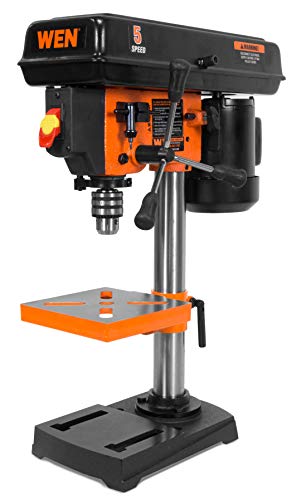
WEN 4206T 8-Inch Cast Iron Benchtop Drill Press

Uolor 3-Speed Cordless Mini Drill Pen with 10 Bits

SKIL DP9505-00 10-Inch Benchtop Drill Press with Laser

NovelLife Precision Mini Drill Press B10 Upgraded
The Strengths Of Each Pick
Anyone running a 3D printer knows the tedium of pressing threaded inserts with a soldering iron held by hand. This press flips that job around: the iron stays fixed and vertical while you lower the part onto the nozzle, so inserts seat square every time. Roughly 90% of the frame is aluminum, which keeps it light enough to reposition yet rigid under repeated use.
The headline spec is clearance. Parts up to about 210mm tall fit under the head, roughly double what many competing stations allow, so taller enclosures and brackets stay on the table instead of forcing awkward sideways work.
A Favorable Mix
- The 210mm height clearance handles tall printed housings that shorter presses can’t accommodate.
- Aluminum-dominant construction keeps the unit portable without flexing during insertion.
- The bundled 60W iron heats quickly, cutting wait time between parts.
Things To Consider
- It’s a single-purpose station; owners doing general drilling will still need a separate press.
- Nozzle tips need occasional cleaning to keep molten plastic from building up between jobs.
Key Specs
Built With In Mind
Makers who post-process printed parts regularly and want repeatable, perpendicular insert placement.
A Better Fit Elsewhere
Shoppers needing general-purpose hole drilling should look at the WEN 4206T below instead.
This is the machine most people picture when they hear “benchtop drill press,” and there’s a reason the design has stuck around. A 2.3-amp induction motor drives five belt-driven speeds through ball bearings, giving you clean holes in wood, plastic, and thin metal without the chatter a handheld drill produces. Spindle travel sits at two inches, enough for most hobby-scale stock in a single pass.
Cast iron construction is the quiet hero here. Mass damps vibration, and vibration is what ruins hole quality. Compared with the compact NovelLife unit later in this list, the WEN trades bench space for genuine material capacity.
Reasons It Performs
- Five speed settings let you match RPM to material, protecting bits and edges alike.
- Ball-bearing supported spindle runs smoothly, which shows up as cleaner exit holes.
- Two inches of spindle travel handles common board thicknesses without repositioning.
Minor Gripes
- Belt changes between speeds take a minute or two, so plan batches by material type.
- The 8-inch swing limits wide workpieces compared with floor-standing machines.
At A Glance
Who Will Love This
First-time press owners setting up a garage or basement shop who want dependable results without overspending.
Reach For A Different Pick When
Woodworkers wanting built-in laser guidance and a larger 10-inch throat will prefer the SKIL DP9505-00 further down.
Not every job needs a machine bolted to a bench. Pendant makers, resin artists, and anyone adding pilot holes to keychains or beads tend to work at the kitchen table, and that’s exactly the territory this pen-shaped drill covers. It charges over USB like earbuds would, runs roughly half an hour per charge, and ships with ten small bits sized for delicate materials.
Three speed levels give you some control: low for brittle stone or cured resin, higher for soft woods and plastics. The honest caveat is runtime. Thirty minutes suits an evening craft session, not a production run, so keep a cable nearby.
Practical Advantages
- USB recharging means no wall adapter hunt; any port works.
- Ten included micro bits cover the sizes jewelry and resin work actually uses.
- Pen grip gives fine control for tiny, fiddly holes.
Points To Note
- Around 30 minutes of cordless runtime per charge may interrupt longer sessions.
- Bit storage matters here; the tiny sizes are easy to lose between projects.
Quick Facts
Right Fit For
Crafters and jewelry makers who drill small holes occasionally and value portability over raw power.
Where Another Pick Suits Better
Repeated, high-volume micro drilling calls for the NovelLife B10’s fixed press action instead of a hand-held pen.
Step up one size class and the differences become obvious. The SKIL runs a 6.2-amp induction motor, nearly triple the draw of the WEN 4206T, and its 10-inch throat accepts wider boards and panels. Five speeds span 610 to 2,800 RPM, a range wide enough to span soft pine through mild steel with the right bit.
Two conveniences set it apart from the cheaper WEN. A laser projects the bit’s landing point before you pull the trigger, and an integrated work light brightens the cut line, which matters more than you’d expect in a dim garage. An adjustable depth stop keeps repeated holes consistent.
Strengths Worth Knowing
- Laser alignment lets you verify placement before committing the bit.
- The onboard work light improves visibility on dark or figured stock.
- Adjustable depth stop delivers uniform hole depth across a batch.
- The 610–2,800 RPM spread suits everything from hardwood to metal.
Honest Caveats
- The extra amp draw assumes a standard household circuit; older shops with shared circuits may trip breakers.
- Laser modules need periodic alignment checks to stay accurate.
Feature Rundown
Whose Shelf It Belongs On
Intermediate woodworkers and DIYers tackling furniture builds who’ve outgrown entry-level capacity.
Consider Something Else When
Desk-bound hobbyists with limited space will find the NovelLife B10 far easier to live with.
At roughly 5.9 by 4.7 by 8.7 inches, this machine occupies less desk area than a coffee mug stand, yet it drills with more authority than its footprint suggests. The upgraded build uses a solid metal frame, three metal axes, and twin linear bearings, with the motor repositioned on a pendant bracket specifically to cut vibration. Less shake means cleaner holes in PCBs, model parts, and thin brass.
The 795-class DC motor spins up to 7,000 RPM, and the included 24V supply lets you dial speed down for delicate work. Unlike the Uolor pen reviewed earlier, this one clamps the workpiece relationship steady, which is what precision really requires.
Everyday Wins
- Linear-bearing guidance keeps the bit tracking true on tiny holes.
- Variable 24V power supply tunes RPM to each material.
- The compact shell fits a desk drawer when not in use.
Small Caveats
- Light-duty motor sizing means thick steel is off the menu.
- The B10 chuck favors small shank bits, so stock up on micro tooling.
Product Snapshot
The Right Fit
Electronics hobbyists, scale-model builders, and anyone drilling sub-3mm holes at a desk.
Skip It When
You’re ripping through dimensional lumber; the WEN 4206T’s cast iron mass and 8-inch swing are built for that.
What Matters Most Before Choosing Mini-Drill Presses
Match The Machine To Your Material
Wood, acrylic, aluminum, and PCB laminate all demand different speeds. A press with five or more belt or electronic speeds protects both the bit and the workpiece; a single-speed tool forces compromises. Soft plastics and resin melt at high RPM, while steel wants slower speeds and steady pressure. List your three most common materials first, then filter.
Throat Depth And Height Clearance
The “swing” number (8-inch, 10-inch) describes how far the spindle reaches from the column, effectively capping workpiece width. Height clearance under the chuck matters just as much for tall assemblies, as the 3DZWMAN’s 210mm capacity demonstrates. Measure your largest recurring project before committing.
Stability Beats Features
Vibration is the enemy of straight holes. Cast iron mass, metal frames, and bearing-supported spindles all fight wobble differently, but they share one goal. A lighter machine on a flimsy bench will disappoint regardless of its spec sheet, so factor in where it will live.
Fixed Press Versus Handheld Pen
Cordless drill pens win on portability and price but lose repeatability, since your hand provides the alignment. For anything requiring matched hole positions, a fixed press pays for itself quickly.
Key Considerations Across These Picks
Traps First Timers Fall Into
Overbuying is the classic error: a 10-inch press bolted to a card table frustrates everyone. The opposite trap is just as real, buying a pen-style drill for jobs that demand repeatable alignment. Check chuck compatibility with the bits you already own, and confirm your circuit can handle the motor’s draw.
The Case For Spending Up
Higher-tier machines buy three things: mass, motor headroom, and guidance features like lasers and depth stops. Those translate directly into fewer scrapped workpieces. Occasional crafters rarely recoup the difference; weekly woodworkers usually do within a handful of projects.
Frequently Asked Questions
Can a mini drill press handle metal?
Yes, within limits. Machines like the SKIL and WEN manage aluminum and mild steel at low speeds with cutting oil; the smaller desk units are better suited to brass, PCBs, and plastics.
What does “spindle travel” mean?
It’s how far the quill moves downward in one pass. Two inches covers most hobby stock, though thicker material needs repositioning.
Are cordless drill pens good for beginners?
They’re a gentle entry point for craft work since they’re inexpensive and forgiving. Their short runtime and hand-guided accuracy limit them to light duty.
How important is cast iron construction?
Very, for accuracy. Mass absorbs the vibration that causes chatter marks and wandering bits, which is why serious benchtop presses favor it.
Do I need variable speed?
For mixed-material shops, absolutely. Being able to slow down for metal and speed up for wood extends bit life and improves finish quality.
Closing Thoughts
Every tool here solves the same problem at a different scale. The 3DZWMAN owns the heat-set niche, the WEN anchors a starter shop, the Uolor travels in a pocket, the SKIL adds guidance tech, and the NovelLife brings precision to a desktop. Start from your most frequent project, not the biggest spec sheet, and the right choice tends to make itself. Whichever direction you lean, a steadier bit beats a stronger arm every time.