


A dull blade turns a five-minute trim into a sanding marathon. The right disc leaves clean crosscuts with almost no tear-out, and it does that job for months instead of weeks. This shortlist covers full-size carbide discs for framing lumber, a budget steel option, a jigsaw assortment for curved work, tiny HSS wheels for hobby cut-off saws, and a coated general-purpose pick from Diablo. Match the blade to your saw and your material, and most of your cut-quality problems disappear before they start.
How The Shortlist Stacks Up

IRWIN MARATHON Carbide Table/Miter Circular Blade 10-Inch 80T
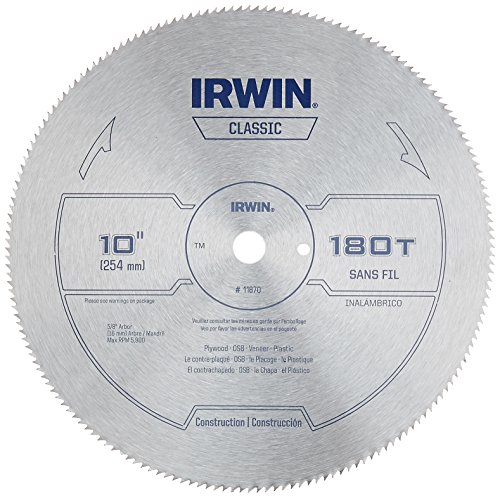
IRWIN 10-Inch Miter Saw Blade Classic Series Steel Table (11870)

EZARC 30PCS Jigsaw Blades Set T-Shank Assorted
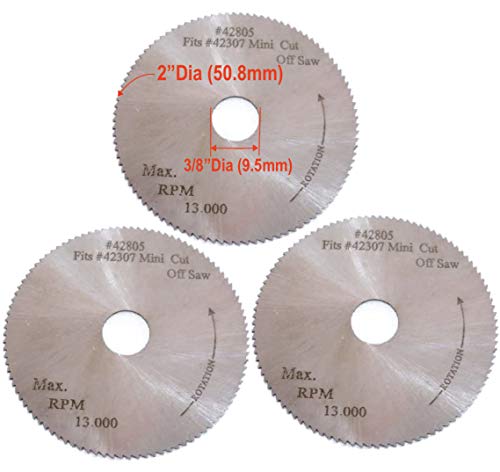
TruePower 2″ 100T HSS Mini Miter Saw Blades, 3-Pack

Diablo General Purpose Wood Saw Blade 10″ 40T
Taking A Closer Look At The Options
Eighty teeth on a 10-inch plate is finish-work territory. The ATB grind, meaning each tooth is beveled alternately left and right, shears wood fibers instead of tearing them, so crown molding and picture-frame stock come off the saw nearly ready for glue-up. The thin kerf, which is simply the width of the cut slot, also asks less of your motor.
Where the IRWIN Classic Series below trades smoothness for price, this one is built around cut quality. The precision-tensioned plate helps the blade run true at speed, which matters when you’re sneaking up on an exact length. In our view, it’s the strongest all-round choice here for anyone doing visible trim work.
Useful Highlights
- The 80-tooth count leaves surfaces smooth enough to skip heavy sanding on trim and casing.
- Diamond-ground teeth hold their edge longer, so you spend less time swapping blades mid-project.
- A thin kerf reduces strain on smaller miter saw motors and wastes less material per cut.
- Precision tensioning keeps the plate running flat, which shows up as straighter miters over long runs of baseboard.
Things To Consider
- Fine-tooth carbide like this rewards careful storage; tossing it loose in a toolbox drawer can chip teeth, and resharpening costs money.
- For rough framing where speed matters more than finish, a lower tooth count such as the Diablo’s 40T clears sawdust faster.
Key Specs
Who It Suits Best
Finish carpenters and serious DIYers who want near-sanded edges on molding, casework, and furniture-grade stock.
Reach For A Different Pick When
Rough framers cutting dimensional lumber all day will get more done with the Diablo 40T general-purpose disc.
Not every project deserves a premium disc. This Classic Series plate uses fully hardened high-carbon steel rather than brazed carbide tips, which keeps the cost low while still delivering a surprisingly tidy cut in softwood and plywood. With 180 fine teeth, it behaves more like a panel-cutting blade than a framing tool.
The trade-off is longevity. Steel loses its edge faster than carbide, especially in abrasive sheet goods or anything with hidden nails. Owners commonly report keeping one of these as a sacrificial second blade for dirty or questionable stock. That’s honestly a sensible way to think about it.
Everyday Perks
- 180 teeth give plywood and melamine a cleaner edge than you’d expect at this price point.
- The hardened plate runs truer over time, reducing wobble-induced tear-out on straight cuts.
- Low cost makes it painless to dedicate one blade to rough or nail-risk material.
Small Caveats
- Plain steel dulls noticeably quicker than the carbide IRWIN Marathon above, so expect more frequent replacement in daily use.
- The very fine tooth pitch can load up with pitch and sap; a quick cleaning with blade cleaner restores performance.
- It’s a specialist for smooth, thin cuts rather than fast rip work through thick lumber.
Made For
Weekend DIYers and hobbyists who cut occasional trim or sheet goods and want capable results without spending much.
Swap It Out When
Anyone cutting hardwood trim regularly will be happier with the IRWIN MARATHON 80T and its longer-wearing carbide edge.
This set steps away from round discs entirely, and that’s the point. A jigsaw handles the curves and interior cutouts no miter saw can touch, and the EZARC kit covers fast ripping, fine scrolling, reverse-pitch splinter control, plastic, and thin metal across 30 T-shank blades. T-shank is the modern clamping standard, so it drops straight into Bosch, DeWalt, Makita, and most other current jigsaws.
You may find the variety overwhelming at first, but the markings on each shank make matching blade to task straightforward. Compared with buying single packs, having the whole range on hand means a curved shelf cut never waits on a store run.
Good Reasons To Consider
- Thirty assorted blades mean every common material has a matched option waiting in the case.
- Chrome vanadium steel bodies handle softwood work, while high-speed steel variants take on thin metal without gumming up.
- Reverse-tooth options cut on the downstroke, protecting the visible face of laminates and veneer.
Points To Note
- Jigsaw blades are consumables by nature; bending one in a tight scroll ruins it, so the set will shrink with use.
- Organization matters, since thirty loose blades in one drawer gets frustrating fast. The labeled slots help if you keep them sorted.
Built With In Mind
Home workshops that already own a jigsaw and want one affordable kit covering wood, plastic, and light metal cutting.
Another Choice May Suit
Straight-line miter work calls for a circular disc instead, and the Diablo 40T below is the versatile option there.
Tiny benchtop cut-off saws live in a world of their own, and standard 10-inch discs won’t come close to fitting them. These TruePower replacements measure just 2 inches across, carry 100 teeth, and mount on a 3/8-inch arbor. High-speed steel, abbreviated HSS, tolerates the heat generated at the rated 13,000 RPM ceiling far better than ordinary carbon steel would.
Hobbyists trimming brass rod, model parts, or small aluminum extrusions are the natural audience. The three-pack matters too, because blades this small wear quickly and having spares on hand avoids downtime.
Well-Handled Touches
- The 0.5mm kerf removes minimal material, which preserves expensive brass and aluminum stock on precise hobby cuts.
- Three blades per pack keep a mini cut-off saw running through long modeling sessions without interruption.
- HSS construction holds an edge under sustained high-RPM operation better than basic steel wheels.
The Fine Print
- These fit only mini saws with a 3/8-inch arbor and 2-inch capacity; they won’t adapt to full-size machines.
- Fine 100-tooth teeth on a small diameter clog easily in gummy materials, so periodic cleaning keeps cuts square.
Quick Facts
Whose Shelf It Belongs On
Model builders, jewelry makers, and electronics hobbyists running a TruePower-style mini cut-off saw for small metal and plastic parts.
Look Elsewhere When
Standard 10-inch miter saw owners need the IRWIN MARATHON 80T instead, since nothing here scales up to full-size tools.
Forty teeth splits the difference between a rough framing blade and the IRWIN MARATHON’s finish-oriented 80. That middle ground is exactly why this Diablo earns a permanent spot in so many shops: it rips dimensional lumber briskly in the morning and still produces acceptable crosscuts on trim after lunch. One blade, most tasks.
The details back that up. TiCo carbide teeth stay sharp through mixed-duty abuse, the Perma-SHIELD coating sheds the pitch and gum that slowly choke uncoated plates, and the laser-cut thin kerf keeps feed effort low. Remodelers tearing out old work appreciate that combination, since demolition dust punishes bare steel quickly.
A Few Highlights
- Handles both rip cuts and crosscuts, so one blade covers framing, decking, and general remodeling.
- The non-stick coating resists heat buildup and corrosion, extending usable life between cleanings.
- A super-thin kerf delivers faster cuts with less waste and less motor load.
- Carbide teeth shrug off the occasional hidden staple better than plain steel alternatives.
Worth Noting
- At 40 teeth, edges on delicate trim show slightly more tear-out than the finer IRWIN MARATHON produces.
- The coating needs gentle handling during installation; gouging it exposes bare plate to rust over time.
Feature Snapshot
The Right Fit
General contractors and busy DIYers who want a single dependable blade for mixed framing and finishing duties.
Consider Something Else When
Cabinetmakers chasing glass-smooth moldings should step up to the 80-tooth IRWIN MARATHON for its finer finish.
What Actually Matters When Choosing A Blade
Tooth Count Sets Your Finish
More teeth mean a smoother surface but slower feeding. An 80-tooth disc like the IRWIN MARATHON shines on visible trim, while 40 teeth, as on the Diablo, moves through framing lumber without bogging. Roughly match the count to how the cut edge will look in the finished piece.
Material And Kerf Decide Everything Else
Hardwoods, plywood, and abrasive composites eat cheap steel alive, so carbide tips pay for themselves quickly there. Thin kerf designs reduce drag, which matters on smaller saws with modest motors. Heavier kerf plates stay flatter in thick stock but demand more power, so check what your machine can handle.
Fit And Maintenance Basics
Confirm arbor size and maximum RPM before ordering anything; a great blade that doesn’t mount is shelf decoration. Whatever you buy, wipe pitch off periodically, store blades flat or hung, and retire a blade once burn marks appear on cuts. Those habits matter more than brand loyalty.
Key Considerations Across These Picks
Traps First Timers Fall Into
The classic mistake is buying a 24-tooth framing blade and expecting furniture-grade results, or the reverse, choking a small saw with a thick-kerf finish plate. Another common slip: ignoring arbor size. Measure yours first, and match tooth count to the actual material on your workbench rather than to marketing labels.
Where The Extra Money Goes
Premium blades spend their budget on carbide quality, plate tensioning, and coatings. That translates into sharper edges held longer, straighter cuts, and less frequent cleaning. Casual users cutting a few boards a month won’t notice the difference; anyone running a saw weekly will recover the added cost in saved time and cleaner work.
Frequently Asked Questions
How many teeth do I need for trim work?
Eighty teeth or more gives the cleanest edges on molding and hardwood trim. Fewer teeth cut faster but leave more sanding behind.
Can one blade handle both ripping and crosscuts?
A 40-tooth general-purpose design manages both acceptably. Dedicated rip or finish blades simply do one job better.
Do thin kerf blades last as long as standard ones?
They wear slightly faster because the thinner plate flexes more under side pressure. On lighter saws, the easier feed usually outweighs that.
How often should a miter saw blade be replaced?
Watch for burn marks, increased feed pressure, or ragged edges. With moderate home use, quality carbide often runs a year or more between changes.
Will these blades fit my saw?
Check two numbers: blade diameter and arbor size. Both appear in your saw’s manual and must match the blade exactly.
Closing Thoughts
Every blade here solves a specific problem well. The IRWIN MARATHON owns finish work, the Diablo covers mixed duty, the IRWIN Classic keeps costs down, and the EZARC and TruePower kits serve jigsaw and mini-saw niches the others can’t reach. Start with the material you cut most, match the tooth count to it, and your next project will thank you.




