


Anyone who has ever tried to miter quarter round with a handsaw knows the frustration: wobbly cuts, gaps at the corner, and a pile of wasted trim. Miter shears solve that by letting you snip shoe molding, PVC strips, and weatherstripping to a precise angle in one squeeze, no sawhorses required. They’re the tool renters, finish carpenters, and weekend remodelers keep reaching for on trim day.
A Closer Look At The Lineup
A Closer Look At The Lineup

Ronan Multi-Cut Industrial Cutter (Pack of 2)

Zeromall Multi Angle Miter Shear Cutter 45-135 Degree

O’Shine Miter Shears for Molding with Extra Blade

O’Shine Miter Shears Explorer Quarter Round Cutter
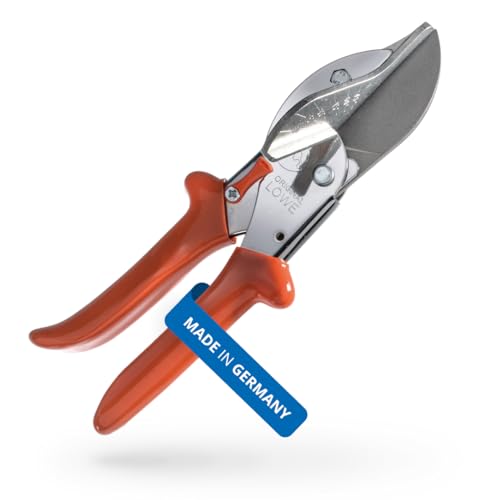
Original LÖWE Sharp Miter Shears 3.104
Why These Options Stand Out
This one comes from the auto industry, where cutting rubber hose and dense plastic is daily work. Instead of scissor-style blades sliding past each other, it uses an anvil action with an offset pivot, so force concentrates right at the cut. That design matters most on thick material like vinyl, leather, or PEX pipe, where ordinary shears stall out.
You get two cutters per pack, which is handy when one lives in the garage and the other in the workshop drawer. For most households tackling hoses and trim offcuts, that’s plenty of coverage.
Noteworthy Benefits
- The blade-to-anvil action powers through dense rubber and thick vinyl without the pinching you’d fight with regular scissors.
- A pack of two means a spare stays sharp while the first sees heavy use.
- Handles wood, leather, hose, and craft stock, so one tool covers several jobs around the house.
Things To Consider
- There’s no adjustable angle guide here, so square or freehand cuts are the job; anyone needing repeatable miters should look down this list.
- Owners commonly report the blade needs occasional cleaning after sticky materials like vinyl to keep the action smooth.
Right Fit For
Mechanics, hobbyists, and homeowners who mostly cut straight lengths of hose, tubing, and dense sheet material.
Where A Sibling Pick Shines
For angled trim work, the O’Shine Miter Shears Explorer offers the 45-to-135-degree adjustability this cutter lacks.
Zeromall’s entry sits at the accessible end of the category, and its steel body measures about 220 mm long, giving you decent leverage in a single hand. The angle block adjusts across a 45-to-135-degree range, so you can set common corner angles for tile trim, quarter round, and tack strip without dragging out a saw box.
It also doubles as a general utility shear for thin plastic pipe, soft wire, and small branches. The honest read: it’s a do-a-bit-of-everything tool rather than a specialist.
Useful Highlights
- The wide 45-135 degree range covers inside corners, outside corners, and everything between.
- Steel construction keeps the price low while staying serviceable for seasonal projects.
- Beyond trim, it snips PVC piping, wire, and soft branches, which earns it space in a general toolkit.
Potential Drawbacks
- Hardwood is off the menu; the maker notes it can’t cut dense timber, only soft stock.
- Blade alignment can drift over time according to user reports, so periodic checks against a scrap piece are worth doing before a full run of cuts.
At A Glance
Who It Suits Best
DIYers with occasional trim touch-ups who want one affordable tool instead of a full cutting setup.
Swap It Out When
Frequent installers cutting shoe molding weekly will appreciate the hardened SK5 blade of the O’Shine Miter Shears instead.
Where the Zeromall keeps things basic, O’Shine invests in blade quality. These shears use Japanese SK5 steel, a high-carbon alloy favored for edge retention, hardened to HRC52 and finished with hard chrome plating. In practical terms, the edge holds up through long trim runs and resists corrosion in a damp basement or garage.
The included spare blade with its own sheath is the detail that tips this pick forward. When the factory edge dulls mid-project, you swap rather than stop.
Real Benefits
- The SK5 chrome-plated blade slices cleanly through quarter round, chamfer, trunking, and weatherstripping up to about 3/4 inch stock.
- A spare blade in a protective sheath effectively doubles the working life of the tool.
- Soft wood dowels, balsa sticks, rubber strips, and PVC all fall within its comfort zone.
Worth Noting
- Like every shear in this class, it’s built for soft materials; forcing hardwood will chip the edge.
- The chrome finish wipes clean easily, but sticky adhesive residue from weatherstrip backing should be removed promptly to preserve the action.
Feature Snapshot
Made For
Homeowners installing shoe molding, quarter round, or wall trim who cut often enough to value a replaceable edge.
Reach For A Different Pick When
Trade professionals cutting dozens of pieces daily may prefer the heavier Original LÖWE 3.104 with its fixed precision stops.
The Explorer shares the same foundation as the O’Shine above: Japanese SK5 steel, hard chrome plating, and HRC52 heat treatment. What changes is the positioning. This version drops the bundled spare blade, keeping the package leaner, and leans into straightforward quarter-round work for people new to trim cutting.
You still get the 45-to-135-degree adjustment, so learning the tool doesn’t mean learning compromises. For a first trim project, that simplicity reads as a feature rather than a gap.
Real-World Strengths
- The same hardened SK5 edge handles balsa sticks, PVC strips, and shoe molding with clean, burr-free cuts.
- Angle setting is intuitive enough for someone picking up trim work for the first time.
- Chrome plating shrugs off moisture in garages and basements better than bare carbon steel.
Small Caveats
- No spare blade in the box, unlike the O’Shine model above, so a dulled edge means sourcing a replacement separately.
- Hardwood remains outside its range, a limit worth respecting to avoid edge damage.
The Right Fit
First-time DIYers tackling a single room’s baseboard or quarter-round project who want proven blade steel without extra accessories.
Another Choice May Suit
Anyone planning multiple rooms should step up to the O’Shine Miter Shears with the included spare blade for uninterrupted work.
LÖWE builds pruning tools in Germany, and that heritage shows in the 3.104. At roughly 8.27 inches long, it’s a substantial tool with optimized power transmission, meaning less hand effort per cut. Moldings and seals up to 50 mm cutting length fall within reach, comfortably more capacity than the 3/4-inch softwood ceiling on the O’Shine pair.
The angle system differs too. Instead of continuous adjustment, you get positive stops at 45 degrees plus markings for 15, 30, and 90 degrees. On a job site, clicking into a known stop beats dialing in a slider.
The Upside
- Fixed 45-degree stops and engraved 15/30/90 markings make repeatable production cuts fast.
- The 50 mm cutting length covers wider moldings and seals than most consumer shears manage.
- German manufacturing and professional-grade construction point toward years of trade-level service.
Points To Note
- Discrete stops mean fewer intermediate angles than continuously adjustable rivals offer.
- The premium build carries a higher cost, harder to justify for a single weekend project.
- Its larger frame takes up more toolbox space than the compact Zeromall.
Core Details
Whose Shelf It Belongs On
Flooring installers, finish carpenters, and serious DIYers who cut trim weekly and want a tool that outlasts the project.
Skip It When
Light, occasional household trimming is better served by the Beginner Friendly O’Shine Explorer at a friendlier commitment level.
What Matters Most Before Choosing Miter Shears
Blade Steel Comes First
Everything else follows the edge. High-carbon alloys like SK5 hold a sharp profile far longer than generic steel, and hard chrome plating adds rust resistance for garage storage. A dull blade crushes PVC instead of slicing it, leaving ragged edges that show at every corner.
Match Capacity To Your Material
Most shears top out around 3/4-inch softwood stock; pushing past that chips the edge fast. Measure your thickest molding before committing, and remember hardwood is universally off-limits in this category. Wider trim calls for longer cutting lengths like the LÖWE’s 50 mm span.
Angle System: Stops Versus Sliders
Continuous adjustment suits varied, one-off angles around older homes with out-of-square corners. Fixed stops with degree markings suit repetitive production work, where speed and consistency matter more than oddball angles.
Extras And Longevity
A spare blade, as bundled with one O’Shine model, quietly doubles usable life. Handle length affects leverage too: longer frames tire your hand less across a full room of cuts.
Key Considerations Across These Picks
Traps First Timers Fall Into
The most common mistake is buying for hardwood. Every shear here targets soft stock, and forcing oak or maple ruins the edge permanently. Second trap: ignoring blade maintenance. Sticky residue from weatherstripping builds up in the pivot and stiffens the action, so a quick wipe after each session keeps things smooth.
Where The Extra Money Goes
Premium models spend on metallurgy and manufacturing tolerances. Hardened, plated steel, precise pivots, and positive angle stops cost more to produce but translate directly into cleaner cuts and longer service life. Daily users recoup that quickly; once-a-year users usually won’t notice the difference.
Frequently Asked Questions
Can miter shears cut hardwood trim?
No, they’re designed for softwoods, PVC, rubber, and similar light materials. Hardwood will damage the blade edge.
What angles do miter shears cover?
Most models adjust from 45 to 135 degrees, covering standard inside and outside corners. Some add fixed stops for repeatable cuts.
How thick a piece can they handle?
Typical limits run around 3/4 inch for softwood dowels and molding. Larger-capacity tools extend closer to 50 mm cutting length.
Do they replace a miter saw?
For small trim, shoe molding, and PVC strips, yes. Baseboards, crown molding, and thick stock still need a saw.
How do I maintain the blades?
Wipe off adhesive and debris after use, store them dry, and swap in a spare blade once the factory edge dulls.
Bottom Line
Pick based on how often you’ll actually cut. Weekend trim touch-ups suit the Zeromall or the O’Shine Explorer, while frequent installers get real value from the spare-blade O’Shine or the German-built LÖWE 3.104. And for hose, rubber, and dense plastics, the Ronan pack covers what no angle shear can. Match the tool to your material, respect the thickness limits, and every corner in the house comes together cleaner.




