Accuracy in a miter saw setup comes from two places: the machine itself and the guide that steers your workpiece. This roundup covers both sides of that equation, pairing three precision miter gauges for table saws with two standalone compound saws. Whether you’re cutting crown molding in a finished room or squaring up joinery in a garage shop, one of these five will match how you actually work.
A Side-By-Side Look

Kreg KMS7102 Precision Miter Gauge System

Evolution R185SMS+ Sliding Miter Saw 7-1/4″

VEVOR Precision Miter Gauge with 15 Angle Stops
Genesis GMS1015LC 10-Inch Compound Miter Saw
INCRA MITER1000SE Miter Gauge Special Edition
A Breakdown Of The Leading Choices
A stock miter gauge that came bundled with your table saw is often the weak link in an otherwise accurate setup. The KMS7102 replaces it with a heavy-duty body, an adjustable fence, and angle control built around repeatability rather than guesswork.
In practice, that matters most on crosscuts you make over and over: drawer parts, face frames, picture frame stock. Owners commonly report the gauge glides smoothly through standard miter slots without the slop that plagues factory gauges, which is where most cut-to-cut drift begins.
Well-Handled Touches
- The adjustable fence lets you square it to the blade once, then trust every cut after.
- Heavy-duty construction resists flex under wide panels, keeping angles true at the far end of a board.
- Smooth slot travel means less wobble between passes, so batch cuts come out consistent.
- Angle settings hold their position during a long session instead of creeping loose.
Things To Consider
- You’ll want to verify fit against your saw’s miter slot dimensions before ordering, since slot tolerances vary by brand.
- It’s an accessory, not a saw, so plan your budget accordingly.
Who It Suits Best
Intermediate woodworkers upgrading a table saw for repeatable crosscuts and joinery.
A Better Fit Elsewhere
Anyone wanting a full standalone saw should look at the Genesis GMS1015LC instead.
Where the Kreg gauge refines one machine, the Evolution R185SMS+ aims to replace several. Its multi-material blade handles wood, plastic, and metal on a single 7-1/4-inch wheel, with bevel capacity to 45 degrees and miter range out to 50 degrees.
The sliding arm extends reach across wider stock than a fixed-head saw of this size could touch. For remodelers bouncing between trim, decking, and steel stud work, carrying one saw instead of three changes the whole day’s logistics.
Real-World Strengths
- A blade ships in the box, so the saw cuts on arrival rather than after a separate purchase.
- Sliding action widens crosscut capacity for shelving and wider trim profiles.
- Dual-axis adjustment covers both bevel and miter angles for compound crown work.
- Compact 210 mm slide footprint fits tight shops and van storage better than a 12-inch slider.
Potential Drawbacks
- The 7-1/4-inch blade caps capacity compared with 10- or 12-inch saws like the Genesis below.
- Metal cutting wears blades faster than wood, so budget for replacements on mixed jobs.
- Hobbyists report the fence hardware benefits from a check-and-tighten after transport.
Feature Snapshot
Right Fit For
Remodelers and DIYers who regularly switch between lumber, plastic, and light metal stock.
Swap It Out When
Table saw users needing repeatable joinery angles are better served by the INCRA MITER1000SE.
Vevor’s take on the precision gauge packs a surprising amount of adjustability into an aluminum alloy body sized for standard 3/4 x 3/8-inch miter slots. Fifteen positive stops cover the angles woodworkers reach for constantly, from 90 degrees down through 15-degree increments on both sides.
The spring-loaded plunger snaps into each stop, which speeds up repetitive work considerably. Compared with the Kreg system above, you give up some fence refinement but gain a laser-marked scale reading in both metric and imperial units.
Where It Helps
- Fifteen positive stops eliminate eyeballing common angles like 22.5 and 67.5 degrees.
- Dual-unit laser markings suit anyone working from mixed metric and imperial plans.
- Aluminum alloy construction keeps weight down while staying rigid enough for hardwood.
- The removable disc adds flexibility for specialized setups.
Small Caveats
- Fit depends entirely on your saw’s T-slot being the standard 19 x 10 mm profile; measure first.
- Some owners note the stop detents feel firmer out of the box and loosen slightly with use.
Quick Facts
Made For
Budget-minded hobbyists who want indexed accuracy without stepping up to premium pricing.
Reach For A Different Pick When
Fine furniture work demanding a telescoping fence points toward the INCRA MITER1000SE.
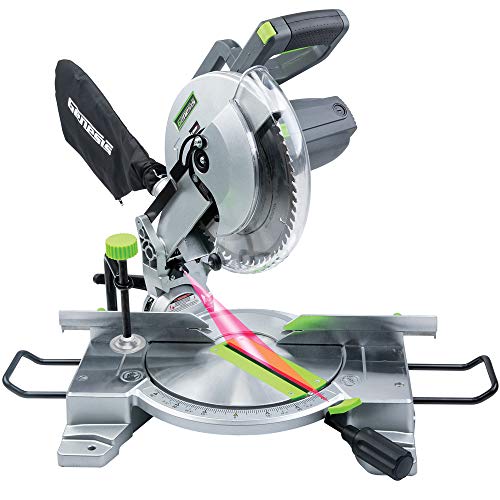
First saws teach habits, and the Genesis GMS1015LC makes the good ones easy. A 15-amp motor spins the 10-inch blade fast enough for clean dimensional lumber cuts, while nine positive miter stops lock in the angles flooring and molding work demands.
The built-in laser guide projects your cut line onto the workpiece before the blade touches it, which shortens the learning curve dramatically. Against the Evolution R185SMS+, this saw trades multi-material versatility for larger blade capacity on wood-only projects.
What Works In Its Favor
- Nine positive stops mean baseboard and crown angles are set by feel, not trial and error.
- The laser line removes guesswork on long boards where pencil marks wander.
- Compound capability handles simultaneous miter and bevel cuts for corner trim.
- A 10-inch blade reaches deeper into wide dimensional stock than compact sliders manage.
Points To Note
- No sliding head, so crosscut width tops out shorter than the Evolution’s extended reach.
- Wood-only design leaves plastic and metal jobs to another tool.
- Owners suggest checking the laser alignment periodically to keep the projected line honest.
Whose Shelf It Belongs On
New homeowners tackling their first trim, flooring, or framing project on a modest budget.
Consider Something Else When
Shop-based woodworkers chasing sub-degree repeatability will get more from the Kreg KMS7102.
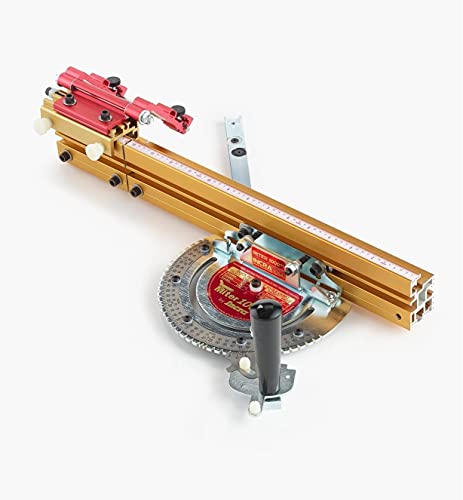
Incra built its reputation on angle indexing, and the MITER1000SE shows why. Forty-one laser-cut V-stops sit along an engraved stainless steel primary scale, giving you positive locations at every popular woodworking angle plus plenty of odd ones.
The patented GlideLOCK bar expands at six points inside the miter slot, taking up play that cheaper gauges leave as slop. Add an incremental fence that telescopes from 18 to 31 inches and a dual flip stop, and you have a gauge that behaves like production equipment.
Key Advantages
- Six expansion points on the miter bar nearly eliminate side-to-side play, the main enemy of repeatable cuts.
- The flip stop lets you alternate between two lengths without re-measuring, a genuine time saver on batches.
- Stainless steel engraving stays legible for years, unlike printed scales that wear away.
- Telescoping fence support keeps long boards square at the cut line.
- Forty-one indexed stops cover angles the Vevor’s fifteen simply don’t include.
Worth Noting
- Setup takes longer than a basic gauge; dialing in the expansion points is a one-time investment.
- Premium positioning puts it above casual hobby budgets.
Technical Reference
Who Will Love This
Serious furniture makers and cabinet builders who bill by the accuracy of their joints.
Another Choice May Suit
Occasional DIYers will find the VEVOR Precision Miter Gauge delivers enough indexing at friendlier cost.
What Matters Before You Commit To One
Accuracy Starts At The Guide
A saw can only cut as straight as its guidance allows. Positive stops, meaning preset notches the mechanism locks into, beat free-floating scales every time because they remove human judgment from each setup. Count the stops and check they cover the angles your projects actually need.
Match Capacity To Your Stock
Blade diameter and slide travel determine what fits under the guard. A 10-inch non-sliding head handles most trim and dimensional lumber, while a 7-1/4-inch slider trades raw depth for reach and portability. Measure your widest typical board before deciding.
Slot Compatibility Is Non-Negotiable
Miter gauges live or die by fit. Standard table saw slots run 3/4 x 3/8 inch, but older or imported machines vary, and even a thousandth of slop compounds across repeated cuts. Confirm your slot profile against the manufacturer’s stated dimensions first.
Motor Power Shapes Finish Quality
Underpowered motors bog down in dense hardwood, leaving burn marks and tear-out. A 15-amp rating gives comfortable headroom for construction lumber and hardwood alike, assuming a standard household circuit.
Key Considerations Across These Picks
Traps First Timers Fall Into
The most common mistake is buying capacity you’ll never use, such as a 12-inch slider for a hobby bench that cuts 1×6 pine. Another is ignoring slot fit when ordering a gauge, then discovering the plunger never seats properly. Read the listed dimensions twice.
Where The Extra Money Goes
Higher-tier gauges spend their price on machining tolerances, expansion mechanisms, and engraved scales that survive years of shop dust. That matters once your projects demand matching grain across dozens of identical parts; casual weekend builds rarely justify the step up.
Frequently Asked Questions
What makes a miter saw cut accurately?
Three things: rigid guidance with minimal play, positive angle stops that lock consistently, and a sharp appropriate blade. Weakness in any one shows up as drifted angles across a batch of cuts.
Are miter gauges only for table saws?
Primarily, yes. They ride in the table’s miter slots to steer workpieces past the blade. Standalone miter saws use their own built-in pivoting heads instead.
Can one saw handle wood and metal?
Some multi-material models use specialized blades rated for several materials. Expect slower cuts in metal and faster blade wear, plus proper clamping and eye protection either way.
How often should I recalibrate my gauge?
Check squareness against a known reference whenever you move the tool or notice drifting cuts. A five-minute verification after transport prevents hours of rework later.
Do laser guides improve accuracy?
They help with placement, showing the cut line before the blade engages. The laser itself doesn’t affect cut quality, and alignment should be verified occasionally since bumps can shift it.
Closing Remarks
Accuracy isn’t one purchase, it’s the sum of a stable guide, matched capacity, and honest calibration habits. Table saw users should start with a quality gauge like the Kreg or Incra, while anyone cutting away from the bench will get more from the Genesis or Evolution saws themselves. Match the tool to the work you actually do, verify fit before ordering, and your corners will thank you.