


Installing fiber cement panels like Hardie siding rewards the right tools and punishes the wrong ones. A wrong gauge nail can crack planks, send dust flying, or leave you re-doing seams on a ladder. The list below covers pneumatic nailers that handle 5/16″ fiber cement boards cleanly, plus a few setup aids that make solo installation realistic. If you’re tackling a re-side this season, these are the tools worth looking at first.
The Main Contenders

DEWALT Brad Nailer Kit, 18GA, 5/8-Inch to 2-Inch, Pneumatic

Metabo HPT 16 Gauge Finish Nailer, NT65M2S
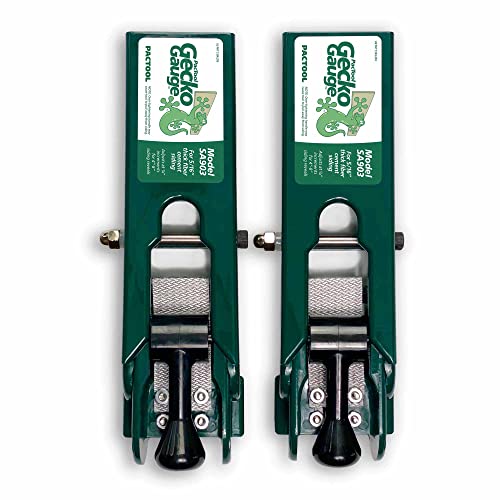
PacTool Gecko Gauge, Original Home Siding Installation Kit

PacTool Gecko Gauge for Siding, Fiber Cement & Engineered Wood
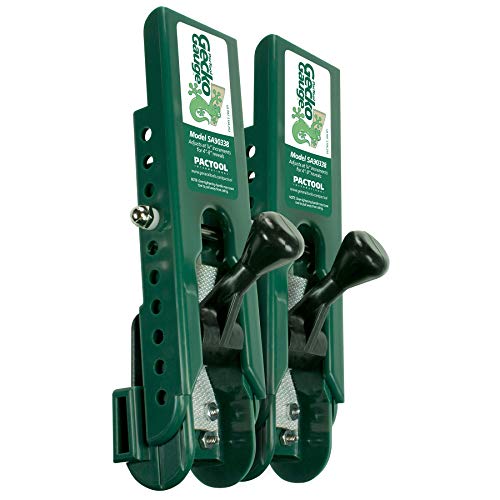
PacTool Gecko Gauge Siding Tool, LP Wood Installation
A Deeper Look At The Lineup
The DEWALT 18-gauge brad nailer earns its spot for siding crews who need a secondary fastener tool for trim and detail work around Hardie panels. Its pneumatic operation (meaning it’s powered by an external air compressor, not a battery) keeps the weight low and the trigger response snappy, which matters when you’re nailing off soffit returns or window trim after the field panels are hung.
For most re-siding jobs, this tool handles the lighter fastening that a framing nailer can’t touch without splitting boards. You may find the 5/8″ minimum nail length limiting if you plan to fasten thick trim profiles, but for standard fiber cement trim pieces, it lands nails flush and clean.
A Favorable Mix
- Lightweight pneumatic body reduces arm fatigue during long trim runs
- Tool-free depth adjustment lets you tune sink depth per board density
- Maintenance-free motor means no brush swaps in the middle of a job
- Reliable trigger response for repetitive nailing sequences
Trade Offs
- Requires a separate air compressor and hose to operate
- Not the right tool for face-nailing 5/16″ Hardie planks to studs directly
- 18-gauge nails are too thin for structural siding fastening
Who It Suits Best
Trim carpenters and remodelers who already run a compressor setup and need a reliable brad nailer for Hardie trim and accessory pieces.
Skip It When
The Metabo HPT 16 Gauge Finish Nailer is a better match if you need slightly thicker nail shanks for heavier trim without stepping up to a full framing nailer.
The Metabo HPT NT65M2S trades a bit of nail gauge thickness for a noticeably lighter grip, which pays off during overhead trim runs on a two-story re-side. A 16-gauge finish nailer sits between a brad nailer and a framing nailer: thicker than the DEWALT above, so it holds trim better, but still fine enough to avoid splitting fiber cement edges.
For installers working alone on a long fascia run, the lightweight balance here is the real story. The simple flip actuation switch (a toggle that lets you switch between single-fire and bump-fire modes without tools) keeps mode changes fast, and the included air duster button is handy for clearing cement dust off the work surface between fasteners.
Key Advantages
- Lightweight balance reduces fatigue on extended overhead work
- 16-gauge nails offer more holding power than the DEWALT’s 18-gauge brads
- Quick flip between sequential and bump-fire trigger modes
- Integrated air duster clears debris between fastening points
Points To Note
- Still requires hose and compressor like the DEWALT option
- Overkill for delicate trim where a brad nailer would suffice
Feature Snapshot
Built With In Mind
Solo siding installers and trim specialists who want a lighter finish nailer that won’t drag down their arms during all-day work.
Where Another Pick Shines
The DEWALT 18GA Brad Nailer Kit is a smarter grab if your work leans toward thinner trim pieces where a 16-gauge nail would be overkill.
The PacTool Gecko Gauge isn’t a nailer at all, but it solves the single biggest problem DIYers hit when installing Hardie siding alone: holding a full-length 12-foot plank level while you fetch the next board. These clamps act as a second pair of hands, gripping the panel edge and maintaining the correct exposure gap between courses.
For a homeowner re-siding a single-story ranch without a helper, this tool turns a two-person job into a manageable solo project. The 5/16″ specification is purpose-built for standard Hardie plank thickness, which keeps alignment consistent across long runs.
The Good Stuff
- Clamps grip the panel and free both hands for fastening
- Maintains consistent exposure spacing between siding courses
- Built specifically for 5/16″ fiber cement plank thickness
- Pair of gauges covers both ends of a long board
Small Caveats
- Doesn’t fit thicker engineered wood products like LP SmartSide
- Takes a few boards to learn the rhythm of clamping and releasing
Right Fit For
DIY homeowners re-siding with 5/16″ Hardie planks who don’t have a helper on site and need panel support between courses.
Look Elsewhere When
The PacTool Gecko Gauge for Siding (Fiber Cement & Engineered Wood) is the better call if your project mixes Hardie with thicker LP SmartSide boards.
The newer PacTool gauge extends the same one-person installation idea to projects that mix 5/16″ fiber cement with thicker 3/8″ LP SmartSide engineered wood. That dual compatibility matters on additions or partial re-sides where the existing structure uses one material and the new section uses another.
You may find this version especially useful if your project spec calls for both Hardie plank and LP panels on the same wall, since buying two separate gauges would mean swapping tools every few courses. The supporting frame is built to handle full 12-foot Hardie boards and 16-foot LP planks without sagging.
Where It Helps
- Works with both 5/16″ Hardie and 3/8″ LP SmartSide products
- Supports full 12-foot and 16-foot plank lengths without flex
- Eliminates the need to buy separate gauges per material
- Keeps level and spacing consistent across mixed-material walls
Honest Caveats
- Higher upfront cost than the original fiber-cement-only gauge
- Bulkier frame may feel awkward in tight corners
Quick Facts
Best Suited To
Contractors and homeowners tackling projects that blend Hardie fiber cement with LP SmartSide panels on the same structure.
A Better Fit Elsewhere
The original PacTool Gecko Gauge is the leaner choice for a pure 5/16″ Hardie-only project where the added material compatibility goes unused.
The PacTool Gecko Gauge for LP siding is purpose-built for 3/8″ LP SmartSide panels, which is the main engineered wood competitor to Hardie plank. If your project is pure LP and you want the gauge tuned specifically for that thickness, this version is the focused tool rather than the dual-material compromise above.
The two-pack format gives you gauges for both ends of a long plank, so a single installer can walk the length of the board and adjust each end without a helper. For pure LP re-sides, the single-material tuning tends to feel more secure on the panel edge than the dual-compatible gauge.
The Helpful Details
- Tuned specifically for 3/8″ LP SmartSide panel thickness
- Two-gauge pack covers both ends of a long board simultaneously
- Acts as a true second pair of hands for solo installers
- Reduces labor time on commercial-scale LP siding projects
A Few Limitations
- Not designed for 5/16″ fiber cement Hardie plank
- LP-only projects are a narrower use case than mixed-material builds
Feature Rundown
Whose Shelf It Belongs On
LP SmartSide specialists and siding crews running pure engineered wood projects who want a gauge tuned exactly for that material.
Swap It Out When
The PacTool Gecko Gauge for Fiber Cement & Engineered Wood is the smarter buy if there’s any chance the project shifts to include Hardie plank alongside LP.
Picking The Right Tools For Fiber Cement Siding
Nailer Type And Gauge Match
Hardie plank is dense, and a 16-gauge finish nailer like the Metabo HPT lands fasteners without splitting the board edge the way thinner brad nails sometimes do. For trim and accessory work, an 18-gauge brad nailer such as the DEWALT keeps holes small and nearly invisible on visible trim faces. A framing nailer is overkill and risks blowouts in fiber cement.
Compressor Requirements For Pneumatic Tools
Both the DEWALT and Metabo HPT options are pneumatic, so plan on a compressor that delivers the right CFM (cubic feet per minute, the volume of air a tool needs to run continuously) at the operating pressure listed for each gun. Smaller pancake compressors cycle constantly on finish nailers and shorten pump life over a full re-side.
Panel Support For Solo Work
Fiber cement planks are heavy and awkward to hold level on a ladder, which is why gauge clamps like the PacTool Gecko family exist. A gauge that matches your exact panel thickness keeps the courses consistent and frees your hands for fastening, which is the real safety win on taller walls.
Matching Gauge To Siding Material
Hardie plank sits at 5/16″ thickness, while LP SmartSide comes in at 3/8″. Using a gauge designed for one material on the other leads to loose grip or crushed edges, so confirm the gauge spec before buying. The newer dual-compatible PacTool covers both, but the single-material gauges feel more dialed-in on their target product.
Smart Angles Before You Commit
Common Buying Slip Ups
The biggest mistake is buying a framing nailer thinking it’s the right tool for fiber cement. Framing nails are too thick, too long, and will crack Hardie plank on impact. Match the nailer gauge to trim and detail work, and pair it with a dedicated siding screw or hand-nail approach for the field fastening, or a purpose-built coil siding nailer.
Where The Extra Money Goes
Higher-tier siding gauges earn their premium through dual-material compatibility, longer maximum board length support, and stiffer frames that don’t flex on full 16-foot planks. For a one-time re-side on a small home, the single-material gauge is enough. For contractors or homeowners expecting future projects, the dual-compatible version pays back through versatility.




