


Plywood sheathing punishes tools. Sheets are heavy, the work is overhead and on the floor, and a weak fastener leaves callbacks later. You need a nailer that sinks fasteners cleanly, keeps up over long runs, and survives a job site that is rarely clean. This roundup focuses on pneumatic options and the consumables that actually make them work on sheathing, subfloor, furring, and decking. The list mixes a couple of trim-friendly brad nailers, a serious concrete T-nailer that handles plywood fastened to masonry or steel, and the collated nails that keep the guns feeding without jams. Choose based on your substrate, your compressor, and how much daily punishment you expect.
A Quick View Of The Lineup
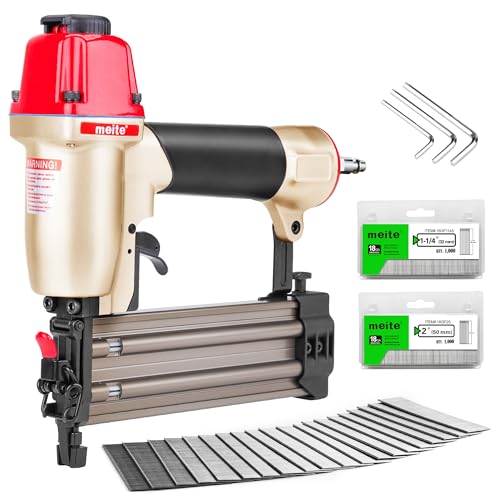
meite F50C Pneumatic Brad Nailer 18 Gauge

DEWALT Brad Nailer Kit, 18GA, Pneumatic (DWFP12231)
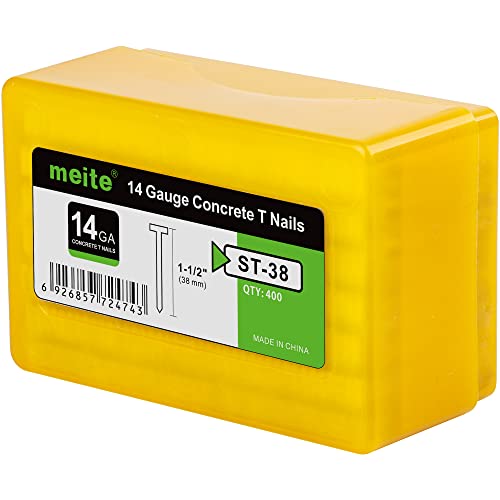
meite 14 Gauge Concrete T Nails 1-1/2 inch Galvanized 400 Count

meite ST64E Pneumatic Concrete T-Nailer Kit 14GA

meite 14 Gauge Concrete T Nails 4-Size Multi-Pack
Taking A Closer Look At The Options
Brad nailers are usually framed as trim tools, not sheathing tools, and the meite F50C leans into that role. It fires 18 gauge brads from 5/8 inch up to 2 inches, which is short of the full-thickness nail most codes want for structural sheathing. Where it earns a spot in this lineup is for fastening thin plywood panels over a structural nailing pattern, attaching furring strips before a heavier nailer takes over, or running casing and baseboard after the walls are closed in.
The kit includes 1,000 brads at 1-1/4 inch and another 1,000 at 2 inch, so you can start working the moment the air hose is connected. The 1/4 NPT inlet and 70 to 100 PSI working range fit most home shop compressors without fuss. You may find the 18 gauge head too light for OSB-to-stud fastening, but for finish detail and light utility work it keeps moving without bogging down.
The Upside
- Slim nose reaches into tight corners around window and door jambs, useful on remodel jobs where you are working around existing trim.
- 2,000 included brads cover a long stretch of casing, baseboard, or light panel work before you need to reorder.
- Standard 1/4 NPT inlet plays nicely with the air hose you already own, no adapter hunt required.
- Light body weight reduces arm fatigue during overhead runs of soffit or ceiling trim.
Worth Noting
- 18 gauge brads do not satisfy structural sheathing fastening schedules on their own, so this is a secondary tool in the sheathing workflow.
- Pneumatic tools need regular oiling through the air line to keep the internal O-rings from drying out, a habit that is easy to skip.
- Depth adjustment is manual, so expect a few test fires on scrap before each material change.
Who It Suits Best
Finish carpenters and remodelers who already own a heavier framing or sheathing nailer and need a precise 18 gauge brad nailer for trim, casing, and detail work on plywood-adjacent jobs.
Consider Something Else When
The meite ST64E Pneumatic Concrete T-Nailer is a smarter pick when you are fastening plywood directly to masonry or steel, since it drives the longer, heavier fasteners structural jobs demand.
The DEWALT DWFP12231 sits a step up the duty cycle from entry brad nailers. It fires the same 5/8 to 2 inch 18 gauge range as the F50C, but the maintenance-free motor is the real story. DEWALT designed it to skip the daily oil ritual that slows down cheaper pneumatic tools, which matters on a jobsite where the compressor is the bottleneck and the team is trying to keep moving.
Tool-free depth-of-drive adjustment lets you swap between soft plywood and harder MDF trim without grabbing a hex key. You may find the nose a touch bulkier than the slim meite F50C, which makes tight inside-corner work slightly slower. For daily trim carpentry where uptime matters more than a featherweight body, the trade-off is usually worth taking.
Useful Highlights
- Maintenance-free motor removes the daily oiling step and keeps the tool ready to grab at the start of the shift.
- Tool-free depth adjustment speeds up material changes when you bounce between plywood, MDF, and solid wood trim.
- DEWALT’s repair network and parts availability make long-term ownership easier than with lesser-known pneumatic brands.
Trade Offs
- Still an 18 gauge brad nailer, so it does not replace a framing or sheathing nailer for structural fastening.
- Slightly heavier and bulkier than ultra-light trim guns, which adds up across a long day of overhead casing work.
Key Product Details
Right Fit For
Production trim carpenters and remodelers who run their tools hard every day and want a low-fuss pneumatic brad nailer that stays out of the shop.
Look Elsewhere When
The meite F50C is a lighter, lower-cost option for weekend remodelers who do not need the daily-cycle durability.
Consumables matter as much as the gun. These 14 gauge concrete T nails from meite are designed to feed a pneumatic concrete nailer, and the 1-1/2 inch length is a useful sweet spot for fastening furring strips and thin plywood panels to concrete or block walls. The galvanized finish adds a layer of corrosion resistance that matters in basements, garages, and exterior wall assemblies where moisture shows up.
At 400 nails per box, the count is enough to cover a moderate job without leaving you with a long tail of partial boxes. A chisel tip helps the nail start cleanly in hard substrate, reducing the wander that causes misfires and bent fasteners. You may find this single-size box limiting if your project mixes 3/4 inch and 2 inch fastening depths, in which case the multi-size pack in slot five is a better fit.
Positive Points
- Galvanized finish resists rust in damp basements and on exterior sheathing, which protects the long-term hold.
- Hardened steel body and chisel tip start a clean hole in concrete, reducing wasted nails from wandering drives.
- Collated format keeps the gun feeding smoothly without constant re-stick.
Small Caveats
- Only one length in the box, so projects with mixed depths need a second box or a different multipack.
- Concrete T nails require a compatible concrete nailer, not a standard framing nailer, so confirm tool fit before ordering.
Made For
Contractors fastening furring strips and thin plywood to poured concrete or block who want a single reliable length in a manageable box size.
Another Choice May Suit
The meite 14 Gauge Concrete T Nails 4-Size Multi-Pack is a better fit when the job mixes several fastening depths and you want fewer open boxes on the bench.
The meite ST64E is the only tool in this lineup that actually attacks the hard substrate problem. It drives 14 gauge collated concrete nails from 3/4 inch to 2-1/2 inch into concrete, steel, and wood, which means you can fasten plywood sheathing, furring strips, decking, and wire lath with one gun. The 100-nail magazine and 400 included nails let a small crew work through a basement or garage wall before reloading.
Operating pressure sits between 85 and 120 PSI, so a mid-size pancake or hot-dog compressor is enough. The dual safety design fires only on target, which is a real comfort when you are leaning into a wall with the muzzle close to your hand. You may find the 100-nail magazine short on long runs compared to a coil framing nailer, but the trade-off is a much smaller tool head that fits into corners a coil nailer cannot reach.
What Pays Off
- Drives into concrete, steel, and wood with a single fastener family, which removes the tool swap mid-job.
- Accepts nails from 3/4 inch to 2-1/2 inch, so thin panels and thick furring strips use the same gun.
- Includes 400 nails in the box, enough to start a basement or garage sheathing job without an immediate reorder.
- Compact tool head reaches into inside corners where a coil framing nailer simply will not fit.
Points To Keep In Mind
- Requires a compressor that can sustain 85 to 120 PSI under load, so small pancake units may stall on long trigger pulls.
- Concrete T nails are not interchangeable with standard framing nails, so stock a dedicated fastener supply for the tool.
- Hard-substrate work wears nozzles faster than wood fastening, so budget for replacement parts if you use it daily.
Best Suited To
Framers and remodelers fastening plywood or furring strips directly to basement concrete, garage walls, or light-gauge steel framing where a regular framing nailer cannot reach.
Reach For A Different Pick When
The DEWALT DWFP12231 is the better choice for pure trim and finish work, where a concrete-rated nailer is overkill.
Multi-pack fasteners solve a real headache on job sites where depths change by the wall. This meite bundle covers 1-1/4 inch, 1-1/2 inch, 2 inch, and 2-1/2 inch 14 gauge concrete T nails, with 240 nails in each size for a total of 960. The galvanized finish matches the single-size box, so corrosion performance stays consistent across depths.
Hardened steel resists bending on hard hits, and the chisel tip is the same geometry as the single-size product, which means feeding stays predictable if you already run the meite ST64E. You may not need all four sizes on a small repair, in which case the smaller 400-count box in slot three is a cleaner fit. For mixed-depth projects, though, this bundle keeps the bench organized with one supplier and one fastener family.
Useful Touches
- Four lengths in one purchase removes the second-trip-to-the-supplier problem on jobs that mix panel and furring depths.
- 240 nails per size is enough headroom for a basement wall plus a garage ceiling without mid-job reorders.
- Galvanized finish protects every length the same way, simplifying long-term hold expectations across the project.
Some Limits To Know
- Total investment is higher than the single-size box, so small jobs with one fastening depth end up with unused inventory.
- Storage needs grow with four open boxes, so plan a dry bin in the truck or shop to keep the collation dry.
Who Will Love This
Contractors running a mix of furring, panel, and lath fastening depths on the same project who want one order to cover the whole sequence.
Skip It When
The meite 14 Gauge Concrete T Nails 1-1/2 inch single-size box is a better match for one-depth projects where leftover inventory is wasted budget.
## Matching Nailers And Fasteners To The Substrate Plywood sheathing spans more than one fastening scenario, and the right tool depends on what is behind the panel. For wood-to-wood sheathing, a framing nailer or a 15-degree coil siding nailer is the standard answer, but the brad nailers in slots one and two earn a place for secondary fastening, trim, and detail work once the structural nailing is done. For plywood fastened to concrete, block, or light-gauge steel, the picture changes entirely. A standard framing nailer cannot penetrate those substrates, and a powder-actuated tool is loud, requires licensing in some regions, and adds consumable cost per shot. The meite ST64E in slot four bridges that gap with a pneumatic design that drives into concrete, steel, and wood using 14 gauge collated T nails, which is why it anchors the heavy-duty end of this list. Gauge and length matter as much as the gun. Gauge is the thickness of the nail wire, and lower numbers mean thicker nails. An 18 gauge brad is too thin to satisfy most structural sheathing schedules, while a 14 gauge concrete T nail is built for hard substrates and is also strong enough for furring and lath. Length needs to clear the panel thickness plus enough embedment into the substrate to hold under load. For 1/2 inch plywood over wood framing, you want roughly 1-1/4 to 1-1/2 inches of penetration past the panel, which is where the 2 inch and 2-1/2 inch sizes in the multi-pack earn their slot. Compressor sizing is the silent variable. A brad nailer sips air and runs on a small six-gallon pancake, but a concrete T-nailer working at 85 to 120 PSI draws hard and fast. A hot-dog or 30-gallon upright compressor with a 4 CFM or better rating at 90 PSI keeps a concrete nailer cycling without the motor constantly cutting in. Skimp on the compressor and the gun starves, misfires increase, and the tool wears faster. Match compressor, hose diameter, and regulator to the gun, and the day goes smoothly. ### Pick By Project Type Remodelers who are wrapping a basement or garage should start with the meite ST64E and the multi-pack of concrete T nails, since the project will mix furring depths and panel fastening on masonry. Finish carpenters working interior trim after the sheathing is closed in will reach for the meite F50C or the DEWALT DWFP12231, with the DEWALT earning its slot for daily production and the F50C winning on weight and cost for occasional use. Anyone running a single small repair on a known substrate can save money with the single-size 1-1/2 inch box in slot three and skip the multi-pack entirely. ## Getting The Most From Your Nailer Purchase ### Common Shopping Slip Ups The most expensive mistake is pairing a brad nailer with a structural sheathing schedule and ending up with a wall that fails inspection. Confirm the fastener and tool combination meet local code before you buy, since swapping tools mid-project costs more than buying the right one up front. The second slip is underestimating compressor capacity, which shows up as misfires and a worn tool long before the project is done. The third is buying a multi-size nail pack for a single-depth job and leaving three boxes of fasteners in the truck for the next two years. ### When Paying More Pays Off The premium for the DEWALT DWFP12231 over a budget brad nailer is the maintenance-free motor and the brand’s service network, which pays off for daily users who run their tools hard. The premium for the meite ST64E over a powder-actuated setup is a quieter tool, no licensing requirement, and the ability to switch between substrates without swapping systems, which adds up on a basement-plus-garage project. Higher tier purchases only pencil out when the use case actually exercises the upgraded feature, so weigh your expected duty cycle honestly before stepping up. ## Frequently Asked Questions ### Can a brad nailer handle plywood sheathing on a wall? No. 18 gauge brads are too thin and too short to meet most building codes for structural sheathing fastening. Use a framing or sheathing nailer for the structural pass, then keep a brad nailer on hand for trim, casing, and detail work. ### What PSI does a pneumatic concrete nailer need? The meite ST64E operates between 85 and 120 PSI, which a mid-size hot-dog or upright compressor can sustain. Smaller pancake compressors may stall under continuous trigger pulls on hard substrate, so match the compressor to the tool. ### Are concrete T nails interchangeable with framing nails? No. Concrete T nails have a different shank, head, and collation, and they feed only in tools designed for them. Mixing fasteners across tools causes jams, misfires, and poor fastening quality. ### How many nails come in a typical concrete nailer box? Single-size boxes from meite contain 400 nails, while the four-size multi-pack holds 960 nails total at 240 per size. Coverage depends on the fastening pattern, but 240 nails of one length covers roughly 40 to 60 square feet of furring at standard spacing. ### Do pneumatic nailers need oiling? Some do, some do not. The meite brad nailers in this list benefit from a few drops of pneumatic tool oil through the air line daily, while the DEWALT DWFP12231 uses a maintenance-free motor that skips the oiling step. Concrete T-nailers also vary, so check the manual that ships with your specific tool. ## Closing Remarks The right answer for plywood sheathing depends on the substrate behind the panel, the compressor in the truck, and how often the tool earns its keep. For hard-substrate work, the meite ST64E plus the four-size nail pack covers most residential scenarios. For trim and detail, the DEWALT DWFP12231 earns its slot on daily use, while the meite F50C keeps things light and affordable for occasional jobs. Pick the tool that matches the substrate and the work pace, and the rest of the project tends to fall into place.



