


Siding work rewards the right tool. The wrong fastening setup leaves split boards, crooked reveals, and aching wrists by the end of the second wall. The five picks below cover the two real jobs you face: driving nails and holding the panels level while you work. Whether you’re cladding a garden shed in fiber cement or re-skinning a two-story with engineered wood, the tool mix matters as much as the panels.
Your Options, Compared
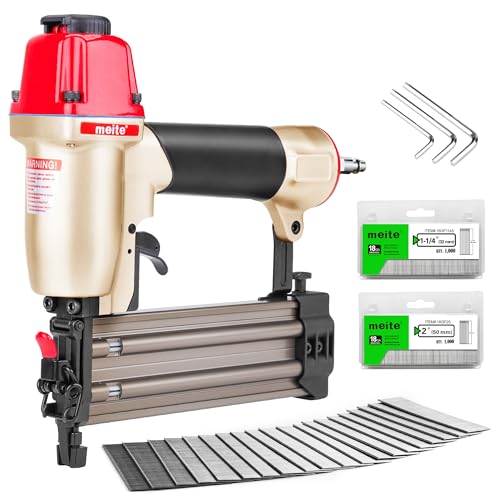
meite F50C Pneumatic Brad Nailer with 2000pcs Nails
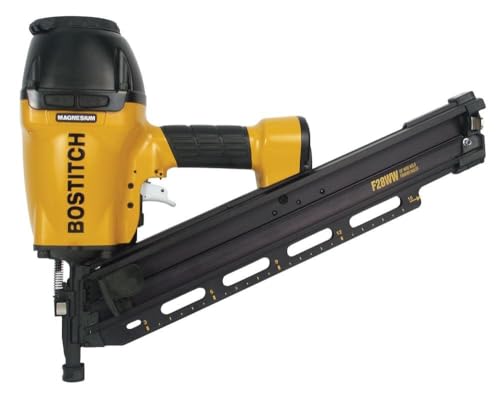
BOSTITCH F28WW Framing Nailer (Clipped Head)
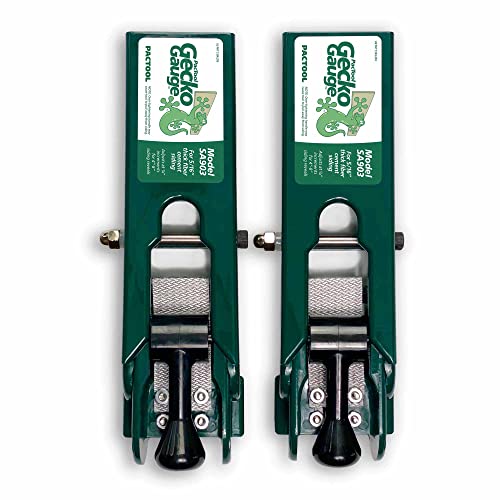
PacTool Gecko Gauge for 5/16″ Fiber Cement Siding

PacTool Gecko Gauge for Fiber Cement and Engineered Wood
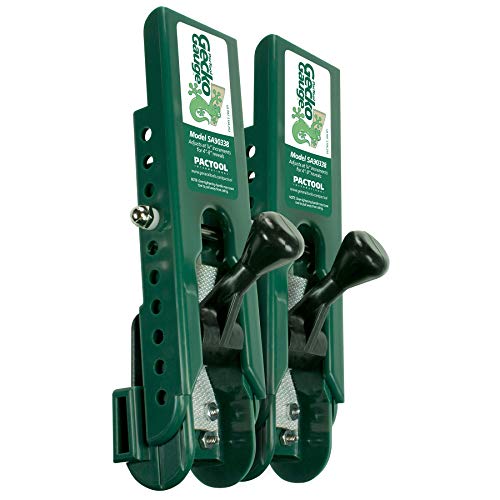
PacTool Gecko Gauge for LP Siding (2-Pack)
Taking A Closer Look At The Options
The meite F50C arrives as a complete starter package: brad nailer, 1000 each of 32 mm and 50 mm 18-gauge brads, and the air fittings needed to hook up. Because it fires 18-gauge brads from roughly 5/8″ up to 2″, it’s the natural sidekick for trim, soffit, and detail work around a siding job rather than the main fastening tool for full panels. The included nail quantity is enough to finish a small shed re-cladding without an extra supply run.
Pneumatic operation (powered by a compressed air supply rather than a battery or gas cartridge) keeps the tool light and consistent, though you’ll need a compressor that delivers 70-100 PSI through a standard 1/4″ NPT (National Pipe Thread, a common air hose fitting size) inlet. Compared with the Bostitch framing nailer below, this is a finish tool first, intended for the trim phase once panels are hung.
Well-Handled Touches
- 2000 brads included means you can finish a small siding trim phase without buying fasteners separately
- 18-gauge nails leave a small hole that fills cleanly on painted trim and soffit edges
- Light pneumatic body reduces forearm fatigue during long trim runs along eaves
- Standard 1/4″ NPT inlet pairs with most homeowner-grade compressors already on the bench
Worth Noting
- Not a panel-fastening tool, so you’ll still need a siding-rated nailer or the Bostitch below for sheathing the walls
- Requires a separately sold compressor capable of 70-100 PSI sustained output
Whose Shelf It Belongs On
DIYers and remodelers who want a starter brad nailer kit for trim, soffit returns, and the small detail work that follows a panel install.
Where Another Pick Suits Better
The BOSTITCH F28WW Framing Nailer is the right call when the job calls for full structural fastening or sheathing rather than finish trim.
The Bostitch F28WW is a framing-class tool, not a finish tool, and the difference shows in the body. A magnesium housing (magnesium is a lightweight structural metal used in pro-grade tools) keeps weight manageable during overhead work on a second-story wall, while the 2″ to 3-1/2″ nail range covers sheathing, sub-fascia, and structural fastening around the siding envelope. For installers framing out the wall before panels go on, this is the right horsepower.
Two features set the F28WW apart from generic framing nailers. The push-button depth adjustment lets you tune drive depth without breaking stride, useful when moving between plywood sheathing and denser OSB. The notched 16-inch layout indicator on the magazine helps you keep stud spacing consistent during the framing phase that precedes the siding itself. Where the meite brad nailer is the trim specialist, this is the structural backbone.
Where It Excels
- Magnesium body balances durability with reduced weight for long days on the wall
- Tool-free push-button depth adjustment speeds up changes between sheathing layers
- 16-inch layout notch on the magazine keeps stud spacing consistent as you build out the wall
- 2″ to 3-1/2″ range handles structural fastening around the siding envelope
Trade Offs
- Clipped-head nails aren’t accepted in all jurisdictions, so check local code before buying
- Overkill for finish trim, where a smaller brad like the meite leaves a cleaner hole
- Requires a compressor capable of sustained framing-nailer air draw, larger than trim-nailer needs
Made For
Contractors and serious DIYers framing out walls, fastening sheathing, and tackling the structural work that surrounds a siding project.
Reach For A Different Pick When
The meite F50C Pneumatic Brad Nailer fits better when the job is finish trim and soffit work rather than full framing.
The original Gecko Gauge changed how single-person siding installs work. Two clamps grip the previous course of fiber cement, holding the next panel at the correct reveal while you fasten, which means no second pair of hands and no improvised wedges. For 5/16″ James Hardie-style fiber cement, this is the long-standing reference tool in the category, and the kit includes both clamps out of the box.
One important fit note: this gauge is built for 5/16″ fiber cement specifically. If your project calls for LP SmartSide or a different engineered wood profile, the dual-material PacTool Gecko Gauge for Fiber Cement and Engineered Wood is the smarter buy. Pair this Gecko with a siding-rated nailer and the workflow becomes a one-person operation, useful when a helper isn’t available.
The Good Stuff
- Holds fiber cement panels at the correct reveal so you can fasten solo
- Two clamps included in the kit, no extra purchase required to start
- Removes the need for wedges, spacers, or improvised jigs on the wall
Soft Spots
- Limited to 5/16″ fiber cement, won’t fit 3/8″ LP SmartSide or other engineered wood profiles
- Clamp jaws can show wear after heavy use, so periodic inspection matters for consistent reveal
Best Suited To
Solo installers and homeowners working with James Hardie fiber cement on small-to-medium siding projects.
Skip It When
The PacTool Gecko Gauge for Fiber Cement and Engineered Wood is the better fit if your project mixes fiber cement with LP SmartSide panels.
The newer Gecko Gauge expands the original idea to two material families. It supports full 12-foot fiber cement boards and 16-foot LP SmartSide planks, the two lengths most pros actually run on a residential wall. For a project that mixes materials, gable ends in fiber cement and main walls in engineered wood, this single gauge covers both rather than forcing a tool swap mid-job.
The patent-pending clamp geometry is the headline feature. It maintains consistent reveal across long courses, which is the failure point on cheaper gauges that drift as panels settle. Compared with the original 5/16″ PacTool Gecko Gauge above, this version trades single-material simplicity for material flexibility and longer board support.
Practical Pluses
- Works with both fiber cement and engineered wood, no need to buy two gauges
- Supports up to 16-foot planks, matching the longest common LP SmartSide lengths
- Maintains consistent reveal across long courses, reducing wavy reveal lines on tall walls
Points To Keep In Mind
- Material-flexibility design means slightly more setup time per material switch than a single-purpose gauge
- Premium positioning in the PacTool line, so the upfront cost runs higher than the original Hardie-only gauge
Quick Facts
Who Should Grab It
Installers handling mixed-material siding projects or anyone who wants one gauge instead of two specialized tools.
Not Your Match When
The PacTool Gecko Gauge Siding Tool for LP Siding (2-Pack) is the right fit for pure LP SmartSide jobs where the dual-material flexibility isn’t needed.
The LP-focused Gecko Gauge ships as a two-pack, which matters more than it sounds. Two clamps let you stage the next course while still fastening the current one, a real speed gain on long walls. The gauge is built for 3/8-inch LP SmartSide panels specifically, so the fit is purpose-tuned rather than compromise-tuned.
This is the specialist choice in the lineup. Where the original PacTool Gecko Gauge handles 5/16″ fiber cement, this version targets one material and one thickness. If your project is pure LP SmartSide from starter strip to ridge, the focused fit and the included two-pack deliver cleaner workflow than a one-size gauge.
Strong Points
- Two clamps included let you stage and fasten simultaneously, speeding up long walls
- 3/8″ LP-specific tuning produces a tight, consistent reveal on SmartSide panels
- Acts as a second pair of hands for solo installers working long siding runs
A Few Limitations
- Material-specific to LP SmartSide, so a fiber cement addition requires a different gauge
- 2-pack increases upfront cost, which only pays back on larger wall runs
Perfect Match For
Solo installers and small crews working on full LP SmartSide exteriors where the two-pack staging speeds up the run.
Consider Something Else When
The PacTool Gecko Gauge for 5/16″ Fiber Cement Siding is the better fit for a Hardie-only project without any LP SmartSide in the mix.
What To Weigh Before Choosing Siding Fastening Tools
Siding work splits into two distinct phases, and each rewards a different tool. Fastening covers how panels get attached to the wall, while gauging covers how each course stays level while you work. A well-equipped project usually has one tool from each camp, since a siding nailer without a gauge still leaves you chasing reveals, and a gauge without a rated nailer leaves you hand-driving fasteners.
Air-powered tools dominate this category because of sustained drive consistency, but every pneumatic option above needs a compressor that delivers the right PSI (pounds per square inch, the air pressure that drives the nail) and CFM (cubic feet per minute, the air volume the tool consumes) at the inlet. Trim brad nailers like the meite need modest volume, while the Bostitch framing nailer asks for more. Factor your existing compressor into the choice rather than discovering the gap on the first day of work.
Material thickness drives gauge selection more than brand preference. Fiber cement in the 5/16″ range and engineered wood in the 3/8″ range use different gauges, and a wrong-size clamp either won’t grip or pushes the panel off-level. Match the gauge to the actual product spec sheet for the panels you’re buying, not to a general siding assumption.
Key Considerations Across These Picks
Where Shoppers Go Wrong
The most common error in this category is treating the fastening tool and the gauging tool as a single purchase. They’re not. A nailer drives fasteners; a Gecko Gauge holds the panel. Skipping the gauge on a solo project turns into wedges, tape, and a second set of hands you didn’t plan for, and skipping the nailer turns into hand-driving thousands of brads, which the body remembers long after the wall is done.
When Paying More Pays Off
Premium gauges in the PacTool line, like the dual-material version, cost more because they maintain consistent reveal across longer courses and across two material families. For a one-room shed project, the original single-material gauge does the job. For a full exterior re-skin or a mixed-material facade, the upgrade tends to show up in straighter reveal lines and faster wall completion, two things that pay back the higher upfront cost over the life of the project.
Frequently Asked Questions
Can a brad nailer handle full siding panels?
No. A brad nailer like the meite F50C fires 18-gauge brads sized for trim, soffit returns, and detail work. Full panels need a siding-rated nailer or the Bostitch framing nailer for the structural layer behind the panels.
Do I need a compressor for these nailers?
Yes, both pneumatic nailers in this roundup require an external air compressor. The brad nailer needs 70-100 PSI through a 1/4″ NPT inlet, while the framing nailer demands more sustained volume for continuous driving.
Will the Gecko Gauge fit any siding brand?
No. Each PacTool gauge is built for a specific thickness range and material family. The 5/16″ gauge targets fiber cement, while the 3/8″ gauge targets LP SmartSide. Match the gauge to the actual panel spec before buying.
Can I install siding alone with these tools?
Yes, the Gecko Gauge clamps act as a second pair of hands, holding each course level while you fasten. Pair the gauge with a siding-rated nailer and a single-person workflow becomes realistic on most residential walls.
Is magnesium really lighter than steel?
Yes. Magnesium alloys are roughly one-third lighter than steel while maintaining structural rigidity, which is why framing nailers like the Bostitch F28WW use the material to cut fatigue on long days overhead.
Final Verdict
Siding work rewards the right combination, and the picks above cover both halves of the job. The Bostitch F28WW handles structural fastening, the meite F50C owns the trim phase, and the three PacTool gauges cover fiber cement, engineered wood, or both depending on your material spec. Match the tools to your actual panels and your actual compressor, and the wall goes up faster with fewer call-backs.




