


Pinning baseboard against a wavy wall with one hand while fumbling for a hammer with the other gets old fast. The right brad nailer turns that awkward dance into a steady rhythm, sinking 18-gauge fasteners just below the surface so a quick pass with filler makes them disappear. Trim carpentry rewards tools that disappear in the hand, and the five picks below cover the most common paths to that kind of work: pneumatic brad nailers for shops that already run an air compressor, and cordless models for remodelers, small-space dwellers, and weekend renovators who value portability over raw firing speed. Each option was chosen with baseboard molding specifically in mind, where a slim 18-gauge brad leaves a clean hole, holds MDF and primed pine securely, and rarely splits the board.
How The Shortlist Stacks Up
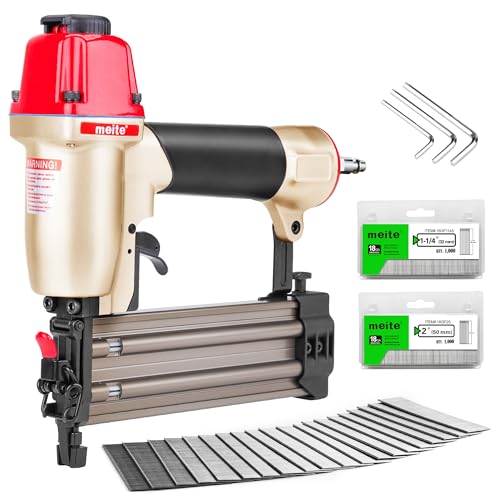
meite F50C 18-Gauge Pneumatic Brad Nailer
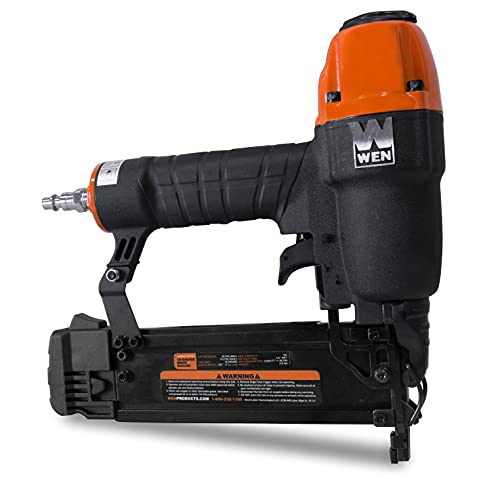
WEN 61721 18-Gauge Pneumatic Brad Nailer

Worx WX840L 20V Cordless 18GA Nail & Staple Gun

WORX WX842L 20V Cordless 18GA Brad Nailer

WORX WX838L.1 20V Brushless Brad Nailer
The meite F50C is built for baseboard runs that stretch from one end of a room to the other, pairing a familiar 18-gauge brad profile with the steady firing cadence you only get from a pneumatic (air-powered) tool. Because it draws from a compressor rather than a battery, you skip recharge breaks entirely and spend the afternoon sinking brads along long walls of MDF, primed pine, or poplar. Compared to the cordless options further down this list, the trade-off is obvious: you will be tethered to a hose, and the unit cannot fire anywhere a compressor cannot reach.
For trim carpenters already running a shop compressor with a 1/4-inch NPT (National Pipe Thread, a standard air fitting) coupler, that compromise barely registers. The narrow nose reaches into inside corners where baseboard returns meet, and the magazine holds enough fasteners to keep you moving through a full room before pausing for a refill.
A Few Strong Suits
- Comes loaded with 2,000 brads in mixed lengths, so trim work can start the same day the box arrives.
- 18-gauge brads split-prone MDF far less than 16-gauge nails, leaving a tiny hole that filler handles in a single pass.
- Pneumatic drive delivers consistent sink depth across hundreds of shots, helpful for long baseboard runs in larger rooms.
- Slim nose reaches tight inside corners where baseboard returns meet door casings.
Things To Consider
- Requires a separate air compressor and hose, which adds setup steps before the first brad fires.
- Air pressure must be dialed in within the supported range; too low and the brad sits proud of the surface.
Built With In Mind
Trimmers and remodelers who already own a compressor and want a high-volume brad nailer for whole-house baseboard installations.
Skip It When
The Worx WX840L is a better match for you if you need cordless convenience for small repair jobs in finished rooms where dragging a hose is impractical.
WEN has long courted hobbyists who want real tool-shop performance without the pro price tag, and the 61721 fits that pattern for baseboard work. It drives 18-gauge brads from 3/8 inch all the way up to 2 inches, which means you can swap between thin shoe molding and chunkier ranch-style baseboard without changing tools. The spring-loaded magazine reloads quickly, so most people can stay focused on layout and coping rather than wrestling fasteners into place.
The wide operating pressure range makes this a forgiving companion in home garages where compressor output varies. If your shop compressor is a smaller portable model, the WEN tends to play nicely with it where some rivals stall. You give up the bundled brads that the meite F50C includes, so plan on buying fasteners separately.
Features That Help
- Brad length range from 3/8 inch to 2 inches covers shoe molding, standard baseboard, and thicker decorative profiles.
- Works with any compressor using a standard 1/4-inch NPT fitting, so pairing is rarely a problem.
- Spring-loaded magazine holds roughly 100 brads and reloads in seconds, keeping baseboard runs moving.
- Lightweight build with a rubber-grip handle reduces fatigue during tall wall runs of crown or baseboard.
Worth Noting
- Does not include a starter pack of brads, so first-time users need to order fasteners before beginning.
- At the lower end of the operating pressure range, sink depth can vary; a few test shots on scrap trim save headaches later.
Right Fit For
Homeowners and weekend carpenters who already keep a small compressor in the garage and want a flexible brad nailer for occasional baseboard and trim projects.
Reach For A Different Pick When
The meite F50C makes more sense if you prefer a kit that arrives with 2,000 brads already in the box for a long trim run.
The Worx WX840L trades pneumatic muscle for true grab-and-go convenience, which is exactly what a first-time baseboard project usually needs. There is no compressor to wheel out, no hose to drag across the floor, and no regulator (the pressure-adjustment knob on a compressor) to dial in. You pull the trigger, it sinks an 18-gauge brad, and the only sound is a soft pop instead of an air-tool bark that might wake the rest of the house.
For small rooms and short baseboard runs, that simplicity is genuinely useful. The trade-off is firing rate and raw driving power: this is a tool for a couple of hundred brads per session, not the 1,500-shot baseboard marathon that the meite F50C handles comfortably. Beginners who finish a single room of trim and put the tool away will rarely notice the difference.
Useful Strengths
- Cordless design eliminates the compressor, hose, and setup steps that intimidate first-time DIYers.
- Sliding magazine is simple to load, and the included sample pack of brads and staples lets you start a small project immediately.
- Belt clip keeps the tool close at hand while you measure, mark, and hold trim pieces in place.
- Light enough to control with one hand when fitting short returns or mitered corners at the start of a baseboard run.
Trade Offs
- Battery limits continuous firing, so multi-room baseboard projects may require a recharge mid-job.
- Lower driving power than the brushless Worx WX838L.1 or any pneumatic option, which can leave brads slightly proud in denser hardwoods.
Key Product Details
Best Suited To
DIYers and renters tackling a single room of baseboard who want a beginner-friendly tool that needs almost no setup.
Where Another Pick Suits Better
The WORX WX838L.1 fits better when you want a brushless motor that handles repeated baseboard jobs across multiple rooms with less battery wear.
The WX842L leans into the same Air Impact Technology found in the WX838L.1, giving it the driving strength to seat 2-inch brads into harder trim materials. For baseboard work, that extra push matters when you hit a stubborn knot in clear pine or back a piece of baseboard with a small shim, situations where a weaker tool leaves the brad sitting proud of the surface.
What sets this model apart is the Power Share platform: the same 20V battery that runs this brad nailer powers more than 140 other tools in the lineup. Shoppers who already own a Worx drill, saw, or trim tool can swap a charged pack straight in and skip waiting on a dedicated charger. Compared to the WX840L above, you get noticeably more driving power, though you pay for it with a slightly heavier tool in hand.
Useful Touches
- Air Impact Technology drives 2-inch brads into hardwood, helpful for thicker baseboard profiles and shimmed walls.
- Compatible with the Worx Power Share battery system used across 140+ tools in the lineup.
- Cordless operation means no compressor, no hose, and no loud air bursts inside finished living spaces.
- Handles small baseboard returns and casing work in tight spots where a hose would constantly snag.
Honest Caveats
- Battery and charger are often sold separately depending on the configuration, adding to the total cost for first-time Worx users.
- Heavier than the WX840L, which can wear on the wrist during overhead casing work on tall walls.
Whose Shelf It Belongs On
DIYers already invested in the Worx 20V platform who want a stronger brad nailer for occasional baseboard and trim projects around the house.
Look Elsewhere When
The WEN 61721 fits better when you prefer pneumatic power and a wide brad length range without buying into a battery ecosystem.
The WX838L.1 is the top of the Worx brad nailer family, swapping the standard brushed motor for a brushless design (a motor with no carbon brushes to wear out, so it runs cooler and lasts longer) and stretching drive depth to roughly 2-1/8 inches into hardwood. For remodelers who install baseboard weekly, that combination pays off fast: more shots per battery charge, less heat buildup during long sessions, and brads that sink flush on the first trigger pull.
The Power Share platform still applies, so two batteries can be stacked to push the system into 40V or 80V territory for larger Worx tools. In baseboard terms, that means a single 20V pack keeps you firing through most room-sized runs, and swapping to a freshly charged pack is faster than waiting on a compressor to refill its tank. The honest read is that this model is overkill for a one-time weekend project, but it earns its place on a remodeler’s bench.
The Case For It
- Brushless motor extends runtime per charge and lengthens the tool’s working life under repeated baseboard jobs.
- Drives 18-gauge brads up to 2-1/8 inches into hardwood, useful for dense baseboard profiles and stubborn knots.
- Lightweight cordless body reduces arm fatigue during tall wall runs in stairwells and foyers.
- Power Share battery system means a single battery can run across more than 140 compatible Worx tools.
Points To Keep In Mind
- Premium price relative to the brushed WX842L, which only makes sense for frequent trim work.
- Battery and charger are often sold separately, so the total cost climbs if you are new to the Worx platform.
Who Should Grab It
Remodelers, handymen, and serious DIYers who install baseboard often enough to justify a brushless motor and a shared battery platform.
Swap It Out When
The Worx WX840L makes more sense for a single-room baseboard project where the lower price and lighter build outweigh the longer runtime of a brushless motor.
## Picking The Right Brad Nailer For Your Trim Project A 16-gauge finish nailer (a tool that fires thicker 16-gauge nails, typically for heavier trim) feels powerful in the hand, but for most modern baseboard, an 18-gauge brad leaves a cleaner hole and rarely splits MDF. Gauge refers to the thickness of the wire, and lower numbers mean thicker nails: 18-gauge is slim enough to disappear after filling, yet long enough to anchor standard 3-1/4 inch baseboard against a stud or drywall. Pneumatic brad nailers stay tethered to a compressor but deliver consistent drive depth and unlimited runtime, which makes them a natural fit for anyone who already owns or plans to own a shop compressor. Cordless 20V models trade a bit of raw power for genuine portability, letting you move from room to room without dragging a hose. Baseboard work tends to happen in finished spaces, so the lower noise of a battery-powered tool is often a quiet bonus that the rest of the household appreciates. Nail length matters more than firing speed for baseboard. Stock 2-1/4 to 2-1/2 inch baseboard usually calls for 1-1/2 to 2 inch brads, while shoe molding and quarter-round (small, rounded trim pieces that sit against the floor) sit comfortably with 3/4 to 1 inch fasteners. A tool that accepts a wide brad range, like the WEN 61721’s 3/8 to 2 inch window, gives you flexibility as the project shifts from tall profiles to delicate returns. ### Pressure And Air Supply Pneumatic brad nailers need a compressor that can sustain roughly 60 to 115 PSI (pounds per square inch, the standard measurement of air pressure) at the tool. Smaller portable compressors with low tank capacity can keep up with intermittent baseboard work, but they cycle more often, which interrupts your rhythm. Plan on a compressor with at least a 6-gallon tank for a typical single-room project. ### Battery Runtime On Cordless Models Cordless brad nailers fire a few hundred brads per charge under typical baseboard loads. A spare 20V battery pays for itself quickly during multi-room projects, and the Worx Power Share platform means that one charger can serve the entire tool family. Recharge time rarely exceeds an hour, so swapping packs at lunch keeps the work moving. ### Magazine Capacity And Reloads Standard magazines hold around 100 brads, which covers a typical room’s worth of baseboard before a refill. Spring-loaded designs clear jams faster than gravity-fed setups, and a magazine that slides out cleanly turns a reload from a chore into a five-second pause between cuts. ## Key Considerations Across These Picks ### Common Shopping Slip Ups Baseboard projects often stall because shoppers grab a finish nailer designed for door casings and discover the 16-gauge holes telegraph through painted MDF. Sticking with 18-gauge brads keeps the holes small enough to disappear under a single pass of filler. Watch for tools without depth-of-drive adjustment (a small wheel or dial that controls how deep the nail sinks); without it, you end up with brads sitting proud of the surface or countersunk (driven too deep) into soft trim. ### Why Top Tier Costs More Brushless motors and premium pneumatics cost more up front, but they tend to run cooler, last longer, and maintain consistent drive depth through hundreds of brads per charge. The extra money usually shows up in two places: the motor itself and the battery electronics that manage it. For remodelers who run the tool weekly, that upgrade often pays for itself in fewer recharges and longer tool life over a couple of years. ## Frequently Asked Questions ### Can an 18-gauge brad nailer hold baseboard securely? Yes, an 18-gauge brad driven into studs or drywall anchors holds standard baseboard securely for most residential rooms. Pairing the brad with a small bead of construction adhesive on the back of the molding adds holding power and prevents the trim from flexing if the wall bows slightly. ### What length brad should I use for baseboard? Most 3-1/4 inch baseboard pairs well with 1-1/2 to 2 inch brads, since the fastener needs to reach the stud behind the drywall. Shorter 3/4 to 1 inch brads work fine for shoe molding and quarter-round, where the trim sits against the floor and the underlying baseboard provides most of the structural support. ### Do I need a compressor for a brad nailer? Only pneumatic brad nailers require a compressor. Cordless 20V models like the Worx WX840L or WORX WX842L fire on battery power alone, which makes them a better fit for finished rooms and small projects where a hose would be a hassle. ### Can I use a brad nailer on MDF baseboard? MDF baseboard is one of the most common materials paired with 18-gauge brad nailers. The slim brad rarely splits the fiber, and the small hole fills cleanly with a single pass of wood filler before painting. ### Is a brushless brad nailer worth the higher price? Brushless brad nailers earn their premium when the tool gets used weekly, since the motor runs cooler and the battery stretches further per charge. For a single-room baseboard project, a brushed model usually delivers enough performance at a lower cost. ## The Takeaway The right brad nailer for baseboard comes down to whether a compressor already lives in the shop or you value the freedom to work anywhere on a charged battery. Pneumatic picks like the meite F50C and WEN 61721 reward existing compressor owners, while the Worx trio covers the cordless path from first-time DIY to frequent remodeler. Match the tool to how often the trim work will happen, and the rest tends to fall into place.



