


Drilling, tapping, or reaming through steel, aluminum, or titanium puts serious stress on your tooling, and dry cutting almost always ends with overheated bits, rough finishes, or seized workpieces. A proper cutting oil or cutting fluid cools the cutting edge, lubricates the chip-to-tool interface, and carries heat and debris away from the cut zone, so your holes stay round, your threads stay clean, and your drill bits last far longer. Hobbyists working in a garage and machinists running a small shop both run into the same core problems: bit welding, poor surface finish, and tools that dull after a handful of holes. The five picks below cover penetrants that double as light cutting aids, dedicated cutting fluids in sizes that match your workload, and a tapping-specific classic that’s earned its reputation.
A Snapshot Of The Selections

WD-40 Specialist Penetrant Smart Straw 11 oz 6-Pack
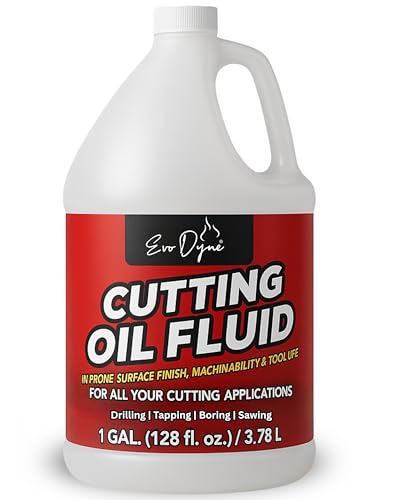
Evo Dyne Cutting Fluid 1 Gallon Made in USA
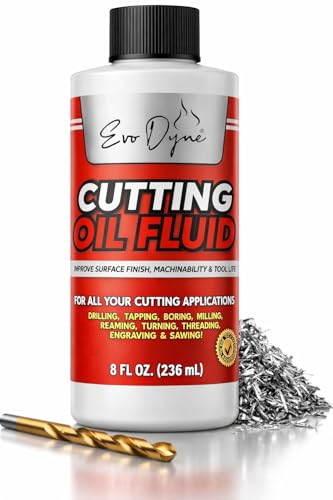
Evo Dyne Cutting Oil 8 oz for Drilling & Tapping

Evo Dyne Cutting Oil 2-Pack 8 oz Made in USA

Forney 20857 Tap Magic Industrial Pro Cutting Fluid 4 oz
A Deeper Look At The Lineup
Strictly speaking, the WD-40 Specialist Penetrant isn’t a dedicated cutting oil, but it earns its spot on this list because it shows up in almost every shop already. The formula is built to break corrosion and free seized hardware, and on light tapping, drilling through thin gauge steel, or chasing a stuck bolt on a chassis, the same penetrating action that creeps between rusted threads also helps lubricate the cut. The 11 oz can with the dual-position straw is a familiar shop sight, and a six-pack means you can scatter cans around the bench, the truck, and the parts cabinet without hoarding one bottle.
For people who only occasionally drill metal, this is the kind of product that pulls double duty. You may find it most useful as a problem-solver rather than a daily machining fluid.
Where It Delivers
- Dual-mode straw that flips between a wide spray and a narrow precision stream for tight crevices and broader coverage.
- Fast-acting penetrant that frees nuts, bolts, threads, locks, and chains stuck by rust and corrosion.
- Leaves behind a thin protective film that helps slow future corrosion on freshly freed parts.
- Low-odor formula compared to traditional solvent penetrants, friendlier in enclosed workspaces.
- Six-can pack keeps one within reach in the shop, the garage, and the vehicle.
Trade Offs
- Not formulated as a primary cutting fluid, so heavy production machining on stainless or titanium will benefit from a dedicated oil.
- Spray application can be wasteful on horizontal surfaces where a drip bottle would deliver fluid more precisely.
- Can attract dust over time as the protective film ages, so reapplication on stored parts is commonly recommended.
Built With In Mind
DIYers and home mechanics who need a versatile shop staple for freeing fasteners and light metal work.
Consider Something Else When
Shoppers running a drill press through stainless or titanium every weekend will get better tool life from Evo Dyne Cutting Oil 8 oz, which is purpose-built for that workload.
The Evo Dyne Cutting Fluid in a 1 gallon jug is the bulk option for a working shop that goes through cutting oil the way a kitchen goes through dish soap. Where the smaller 8 oz bottle above suits a hobby bench, this container is sized for daily drilling, milling, and tapping on a range of metals including stainless steel and aluminum. The fluid is designed to lubricate the cut, reduce tip welding (where a cutting edge fuses to the workpiece), and help carry heat away so pitting and rough finishes don’t take over.
Made in the USA and sold as an industrial-grade fluid, this jug makes sense when downtime from a dry cut costs more than the fluid itself. You may find a gallon jug awkward on a small workbench, so many users decant it into a pump bottle or a small squirt can for actual application.
What Stands Out
- One gallon volume supports high-use shops that burn through smaller bottles in a weekend.
- Formulated to handle stainless, aluminum, and other alloys that punish dry cutting.
- Helps extend tool life by reducing heat buildup and bit welding at the cutting edge.
- Improves surface finish on machined parts, useful when finish matters as much as dimensional accuracy.
Points To Keep In Mind
- Gallon size is heavy and can be awkward to pour, so a secondary applicator bottle is commonly used at the bench.
- Storage space matters: a gallon jug takes up a noticeable spot on a crowded shelf.
- Probably overkill for someone drilling a handful of holes a month, where a smaller bottle is easier to manage.
Best Suited To
Small machine shops and serious fabricators who cut metal daily and want a single bulk container to draw from.
Skip It When
A garage hobbyist tapping a few threads a month will get more value from Evo Dyne Cutting Oil 8 oz, which is the same fluid in a bench-friendly size.
The Evo Dyne 8 oz Cutting Oil is the bench-bottle version of the brand’s cutting fluid, and it reads as a thoughtful product for hand work and small machines. The “tack” referenced in its description means the fluid clings to the tool and workpiece instead of running off, which is exactly what you want when tapping threads by hand or drilling a deep hole where a thin oil would drip away. That cling is a real safety win: a flinging tap on a slippery, dry surface is no fun.
Versus the WD-40 Specialist Penetrant that opened this list, this Evo Dyne bottle is purpose-built as a cutting fluid rather than a penetrant first, so the lubrication profile is dialed for actual metal removal. For most home workshops, the 8 oz size hits a nice balance between refill frequency and shelf footprint.
Key Advantages
- Tack-rich formula clings to taps and drills, reducing fling and improving contact at the cutting edge.
- Works under high pressure on both power machines and hand tools.
- Compatible with a range of metals including stainless steel and titanium.
- Compact 8 oz bottle fits easily on a drill press stand or a small bench tray.
Honest Caveats
- Small bottle means frequent refills for shops that cut metal daily.
- Applicator isn’t built in, so you’ll likely want a separate squeeze bottle or brush for clean delivery.
Key Specs
Who Should Grab It
Home machinists and DIYers running a drill press or tapping threads by hand on a variety of metals.
A Better Fit Elsewhere
Anyone cutting metal professionally every day will appreciate Evo Dyne Cutting Fluid 1 Gallon, the same fluid in a shop-scale volume.
The Evo Dyne 2-Pack is the same 8 oz cutting oil as the previous pick, bundled into a two-bottle pack for users who want a backup on the bench. In practice, having a spare bottle matters more than it sounds: cutting oil gets contaminated with chips and swarf (the curled metal debris produced by cutting), and once that happens, performance drops and you don’t want to keep using the same bottle for a precision job. Swapping in a fresh bottle is a quick reset.
Compared to the single Evo Dyne 8 oz bottle, this pack costs a bit more up front but spreads fluid across two locations, so you can keep one near the drill press and one at a workbench or in a rolling toolbox. For people who like to refill applicator bottles and not run out mid-project, the two-pack setup just feels less stressful.
A Few Highlights
- Two bottles let you keep fluid at two workstations, or rotate a clean bottle in as the first gets dirty.
- Same tacky, high-pressure formula as the single Evo Dyne 8 oz bottle.
- Suited to a wide range of metals including stainless and aluminum.
Small Caveats
- You’ll need to provide your own applicator, since the bottles don’t include a built-in spout or brush.
- Two 8 oz bottles still run out fast in a busy shop, where the 1 gallon jug above is the better fit.
The Right Fit
Garage and DIY workers who want bench-size fluid in two locations without committing to a gallon jug.
Swap It Out When
Heavy production shops will benefit from Evo Dyne Cutting Fluid 1 Gallon, which reduces the number of refills per week.
Forney’s Tap Magic Industrial Pro is a long-running name in machining circles, and this 4 oz bottle is its small-format, tapping-focused fluid. The “Pro” line is formulated for harder jobs than the original Tap Magic, and it’s the version you reach for when you’re tapping or threading tough alloys and don’t want to gamble on a generic lubricant. Applied directly to the work surface with a brush or squeeze applicator, it leaves a film that holds up under the high friction of forming a thread.
Versus the Evo Dyne products above, the Forney bottle is smaller and more targeted. It’s the right size to keep next to a tap and die set, and it’s the kind of specialty fluid that earns its spot by doing one job very well rather than trying to be all things to all projects.
The Upside
- Designed specifically for tapping, threading, drilling, and reaming on tough materials.
- Compatible with both ferrous metals and non-ferrous alloys.
- Compact 4 oz bottle is easy to store in a tap and die drawer or apron pocket.
Less Ideal Details
- Small bottle runs out fast under heavy use, so it’s really a specialty tool, not a shop-wide supply.
- Not a spray, so you’ll want a brush or applicator bottle for clean placement.
Key Specs
Whose Shelf It Belongs On
Hand-tappers, machinists, and tradespeople who want a specialty fluid dedicated to thread cutting.
Reach For A Different Pick When
Shoppers who want a single fluid for both drilling and tapping will find Evo Dyne Cutting Oil 8 oz a more versatile bench companion.
Picking The Right Cutting Oil For Your Bench
Cutting oils and cutting fluids aren’t all the same. A general-purpose lubricant might keep a hinge swinging, but it won’t survive the heat and pressure of a drill bit pushing through stainless. A few attributes consistently separate the useful from the wasteful.
Viscosity and tackiness matter more than people expect. Thinner oils flow into small flute spaces, but they also drip away from vertical surfaces. Tacky fluids, like the Evo Dyne formula, cling to the tap or drill and stay in the cut zone, which is a real advantage for hand tapping and overhead drilling. Match the fluid’s thickness to the job: thinner for fine drilling in a machine, tackier for hand work and vertical surfaces.
Material compatibility is a hard requirement. Stainless steel, titanium, and high-carbon alloys run hot and tend to weld chips to tool edges (a phenomenon called “bit welding” or “built-up edge”). A cutting fluid designed for general steel may not handle those alloys well. Look for fluids that explicitly call out the metals you work with, especially if stainless or titanium is part of your regular workload.
Application method shapes daily experience. Aerosol penetrants are fast but wasteful. Pump bottles, squirt cans, and brush-top fluids give you control at the cut, which is critical when you’re not trying to soak the entire workpiece. For drill press work, a small squeeze bottle with a needle tip is the closest thing to a workshop upgrade you can buy for a few dollars.
Container size affects how often you refill. A 4 oz bottle is enough for occasional taps. An 8 oz bottle covers a steady hobby workload. A 1 gallon jug makes sense only when the fluid is going through faster than you can decant it into smaller bottles.
Where Shoppers Slip Up And Where The Extra Money Goes
Common Shopping Slip Ups
Treating any lubricant as a cutting fluid is the most common mistake. Penetrating oils, motor oil, and 3-in-1 oils aren’t formulated for the heat and pressure of metal cutting, and they’ll let tools run hot and dull faster than a real cutting fluid. Match the product to the task.
Another trap is buying the cheapest bottle and expecting a clean finish on stainless. Stainless and titanium punish under-lubricated tools, and a low-grade fluid often shows its limits as poor surface finish and short tool life.
Finally, skipping the applicator is a small mistake that causes big messes. A drip bottle or brush costs almost nothing and turns a frustrating squeeze-bottle experience into a controlled, clean cut.
Why Top Tier Costs More
Premium cutting fluids cost more because they’re formulated for tougher alloys and longer tool life. The Evo Dyne gallon jug, for example, handles stainless and titanium in a way that budget fluids struggle to match. The upgrade pays off when your tooling costs dwarf the fluid cost, which is the math in any shop that replaces indexable inserts or carbide drills. For occasional hobby work, a mid-range fluid hits the sweet spot without overspending.
Frequently Asked Questions
Do you really need cutting oil, or is it optional?
You need it for clean, repeatable work. Dry cutting on metal builds heat fast, dulls tools early, and leaves rough finishes, especially in stainless and aluminum.
Can you use WD-40 as cutting oil?
You can use WD-40 Specialist Penetrant for light work and freeing stuck fasteners, but a dedicated cutting fluid like Evo Dyne or Forney Tap Magic performs much better on serious drilling and tapping.
What’s the difference between cutting oil and cutting fluid?
The terms are often used interchangeably. Cutting fluid is the broader category and includes water-based and synthetic options, while cutting oil usually refers to oil-based fluids optimized for lubrication and heat control.
Is cutting oil safe on aluminum?
Yes, most general-purpose cutting oils are safe on aluminum and actually improve surface finish. Avoid very heavy sulfurized oils if the workpiece will later be painted, since residue can affect adhesion.
How should you store cutting oil?
Keep bottles sealed, stored upright, and out of direct sunlight. A cool shelf in the shop is fine; just avoid letting swarf or chips contaminate the fluid between uses.
Closing Remarks
The right cutting oil quietly does its job: longer tool life, cleaner threads, and a smoother finish on every part. Match the fluid to your workload, keep a clean applicator on the bench, and the rest of the metalwork tends to fall into place.




