


Refinishing a weathered deck is a different kind of sanding job. You’re working on large, flat surfaces that demand a tool you can keep moving for hours, that pulls dust away from your face, and that won’t bog down when the old finish gets gummy. A standard palm sander just doesn’t cut it for an entire 200-square-foot deck.
Random-orbit sanders are the better match. They combine rotation and oscillation in a single 5-inch pad, which means swirl marks get erased as you go. The right one for deck work balances speed control, dust management, and a grip that stays comfortable through a long afternoon. The five DEWALT models below cover every kind of deck job, from quick weekend recoats to full restorations.
The Picks In Brief

DEWALT 5-Inch Variable-Speed Random Orbit Sander (DWE6423)
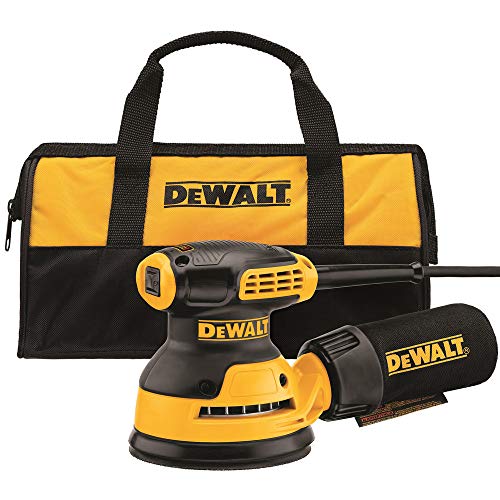
DEWALT 5-Inch Random Orbit Sander Kit (DWE6421K)

DEWALT 5-Inch Palm Sander (DWE6421)

DEWALT 5-Inch Variable-Speed Sander Kit (DWE6423K)

DEWALT 20V MAX 5-Inch Cordless Sander Kit (DCW210D1)
The Strengths Of Each Pick
For a full deck restoration, you usually start with 60 or 80 grit to strip old stain, then work up through finer grits. The DWE6423 lets you match that range without swapping tools, because OPM (orbits per minute) can be dialled between 8,000 and 12,000. Slow it down on soft cedar, speed it up on dense pressure-treated pine. The 3-amp motor keeps torque steady under load, which matters when the pad is pressing into a stubborn patch of weathered stain.
Compared to the fixed-speed palm sander later in this list, the variable control is the headline feature. The rubber overmold grip and separate counterweight design keep vibration down so your hands stay fresher across a long afternoon. The low-profile body also gets you closer to the board surface, helpful when working between deck rails or up against a post.
Notable Upsides
- Variable speed dial covers rough stripping and fine finishing in one tool
- Low-profile design reaches tight deck corners and rail gaps
- Counterweight system reduces hand fatigue on big square-footage jobs
- Hook-and-loop pad swaps sandpaper in seconds mid-job
- Rubber overmold grip stays secure with dusty or sweaty hands
Things To Consider
- Corded design means dragging an extension cord across the yard
- Dust bag fills quickly on heavy deck work and needs emptying between passes
Who It Suits Best
Homeowners tackling a full deck refinish who want one tool that handles every grit stage without compromise.
Skip It When
The DEWALT 20V MAX 5-Inch Cordless Sander Kit (DCW210D1) is the better call when your deck sits far from any outdoor outlet.
Where the DWE6423 trades speed control for versatility, the DWE6421K simplifies things with a fixed 12,000 OPM output. For shop-based deck board prep, like sanding replacement planks before installation, that single speed is plenty. The 3-amp motor pulls consistently through hardwoods, and the same counterweight and overmold design from the variable-speed model keeps the tool from rattling your wrists.
The kit format matters here, since the included carrying case makes it easy to keep the sander, sandpaper, and dust bag together. For a weekend warrior with a small deck and a garage full of other projects, the DWE6421K covers the basics without the higher cost of the variable-speed sibling.
What Earns Its Place
- Fixed 12,000 OPM is well matched to deck board prep and general sanding
- Carrying case keeps the sander and accessories organized between jobs
- Counterweight design lowers vibration during long sessions
Trade Offs
- No variable speed means less finesse on softwoods or delicate finishes
- Corded operation still requires an outdoor outlet or extension cord
Made For
DIYers who want a simple, reliable sander for shop and bench projects that occasionally extend to small deck repairs.
Reach For A Different Pick When
The DEWALT 5-Inch Variable-Speed Sander Kit (DWE6423K) is the smarter grab if your deck work spans rough stripping and final sanding in a single weekend.
The DWE6421 is the bare tool version of the kit above, meaning no case and no extras, just the sander itself at a friendlier entry point. For a quick deck recoat, where you’re knocking down the previous stain’s loose edges and smoothing out rough spots, the fixed 12,000 OPM is plenty of muscle.
The shorter body design is the real standout. It gets your hand closer to the pad, which translates to more control on uneven deck boards. Pair it with a hook-and-loop sandpaper assortment and a dust collector, and you have a focused tool for small-to-medium deck refreshes without the variable-speed premium.
Features That Help
- Compact, palm-friendly body improves control on warped deck boards
- Hook-and-loop pad changes paper fast between grit stages
- Same 3-amp motor platform used across the DEWALT 5-inch line
Honest Caveats
- No carrying case means sandpaper and accessories need separate storage
- Single-speed motor can’t slow down for heat-sensitive softwoods
- Dust bag is small for a full deck, plan on emptying it often
Best Suited To
Homeowners handling a single deck recoat who already own sandpaper and accessories from past projects.
Look Elsewhere When
The DEWALT 5-Inch Variable-Speed Random Orbit Sander (DWE6423) is the better fit for multi-stage restorations where speed control matters.
The DWE6423K bundles the same variable-speed motor found in the bare DWE6423, but adds a carrying case and the full accessory set. For deck work specifically, that case is more useful than it sounds, since sandpaper, the dust bag, and a stack of extra hook-and-loop pads stay clean and dry between outdoor sessions. The case also makes it easier to grab the sander and head to the backyard without a hunt through the garage.
The 8,000 to 12,000 OPM range is the same as the bare tool, so all the real-world benefits carry over. Slow speeds handle old paint on soft cedar, top speeds power through dense deck boards. The rubber overmold grip and counterweight system remain, keeping vibration manageable across a long deck.
Reasons It Performs
- Variable speed range covers the full grit progression on a deck
- Carrying case protects the tool from outdoor dust and moisture
- Hook-and-loop pad is compatible with the wide DEWALT sandpaper range
Worth Bearing In Mind
- Corded design still requires outdoor power access
- Dust collection depends on the included bag filling up mid-job
Key Attributes
Who Should Grab It
Homeowners who sand decks and other outdoor projects often enough to value the carrying case and accessory bundle.
A Better Fit Elsewhere
The DEWALT 20V MAX 5-Inch Cordless Sander Kit (DCW210D1) is the smarter choice for far-from-outlet deck locations.
The DCW210D1 swaps the cord for a 20V MAX battery, which is a meaningful upgrade for deck work in the back corner of the yard. No more running an extension cord across a lawn, no more dragging a cord behind you as you walk the length of the deck. The brushless motor (a design that uses electronic controllers instead of carbon brushes, which means less friction and longer runtime) delivers the same 8,000 to 12,000 OPM range as the corded variable-speed models, and the variable-speed dial sits right on top for easy thumb access.
The kit comes with a 2.0Ah battery, charger, and storage bag, which is genuinely helpful for outdoor projects. The trade-off is runtime: depending on grit and pressure, a single 2.0Ah battery may not finish a full large deck on one charge, so a backup battery is worth keeping nearby.
A Few Strong Suits
- No cord to drag, trip over, or unplug mid-pass
- Brushless motor extends runtime and tool life over brushed designs
- Variable speed dial covers both stripping and finishing needs
Some Limits To Know
- 2.0Ah battery may require recharging or a backup on larger decks
- Battery and charger add weight compared to the bare corded options
The Right Fit
Homeowners with back-of-property decks or no convenient outdoor outlet, especially those already invested in the DEWALT 20V MAX battery platform.
Swap It Out When
The DEWALT 5-Inch Variable-Speed Random Orbit Sander (DWE6423) is the better fit for marathon deck sessions where corded power and unlimited runtime matter more than mobility.
Picking The Right Orbital Sander For Your Deck
A few attributes matter more than others when a random-orbit sander spends its day on deck boards. Speed control lets you match the orbit rate to the wood and finish, and you may find the variable range more useful if your deck mixes soft cedar rails with dense pressure-treated floorboards. A 5-inch pad hits a sweet spot, big enough to cover deck boards quickly, small enough to work between balusters and around post bases.
Ergonomics matter more than people expect on a deck. Sanding 200 square feet of boards takes a few hours, and a counterweight-balanced tool with a rubber overmold grip will save your hands. The shorter the body, the closer your hand sits to the pad, which improves control on boards that have warped over the seasons.
Dust management is the other real consideration. The one-handed locking dust bag on these models is convenient, but a bag fills fast when you’re stripping old stain. Most users will want to plan around emptying the bag between passes, or factor a shop vac adapter into the setup. Corded sanders deliver unlimited runtime, which matters on full restorations, while cordless models trade that for freedom of movement around the yard.
Key Considerations Across These Picks
Wrong Turns To Avoid
The most common slip is buying a fixed-speed sander for a deck that mixes wood types. Soft cedar burns at high OPM, while dense pressure-treated pine needs the torque. A single-speed tool forces you to compensate with pressure and paper choice, which slows the job.
Another mistake is underestimating dust collection. The included dust bag is fine for small projects, but on a full deck it fills in minutes. A shop vac adapter or a plan to empty the bag frequently keeps the abrasive cutting efficiently instead of glazing over.
Where The Extra Money Goes
The jump from a single-speed sander to a variable-speed model buys you control. For a one-off deck job, the single-speed works, but a variable range means the same tool handles the rough grit on old stain and the fine grit before the new finish without swapping equipment.
The jump to a cordless brushless platform buys you mobility and motor longevity. For a deck tucked in the back corner of the yard, that freedom adds up. For a deck right outside the back door with a convenient outlet, the corded model handles the same work for less.
Frequently Asked Questions
What grit sandpaper works best for stripping a deck?
Start with 60 or 80 grit for old stain and rough wood, then work up to 120 grit for the final pass before applying new finish. A random-orbit sander handles that full range, especially with a variable-speed model like the DWE6423.
Can a random-orbit sander handle paint as well as stain?
Yes, random-orbit sanders strip both paint and stain, though heavy paint layers may need multiple passes or a coarser grit to start. Slower OPM settings help avoid gumming up the paper on heat-softened paint.
How do I keep dust down while sanding a deck?
The included dust bag collects a portion of the dust, but for serious deck work, attach the sander to a shop vac using a compatible adapter. Emptying the dust bag frequently also keeps the sander from losing suction as it fills.
Is a cordless orbital sander strong enough for a full deck?
Modern brushless cordless models, like the DEWALT 20V MAX 5-Inch Cordless Sander Kit, deliver the same OPM range as corded options. Battery runtime is the main limit, and a backup 20V MAX battery is worth having for larger decks.
Do I need to sand between coats of deck finish?
Light sanding with a fine 220-grit paper between coats helps the next layer bond properly. A random-orbit sander at low speed handles this without cutting through the previous coat.
Wrap Up
The right orbital sander for your deck depends on the size of the job, the proximity of an outlet, and whether you want one tool for everything or a focused sander for quick work. Variable-speed corded models like the DWE6423 cover the widest range of deck scenarios, while the cordless DCW210D1 is the practical pick for outlets that are too far away. Pick based on your deck’s layout and how often you plan to refinish, and the sanding itself becomes a much less painful job.




