


Fencing a backyard, setting deck footings, grading a patio, or running a long foundation line all run into the same wall: a line level or a chalk reel just won’t carry the distance. Outdoor laser levels fill that gap by throwing a visible reference line across your jobsite, so you can work to a true plane without a second person holding a string. The five models below cover the common scenarios DIYers and pros run into outside, from open-sun deck work to interior tile and framing jobs where the same tool pulls double duty.
A Side-By-Side Look

DOVOH H3-360G-KIT Outdoor Laser Level with Receiver

CIGMAN 4 x 360° Self Leveling Laser Level
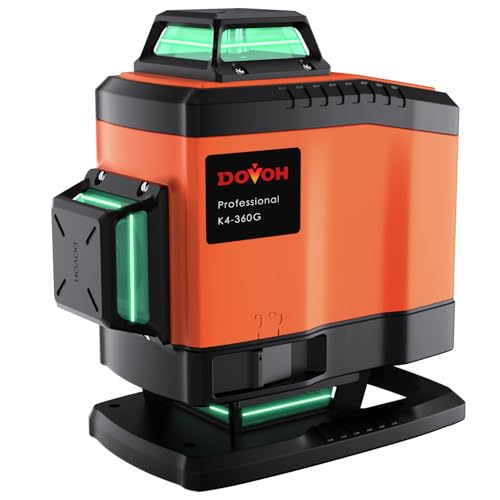
DOVOH K4-360G 4D Green Beam Laser Level

DOVOH Y4-360G-KIT 4D Laser Level with Tripod

PLS 180G Cross Line Green Tool
Meet The Standout Selections
The DOVOH H3-360G-KIT is built around the problem every outdoor user runs into: a green laser line you can see on drywall becomes invisible the moment the sun hits it. The kit ships with a dedicated receiver, which is a small handheld sensor that beeps and visually indicates when the rotating laser crosses your target. Pair the two and the tool’s working range stretches out to roughly 400 feet, which is enough to lay out a fence run, set post heights across a yard, or check a deck ledger without sprinting back and forth.
For most backyards and small job sites, the receiver is the piece that makes the whole category usable in daylight. You sight the sensor on a grade rod, the tool tells you when you’ve hit the line, and you mark your point. The 360-degree horizontal plane covers an entire room or job area without needing to spin the unit.
A Few Strong Suits
- Receiver bundle stretches usable range to about 400 ft outdoors, far past what a naked eye can see.
- 360-degree horizontal plane covers full rooms and open yards without repositioning.
- Green beam reads better than red in dim indoor conditions, useful when one tool handles both spaces.
- Self-leveling pendulum saves setup time on slightly uneven ground.
Things To Consider
- Without the receiver in your hand, the beam gets hard to follow in direct sun; you depend on the sensor for accuracy outdoors.
- Like most pendulum-style lasers, owners commonly report that rough transport can knock the leveling mechanism out of calibration over time.
Right Fit For
DIYers and contractors working open-air projects from fence lines to small foundations who need a one-tool outdoor and indoor solution.
Consider Something Else When
If your work is mostly interior tile and cabinet layout, the CIGMAN CM-G16 four-plane tool covers those tasks more directly.
The CIGMAN CM-G16 throws sixteen green lines across four full 360-degree planes, which sounds like a lot until you set it in the middle of a bathroom remodel and watch the floor, walls, and ceiling all light up at once. Two horizontal planes and two vertical planes intersect at clean 90-degree squares, which is exactly what tile setters and cabinet installers reach for. The setup is aimed squarely at indoor layout work, with the green diode staying bright enough to read in normal room lighting.
What separates this from a one-plane outdoor tool is coverage. The four-plane layout means a tile floor and a tile wall can be checked at the same time without re-aiming, and drop-ceiling grids snap into place faster when you can see the level line at every corner.
Practical Advantages
- Four 360-degree planes cover floor, walls, and ceiling in a single setup, saving time on tile and remodel work.
- Sixteen visible lines mean you rarely need to rotate the unit to find your reference.
- Horizontal and vertical planes cross at true 90 degrees, which keeps tile joints and cabinet runs square.
- Green beam stays readable in typical indoor lighting.
- Strong fit for cabinetry, framing, plumbing, and picture-hanging layouts.
Trade Offs
- Without a dedicated outdoor receiver, the beam fades fast in direct sunlight.
- The 4-plane diode array drains batteries quicker than single-plane units; carry spares on longer jobs.
Feature Snapshot
Made For
Remodelers, tile setters, and serious DIYers who want one tool to anchor floor, wall, and ceiling reference lines at the same time.
Skip It When
Long outdoor runs and open-yard projects benefit more from the DOVOH H3-360G-KIT receiver bundle.
Where the CIGMAN leans toward finish work, the DOVOH K4-360G is built to take hits. The body is wrapped in an overmold rubber housing, which is a thick, soft-touch layer that absorbs shock if the tool gets knocked off a ladder or kicked across a truck bed. Inside, it uses the same four-plane green-beam layout you’d find on higher-end layout lasers, with two horizontal and two vertical 360-degree lines giving you whole-room coverage.
The honest read is that this sits between the CIGMAN’s interior focus and the H3-360G-KIT’s outdoor reach. The added armor makes it a comfortable choice on framing and concrete days where tools get tossed around, and the four-plane output still handles drop ceilings, cabinet runs, and partition walls.
Notable Gains
- Rubber overmold housing cushions drops and protects the leveling module on busy job sites.
- Four-plane green output covers floors, walls, and ceilings without repositioning.
- Self-leveling pendulum speeds up setup on slightly uneven surfaces.
- Doubles between rough framing and finish work in the same day.
Points To Note
- No outdoor receiver included, so direct-sun range is limited compared to the H3-360G-KIT.
- Heavier than basic cross-line tools, which adds a small amount of fatigue on long overhead ceiling layouts.
Whose Shelf It Belongs On
Framing crews and remodelers who work rough-in and finish phases back to back and need one tool that survives both.
Reach For A Different Pick When
Yard and foundation work with bright sun benefits from the DOVOH H3-360G-KIT and its dedicated receiver.
The Y4-360G-KIT is essentially the K4-360G’s layout chops wrapped in a complete kit. The laser itself puts out the same two horizontal and two vertical 360-degree green lines, so floors, walls, and ceilings all get a reference plane in a single setup. The addition that defines this bundle is the included tripod, a three-legged stand that lifts the laser to working height and keeps it steady on uneven ground.
The tripod extends to about 60 inches and supports up to roughly 3 kg, which is enough headroom to drop a ceiling line without stacking boxes. For homeowners and remodelers who don’t already own a laser tripod, this kit removes the guesswork of figuring out which mount fits which laser.
What Earns Its Place
- Tripod reaches roughly 60 inches, giving you full ceiling height without jury-rigging a mount.
- Four 360-degree green planes cover an entire room from one tripod position.
- Sturdy enough at 3 kg load capacity to stay stable on slightly uneven surfaces.
- Saves a separate accessory purchase for first-time laser owners.
Worth Bearing In Mind
- The carrying case is larger and heavier than bare-tool options, which matters on the commute.
- No outdoor receiver is included, so open-sun visibility is limited.
Quick Facts
Perfect Match For
First-time laser owners and remodelers who want a complete floor-to-ceiling kit without buying accessories separately.
A Better Fit Elsewhere
Contractors who already own a heavy-duty tripod and need outdoor reach should look at the DOVOH H3-360G-KIT instead.
The PLS 180G is the smallest tool in this lineup, and that is exactly the point. It is a single cross-line laser, which means one horizontal line and one vertical line that meet at a 90-degree corner, housed in a compact body about 2.5 inches wide. The green beam is easier to see indoors than the older red diode, and the unit ships bare without a tripod, so you can drop it on a shelf, a ladder rail, or a pocket clip mount.
For quick tasks like hanging a row of pictures, leveling an outlet row, or setting a single backsplash line, a four-plane tool can feel like overkill. The 180G is the grab-and-go option that lives in a kitchen drawer and gets pulled out for the ten-minute job.
Where It Delivers
- Compact size fits in a tool bag or kitchen drawer for quick everyday layouts.
- Green cross line is easier to see than red in typical indoor lighting.
- Simple two-button operation reduces the learning curve for first-time users.
- Handy as a backup tool for pros who already own a 360-degree unit.
Some Limits To Know
- Single cross line means rotating or repositioning the tool for whole-room layouts.
- No 360-degree coverage, so drop-ceiling grid work and floor tile are out of its comfort zone.
- Not designed for outdoor sun without a separate receiver.
Technical Reference
Who Should Grab It
Homeowners and light users who want a reliable cross-line reference for hanging, leveling, and small alignment jobs.
Swap It Out When
Larger tile and remodel projects need the four-plane coverage of the CIGMAN CM-G16.
Choosing Outdoor Laser Levels Without the Guesswork
Laser color matters more than people expect. Green beams sit closer to the center of the human eye’s sensitivity, so they read brighter than red at the same power draw, especially in shaded outdoor and bright indoor settings. For direct sun, though, even a green beam fades fast, which is why outdoor-rated kits ship with a receiver. The receiver is a sensor that detects the laser pulse even when your eye cannot, turning sunlight into a non-issue.
Range and accuracy move together. A 360-degree self-leveling unit with a pendulum lock protects the internal mechanism during transport and keeps calibration honest. Pendulum self-leveling means the internal sensor swings into plumb on its own within a small range, usually around three to four degrees. Beyond that, the tool should warn you rather than project a false line.
Beam configuration drives layout speed. Single cross-line tools like the PLS 180G work well for one wall or one shelf. A four-plane 360 laser, like the CIGMAN or the DOVOH K4-360G, covers floor, wall, and ceiling lines simultaneously. That difference compounds across a full day of tile or cabinet work, and it’s why trade users often step up to multi-plane units once they’ve used one for a project.
Build quality shows up where you don’t see it. Rubber overmold, an IP54 dust and water rating (a standard measure of how much dust and splashing water a tool can handle), and a locking pendulum all extend the life of the tool on real job sites. Bare indoor tools save weight and cost, but they tend to be the first piece that fails when work gets rough.
Where Shoppers Go Wrong
The most common mistake is buying a green-beam indoor tool and expecting it to work in afternoon sun. The beam is technically there, but your eye can’t see it. For outdoor work, plan on a kit that includes a receiver from the start, or budget for one as a separate add-on.
A second trap is ignoring the tripod question. A handheld laser drifts the moment you let go, and stacking it on a paint can is a recipe for slow, inaccurate layouts. A short tripod is fine for floors and low walls; ceiling and full-height layouts need a stand that extends to 60 inches or more. Kits like the DOVOH Y4-360G-KIT solve this by including the stand.
When Paying More Pays Off
Higher-tier models in this category earn their premium through diode brightness, pulse mode for receiver use, and tougher housings. A 4D laser like the DOVOH K4-360G or the CIGMAN CM-G16 costs more than a single-line cross tool, but the four-plane coverage replaces an extra worker on tile, ceiling, and cabinetry days. Over a year of regular use, the time saved on layout often pays for the upgrade, especially for trade users billing by the hour.
For DIYers, the upgrade math works differently. One or two room projects a year may not justify a 4D tool, and a quality cross-line tool plus a careful layout routine can be enough. Match the tool to the work, not the other way around.
Frequently Asked Questions
Do outdoor laser levels work in direct sunlight? A naked beam fades quickly in direct sun, but most outdoor-rated kits include a receiver that detects the laser pulse and signals when you’ve hit the line. The DOVOH H3-360G-KIT is a good example of a kit that ships with this receiver included.
What is the difference between red and green laser levels? Green beams appear brighter to the human eye in most lighting conditions, which makes them easier to see without a receiver. Red beams cost less and use less battery, but they fade faster in bright conditions.
Can a 360-degree laser replace a chalk line? For most layout work, yes. A 360-degree self-leveling laser projects a continuous line around an entire room, which is faster than snapping chalk and rechecking with a string.
How accurate are self-leveling laser levels? Most self-leveling models in this category level within a few millimeters over typical working distances, and many meet professional layout tolerances. Always check the manufacturer spec for the exact figure at the distance you plan to work.
Do I need a tripod for an outdoor laser level? A stable mount is strongly recommended. Lasers drift the moment you set them on an uneven surface, and tripods like the one in the DOVOH Y4-360G-KIT keep the line steady at working height.
Bottom Line
A good outdoor laser level saves the kind of time you can’t buy back: walking back and forth with a string, re-snaping chalk, second-guessing a long sight line. Match the tool to the work, plan for a receiver if your projects live in the sun, and don’t overspend on a 4D model if your layouts are simple. The five picks above cover the main scenarios you are likely to face, from open-yard foundation work to kitchen tile, and each one fills a different role. Pick the one that fits your next project, not the one with the most planes.




