


Cutting in along ceilings, baseboards, and window trim separates a quick paint job from one that actually looks professional. The right angled brush saves you from tape fatigue and keeps edges sharp, so the entire room reads cleaner once the roller passes are done. Most weekend painters notice the difference within a single wall.
The picks below lean on a few attributes that matter for clean lines: a short handle for control, an angled sash profile that follows inside corners, and synthetic filaments that hold latex and acrylic paint without leaving fuzz behind. Each option fits a different kind of project, so the list moves from tight touch-up work through whole-room refreshes.
An Overview Of The Picks

Wooster Shortcut Angle Sash Paintbrush 2-Inch (Pack of 6)

Wooster Shortcut Angle Sash Paintbrush 2-Inch White (Pack of 12)
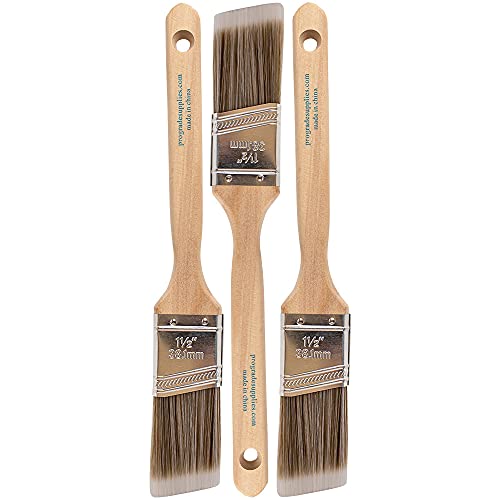
Pro Grade Angled Paint Brushes 1.5 Inch Set for Trim (3 Pc)
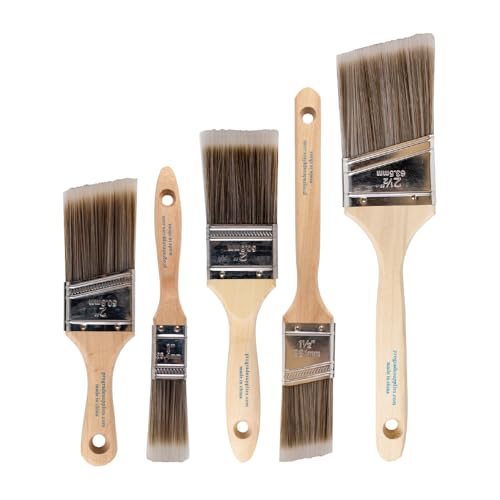
Pro Grade Paint Brushes Set for Walls, Trim & Stain (5-Piece)

Pro Grade Flat & Angled Paint Brush Set for Walls and Trim (2 Pc)
More Details On Our Top Picks
Short-handled brushes get a workout whenever you are kneeling along a baseboard or reaching up to a ceiling line, and the Wooster Shortcut is built around that idea. The 2-inch angled sash profile is a familiar size for trim work, while the compact handle keeps your knuckles clear of freshly painted walls. For a single bedroom or bath, a six-pack gives you spares as bristles wear down or get accidentally ruined by a dried-on glob of latex.
The synthetic filament blend works across latex, acrylic, and water-based stains, so you do not need to swap brushes between rooms. A brass-plated steel ferrule holds the bristles in place during wash cycles, which matters once you start cleaning brushes instead of tossing them. Compared with the 1.5-inch Pro Grade set further down the list, this one trades a finer tip for a wider coverage area on long runs of baseboard.
Useful Touches
- The short 2 1/4-inch handle gives you tighter wrist control near corners and ceiling edges.
- Synthetic filament blend handles latex, acrylic, and water-based stains in the same session.
- Brass-plated steel ferrule resists rust through repeated wash-and-reuse cycles.
- Pack of six covers a multi-room repaint without forcing a mid-project brush run.
- 2-inch width is a versatile middle ground for most baseboards and door casings.
Trade Offs
- The short handle can feel cramped for users with larger hands on long, overhead runs.
- Like most synthetic brushes, it benefits from a thorough comb-out before storage to keep the angled edge true.
Who It Suits Best
Weekend painters and rental-property owners repainting one or two rooms who want a familiar, controllable brush for baseboard and ceiling lines.
Look Elsewhere When
You would rather buy a single multi-size set, in which case the Pro Grade Paint Brushes 5-Piece set covers wider walls and trim in one bundle.
Twelve brushes in a single box is overkill for a hallway, but it makes sense for a whole-house repaint, a small rental portfolio, or a volunteer project with a long punch list. Each brush carries the same Shortcut handle, brass-plated steel ferrule, and synthetic blend as the six-pack above, so the cutting-in feel is identical. The extra count just means fewer mid-job excuses when one brush gets crusty or bent.
The angle sash profile still favors trim and corner work over broad wall coverage, so pairing this with a roller is the more efficient play for open wall space. The white colorway makes it easier to spot stray bristles against a darker trim color before they dry into the finish. Compared with the Pro Grade 5-Piece set, you give up size variety in exchange for a deep bench of the same dependable shape.
Benefits That Matter
- Twelve brushes let you rotate as bristles clog, instead of stopping to rinse mid-edge.
- The white handle and ferrule make stray bristles easier to see against dark trim colors.
- Same Shortcut handle profile as the six-pack, so muscle memory transfers between jobs.
- Synthetic blend covers latex, acrylic, and water-based stains without a brush swap.
Honest Caveats
- All twelve brushes are the same 2-inch size, so you still need other sizes for wider walls or narrow muntins.
- Storing a full dozen clean brushes takes a dedicated slot in a utility drawer or shop rack.
Feature Snapshot
Made For
Property managers, multi-room renovations, and volunteer crews who run through a brush per wall and value backup inventory over size variety.
Consider Something Else When
You are tackling a single small room, in which case the more focused Pro Grade Angled Paint Brushes 1.5-Inch Set 3-Piece will stretch further with less storage overhead.
At 1.5 inches, the Pro Grade angled set sits in the sweet spot for narrow trim, window mullions, and any place where a wider brush would smear paint onto the adjacent surface. The triple pack also gives you a clean brush ready when one starts to fatigue halfway through a day. The thinner tip is the part that does the actual cutting-in, so a crisper point translates directly into a cleaner line.
Inside corners benefit most from this size, since the angle lets the bristle edge sit flush against both walls without leaving a heavy ridge. A wooden comfort grip absorbs some of the pressure that a plastic handle would push back into your fingers, which matters over a long afternoon of edging. Where the Wooster Shortcut uses a stubby handle for control, this Pro Grade handle reaches a more standard length for two-handed use on long baseboard runs.
What Helps Most
- 1.5-inch width fits narrow trim, window frames, and detailed molding work.
- Tapered tip produces a finer point for following inside corners and edges.
- Wooden comfort grip reduces hand fatigue on multi-hour edging sessions.
- Three-pack rotates a fresh brush in as older ones start to wear.
Small Caveats
- Wood handles need drying time after washing, since trapped moisture can swell the grip over time.
- The 1.5-inch width feels slow on wide-open baseboard runs compared with the 2-inch Wooster above.
Right Fit For
Detail-oriented DIYers working on window trim, doors, and inside corners where a fine point matters more than coverage speed.
A Better Fit Elsewhere
You mostly edge long baseboard runs, in which case the wider Wooster Shortcut 2-Inch 6-Pack covers ground faster with the same control philosophy.
Five brushes in one box is the kind of math that works for a first-time homeowner who does not yet know which size will matter most. The set covers a 1-inch flat, a 1.5-inch angle, a 2-inch flat, a 2-inch angle stubby, and a 2.5-inch angle, which is more variety than any other option on this list. You will reach for the angled brushes near edges and save the flats for cutting in along ceilings and broad trim.
For cabinet doors, furniture refreshes, and door frames, the smaller flat and angle handle the precision while the wider 2.5-inch angle covers baseboards. Stain and sealer work also fits within the same kit, so outdoor furniture projects do not require a separate purchase. The trade-off is that you carry five handles instead of one or two, which can feel like overkill for a single accent wall.
Positive Points
- Five sizes cover everything from narrow muntins to wide baseboards in a single kit.
- Angled and flat profiles in the same set remove guesswork about which shape fits a given edge.
- The 2.5-inch angle speeds up long baseboard runs compared with the 1.5-inch Pro Grade set above.
- Designed for washing and reuse, so the kit can stretch across multiple rooms or projects.
Some Limits To Know
- Without one clearly specialized size, none of the five brushes feels like a specialist edge tool.
- Keeping all five brushes clean between sessions means more brush-combing at the end of the day.
Key Product Details
Best Suited To
First-time DIYers outfitting a toolbox for a multi-room repaint who would rather buy one kit than guess which sizes they will actually need.
Skip It When
You only need to cut in along baseboards in one room, in which case the Pro Grade Flat & Angled Paint Brush Set 2-Piece offers a tighter, more focused kit.
A two-piece kit earns its keep when the project itself is simple. The Pro Grade pair pairs a 3-inch flat with a 2.5-inch angle, which covers most of what a single accent wall or one-room refresh demands. The angle sash handles the cutting-in along ceiling and baseboard lines, while the wider flat brush fills in the corner of a wall or a door slab without leaving a heavy ridge.
Two brushes also mean a smaller cleaning commitment at the end of the day, which matters for a quick weekend turnaround. The flat brush is the right call for the first coat along a wall-to-ceiling line where you want a soft, brushed finish before the roller comes through. Compared with the broader 5-Piece Pro Grade kit, this set is more of a focused workhorse for a defined project than a full toolbox starter.
Useful Highlights
- 3-inch flat covers wide wall areas and door slabs in fewer strokes.
- 2.5-inch angle handles baseboard and ceiling lines without smearing into adjacent surfaces.
- Two-brush kit keeps the post-paint cleanup short and manageable.
- Designed for washing and reuse across multiple projects.
Where It May Fall Short
- No narrow 1-inch or 1.5-inch brush in the set for window mullion or detail trim work.
- For whole-house jobs, you may find yourself wishing for at least one more spare once fatigue sets in.
Quick Technical Notes
Who Should Grab It
Homeowners tackling a single accent wall, one-room refresh, or a small furniture repaint who want one flat and one angle without buying a full kit.
Another Choice May Suit
You need to handle narrow trim and wide walls in the same project, in which case the Pro Grade Paint Brushes 5-Piece set covers both ends of the size range.
What Matters Most Before Choosing Paint Brushes For Cutting Edges
Handle Length and Grip Style
Short, stubby handles put your hand close to the bristles, which makes tight corners and overhead ceiling lines easier to control. Longer handles let you reach further without a ladder and let you use two hands on a long baseboard, but they reduce fine control. The right call depends on whether you spend more time working in tight spots or sweeping along a long edge.
Angled Versus Flat Profiles
An angled sash brush has bristles cut at a slant, so the longer edge follows a wall or ceiling line while the shorter tip cuts into a corner. A flat brush lays a smoother, more uniform stroke and works well along door slabs or the first pass of a wall-to-ceiling line. Most edging kits keep at least one of each, since they handle different parts of the same room.
Filament Material and Compatibility
Synthetic filament blends work with latex, acrylic, and water-based stains, which covers almost every interior wall paint sold today. A brass-plated steel ferrule keeps the bristles from spreading apart during washing, which protects the angled edge over time. Natural bristles are usually reserved for oil-based finishes and are not necessary for typical cutting-in work.
Size, Quantity, and Storage
A 2-inch brush is a versatile default, while 1.5-inch and 2.5-inch sizes handle narrow and wide trim respectively. Multipacks make sense for long projects, since a clean brush is always more accurate than a clogged one. Plan where the clean brushes will hang or stand to dry, because a damp ferrule left in a drawer can corrode over time.
Key Considerations Across These Picks
Where Shoppers Go Wrong
Buying a single all-purpose brush and expecting it to handle narrow window mullions and wide baseboards the same way. A 1.5-inch and a 2.5-inch brush cover more situations with less frustration than one size forced to do both. Skipping the cleaning comb at the end of a session is another common slip, since dried paint at the ferrule slowly ruins the angled edge you paid for.
Where The Extra Money Goes
Higher-tier brush sets usually add a brass-plated steel ferrule, denser filament packing, and a more refined tip taper. Those features show up as cleaner lines, longer brush life, and less bristle loss into the finish. The upgrade pays off when you paint several rooms per year, while a single-room weekend project often does fine with a more modest kit.
Frequently Asked Questions
What size angled brush works best for cutting in along ceilings?
A 2-inch or 2.5-inch angle covers most ceiling lines without making your wrist overwork, while a 1.5-inch angle handles inside corners where the longer brush would smear into the adjacent wall. Many painters keep both sizes on hand for the same room.
Can I use the same brush for latex and acrylic paint?
Yes, as long as the brush uses a synthetic filament blend and you rinse it thoroughly between uses. The Wooster Shortcut and the Pro Grade sets on this list are designed to handle latex, acrylic, and water-based stains in the same session.
How do I keep an angled edge sharp between rooms?
Wash the brush promptly after the final coat, comb the bristles back into shape with a brush comb, and hang or stand the brush so the tip is not pressed against a surface. Avoid wrapping damp brushes in plastic, since trapped moisture can bend the angled profile.
Do I need a flat brush if I already have an angled one?
A flat brush lays a smoother stroke along door slabs and the first pass of a wall-to-ceiling line, while an angle is better for following edges. The Pro Grade 2-Piece set pairs both, which is a tidy way to cover the two most common brush jobs in one room.
How long should a good cutting-in brush last?
With proper cleaning and storage, a synthetic angled brush can last through several rooms of latex paint before the bristles start to lose their shape. Heavier use with cheaper brushes tends to shorten that lifespan, which is one reason the Wooster Shortcut is popular for repeated projects.
Bottom Line
A clean ceiling line and a sharp baseboard edge start with a brush that fits the corner you are cutting in. Short-handled, angled sash brushes tend to handle tight spots, while a flat brush in a larger size covers broad passes. Pick the kit that matches the room count in front of you, take a minute to clean the brushes at the end of the day, and the next round of painting will go faster than the first.




