


Latex paint rewards the right tool. Skip the brush, pick up a proper paint gun, and a full room of walls goes from a weekend slog into a Saturday-morning project. The five options below cover everything from quick weekend stain jobs to whole-house airless spraying, and they all handle latex without thinning headaches. Whether you’re a first-timer tackling trim or a seasoned DIYer ready to repaint the whole interior, there’s something here that fits your workflow and your budget.
A Snapshot Of The Selections

Wagner Control Pro 130 HEA Paint & Stain Sprayer
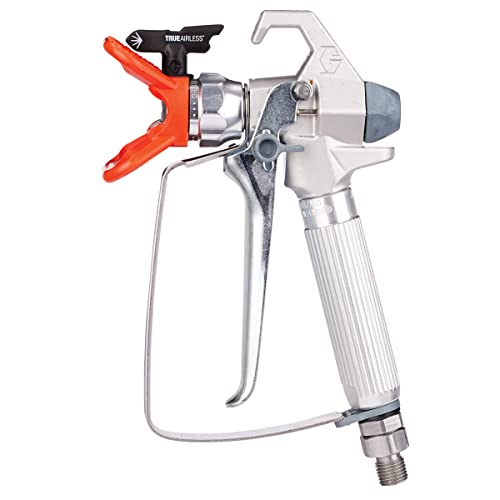
Graco SG3 Airless Spray Gun (Model 243012)

Graco LTX315 RAC X Switch Tip (6–8 in)

Wagner Control Spray QX2 HVLP Stain Sprayer

Wagner FLEXiO 570 HVLP Sprayer (iSpray)
What Each Pick Brings To The Table
The Control Pro 130 earns its place on this list because it handles latex straight from the can, no thinning required. Airless sprayers push paint through a tiny tip at high pressure, and the “HEA” tag (High Efficiency Airless) is Wagner’s way of saying it does that with less wasted mist than older airless designs. For a homeowner repainting living room walls or staining a backyard deck, that means fewer sheets of plastic draped over the landscaping.
Setup is straightforward enough for a first-time airless user: connect the hose, prime the pump, dial in your pressure, and pull the trigger. The unit runs on a standard household outlet, so you won’t need a dedicated circuit or a generator. For most weekend projects, this one strikes a sensible balance between power and portability.
Points In Its Favor
- Sprays unthinned latex and stain, saving the trial-and-error step of thinning paint to the right viscosity
- HEA tech reduces bounce-back and airborne mist, which means less masking and a cleaner workspace
- Supports both interior walls and exterior siding, decks, and fences without swapping rigs
- Steady flow rate covers large surfaces in a fraction of the time a brush or roller would take
Worth Noting
- Cleanup takes longer than with an HVLP (High Volume Low Pressure) hand-held because the hose and pump need flushing
- You’ll want to mask floors, windows, and trim carefully; overspray control is good for airless but not perfect
- Tip clogs can happen if latex sits in the line, so purging at the end of the day matters
Key Product Details
Made For
DIYers and homeowners repainting full rooms, siding, or fences on weekends who want faster coverage without renting commercial gear.
Consider Something Else When
The Wagner FLEXiO 570 is a better fit for users who want one handheld rig they can carry up a ladder for trim and small touch-ups.
Not everyone needs a full sprayer rig. If you already own a Graco or Magnum airless pump, the Graco SG3 is a gun-only upgrade that replaces the factory piece on your hose. The standout feature is the built-in swivel at the handle, which keeps the hose from twisting as you move around a wall, so you spend more time painting and less time unwinding kinks.
The four-finger trigger has a light, smooth pull, which sounds like a small thing until you’ve squeezed a stiff trigger for two hours straight on a ceiling job. The thumb-engaged safety locks the gun when you set it down, a useful habit when you’re climbing down a ladder or stepping away for a phone call.
What Works In Its Favor
- 3,600 PSI (pounds per square inch) max pressure handles thick latex with a standard RAC IV tip
- Swivel at the handle reduces hose twist and arm fatigue on long sessions
- Four-finger trigger spreads the pull across more fingers, easing fatigue
- Safety lock prevents accidental sprays when the gun is set down
Trade Offs
- Only useful if you already own a compatible Graco or Magnum pump
- Replacement filters and tips add to long-term ownership cost
Best Suited To
Owners of Graco or Magnum airless rigs who want a more comfortable, hose-friendly gun for frequent use.
Look Elsewhere When
The Graco LTX315 tip is the smarter pick for users who need a wider spray fan and fewer passes on broad walls.
Spray tips are the most underestimated component in any airless setup. The Graco LTX315 is a reversible Switch Tip with a .015-inch orifice, a small opening that controls how much paint leaves the gun, and a 6 to 8 inch fan width, which is the size of the spray pattern at typical spraying distance. The wider fan means each pass covers more wall, so a 12-foot living room goes from a dozen strokes down to half that.
Unlike the Wagner rigs above, this is an accessory, not a complete system. It drops into any RAC X-compatible guard, which is the metal shroud that holds the tip in place, on most modern Graco guns. The reversible design is a real-world benefit: when a tip clogs, you flip it around, spray into a bucket, and blow the debris out instead of tearing the whole thing apart.
The Value In It
- 6 to 8 inch fan width cuts the number of passes per wall, finishing rooms faster
- Optimized for today’s latex and oil-based coatings, so atomization stays consistent
- Reversible SwitchTip design clears clogs in seconds without disassembly
- Locking tab holds the tip securely in the guard during heavy use
Points To Keep In Mind
- Requires a compatible RAC X guard and a working airless pump, which adds to the total cost
Feature Snapshot
Right Fit For
DIYers with an existing Graco airless rig who want wider coverage and faster cleanup when tips clog.
Reach For A Different Pick When
The Wagner Control Pro 130 is the better starting point for users who don’t yet own a pump and need a complete system out of the box.
The QX2 is built for outdoor staining projects, and it shows in the small details. HVLP stands for High Volume Low Pressure, a delivery method that uses a large volume of air at low pressure to push paint. It produces a softer, more controlled spray than airless, which matters when you’re staining a picket fence and don’t want mist drifting into the neighbor’s yard. Three spray pattern settings (horizontal, vertical, and narrow) cover fences, lattice, and detailed trim without swapping parts.
Where the Control Pro 130 above is a full airless rig on wheels, the QX2 is handheld and cup-fed. You pour stain into the container, snap it on, and start spraying. For first-timers, that low-fuss setup is a real plus, since there’s no hose to drag and no pump to prime.
Where It Excels
- Three spray patterns adapt to fences, slats, and detailed trim without changing nozzles
- Low-overspray design keeps stain on the wood rather than in the air
- Handheld and lightweight, easy to carry up a ladder for a pergola
Potential Drawbacks
- Better suited to stains than thick latex wall paint, so interior use is limited
- Smaller cup means frequent refills on bigger decks
Who It Suits Best
First-time DIYers tackling fences, lattice, decks, and outdoor furniture who want a simpler handheld setup.
A Better Fit Elsewhere
The Wagner FLEXiO 570 handles interior latex walls too, which makes it a smarter pick for users planning projects on both sides of the wall.
The FLEXiO 570 sits in a useful middle ground between a handheld stain sprayer and a full airless rig. The iSpray nozzle, the front attachment that shapes the spray pattern, is the headline feature: it pulls enough airflow to push unthinned latex, which is unusual for an HVLP. The result is a handheld unit that can handle ceilings and interior walls, then pivot to a deck or fence the same weekend.
Compared to the QX2, this one has a larger cup and a turbine motor in the base, so the trigger handle stays lighter in the hand. Cleaning is a quick rinse of a few removable parts, which suits the typical “finish one project Saturday, start another Sunday” rhythm most DIYers follow.
Reasons It Performs
- Sprays unthinned latex and stain from the same machine, no second rig needed
- Adjustable flow and pattern give you control across walls, ceilings, and trim
- Removable parts make cleanup faster than a brush and most roller setups
- Indoor and outdoor capability in one package
Less Ideal Details
- Slower than a full airless rig on large exterior surfaces like two-story siding
- Turbine noise runs louder than the QX2 in a quiet workshop
Quick Facts
Whose Shelf It Belongs On
DIYers juggling indoor walls, ceilings, and outdoor staining who want one rig that travels between both.
Swap It Out When
The Wagner Control Pro 130 is the stronger choice for users repainting full exterior siding on a two-story home where raw speed matters most.
What To Weigh Before Choosing Your Paint Gun
Picking the right paint gun for latex comes down to matching the tool to the job, not chasing the most powerful unit on the shelf. Airless systems push paint at high pressure and cover large areas fast, but they demand more masking, more cleanup, and a steadier hand to avoid runs and sags. HVLP units trade raw speed for finer control, which suits detail work, fences, and users who want a quieter, less intimidating setup.
Project size is the first filter. A single accent wall or a small fence section barely justifies the setup time of an airless rig, while a whole-house interior repaint rewards the speed. Paint viscosity matters too: most modern airless and HVLP rigs handle latex straight from the can, but if you’re working with thicker elastomeric or specialty coatings, you’ll want to confirm the tip size and pressure range can keep up.
Portability, storage, and noise round out the practical side. A handheld HVLP is easier to store in a closet than a wheeled airless cart, and it’s friendlier on extension ladders. For most homeowners, the honest read is to start with the type of project that comes up most often, then pick the rig that handles that case well, with the understanding that stepping up to a more capable system usually pays off the second time you use it.
Smart Ways To Avoid Common Buying Mistakes
Where Shoppers Go Wrong
One common trap is matching the wrong sprayer to the project. Buyers reach for an airless rig to stain a small garden bench, then spend more time masking and cleaning than they saved. The reverse mistake happens too: grabbing a small HVLP to repaint a full living room and burning through an entire weekend on a job a $200 airless unit would finish by lunch.
Another slip is ignoring tip and filter maintenance. Latex paint thickens fast once it leaves the can, and a clogged tip is the most common cause of poor spray patterns. Owners commonly report that rinsing the filter after every use and purging the line with water at the end of a session keeps the gun spraying like new for years.
The Upgrade Payoff
Higher-tier paint guns earn their keep in three places: pressure control, build quality, and ergonomic features. A 3,600 PSI rating handles thicker coatings without bogging down, a metal gun body outlasts plastic under daily use, and a swivel fitting at the handle can spare your wrist on a long ceiling run. For occasional weekend projects, the basics do the job, but if you’re spraying every season, the upgrade usually pays for itself in time saved and a finish that looks like it was done by a contractor.
Frequently Asked Questions
Can any paint gun spray latex without thinning?
Most modern airless rigs and the FLEXiO 570 handle unthinned latex from the can, which saves the trial-and-error step of getting viscosity right. Smaller HVLP cup sprayers often need a bit of water or thinner to spray smoothly.
What’s the difference between HVLP and airless?
HVLP uses a large volume of air at low pressure for fine control and minimal overspray, ideal for furniture, fences, and detail work. Airless systems push paint at high pressure through a tiny tip, covering large walls and siding quickly but with more mist to manage.
Do I need to thin latex paint before spraying?
With the right tip size and a capable machine, thinning usually isn’t necessary for standard latex. Heavy-bodied paints, primers, and specialty coatings sometimes need thinning to flow properly, so check the sprayer’s manual before you start.
How do I clean a paint gun after latex?
Flush the system with warm water until it runs clear, then remove and rinse the tip, guard, and filter. Letting latex dry inside the gun is the fastest way to ruin a tip, so end-of-day cleanup matters more than people expect.
Can I use the same gun for stains and latex?
Yes, most HVLP and airless units handle both, though you’ll want to flush thoroughly between the two to avoid cross-contamination. Dedicated stain projects tend to favor HVLP, while whole-house latex work goes faster on an airless rig.
Closing Remarks
The right paint gun for latex comes down to the size of the job, the space you’re working in, and how often you expect to pull the trigger. For whole-house interiors, the Control Pro 130 and FLEXiO 570 cover most of what a homeowner will face. For outdoor staining and detail work, the QX2 keeps things simple. And for anyone already running a Graco pump, the SG3 gun and LTX315 tip turn a good rig into a great one. Pick the tool that matches your next project, not your last one, and you’ll spend less time wrestling with equipment and more time enjoying a fresh coat of paint.




