


A fresh wall color is one of the fastest ways to reset a room, and the roller you grab quietly decides how that finish actually looks. Cheap covers shed fuzz into the wet paint, flimsy frames wobble halfway up the wall, and the wrong nap (the length of the roller fibers, which controls how much paint the cover holds) leaves streaks you only notice in raking afternoon light. This list rounds up five solid options for the most common interior jobs, from big open walls to narrow trim and tight corners, so your next paint day goes smoother than the last.
The Main Contenders

Wooster Brush SR053 Sherlock Extension Pole, 1-2 ft

Mister Rui Foam 4-inch Roller Kit, 8 Pack

Mister Rui 2-inch Foam Roller Covers, 12 Pack
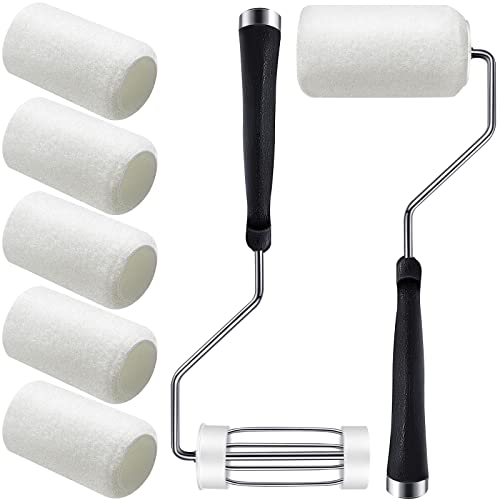
Tessco 2-Pack 4-inch Roller Kit with 6 Covers

Wooster R564 9-inch Roller Covers, 12 Pack
Why These Options Stand Out
A roller cover does the work, but the pole behind it shapes how the whole day feels. The Wooster Sherlock adjusts from roughly one to two feet in six-inch increments, so you can dial in the length that matches the wall section you’re working on. It’s not the tool that touches the paint, which is why a sturdy pole quietly separates a clean job from a sore-shoulder afternoon.
You thread your standard roller frame onto the universal tip and it locks in, so swapping between detail and broad-roller work takes seconds. For a single accent wall, this likely won’t matter much. For a whole-room repaint, the difference in fatigue is real, and the build quality here feels closer to contractor gear than weekend gear.
The Helpful Details
- Twist-lock adjustment in six-inch steps keeps the length set where you want it
- Hexagonal inner shaft stops the roller from spinning freely on the pole
- Universal threaded tip accepts common roller frames and many brushes
- Made for repeated use across long projects rather than a single touch-up
Trade Offs
- Two-foot max reach won’t replace a full extension pole on tall stairwells
- Heavier than budget poles, which some users may notice on overhead work
Best Suited To
Anyone painting standard eight-foot walls who wants fewer ladder moves and a more controlled reach than free-handing a frame provides.
Consider Something Else When
Tackling vaulted ceilings or two-story foyers, where a longer extension pole or the Wooster R564 covers paired with a full-size pole will save more time.
Foam covers get a bad rap on big walls, but on flat cabinet doors and smooth trim they’re hard to beat. The Mister Rui 4-inch kit arrives with everything needed to start: covers, a frame, a tray, and a disposable liner, which removes the most common beginner excuse of “I don’t have the right stuff.”
Because the rollers are small, control is the real advantage. You can roll a shaker door edge or a tight cupboard face without the cover sagging into the corners. If you’re refinishing a single piece of furniture or a small kitchen’s worth of cabinet fronts, this kit bundles the workflow into one box, which is more useful than it sounds.
Reasons It Performs
- High-density foam leaves a smooth finish on flat doors and cupboards
- Tray and liner included, so cleanup at the end of the job is genuinely quick
- Compact 4-inch size makes detail work less intimidating for first-time painters
- Works with both oil and water-based finishes, so you don’t need a second kit
Points To Note
- Foam covers aren’t ideal for textured drywall on full walls
- Small frame means more trips back to the tray on any surface larger than a door
Feature Snapshot
Who Should Grab It
First-time DIYers refinishing cabinet doors, small furniture pieces, or trim where a smooth finish matters more than speed.
Where Another Pick Suits Better
Rolling out a full room of interior walls, where the Wooster R564 9-inch covers will cover far more square footage per dip.
Sometimes you don’t need another frame, you need refills. This Mister Rui 2-inch pack of twelve foam covers is built for the painter who already owns a mini frame and just wants fresh covers for a multi-day detail job. The narrow size slips into the kind of spots a 4-inch or 9-inch cover can’t reach cleanly.
For cutting in around door casings, rolling the face of narrow shelves, or finishing built-in trim, a 2-inch foam cover earns its keep. The foam is dense enough to avoid the heavy orange-peel texture (the slightly bumpy, dimpled look that paint can leave on a surface) cheap foam tends to leave behind, and the covers wash out for repeat use on lighter projects.
What Helps Most
- Tight 2-inch width is purpose-built for trim, edges, and tight corners
- Washable design extends the life of each cover across multiple sessions
- Dense foam holds paint without flooding the surface
- Twelve-pack quantity covers a full room of trim without rationing
Honest Caveats
- No frame included, so you need a compatible mini roller handle already
- Two-inch width makes wall work impractical; this is a specialty tool
Right Fit For
Painters handling detailed trim work or finishing built-ins who already have a 2-inch frame and just need a steady supply of covers.
Skip It When
You don’t yet own a mini frame, in which case the Mister Rui 4-inch kit bundles the frame and covers together for a more complete start.
Small rollers live or die by grip comfort, because you’re holding the frame the whole time instead of letting a pole carry the weight. The Tessco kit leans into that with a soft-grip handle and a self-locking frame, which keeps the cover from spinning off mid-stroke. Two frames plus six covers in the box covers a small project without sharing a soggy cover between coats.
For door frames, window sills, and narrow wall sections between cabinets, a 4-inch cover threads the needle between speed and control. The self-lock mechanism is the kind of feature you stop noticing because it just works, which is the goal.
Useful Strengths
- Two frames let you swap between colors or keep a dry backup ready
- Soft-grip handle reduces hand fatigue on multi-hour trim sessions
- Self-locking design holds covers firmly without slippage
- Six covers give enough capacity for a room of trim in one purchase
Less Ideal Details
- Four-inch width is slower than a 9-inch cover on broad wall expanses
- Cover material is more general-purpose than the smooth-finish foam on the Mister Rui 4-inch kit
Whose Shelf It Belongs On
Homeowners handling window casings, door frames, and narrow accent walls where a comfortable grip and two ready frames matter more than absolute smoothness.
Reach For A Different Pick When
Refinishing cabinet doors, where the Mister Rui 4-inch foam kit’s dense foam leaves a noticeably smoother finish on flat panels.
For a full room of interior walls, the workhorse is a 9-inch cover with enough nap to load paint and release it evenly. The Wooster R564 sits in that sweet spot, with a 3/4-inch nap that handles light to medium texture on typical drywall. Buying a 12-pack keeps you from cutting a project short because the last cover wore out.
The polypropylene core is a detail most people never think about, but it resists cracking when you rinse and reuse a cover between coats. Twelve covers might feel like overkill for one weekend, until you realize how often a single cover gets tossed because it sat too long in the tray.
What Stands Out
- 3/4-inch nap picks up enough paint for textured drywall without constant reloading
- Green double-thick core holds up to rinsing and reuse between coats
- Nine-inch width covers broad wall sections quickly
- Twelve-pack quantity suits a full-room repaint with spares on hand
Things To Consider
- Nap length is too long for ultra-smooth surfaces like new cabinet-grade panels
- Bulk pack is heavier to ship and store than a three or six-cover option
Quick Facts
Built With In Mind
Homeowners repainting one or more full rooms of standard interior drywall who want contractor-style covers without buying them one at a time.
Not Your Match When
Working on smooth cabinets or narrow trim, where the Mister Rui 2-inch or 4-inch foam covers leave a finer, more controlled finish.
Picking The Right Roller Setup For The Job
Matching the roller to the surface matters more than picking the most expensive cover on the shelf. Foam covers, like the Mister Rui kits, leave a smooth finish on flat cabinet doors and trim, but they struggle on textured drywall because there’s no fiber to push paint into the valleys. Nap covers, like the Wooster R564, do the opposite: they carry paint into surface texture, which is exactly what interior walls usually need.
Nap length is the next decision. A 3/8-inch nap works on smooth or lightly rolled walls, while a 3/4-inch nap (like the R564) handles most standard interior drywall with light to medium texture. Going longer than you need leaves stipple marks; going shorter than you need forces you to reload constantly. The frame is the unsung piece, because a wobbling cover shreds faster and lays paint unevenly. A self-locking frame, like the one in the Tessco kit, keeps the cover seated through aggressive rolling.
For walls taller than you can reach comfortably, an extension pole isn’t optional, it’s the difference between a clean job and a streaky one. Pair the Wooster R564 covers with the SR053 pole and you get the most common contractor-style interior setup in this list. For narrow trim, a 2-inch cover does what a 9-inch simply cannot, and skipping that step is how cut-in lines end up wavy.
Smart Habits For First-Time Rollers
Pitfalls Shoppers Hit
The most common buying slip in this category is choosing a cover by price alone. A cheap cover sheds lint into wet paint, and the fix is sanding and repainting, which costs more time than the savings. Another trap is buying a 9-inch cover for trim work. The width is right for walls, wrong for narrow door casings, and the result is paint on the casing and a sore wrist.
A third slip is ignoring nap length. A long-nap cover on smooth walls leaves a heavy stipple texture, while a short-nap cover on textured drywall starves the surface of paint and forces extra coats. Match the nap to the wall, not the price tag.
When Paying More Pays Off
Higher-tier roller covers earn their keep on coverage and durability. A quality cover holds more paint per dip, lays it down more evenly, and survives multiple coats without falling apart. For a single-touch-up job, that premium may not matter. For a whole-room repaint, the time saved on fewer dips and fewer replacement covers tends to justify the cost.
Frequently Asked Questions
What nap roller is best for interior walls?
A 3/8-inch nap handles smooth walls, and a 3/4-inch nap is the common choice for lightly textured drywall like the Wooster R564. Go longer only on heavy texture or popcorn surfaces.
Can foam rollers be used on walls?
Foam rollers work on very smooth walls but leave air bubbles and minimal texture fill. For typical interior drywall, a nap cover produces a more even, forgiving finish.
How do you clean reusable roller covers?
Rinse latex paint covers under warm water until the water runs clear, then stand them on end to dry. For oil-based finishes, use the appropriate solvent followed by a soap and water rinse.
Do extension poles make painting easier?
Yes, particularly for ceilings and tall walls. A pole like the Wooster SR053 cuts down on ladder moves and gives you a steadier line because your arms stay closer to your body.
How many roller covers do you need per room?
Most single-room projects get through with three to four covers, since covers wear out, clog with lint, or stiffen if left sitting in paint. A 12-pack like the Wooster R564 gives breathing room.
Bottom Line
The right roller depends on the surface in front of you: foam for smooth cabinets and trim, a 9-inch nap cover for full walls, and a steady extension pole to tie it all together. Any of these five picks can anchor a solid interior paint kit, so the honest move is to start with the work in front of you and build outward from there.




