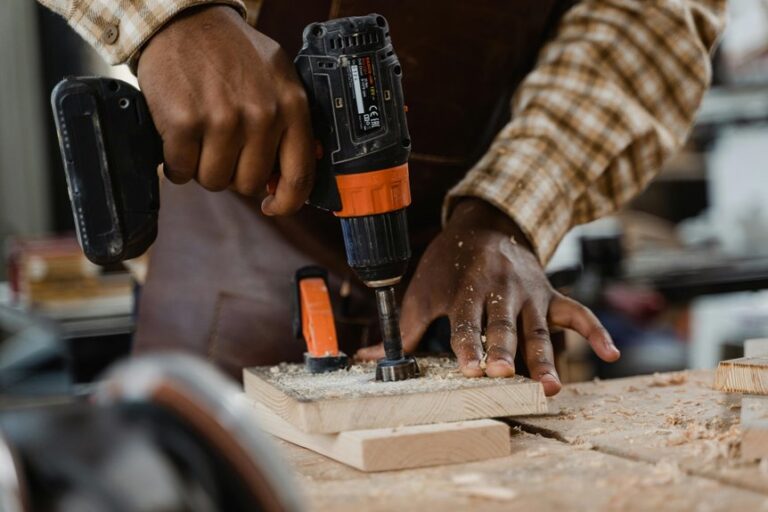
A good palm router turns fussy detail work into something you can knock out between coffee refills. Trim, edge profiles, hinge mortises, inlay grooves: all of it gets faster once the tool feels balanced in your hand and the motor doesn’t bog down. This list rounds up five solid options for hobbyists tackling weekend projects, remodelers trimming doors on site, and serious woodworkers needing a reliable second router alongside a full-size plunge unit.
The Shortlist At A Glance

DEWALT 20V Max XR Brushless Cordless Router (DCW600B)

Makita XTR01Z 18V LXT Brushless Compact Router

TWOWIN 6.5 Amp 1.25 HP Handheld Wood Router
TwoWin 800W Compact Wood Router Kit

TwoWin 800W Compact Palm Wood Router
More On The Choices That Made The List
The DEWALT DCW600B brings corded-router muscle to a 20V Max XR platform, which matters the moment you trim a door on site without an outlet nearby. A brushless motor (a motor that uses electronic control instead of carbon brushes, lasting longer and running cooler) drives the variable-speed dial so you can match RPM to bit diameter, and the plastic fixed base keeps the tool light enough for one-handed control during edge work. Dual LEDs throw light right where the bit meets the workpiece, which you’ll appreciate on darker stained woods.
For anyone already running 20V Max XR batteries, this router slides into a kit you already own. Compared to the corded TWOWIN units below, you trade constant torque for the freedom to work anywhere, and that trade tends to feel fair on remodels and finish carpentry where outlet access drives the day.
Strong Points
- Brushless motor extends tool life and stretches per-charge runtime, which matters on long trim days.
- Variable-speed control lets you slow the bit for larger-diameter profile cutters, reducing chatter and burn marks.
- Dual-LED illumination improves bit visibility on dark stock, lowering the chance of wandering cuts.
- Plastic fixed base keeps the tool light, so fatigue stays in check during overhead or extended trim runs.
- Shares batteries with the rest of the 20V Max XR lineup, simplifying your kit if you already own the platform.
Things To Consider
- Tool-only body means you supply batteries and a charger, which adds to the real cost if you’re new to the platform.
- Cordless run time depends heavily on amp-hour battery size, and heavy hogging cuts in hardwoods will drain a pack faster than light edge work.
Key Product Details
Right Fit For
Woodworkers and finish carpenters already invested in the 20V Max XR battery system who want cordless freedom without sacrificing router performance.
Look Elsewhere When
The TWOWIN 6.5 Amp handheld router is a better fit if you want a corded tool with a stronger continuous-duty motor and don’t mind dragging an extension cord.
The Makita XTR01Z is built around the same BL brushless motor platform (Makita’s brushless line, designed for longer runtime and reduced maintenance) that powers much of the LXT catalog, and that ecosystem logic is the main reason to pick it. A compact form factor helps during detail routing on smaller workpieces, where the DEWALT’s slightly longer base can feel like overkill. The brushless design also cuts down on the heat buildup that wears out brushed motors during repeat cuts.
If your shop already runs on Makita 18V batteries, this router is the easy answer. Where the corded TWOWIN models below tie you to a wall outlet, the XTR01Z lets you walk out to the garage, the deck, or the job-site trailer and just start cutting.
Practical Advantages
- Brushless motor stretches runtime and reduces maintenance, which matters if you run the tool for hours each week.
- Compact body improves control on smaller trim pieces and decorative edge profiles.
- Cross-compatibility with the wider 18V LXT battery family keeps your charger and spares in one place.
Trade Offs
- Tool-only shipping, so you supply batteries and charger separately, which can be a hurdle for first-time Makita shoppers.
- Continuous heavy cuts in dense hardwoods will drain a battery noticeably faster than lighter edge trim work, so plan pack rotation for longer sessions.
- Owners commonly report that the included base works best for lighter trimming tasks; heavier plunge work may call for an additional base or jig setup.
Best Suited To
Makita LXT users who want a cordless trim router that shares batteries with their existing drill, impact, and saw setup.
Reach For A Different Pick When
The TwoWin 800W Compact Palm Wood Router is a better match if you’d rather stay corded and skip buying into a battery platform.
The TWOWIN handheld router brings more raw power than the smaller 800W kits, with a 6.5 amp motor and roughly 1.25 horsepower (a measure of motor output; higher numbers mean the tool can sustain tougher cuts without stalling). The ABS and aluminum body helps with heat dissipation and adds a reassuring weight in the hand, which can actually improve control during heavier cuts. Six variable speeds top out around 30,000 RPM no-load, which is plenty for shaping and trimming hardwoods and softwoods alike.
Where the smaller TwoWin palm routers are tuned for light trim and detail work, this one steps up for users cutting deeper profiles or running longer passes. You give up the cordless convenience of the DEWALT and Makita, but you gain constant power and no battery anxiety on long afternoons in the shop.
Points In Its Favor
- Stronger motor handles deeper cuts and harder woods without bogging down, a real step up from entry-level palm routers.
- Six-speed range lets you tune RPM to bit size, which improves cut quality on larger-diameter profile bits.
- ABS plastic and aluminum construction balances durability with reasonable weight for handheld work.
- Waterproof outer shell helps the tool handle shop dust and the occasional spilled drink without immediate panic.
Worth Noting
- Corded design limits mobility, so you’ll want a quality extension cord and a layout that doesn’t fight the cable.
- Heavier than smaller palm routers, which can translate to hand fatigue during long edge-trim sessions overhead.
- Owners commonly report that the included bit set is functional but basic, so serious users tend to upgrade bits fairly quickly.
Who Will Love This
Garage woodworkers and DIY remodelers who want a router with stronger sustained cutting power and don’t mind staying tethered to an outlet.
Swap It Out When
The DEWALT 20V Max XR Cordless Router makes more sense for trim carpenters working on job sites where outlets are scarce or unavailable.
The TwoWin 800W compact router comes as a kit with a wooden index case full of tungsten carbide bits (carbide-tipped cutters that hold an edge far longer than standard steel bits), which lowers the barrier for first-time router users who don’t yet own a bit collection. At 800 watts and 30,000 RPM no-load speed, it has enough muscle for edging, trimming, veining, and grooving across common softwoods and plywood. The compact form keeps it manageable for users still developing a steady hand.
Compared to the more powerful TWOWIN unit above, this one leans toward hobby and light professional work. You trade a little motor strength for an all-in-one package, which suits a beginner building a starter workshop more than a contractor running daily production cuts.
Strengths Worth Knowing
- Included bit set in a wooden index case gets you cutting right out of the box, no extra shopping required.
- 800W motor and 30,000 RPM top speed cover most hobby-level routing tasks comfortably.
- Compact body reduces fatigue and improves control for users still learning proper router technique.
- Tungsten carbide bits hold their edge longer than standard steel, so you’re not sharpening or replacing bits constantly.
Points To Keep In Mind
- 110V to 120V input means you’ll need a matching outlet and a heavy-enough extension cord for longer runs.
- Bit quality is decent for a starter set, but a serious woodworker will likely upgrade to specialty bits over time.
- Owners commonly report the included depth adjustment works fine for light work but isn’t as refined as higher-end routers.
Feature Snapshot
Built With In Mind
Beginners and hobbyist woodworkers who want a router, a starter bit set, and a storage case in one package.
A Better Fit Elsewhere
The TWOWIN 6.5 Amp 1.25 HP Handheld Router is a stronger choice once you’re ready to push deeper cuts and harder materials.
The TwoWin 800W palm router is the smallest, lightest option in this lineup, and that’s its whole appeal. At 800 watts and 30,000 RPM, it covers the same edging, trimming, and veining work as its slightly larger sibling, just in a body that fits comfortably in a smaller hand or a tighter workspace. The 110V input matches standard shop outlets, so setup is straightforward for most home workshops.
For users who mainly trim laminate countertops, round over shelf edges, or cut small grooves for joinery, this tool gets the job done without the bulk of a full-size router. It’s the natural step up from a Dremel-style rotary tool and a smart companion to a table-mounted router in a small shop.
What Pays Off
- Compact palm-style body reduces fatigue during detail work and fits users with smaller hands comfortably.
- 800W motor and 30,000 RPM cover typical hobby trim and profile cuts without strain.
- Standard 110V shop power means no special wiring or battery investment is required.
- Pairs well with a wooden index case of bits for organized, fast bit changes on small projects.
Honest Caveats
- Smaller motor means longer cuts in thick hardwoods can bog the tool down compared to the 6.5 amp TWOWIN unit above.
- Build quality is functional rather than premium, so dropping it onto a concrete shop floor is more of a concern than with pro-grade routers.
- Owners commonly report that dust collection is minimal, so plan on shop-vac cleanup between cuts on longer sessions.
Perfect Match For
DIYers and hobbyists who mainly do light trim, edge profiling, and small joinery cuts in a home workshop.
Not Your Match When
The Makita XTR01Z cordless router is a smarter buy if you frequently work away from outlets or already own Makita LXT batteries.
What To Weigh Before Choosing A Palm Router
Power Source: Corded vs. Cordless
Corded palm routers deliver constant torque (the rotational force that keeps the bit cutting through dense material) and never run out of battery mid-cut, which matters during longer sessions in the shop. Cordless models trade that for freedom to work on job sites, decks, and remodels where running an extension cord is impractical. Your typical work environment usually makes this decision for you.
Motor Strength and Speed Range
For softwoods, plywood, and laminate, an 800W motor handles almost everything. Hardwoods like maple, oak, and walnut benefit from a stronger motor, often in the 1.25 HP range, which prevents the bit from stalling mid-profile. Variable-speed control adds flexibility, since larger-diameter bits need slower RPMs to cut cleanly without burning the wood.
Ergonomics and Base Design
A fixed plastic base keeps weight down and works well for trim work, but heavier aluminum bases offer more stability for deeper cuts. Grip comfort and overall tool weight matter more than people expect: a router that feels balanced in your hand for five minutes of test holding will feel a lot heavier after an hour of edge profiling.
Bit Compatibility and Included Accessories
Standard 1/4-inch collet compatibility (the clamping mechanism that holds the router bit; 1/4 inch is the most common shank size for palm routers) covers most bit sets you’ll encounter. Kits that ship with a wooden index case of tungsten carbide bits save you an early trip to the hardware store and help keep the bits organized between projects.
Key Considerations Across These Picks
Pitfalls Shoppers Hit
A common mistake is buying a router without checking bit shank compatibility, only to discover your existing bits don’t fit the collet. Another is underestimating the weight difference between compact palm routers and slightly larger models, which becomes very real during overhead trim work on door frames and cabinet soffits. Finally, don’t skip the extension cord gauge (cord thickness: lower gauge numbers mean thicker wire and less voltage drop) for corded models; a thin cord on an 800W router can starve the motor and cause poor performance.
Where The Extra Money Goes
Stepping up to a brushless motor typically adds cost but pays back through longer runtime, cooler operation, and a longer tool lifespan. A more powerful motor, like the 1.25 HP TWOWIN unit, costs more but handles hardwoods and deeper cuts that an entry-level router will struggle with. Cordless platforms also add cost through batteries and chargers, which only make sense if you’ll use the tool frequently or already own the battery system.
Frequently Asked Questions
What is a palm router used for?
Palm routers are designed for light to medium routing tasks like edge trimming, rounding over profiles, cutting small grooves, and shaping decorative details. They work well for trim carpentry, sign making, and small joinery cuts where a full-size plunge router would be too bulky.
Can a palm router cut through hardwood?
Yes, though the depth of cut and the bit diameter both affect how easily the router handles dense hardwoods. An 800W router manages shallow passes in oak or maple, while a 1.25 HP unit sustains deeper cuts with less bogging down.
What is the difference between a palm router and a plunge router?
A palm router has a fixed base, meaning the bit depth is set before you start and stays at that depth during the cut. A plunge router lets you lower the bit into the workpiece mid-cut, which is useful for mortises, stopped grooves, and pattern work where you need to start the cut in the middle of the material.
How do I pick the right collet size?
Most palm routers use a 1/4-inch collet, which fits the vast majority of router bits available. Some models also offer 3/8-inch collets for heavier bits, but for most hobby and trim work, 1/4-inch is the standard you’ll want to match.
Is a cordless palm router worth it?
A cordless palm router is worth it if you work in places without easy outlet access, like job sites, decks, or outdoor projects. For shop-bound hobbyists, a corded model often delivers more consistent power at a lower cost.
Closing Remarks
Pick the router that fits the work you actually do, not the work you might do someday. The cordless DEWALT and Makita options shine on job sites and remodels, while the corded TwoWin kits cover home-shop routing at a friendlier entry point. Match the motor to your typical material, and the rest usually takes care of itself.