


Laundry room breakdowns rarely strike at a good time. A washer that won’t agitate mid-cycle or refuses to spin is the kind of fix most households try to handle themselves, especially when the part in question is small, affordable, and frankly not worth a service call. The right replacement part turns a frustrating weekend into a twenty-minute project.
This list covers the practical bits that keep a top-loader moving. Agitator dogs, motor position sensors, and the humble fender washer all play a role, whether you service your own machine or build projects that need serious fastening hardware. Each pick below is chosen for clear compatibility, straightforward install, and the kind of spare-it value that fits a real garage or laundry shelf.
How The Shortlist Stacks Up
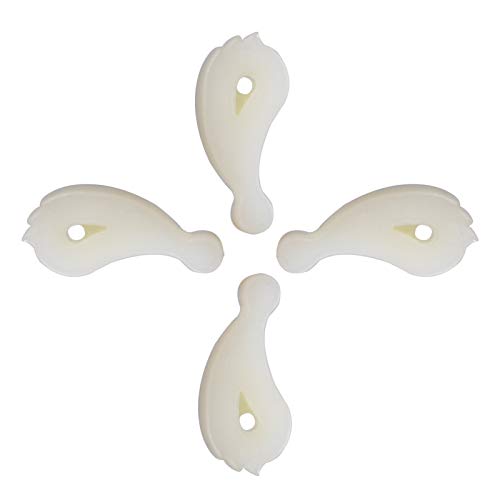
Cykemo 80040 Washer Agitator Dogs (4-Pack)

XFYBZN 6501KW2002A Washer Motor Rotor Position Sensor

Yaocom 200 Pcs 1/4″ x 1-1/4″ Zinc Fender Washers

Yaocom 400 Pcs 1/4″ x 1-1/4″ Zinc Fender Washers
Yaocom 100 Pcs 1/4″ x 1-1/4″ Zinc Fender Washers
A Closer Look At Each Pick
Top-loader owners with a Whirlpool or Kenmore in the garage know the symptom: the tub fills and drains, but the agitator barely twitches. Agitator dogs are the small nylon cams inside the agitator cap that grip the shaft on each stroke. Once they wear down, the agitator slips and clothes come out still soapy. This four-pack covers the usual full replacement, with spares for the next round in a few years.
Compared with the rotor sensor that follows, this is a true weekend warrior part. You lift the agitator cap, pull the inner piece, and snap the new dogs into the housing. No wiring, no electronics, just a 7/16-inch socket and a flathead screwdriver.
A Strong Showing
- Compatible with a wide spread of Whirlpool, Kenmore, Roper, Crosley, and Estate models, so the cross-reference list covers most mid-2000s top-loaders.
- Four dogs per pack, meaning one purchase typically handles the full set with extras left for the next failure.
- Install runs a few minutes with basic hand tools, so a service call fee is easy to skip.
- Restores proper back-and-forth motion in an agitator that has gone sloppy, which directly improves wash performance.
Things To Consider
- You will need to confirm the model number on your machine, since compatibility hinges on matching the part number to your specific washer.
- Plastic dogs wear faster in households running heavy or overstuffed loads every cycle.
Right Fit For
Anyone with a Whirlpool-family top-loader whose agitator has lost its bite and wants the most affordable path back to clean laundry.
Look Elsewhere When
Your machine is an LG with a spin error code, in which case the XFYBZN 6501KW2002A Washer Motor Rotor Position Sensor is the more relevant repair.
The rotor position sensor sits inside the stator assembly and tells the control board where the motor is during a cycle. When it fails, the drum refuses to tumble, agitation stalls, or the display throws an LE (locked rotor) or EO error. This switch from XFYBZN is the part to reach for when diagnostics point squarely at the sensor rather than the motor itself.
Where the Cykemo dogs are a five-minute fix, this is a proper repair. You disconnect power and water, lay the washer on its back, and pull the stator housing to reach the sensor. Most owners with a socket set and a flathead can finish inside an hour.
Good Reasons To Consider
- Targets a specific, common failure mode on direct-drive washers, so the fix addresses a real symptom rather than a guess.
- Replaces a small part at a fraction of the cost of a new motor or full control board swap.
- Restore function without specialty tools beyond a socket and screwdriver.
- Useful as a pre-motor diagnostic, since swapping the sensor first rules out a cheaper cause before a bigger repair.
Worth Noting
- Access requires laying the machine on its back and removing the stator, so the install is more involved than a simple plug-in swap.
- Misdiagnosis is a risk, since LE and EO codes can also point to wiring or the main board, not just the sensor.
- Disassembly and reassembly of the stator housing adds time, so plan on a longer repair window.
Built With In Mind
LG washer owners seeing locked rotor codes and the type of DIYer who is comfortable opening the machine beyond the top panel.
Reach For A Different Pick When
Your top-loader is simply failing to agitate with no error code, where the Cykemo 80040 Washer Agitator Dogs is the likelier culprit and a far simpler job.
Fender washers are wide-diameter flat washers that spread load across thin or soft material, which is exactly what you want when fastening into plywood, sheet metal, or thin wall panels. This Yaocom set runs 200 pieces of 1/4-inch by 1-1/4-inch carbon steel with a silver zinc plating, sized to fit a 1/4-inch bolt and the larger 3/8-inch inside-diameter variants noted in the spec block. The zinc coat helps the washer hold up to garage humidity, occasional condensation, and outdoor exposure.
The 200-count lands in a useful middle ground. A weekend shed build might eat forty, a trailer-deck repair another twenty, and a few smaller fix-ups will still leave a healthy drawer stash.
Why It Works Well
- Zinc plating on carbon steel gives a solid resistance to rust for indoor projects and covered outdoor use.
- 200 pieces handle several medium projects without forcing a mid-job reorder.
- Wide 1-1/4-inch outer diameter spreads clamp load effectively on soft or thin materials, reducing pull-through.
- Fits common 1/4-inch bolt sizes used in most home and shop assemblies.
Trade Offs
- Not the right pick for heavy marine or prolonged wet exposure, where stainless steel would be the safer bet.
- Bulk packaging means some sorting if you need only a few at a time, and a small parts bin helps keep them organized.
Feature Snapshot
Made For
Home shop hobbyists handling medium-volume builds in wood or sheet metal who want a mid-sized stash of galvanized fender washers on hand.
Swap It Out When
You need fewer pieces for a one-off repair, where the Yaocom 100 Pcs 1/4″ x 1-1/4″ Zinc Fender Washers keeps things tighter.
This is the same Yaocom fender washer, simply doubled up to 400 pieces. For anyone running a small repair shop, a community workshop, or a busy household of weekend projects, the bigger pack means fewer reorder interruptions. It also offers a lower unit cost per washer, which adds up quickly when you are building several sheds, decks, or trailer repairs in a season.
Owners commonly report the bulk box pays for itself simply by removing the stop-and-go cycle of small-box runs. The trade-off is storage space, since 400 pieces take up a real footprint in a parts drawer.
The Case For It
- Bulk 400-piece count keeps a working inventory available for serial projects and shop repairs.
- Zinc-plated carbon steel handles typical indoor and covered outdoor conditions without immediate rust concerns.
- Wide 1-1/4-inch face spreads load across soft or thin stock, preventing the dreaded pull-through failure on plywood and thin sheet.
- Fits standard 1/4-inch bolts used across most home hardware.
- Comes in handy as spacers, shims, or bearing shims in improvised shop fixes.
Points To Note
- Bigger pack takes up meaningful drawer or bin space, so a dedicated organizer helps.
- Zinc plating is not equivalent to stainless steel for long-term wet or salt-air exposure.
Best Suited To
Active shop users, property owners with multiple ongoing builds, or anyone stocking a community workspace.
Consider Something Else When
You only need enough for one weekend repair, in which case the Yaocom 200 Pcs 1/4″ x 1-1/4″ Zinc Fender Washers gives a better balance of supply and storage.
The 100-pack is the same Yaocom fender washer at a smaller count, aimed squarely at the homeowner who fixes a fence panel, tightens a trailer deck, or shims a wobbly workbench once a season. No restocking, no oversupply, just enough to handle a couple of small jobs and still leave spares in the drawer.
It is also a smart pickup for someone trying fender washers for the first time. You learn whether the size fits your usual bolt without committing to a bulk box that ends up half-used in a corner of the garage.
Everyday Perks
- Compact 100-piece count fits a kitchen drawer or small parts bin without dominating shelf space.
- Zinc-plated carbon steel offers a useful level of rust resistance for indoor and covered outdoor projects.
- Wide 1-1/4-inch diameter protects thin or soft materials from bolt pull-through.
- Right-sized for a single deck repair, fence panel fix, or shelving rebuild.
Minor Gripes
- Heavier repeat users will run out quickly and need a reorder, which negates the per-piece value compared to the 400-count box.
Whose Shelf It Belongs On
Occasional DIYers and apartment dwellers who need a modest fender washer supply for one-off repairs around the home.
A Better Fit Elsewhere
Anyone planning a long shed build or a series of trailer projects should step up to the Yaocom 400 Pcs 1/4″ x 1-1/4″ Zinc Fender Washers to avoid mid-project restocks.
What Matters Most Before Choosing Parts Washers
Knowing which part actually fixes your problem saves both time and money. The wrong sensor or the wrong washer size can turn a one-hour repair into a Saturday lost to reorders and second guesses.
Match The Part To The Symptom
Read the error code before you order. A “no agitate” symptom on a Whirlpool top-loader usually points to worn agitator dogs, while an LE error on a direct-drive LG points to the rotor position sensor. The Cykemo dogs and the XFYBZN sensor solve very different failures, even though both live inside a top-loading washer.
Cross-Reference Model Numbers
The agitator dog compatibility list runs long because Whirlpool-family machines share common part numbers across decades of models. The 80040 part number, plus alternates like 3366877 and 285612, are worth matching against your model tag before clicking order.
Choose Washer Quantity For The Project
A 100-piece fender washer pack suits a small fence fix. A 200-piece box covers a shed project. A 400-piece pack fits a shop running serial repairs. Picking the right size up front removes the mid-project hardware store run that breaks momentum.
Key Considerations Across These Picks
Common Shopping Slip Ups
The most frequent mistake is matching a part to the brand without checking the actual part number on the model tag. Whirlpool, Kenmore, and Roper machines share many internals, but the same model year of a different sub-brand may use a different sensor. Always cross-reference your model’s full number against the part list before clicking order.
Another misstep is treating fender washers and standard flat washers as interchangeable. A standard flat washer tightens a nut, but a fender washer’s wider face is what keeps a bolt from pulling through thin plywood or sheet metal. Substituting one for the other is a common reason a fence panel repair comes loose within a season.
Where The Extra Money Goes
The jump from a 100-pack to a 400-pack of fender washers is mostly about the per-piece value, not a change in the washer itself. For active shop users, that unit-cost drop quickly covers the storage trade-off.
On the repair side, moving from a generic aftermarket sensor to a higher-tier option usually buys tighter QC and a longer track record across more model years. The honest read is that for most households, the mid-tier aftermarket part on this list handles the job; the upgrade is worth it when you would rather not test the failure rate of an unknown batch.
Frequently Asked Questions
How do I know which washer part I actually need?
Start with the symptom. No agitation on a Whirlpool-family top-loader usually means worn agitator dogs, and the 80040 part number on the Cykemo 4-pack is the typical match. An LE or locked rotor error on a direct-drive LG often points to the rotor position sensor instead.
Are these fender washers rust-proof?
The Yaocom fender washers are carbon steel with a silver zinc plating, which gives solid corrosion resistance in dry, indoor, and covered outdoor settings. They are not stainless, so for long-term wet or salt-air exposure you would want to step up to a stainless option.
Can I install the rotor position sensor without a service call?
Most homeowners with a socket set and a flathead screwdriver can do it, but the job involves laying the washer on its back, removing the stator housing, and disconnecting wires. Expect an hour of careful work the first time, with the power and water supply disconnected throughout.
How many fender washers does a typical shed build use?
A modest 8-by-10 shed often eats between 50 and 100 fender washers, depending on how many bolts fasten into thin wall panels. The 200-piece Yaocom box is usually the right call for a single shed with some spares left over.
Do agitator dogs wear out on a schedule?
There is no fixed interval. Most households get several years from a set, with failure showing up sooner in homes running heavy, overstuffed loads on a daily basis. Buying a four-pack, as the Cykemo set does, covers the full replacement with spares for the next round.
The Takeaway
Whether you are coaxing a tired agitator back to life with the Cykemo 80040 dogs, chasing down a rotor error with the XFYBZN sensor, or stocking the shop drawer with Yaocom fender washers, the right part turns a frustrating repair into a clean afternoon of work. Match the part number, pick a quantity that fits the project, and the rest is just basic tools and a little patience.




