


A pinless moisture meter reads moisture content without leaving pinholes, making it the go-to instrument for anyone working with lumber, flooring, or finished wood. Woodworkers, flooring installers, and home inspectors rely on these tools to catch hidden dampness that can ruin a project, cause cupping, or invite mold. The right pick depends on your material, depth requirements, and whether you need data logging or simple go/no-go readings. This list covers wood and concrete options across a range of feature sets.
A Closer Look At The Lineup

Wagner Orion 930 Pinless Wood Moisture Meter (Dual Depth)

Wagner Orion 910 Pinless Wood Moisture Meter Kit (Deep Depth)

Wagner Orion 950 Pinless Wood Moisture Meter with Bluetooth
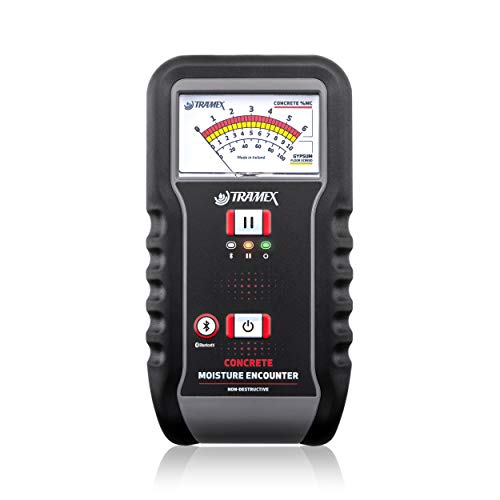
Tramex Concrete Moisture Encounter CME5
Wagner Orion 910 Pinless Wood Moisture Meter Kit (NIST Calibrator)
A Closer Look At Each Pick
The Wagner Orion 930 sits in a comfortable middle ground, offering dual-depth scanning (¼” and ¾”) without the connectivity overhead of the pricier 950 below. For woodworkers who switch between thin stock and thicker hardwood slabs, that dual-depth capability eliminates the guesswork that single-depth meters force on you.
Its IntelliSense technology reads deeper into the board rather than just skimming the surface, which matters when you’re checking kiln-dried lumber that’s been stored in a humid shop. If you primarily work with rough lumber or want one tool that handles cabinetry, flooring, and furniture stock, the 930 covers a lot of ground.
Real-World Strengths
- Dual-depth scanning at ¼” and ¾” handles both thin veneers and thick slabs without swapping tools.
- Pinless sensor means finished furniture and installed floors stay unmarked during inspection.
- On-site calibration with the included standard calibrator keeps readings honest across long work sessions.
- IntelliSense technology weighs the wood’s internal moisture, not just the surface, for more reliable results on stored lumber.
Things To Consider
- No Bluetooth or app integration, so logging readings means pen-and-paper or a manual spreadsheet.
- Like most pinless meters, you may find it gives a wider reading area than pinpoint pin meters, which can matter on narrow trim.
Who It Suits Best
Woodworkers and flooring installers who regularly switch between stock thicknesses and want a single meter that adapts without needing to be a tech-first shop.
Consider Something Else When
The Wagner Orion 950 pinless moisture meter is a better fit if you need Bluetooth data logging or GPP/GPK and dew point calculations for inspection reports.
The Wagner Orion 910 strips things back to a single deep-depth reading at ¾”, which simplifies life for newcomers who don’t need to think about depth selection. Compared to the dual-depth 930 above, you lose some versatility but gain a more straightforward interface and a friendlier entry point for first-time moisture meter owners.
The kit includes the on-site standard calibrator and a rubberized grip that helps during long inventory checks. For DIYers checking lumber at the home center or hobby builders wanting confirmation that their stock is dry enough to glue up, the 910 is a measured, no-nonsense tool that does one job well.
Good Reasons To Consider
- Single deep-depth mode at ¾” removes the setup decisions that can confuse new users.
- Non-destructive pinless sensor protects finished and visible surfaces during inspection.
- On-site calibration with the standard calibrator keeps accuracy consistent over time.
- Comes as a kit, so the calibrator is included rather than a separate purchase.
Points To Keep In Mind
- Only one depth setting means thinner materials and veneers can give misleadingly averaged readings.
- No Bluetooth, app pairing, or advanced calculations, so inspectors needing documented data will need to look elsewhere.
- Owners commonly report that a fully charged or fresh-battery session is important because low batteries can shift readings slightly.
Made For
Beginner woodworkers and DIYers who primarily work with dimensional lumber and want accurate deep-depth readings without learning curves.
Skip It When
The Wagner Orion 930 dual-depth meter is the smarter choice if you regularly check both thin and thick stock and need that flexibility.
The Wagner Orion 950 builds on the 930’s foundation and layers in Bluetooth connectivity, automatic EMC (Equilibrium Moisture Content) tracking, and GPP/GPK plus dew point calculations. For inspectors who need to generate client reports, that data logging changes the workflow entirely: readings sync to your phone rather than getting scribbled on a clipboard.
You still get dual-depth scanning at ¼” and ¾”, so versatility is preserved. Where the 950 earns its premium is in the documentation side, which is why home inspectors, flooring consultants, and quality-control pros tend to gravitate toward it over the simpler Orion models.
The Practical Payoff
- Bluetooth syncs readings to a mobile app, eliminating manual transcription for inspection reports.
- Auto EMC tracking adjusts for ambient humidity, which is critical when checking wood in basements or unconditioned shops.
- GPP (grains per pound), GPK (grains per kilogram), and dew point calculations cover the data points flooring and IAQ inspectors need.
- Dual-depth scanning at ¼” and ¾” handles the same range of materials as the 930 above.
Honest Caveats
- App reliance means older phones or limited storage can complicate the data workflow.
- More features translate to more setup steps, so first-time users face a steeper learning curve than the 910 or 930.
- Sensor plate should be wiped clean periodically, as dust and debris on the contact surface can skew shallow readings.
Key Product Details
Who Should Grab It
Professional inspectors, flooring consultants, and quality-control technicians who need documented readings and EMC-adjusted data for client reports.
Not Your Match When
The Wagner Orion 930 is a better fit for hobbyists who don’t need Bluetooth logging or advanced moisture calculations.
The Tramex CME5 breaks away from the wood-focused Orion lineup and tackles a different challenge entirely: concrete and slab moisture. If you’re a flooring installer laying tile, vinyl, or engineered wood over a concrete subfloor, wood-specific meters won’t help you, and the CME5 fills that gap with dual-depth analog scanning.
It uses non-destructive impedance measurement (a method that detects moisture by sending a low-frequency signal through the material) calibrated to ASTM F2659, which is the standard inspectors reference for concrete moisture testing. For restoration contractors, building inspectors, and anyone diagnosing slab issues before floor installation, the CME5 is a category-specific workhorse.
Standout Benefits
- Designed specifically for concrete, slabs, and screeds rather than adapted from a wood meter.
- Dual-depth comparison (shallow up to 0.4″ and deep up to 1.25″) helps isolate surface condensation from deeper slab moisture.
- Complies with ASTM F2659, the recognized standard for non-destructive concrete moisture testing.
- Analog readout keeps the tool simple with no app pairing or battery-draining screens.
Room For Improvement
- Limited to concrete substrates, so this is a specialty tool rather than a general-purpose meter.
- Analog display can be harder to log precisely than the digital readouts on wood-focused meters.
- Compared to pin-type concrete meters, the shallow-depth reading averages a wider area and may miss localized damp spots.
Best Suited To
Flooring installers, restoration contractors, and building inspectors who need ASTM-aligned concrete moisture readings before floor coverings go down.
Look Elsewhere When
Any of the Wagner Orion meters in this list are a better fit if your work centers on lumber, hardwood flooring, or furniture rather than concrete slabs.
The Wagner Orion 910 with the Traceable Calibrator variant is essentially the same deep-depth meter as the standard 910 covered above, but the included NIST-traceable calibrator adds a layer of documentation that matters in regulated work. NIST traceability means the calibrator’s reference values are linked to a recognized national standard, so your instrument’s accuracy can be backed up with paperwork.
For inspectors generating reports that may face legal or warranty scrutiny, that traceability transforms the meter from a useful tool into a defensible one. Same IntelliSense technology, same ¾” deep measurement, same pinless non-damaging sensor, but with calibration credentials attached.
Positive Takeaways
- NIST-traceable calibrator supports inspection reports that need defensible accuracy documentation.
- Deep-depth ¾” scan penetrates thick stock and assemblies for more representative readings.
- Non-damaging pinless sensor preserves finished surfaces, antiques, and installed floors.
- IntelliSense technology weighs the wood’s internal moisture rather than just the surface layer.
Some Limits To Know
- Single-depth design limits versatility on thin stock compared to the dual-depth 930 or 950 above.
- NIST calibrator adds cost that may be unnecessary for hobbyist use.
- No Bluetooth or app integration, so logging still requires manual entry into reports.
Whose Shelf It Belongs On
Professional inspectors and consultants who need calibration traceability for documented reports, warranty claims, or legal-grade inspections.
Swap It Out When
The standard Wagner Orion 910 kit is the smarter pick for hobbyists and DIYers who don’t need NIST-traceable documentation.
What Matters Most Before Choosing a Pinless Moisture Meter
Match the Meter to Your Material
Wood meters and concrete meters are not interchangeable. The Wagner Orion series is built and calibrated for wood species, while the Tramex CME5 is specifically designed for concrete substrates. Using a wood meter on concrete, or vice versa, will give you meaningless numbers. Start by identifying your primary material and narrow from there.
Depth Capability Shapes Your Results
Pinless meters measure moisture within a scanning zone, and that zone’s depth affects accuracy. Shallow scans (around ¼”) work well for thin stock, veneers, and finished surfaces where you want to catch surface moisture before finishing. Deep scans (around ¾” or deeper) are better for thick lumber, slabs, and assemblies where surface conditions might mislead you. Dual-depth meters like the Orion 930 and 950 give you both options in one unit, which is helpful if your work spans multiple stock thicknesses.
Think About Documentation Needs
Hobbyists often just need a quick go/no-go reading, but inspectors and contractors frequently need logs, timestamps, and EMC-adjusted data. Bluetooth models like the Orion 950 sync to a phone app, while analog or basic digital meters require manual note-taking. The extra documentation features are worth the cost only if your work demands them, otherwise you’re paying for capability that sits unused.
Calibration and Long-Term Accuracy
Pinless meters drift over time, especially with daily use. On-site calibration (where you can verify the meter against a known standard without sending it in) keeps readings honest between professional calibrations. If your work requires defensible accuracy for client reports or legal documentation, look for kits that include a traceable calibrator, since those reference values are linked to national measurement standards.
Key Considerations Across These Picks
Common Shopping Slip Ups
A frequent mistake is buying a wood-specific meter and trying to use it on concrete, or picking a single-depth meter when your work spans multiple stock thicknesses. Another trap is assuming all pinless meters read the same way; species correction matters, and entry-level meters sometimes skip that adjustment. Take ten minutes to confirm the meter handles your dominant species, thickness range, and documentation workflow before adding it to your cart.
When Paying More Pays Off
The jump from a basic single-depth meter to a dual-depth or Bluetooth-equipped model usually pays off in time saved and reporting quality. For hobbyists, a streamlined meter covers the essentials, but for pros logging dozens of readings per job, Bluetooth sync and EMC-adjusted data eliminate manual transcription errors and speed up client deliverables. The premium is only worth it when those features match your actual workflow.
Frequently Asked Questions
How does a pinless moisture meter work?
A pinless meter uses an electromagnetic sensor pad that scans a defined area beneath the surface to estimate moisture content. Because no pins penetrate the wood, the surface stays unmarked, which is ideal for finished floors, furniture, and visible stock.
Can one meter handle both wood and concrete?
Most wood-specific pinless meters are not calibrated for concrete, and concrete meters like the Tramex CME5 are designed for substrates that wood meters cannot read accurately. Choose a meter built for your primary material.
What is dual-depth scanning useful for?
Dual-depth scanning lets you check thin stock at a shallow depth and thicker lumber at a deeper setting without swapping tools. That flexibility helps when your work spans cabinetry, flooring, and furniture projects.
Why does EMC matter in moisture readings?
EMC, or equilibrium moisture content, accounts for the ambient humidity your wood will eventually reach. Readings adjusted for EMC give a more realistic prediction of long-term stability than raw moisture percentage alone.
Do pinless meters need regular calibration?
Yes, pinless meters drift over time and should be checked against a calibrator periodically. On-site calibration lets you verify accuracy in the field, while traceable calibrators add documentation for professional inspection work.
Bottom Line
The right pinless moisture meter comes down to your material, your depth needs, and whether documentation matters to your work. Woodworkers will find the Wagner Orion 930 hard to beat for versatility, while inspectors benefit most from the 950’s Bluetooth and EMC features. For concrete and slab work, the Tramex CME5 fills a role the Orion line simply wasn’t built for. Match the tool to the job, and your projects stay dry, stable, and built to last.




