


A plasma cutter under 500 dollars hits a sweet spot for hobby fabricators, weekend welders, and small-shop pros. You want clean, confident cuts on steel without a blown breaker or a week of setup, and you want the machine to behave once dust, rust, or expanded metal show up on the workpiece. The five ARCCAPTAIN cutters below cover the realistic needs of a home garage, a farm repair job, or a light fab shop. Each one brings something different to the bench: dual voltage, pilot arc, blowback start, or a multi-mode platform. Read on to see which one matches the way you actually work.
A Snapshot Of The Selections
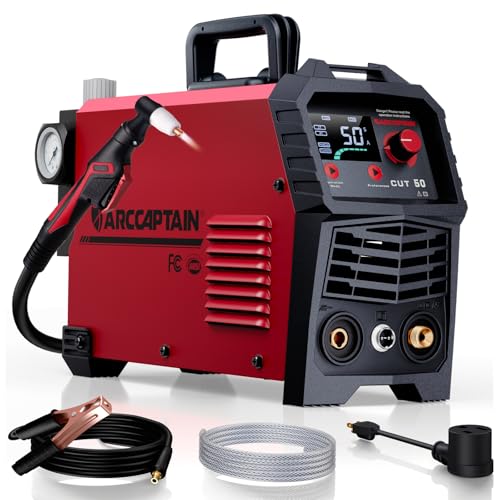
ARCCAPTAIN 50A Plasma Cutter, 110V/220V, 2/3 Inch Max Cut

ARCCAPTAIN 55A Plasma Cutter, Non-Touch Pilot Arc, 120V/240V

ARCCAPTAIN 55A Non-HF Plasma Cutter, Blowback Pilot Arc, 110V/220V

ARCCAPTAIN Plasma Cutter 55A, Non-Touch Pilot Arc, 120V/240V

ARCCAPTAIN 60A Plasma Cutter, Non-Touch Pilot Arc, 110V/220V
A Breakdown Of The Leading Choices
Most beginners only have a 110V outlet, and that constraint alone has killed plenty of first projects. The ARCCAPTAIN 50A solves that by switching between 110V and 220V, so a kitchen-renovation cut list on Sunday can turn into a thicker-plate repair in the shop on Monday without buying a second machine. On 220V the unit pushes 50 amps, and on 110V it steps down to 35 amps. You still need a separate air compressor feeding clean, dry air, which is standard in this category, but the dual-voltage chassis is the real story.
Compared to the higher-amp ARCCAPTAIN models further down this list, the 50A is a friendlier entry point. It still cuts mild steel up to about 1/2 inch cleanly, which handles most home and hobby demands. The trade-off is severance thickness, where the 60A clearly wins. If your work rarely goes beyond sheet metal and 1/4 inch plate, you may not need to step up.
What Stands Out
- 110V/220V switching adapts to whatever outlet is available in your workspace
- Clean 1/2 inch cuts on steel for typical fabrication needs
- Cuts aluminum and copper as well as steel, expanding project options
- Lower-amperage 110V setting avoids tripping older household circuits
- Compatible with standard workshop air compressors for parts availability
Things To Consider
- An air compressor is required and not included, adding to total setup cost
- Severance capacity is lower than the 55A and 60A models in this guide
- Voltage switching requires shutting the unit down fully before flipping modes
Made For
Hobbyists and DIY welders who want one machine that travels between a home garage and a friend’s shop with different outlet types.
Skip It When
You regularly cut 5/8 inch steel plate, in which case the ARCCAPTAIN 60A Plasma Cutter is the more honest tool for the job.
Replacing consumables gets old fast. The ARCCAPTAIN 55A uses a high-frequency non-touch arc start, so the torch tip never has to scrape across the workpiece to fire up. A pilot arc function (a low-power electric path that jumps the gap to the metal before the full cutting arc kicks in) lets the torch maintain the arc on contact, which is genuinely useful for grating, expanded metal, and rusty plate. The 55A output is a small but real bump over the 50A model reviewed first, and the 120V/240V switching handles the same dual-outlet situations.
You may find the 55A output lands in the right zone for fabrication shops that cut a mix of thin sheet and 3/8 inch plate without a dedicated industrial circuit. Non-touch starting also reduces electrode wear, which is a real ownership cost savings on consumables over time. Owners commonly report the trade-off is sensitivity to dirty air, so a moisture trap on the compressor line is a sensible add.
Well-Handled Touches
- Non-touch pilot arc reduces tip drag and improves cut quality on grates
- Extends consumable life compared to scratch-start torches
- Handles dirty or coated steel without re-grinding first
- 120V/240V compatibility matches residential and light-commercial outlets
Worth Noting
- Air line moisture causes arc instability, so a filter-dryer is worth adding
- Voltage switch must only be flipped once the display and fan shut off, or you risk tripping internal protection
Quick Technical Notes
Right Fit For
Garage fabricators who cut a mix of new steel and reclaimed metal with some surface contamination.
Another Choice May Suit
People working around sensitive electronics should look at the ARCCAPTAIN 55A Non-HF Plasma Cutter instead, since that model avoids high-frequency interference entirely.
High-frequency arc starts can glitch CNC controllers, computer screens, and sensitive comms gear sharing a circuit. The ARCCAPTAIN 55A Non-HF side-steps that by using a blowback pilot arc start, which is a mechanical-arc method that pushes the electrode back with air pressure to create the initial arc without any high-frequency signal. For a shared workshop, a maker space, or a home garage with a CNC mill on the bench, that distinction matters. You still get 55A of cutting power and 110V/220V switching, so it slots into the same workflow as the previous models.
Compared to the HF non-touch 55A reviewed second, this one is the smarter pick whenever an HF start has been the cause of unexplained machine lockups or sensor faults. The low-frequency arc maintenance system (a slower control signal that keeps the arc stable between cuts) reduces electrode burn during idle time, which is a quiet but real consumable savings.
Strengths Worth Knowing
- Blowback pilot arc prevents electromagnetic interference with nearby electronics
- Safer around operators wearing pacemakers or sensitive medical devices
- Stable arc maintenance lowers consumable burn during pauses
- Mesh-cutting mode is built in for expanded-metal work
Trade Offs
- Air compressor and dry line are still required, same as other models
- Blowback starts can be slightly slower to fire than HF starts on heavily oxidized plate
Who Will Love This
Fab shops and home workshops with CNC machines, computers, or radio gear sharing the same electrical circuit.
Look Elsewhere When
You mainly cut very rusty plate and want the fastest possible arc initiation, since the ARCCAPTAIN Plasma Cutter 55A with HF non-touch start handles coated steel more aggressively.
Farm repair and equipment tear-down rarely offer clean steel. The ARCCAPTAIN 55A non-touch pilot arc machine is built for exactly that scene, where dirt, rust, and old paint are part of the workpiece. The HF non-touch start fires the arc without scraping the tip across the surface, and the pilot arc keeps a steady hand on grating and expanded metal where a standard torch would stutter. The 120V/240V switching makes it portable enough to haul to a job site.
You may find the 55A class hits the right balance for thicker plate work without jumping to a 60A unit. Against the ARCCAPTAIN 55A Non-HF reviewed third, this one wins on dirty-metal initiation at the cost of some electrical noise. Owners commonly keep a spare consumable kit in the truck because the pilot arc does the heaviest lifting in the field.
The Helpful Details
- Non-touch pilot arc starts reliably through rust, paint, and oil residue
- Reduces electrode burn for longer consumable life in field conditions
- 120V/240V dual voltage suits mobile repair work
- Stable arc on expanded metal and perforated plate
Soft Spots
- High-frequency start may interfere with sensitive electronics on the same circuit
- Air supply must be clean and dry for consistent arc quality in dusty conditions
Feature Snapshot
Whose Shelf It Belongs On
Farm operators, mobile welders, and anyone cutting used steel where surface prep is unrealistic.
Swap It Out When
Your shop runs CNC or sensitive electronics in the same workspace, where the ARCCAPTAIN 55A Non-HF Plasma Cutter with blowback start is a cleaner fit.
Most cutters do one thing. The ARCCAPTAIN 60A does three: solid plate cutting, expanded-metal cutting, and a rust-clean mode that removes corrosion without a grinder. Plate cutting is the standard 60A arc, expanded-metal mode is the pilot-arc behavior adapted for mesh materials, and rust-clean mode turns the torch into a surface-prep tool. That third function is genuinely useful when you want to weld a piece without first chasing it with a wire wheel. With 110V/220V switching on top, it earns the multi-tool label.
Against the 55A models above, the 60A adds severance headroom on thicker plate. You may find the rust-clean mode less aggressive than a dedicated angle grinder, but it is faster than nothing, and it leaves the workpiece ready for welding. Owners commonly report that learning all three modes takes an afternoon of practice, after which the workflow becomes a real time-saver.
The Case For It
- Three cutting modes in one machine reduce the need for separate tools
- 60A output handles thicker steel plate than the 50A and 55A models
- Non-touch pilot arc improves starts on coated and dirty surfaces
- Rust-clean mode skips the wire-wheel step on most repair work
Honest Caveats
- Three modes mean a slightly steeper learning curve than single-mode cutters
- Rust-clean mode is convenient but does not replace heavy grinding for deep corrosion
Key Product Details
Best Suited To
Metalworkers who want a single platform for cutting, mesh work, and light surface prep without stacking separate tools on the bench.
Reach For A Different Pick When
Clean sheet-metal work in an electronics-shared shop is the priority, in which case the ARCCAPTAIN 55A Non-HF Plasma Cutter is the better everyday machine.
Picking A Plasma Cutter That Fits Your Bench
Choosing plasma cutters under 500 dollars really comes down to matching the machine to your outlet, your air supply, and the kind of steel you actually cut. Most shoppers overthink the brand and underthink the constraints at home.
Voltage And Outlet Reality
A 110V or 120V setting matters more than people expect. It lets you cut in a driveway, a basement, or a rental garage without re-wiring. A 220V or 240V setting gives you thicker cuts and faster travel speeds when the shop receptacle is available. Dual-voltage models bridge both situations, which is why every pick on this list supports it.
Arc Starting Method
Non-touch pilot arc starts fire without dragging the tip across the metal, which extends consumable life. High-frequency starts are the standard way to do that, but they can interfere with nearby electronics. Blowback starts avoid that interference mechanically. If your shop has CNC or sensitive comms gear, a non-HF model is the safer pick. If your work happens on dirty farm steel, an HF non-touch start is more forgiving.
Air Supply And Consumables
Every plasma cutter needs a clean, dry air supply. A moisture trap and a pressure regulator on the compressor line are not optional accessories in real-world use. Consumables (electrodes, tips, shields) are a recurring cost, so a machine that uses standard consumables in a common size keeps ownership simple.
Choosing By Skill Level
Beginners benefit from forgiving arc starts and clear mode labels. Hobbyists with mixed projects get the most out of multi-mode machines. Light-pro fab shops running daily cuts should weigh the 55A and 60A classes for thicker plate without overspending on industrial capacity.
Key Considerations Across These Picks
Pitfalls Shoppers Hit
The most common error is buying a cutter without a real air supply plan, then blaming the machine for sputtering arcs. Another mistake is ignoring electrical circuit capacity. A 60A cutter on a 15-amp household outlet will trip. Plan the outlet before the order. The final trap is buying a cheap HF unit for a shop full of CNC electronics and wondering why the controller keeps faulting.
Where The Extra Money Goes
Stepping up from a 50A to a 60A model buys thicker-plate severance, more cutting modes, and a slightly sturdier internal design for continuous use. The upgrade pays off when you cut heavier plate regularly or want rust-clean capability. For occasional thin-steel work, the smaller units give you nearly all the useful function at lower cost.
Frequently Asked Questions
Do I need a special outlet for a plasma cutter under 500?
Most models in this range support 110V/120V at lower amperage, but reaching full output usually requires a 220V/240V receptacle on a dedicated circuit.
Can a plasma cutter under 500 handle 1/2 inch steel?
Several models in this guide list 1/2 inch clean-cut capacity on steel, with the higher-amperage units extending severance thickness beyond that.
How loud is a plasma cutter compared to other tools?
The cutter itself is quieter than an angle grinder, though the air compressor driving it adds the bulk of the workshop noise during operation.
What air pressure do these cutters require?
Most entry and mid-range plasma cutters operate in the 55 to 75 PSI range, which is well within a standard home-shop compressor’s output.
Will a plasma cutter under 500 cut rusty or painted metal?
Non-touch pilot arc and rust-clean mode machines handle coated and corroded surfaces more reliably than basic touch-start torches.
Wrap Up
A plasma cutter under 500 dollars is enough machine for the realistic work most home and small-shop welders take on. Match the voltage to your outlet, the arc start to your environment, and the amperage to the plate you actually cut. The right pick is the one that removes setup friction from your next project, not the one with the most advertised features.




