


Cutting metal on the go gets awkward fast when a separate air compressor has to tag along. The machines on this list solve that by pairing an inverter plasma cutter with onboard air management, so you can roll up to a job, plug into a wall outlet, and start slicing through steel without dragging a noisy tank across the shop. These picks cover the spread from a lightweight 110V DIY unit to a multi-process 65A workhorse, all built around the same basic idea: less gear, more cutting.
The Shortlist At A Glance

YESWELDER CUT-50DS 50A Plasma Cutter, IGBT

PrimeWeld CUT50D 50A Air Inverter Plasma Cutter
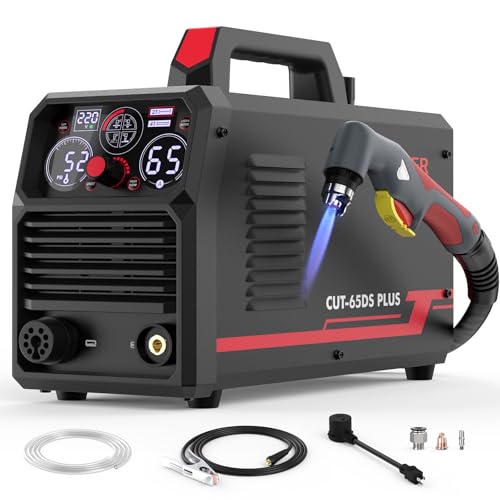
YESWELDER CUT-65DS PLUS 4-in-1 Plasma Cutter
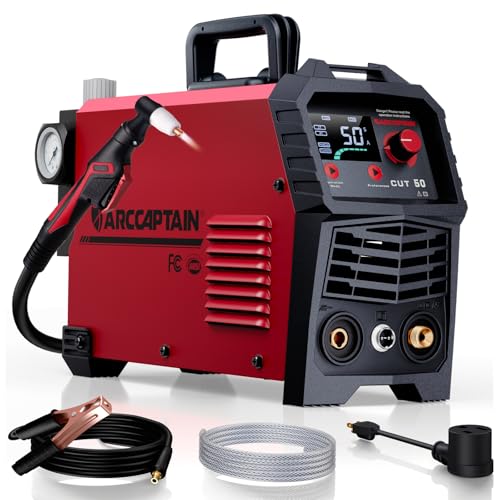
ARCCAPTAIN 50A Plasma Cutter, Dual Voltage

YESWELDER CUT-55DS PRO 55A Plasma Cutter
More On The Choices That Made The List
The YESWELDER CUT-50DS lands at the top of this list because it threads the needle most home shops actually need. Its IGBT inverter design (a transistor-based power module that keeps the unit light and efficient) lets the same machine run on a standard 110V household circuit or step up to 220V for heavier work, so you aren’t locked into one electrical setup. Output spans 20 to 50 amps, which is plenty for the kind of bracket, trailer, and exhaust repairs most weekend fabricators tackle.
For someone cutting in a one-car garage or moving between job sites, the 1/2-inch clean-cut rating on 220V is the headline number. It means you slice through plate steel up to half an inch thick and walk away with an edge that needs minimal grinding. The PT/2T/4T trigger modes (post-flow, 2-touch, and 4-touch arc control) give you finer command over the arc start and cooling cycle, which matters when you’re doing longer cuts and don’t want consumables burning up faster than they should.
Real Benefits
- Dual-voltage design works in a kitchen outlet and a 220V shop drop alike, no rewiring.
- 1/2-inch clean cut on 220V handles trailer and equipment repairs without dragging out a bigger machine.
- IGBT inverter keeps the unit compact enough to sit on a workbench or stash in a truck.
- Post-flow cooling extends torch consumable life on longer cuts.
Worth Noting
- Clean-cut depth drops to 1/4 inch on 110V, so the 1/2-inch figure depends on the higher-voltage outlet.
- Requires a separate compressed-air source, which adds a piece of gear to transport.
Who It Suits Best
Home fabricators and small-shop welders who split time between 110V and 220V outlets and want a single machine that travels between them without fuss.
Where Another Pick Suits Better
Fabricators who need cutting plus gouging and marking in one unit will get more out of the YESWELDER CUT-65DS PLUS further down this list.
PrimeWeld built the CUT50D with the kind of chassis that shrugs off truck beds and job-site drops, which is why it earns the rugged label here. The dual-voltage inverter (110V/220V with automatic switching) means you walk onto a site, find the closest outlet, and get to work without a voltage selector to flip. Its 1/2-inch clean cut on steel matches the YESWELDER CUT-50DS, but the kit ships with a more complete torch and consumable bundle out of the box.
If you’re the type to leave a cutter in the back of a work van through summer and winter, the duty-cycle rating at 78°F gives you a realistic ceiling for how hard you can push the machine before it needs a cooldown. That makes it a sensible pick for mobile welders doing auto-body, fence, and farm repair work, where downtime is the enemy and the gear has to keep up.
A Few Strong Suits
- Auto-switching dual voltage removes one setup step when you change outlets.
- Stated duty cycle supports continuous work in moderate-temperature shops.
- Kit-style packaging usually includes torch and consumables so you can cut the day it arrives.
- Steel chassis handles transport better than lightweight plastic-bodied competitors.
Trade Offs
- Heavier than the YESWELDER CUT-50DS, so you may find it less comfortable for long carries.
- You still need a separate air compressor, since the unit manages cutting but not onboard air.
Made For
Mobile welders and field-service shops who treat their cutter like a tool and want a kit that arrives ready to use.
Consider Something Else When
Hobbyists cutting thin sheet metal at home will get a lighter, more budget-friendly experience from the ARCCAPTAIN 50A further down the list.
Where the first two picks are dedicated cutters, the YESWELDER CUT-65DS PLUS steps into multi-process territory. It handles plate cutting, grid cutting (slashed or perforated sheet that would otherwise confuse the arc), gouging, and marking in a single chassis, which is a real time-saver when a job shifts from slicing steel to cleaning out a bad weld. The non-HF pilot arc (a contact-start method that avoids high-frequency interference, safer for nearby electronics) is the standout engineering choice for shops running CNC tables or sensitive controls.
This is the pick for someone who has outgrown a single-purpose cutter. At 65 amps, the power headroom lets you tackle thicker plate and longer cuts without the machine bogging down, and the dual-voltage design keeps it useful across home and professional outlets. It still needs an external air supply, but that trade-off buys you a more capable cutting platform than the 50A units above.
The Value In It
- Four processes in one chassis replace several dedicated machines in a small shop.
- Non-HF start protects nearby computers, CNC controllers, and electronics from arc-start interference.
- 65-amp output gives headroom for thicker plate and sustained production cuts.
- Marking mode supports layout work without switching to a separate marker.
- Dual-voltage compatibility travels between home and shop outlets.
Room For Improvement
- Multi-process design adds a learning curve if you’ve only run single-purpose cutters before.
- Heavier and more expensive than the 50A options above, so casual users may not use every feature.
- Still depends on an external air compressor, so plan shop layout around that.
Best Suited To
Fabrication and repair shops that switch between cutting, gouging, and marking and want one machine handling it all.
Skip It When
Occasional DIYers who only need clean cuts on thin steel will find the YESWELDER CUT-50DS easier to live with day to day.
The ARCCAPTAIN 50A is the pick for someone pushing the upper end of what a 50-amp class cutter can handle. Its 1/2-inch clean cut on steel matches the other 50A machines, but the headline number is the 2/3-inch maximum cut capacity (a severance cut where edge quality drops but the material still separates), giving you a safety margin when you occasionally run into thicker plate on a tear-down or salvage job. The dual-voltage inverter handles 110V and 220V environments automatically.
This is the kind of cutter that fits a garage welder who also runs small fabrication projects for the farm. Because the maximum cut jumps notably above the standard 5/8-inch ceiling, you can take on rusty truck frames and heavy equipment repairs without renting a bigger machine. Owners commonly mention that the IGBT platform runs cooler than older transformer designs, though you’ll still want to keep the vents clear and the unit out of direct summer sun during long cuts.
Notable Gains
- Maximum cut capacity above typical 50A competitors gives headroom for thicker plate.
- Automatic dual-voltage switching works at home or in a 220V-equipped shop.
- 1/2-inch clean cut on standard supply lines is plenty for most repair work.
Points To Note
- Requires a separate compressor, so factor in air-line setup and tank size.
- Maximum cut requires slower travel speeds to maintain quality, which adds time on thick plate.
- Vent placement means you should leave clearance on at least one side during extended runs.
Key Specs
Perfect Match For
Garage welders and small-farm operators who need a 50A-class cutter with extra thickness headroom for tear-down and repair work.
A Better Fit Elsewhere
Users who want cutting, gouging, and marking in one chassis should consider the YESWELDER CUT-65DS PLUS instead.
Closing out the list is the YESWELDER CUT-55DS PRO, the model that earns its keep in shops running all day, every day. The non-HF blow-back start (a spring-loaded piston inside the torch that fires the arc without high-frequency sparks) is the quietest, cleanest way to begin a cut, and it doesn’t interfere with the CNC tables, sensors, or other electronics that share a shop floor. The IPT40 torch is a widely supported consumable platform, so replacement tips and electrodes are easy to source when consumables finally wear out.
At 55 amps, the unit sits between the 50A DIY picks and the 65A multi-process machines, hitting a sweet spot for production cutting on mid-thickness steel. Dual-voltage support means it moves between job sites and a fixed shop without reconfiguration. You may find the PRO label worth the step up from the CUT-50DS if your cuts run long and the time saved on smoother arc starts adds up across a busy week.
Strengths Worth Knowing
- Non-HF start protects nearby electronics, important in CNC-equipped shops.
- IPT40 torch uses widely available consumables, so replacements are easy to find.
- 55A output handles mid-thickness production work without stepping up to a 65A machine.
- Blow-back start produces smoother arc initiation than scratch-start competitors.
Honest Caveats
- Step up in cost from the 50A DIY options, so the extra capability has to justify itself for your workload.
- Still needs an external air compressor to operate, no onboard tank.
Who Should Grab It
Shop welders and production fabricators who run the cutter daily and want non-HF reliability without jumping to a 65A multi-process platform.
Reach For A Different Pick When
Casual home users cutting thin steel a few times a month will get better value from the YESWELDER CUT-50DS at the top of this list.
Choosing A Plasma Cutter That Earns Its Space
Voltage And Where You’ll Plug In
Dual-voltage inverters are the most flexible choice because they work on a standard 110V outlet at home and a 220V drop at the shop. On 110V, clean-cut depth is typically limited to around 1/4 inch; stepping up to 220V is what unlocks the 1/2-inch clean-cut numbers manufacturers advertise. If your shop only has 220V, a single-voltage machine can save some cost, but most home and garage welders benefit from the dual-voltage flexibility.
Amperage And The Material You Actually Cut
Output amperage sets the ceiling on plate thickness. A 50A machine covers most home repair and fabrication needs on steel up to 1/2 inch. A 55A unit gives a small bump in headroom for sustained production work. A 65A multi-process platform adds gouging and marking modes for shops that need more than just cutting. Match the amp rating to the thickest material in your regular workload, not the occasional one-off job.
Air Supply And The Compressor Question
Every machine on this list pairs an inverter cutter with a separate air compressor, so factor tank size, CFM (cubic feet per minute) output, and regulator setup into your total ownership cost. Smaller pancake compressors work for intermittent cuts on thin steel. Sustained cutting on thicker plate needs a compressor that can keep up with the cutter’s air demand without the pressure dropping mid-cut.
Torch Start Method And Shop Environment
High-frequency (HF) start systems can interfere with nearby electronics, which matters in CNC-equipped or electronics-heavy shops. Non-HF pilot arc and blow-back starts are quieter, safer around sensitive equipment, and usually more reliable for daily production. If your shop shares space with computers, sensors, or automated tables, a non-HF start is worth prioritizing over a small price difference.
Smart Spending In This Category
Common Buying Slip Ups
The most frequent mistake is chasing the maximum cut number instead of the clean cut number. Maximum cut is a severance rating where edge quality drops and you walk away with a ragged edge that needs grinding. Clean cut is the figure that reflects usable work, and it’s always smaller than the maximum. A second slip is forgetting the compressor: the inverter is only half the system, and a too-small tank will have you waiting for pressure recovery between every cut.
Where The Extra Money Goes
Stepping up from a 50A entry model to a 55A or 65A machine typically buys non-HF arc starting, multi-process capability (cutting, gouging, marking), and a more robust duty cycle for continuous work. The premium pays off in shops that run the cutter daily or share space with sensitive electronics. For a few cuts a month on thin steel, the upgrade is hard to justify, and a 50A dual-voltage unit covers the work without the extra cost.
Frequently Asked Questions
Do I Still Need A Separate Air Compressor For These Cutters?
Yes. Every machine on this list is an inverter plasma cutter with built-in air management for the cut, not a built-in air compressor. You supply the compressed air from an external tank. Plan for a compressor that can keep up with the cutter’s CFM requirement at the pressure the manufacturer specifies.
What Thickness Of Steel Can A 50A Cutter Handle?
A 50A dual-voltage cutter delivers about 1/4 inch of clean cut on 110V and up to 1/2 inch of clean cut on 220V. Maximum severance cut ratings run higher, but those leave a rough edge that needs cleanup. Match the cutter to the clean-cut depth you actually need.
Can These Plasma Cutters Slice Through Stainless And Aluminum Too?
Yes. Inverter plasma cutters handle any conductive metal: mild steel, stainless steel, aluminum, and copper. Cut quality on aluminum and stainless depends on travel speed, amperage setting, and air pressure. Slower travel and proper air regulation give the cleanest edges on non-ferrous material.
What Does Non-HF Pilot Arc Actually Do For Me?
Non-HF (non-high-frequency) starting fires the arc using a pilot arc or blow-back mechanism rather than high-voltage sparks. That means no electromagnetic interference with nearby electronics like CNC controllers, computers, and sensors. Shops running mixed equipment benefit from non-HF starts, while home users with no sensitive electronics nearby can use either type.
Is A Higher Amp Rating Always Better?
Not necessarily. A 65A machine is heavier, more expensive, and overkill for someone cutting 1/8-inch sheet metal in a home garage. A 50A or 55A unit is the right size for most home and small-shop workloads. Choose the amp rating that matches your thickest regular material, and step up only when you actually need the extra headroom.
Bottom Line
The right pick depends on where you cut and how often. A 50A dual-voltage unit like the YESWELDER CUT-50DS or the ARCCAPTAIN handles the bulk of home and garage work without weighing you down. The PrimeWeld CUT50D adds rugged build quality for mobile use. The YESWELDER CUT-55DS PRO brings non-HF reliability for production shops, and the CUT-65DS PLUS opens up multi-process work for fabricators who need more than just cutting. Match the machine to the material and the outlet, and the rest sorts itself out.




