


Plenty of household fixes turn on a single clean slice through a stubborn piece of plastic. Cutting PEX for a faucet swap, trimming vinyl trim, slicing through a thick rubber hose, or breaking down cardboard and shrink wrap all feel easier with the right blade in your hand. The wrong tool, though, leaves ragged edges, cracked tubing, or sore fingers.
This roundup covers five plastic cutters built for real workshop, plumbing, and DIY situations. Some are rotary tube cutters built for tight crawl spaces. Others are utility blades or shears-style multi-cutters designed to chew through dense, layered materials without crushing them. Read on for the trade-offs worth weighing.
The Choices Worth Comparing

RIDGID 40617 Model 101 Close Quarters Tubing Cutter

Pacific Handy Cutter SP017 Safety Point Blades, Pack of 100

Ronan Multi-Cut Utility Cutter, Quick Change Blade
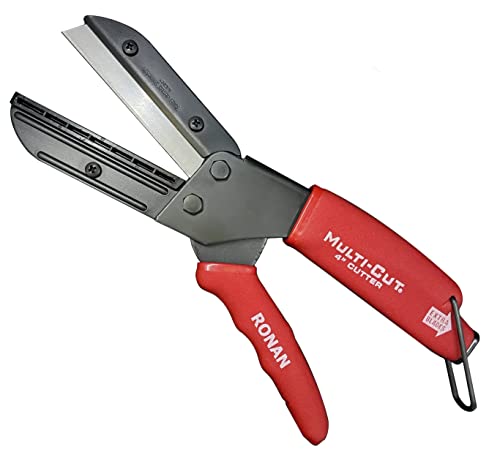
Ronan Multi-Cut 401 Multi Cutting Tool

Ronan Multi-Cut Industrial Cutter, Heavy Duty Blade
A Breakdown Of The Leading Choices
The RIDGID 40617 Model 101 is purpose-built for the awkward spots behind a sink, beneath a vanity, or up inside a ceiling joist where a standard cutter simply cannot swing. Its slim, close-quarters design slips into gaps a regular tube cutter would never fit, and the knurled feed screw knob gives you the kind of controlled pressure that matters when cutting copper, aluminum, brass, or plastic lines that have already been fitted into a wall.
This is the right tool when working on a finished plumbing repair, not when cutting raw stock on a workbench. For homeowners facing their first PEX repipe or a remodel involving tight retrofit cuts, the rotary action produces clean, square ends without deforming the tube. Professional plumbers tend to own one because the geometry of a real job rarely gives you room for a full-size cutter.
What Stands Out
- Compact body designed to rotate in tight crawl spaces and behind finished walls
- 1/4-inch to 1-1/8-inch capacity handles most residential supply lines and PEX retrofits
- Knurled feed screw knob gives fine pressure control for clean, burr-free cuts on copper, brass, aluminum, and plastic
- Rotary cutting action leaves a square, professional edge ready for fitting
Things To Consider
- Cutting wheels dull with heavy use and are a consumable replacement to budget for over time
- Not intended for thick-walled pipe, so it is strictly a small-diameter tool
- The slim profile, while a strength in tight spots, can feel less stable in larger hands during longer runs
Key Product Details
Whose Toolbox It Belongs On
Plumbers handling service calls and homeowners tackling a tight PEX repipe or under-sink repair will get the most from this cutter.
A Better Fit Elsewhere
Anyone cutting through thick rubber hose, vinyl, or dense layered materials should reach for the Ronan Multi-Cut Industrial Cutter instead, since the RIDGID’s rotary wheel is built for tubing, not for solid sheet stock.
The Pacific Handy Cutter SP017 blades are not a cutter on their own, but a 100-pack of replacement safety blades for the company’s PHC safety cutter handles. Each blade has a guarded, safety-point tip rather than a fully exposed edge, which is the entire point: it cuts boxes, cardboard, packing tape, and thin plastic strapping while reducing the chance of a finger finding a sharp corner.
This pack is the right pick when a team or a busy home goes through utility blades quickly. Anyone who has run a warehouse, an e-commerce shipping bench, or a school art room knows how fast a dull blade sneaks up on you, and buying 100 at a time means you swap, not debate. For a single homeowner opening the occasional box, it is overkill; for high-volume use, it is the practical way to keep a fresh edge on hand.
The Value In It
- Safety-point tip design helps reduce the chance of accidental skin contact
- Bulk 100-pack keeps fresh blades on hand for shipping rooms, classrooms, or busy shops
- Designed specifically for PHC safety cutter handles, ensuring proper fit and retention
- Slicing through cardboard, shrink wrap, plastic strapping, and tape becomes faster with a fresh edge
Trade Offs
- Only fits PHC-style safety cutter handles, not standard utility knives
- Not designed for dense plastic, PEX, or thick rubber hose work
Right Fit For
Shipping teams, warehouse staff, and busy households that already own a compatible safety cutter will benefit most from this bulk supply.
Reach For A Different Pick When
Anyone needing to slice through rigid PEX tubing or thick vinyl should look at the RIDGID 40617 Model 101 instead, since these safety blades are built for packaging, not plumbing.
The Ronan Multi-Cut Utility Cutter is a compact, quick-change blade tool aimed squarely at the weekend DIY crowd. Its sharp blade is intended to handle rope, leather, soft trim, linoleum, light pruning, and PEX or plastic tubing, the kind of mixed materials you actually encounter in a Saturday project, not a single dedicated use case.
Compared to the RIDGID Model 101 from the first pick, this Ronan trades rotary precision for versatility. A plumbing retrofit will still want a dedicated tube cutter for square ends, but a homeowner repairing a garden hose, trimming weatherstripping, and snipping rope in the same afternoon will appreciate having one tool that adapts. The quick-change design also means swapping a dull edge does not require a separate tool or a trip to the workbench.
What Makes Sense
- Quick-change blade design keeps downtime low during mixed-material projects
- Handles PEX tubing, rope, leather, soft trim, and linoleum in one tool
- Compact size fits comfortably in a junk drawer or kitchen tool caddy
- Useful for both indoor and outdoor tasks, from light pruning to craft cutting
Worth Noting
- Not designed for thick metal, hard PVC, or heavy industrial materials
- Cutting accuracy on rigid PEX is rougher than a dedicated rotary tube cutter
- Replacement blade availability depends on matching the specific Ronan utility line
Feature Snapshot
Made For
Home DIYers handling mixed plastic, rope, and trim work will find this the most useful general-purpose option in the lineup.
Skip It When
Plumbers who need dead-square cuts on copper or PEX should stay with the RIDGID 40617 Model 101, since this Ronan’s straight blade is not a substitute for a rotary tubing tool.
The Ronan Multi-Cut 401 is the original of the Ronan family, built around a different mechanical action than ordinary scissors. A sharp 4-inch blade comes down onto a flat anvil with an offset pivot, so the cutting force lands where the material is thickest rather than splaying outward. That makes a real difference on dense plastic, layered cardboard, and stacked leather that would crush or fold under conventional shears.
This is the right pick when scissors and a utility blade both feel like the wrong tool. Crafters cutting thick vinyl, hobbyists trimming carpet tile, and small-shop users slicing through layered packaging all benefit from the anvil action. Versus the Multi-Cut Utility Cutter from the previous pick, the 401 is more of a stationary bench tool than a pocket carry.
Features That Help
- Blade-and-anvil design slices through thick, dense materials that resist standard shears
- Offset pivot keeps cutting force aligned for cleaner edges on rigid plastic
- 4-inch blade length handles wider cuts in a single pass
- Useful for plastic, rope, leather, and heavy cardboard alike
Points To Note
- Not designed for metal, hard PVC, or wire, so the use case is more focused than it first appears
- Sharper than typical craft scissors, so it benefits from a moment of orientation before first use
Best Suited To
Crafters, hobbyists, and small-shop users who regularly cut thick, dense materials will appreciate the 401’s anvil-style action.
Not Your Match When
Anyone doing high-volume industrial cutting through hoses and rubber should move up to the Ronan Multi-Cut Industrial Cutter, which is built for heavier daily production work.
The Ronan Multi-Cut Industrial Cutter is the heaviest hitter in this roundup. Originally developed for the auto industry, it uses the same blade-to-anvil geometry as the Multi-Cut 401 but pairs it with a 2.5-inch industrial-grade blade designed for thick hoses, dense rubber, vinyl sheeting, leather, and wood. If you have ever tried to trim a heater hose or a section of thick vinyl flooring with scissors, you already know why that geometry matters.
Compared to the Multi-Cut Utility Cutter from pick 3, this industrial model trades portability for force. It belongs on a workbench or a shop floor, not in a junk drawer. Auto technicians, maintenance crews, and serious DIYers with a real workload will find it earns its keep; lighter craft work is better served by the smaller Ronan options.
Strengths Worth Knowing
- Industrial-grade blade chews through thick plastic, rubber, vinyl, and wood
- Blade-to-anvil action with offset pivot point delivers heavy-duty cutting force
- Originally designed for the auto industry, so it handles hoses and PEX pipe without complaint
- Useful for both shop and craft settings when thicker stock is the norm
Honest Caveats
- Larger and heavier than typical craft cutters, so it is a bench tool, not a pocket one
- Overkill for thin plastic film, paper, and light packaging
- Replacement blades should be sourced specifically for the industrial Ronan line
Product Snapshot
Who Should Grab It
Auto technicians, maintenance crews, and serious DIYers with frequent heavy cutting needs will benefit most from this industrial Ronan.
Look Elsewhere When
Crafters and hobbyists handling mostly thin sheet stock will get along fine with the Ronan Multi-Cut 401, which is lighter and easier to control for smaller projects.
Matching The Right Cutter To Your Project
Think About Material Before Anything Else
The first question is what you actually need to cut. PEX and copper plumbing tubing call for a rotary tube cutter like the RIDGID Model 101, because the wheel action produces a square, burr-free end that seats properly in a fitting. Flexible plastic strapping and cardboard are friendlier territory for a safety utility blade like the Pacific Handy Cutter SP017. Dense rubber, vinyl, leather, and layered plastic want the anvil-style cutting power of a Ronan Multi-Cut.
Match Capacity To The Range You Actually Cut
A tool that handles 1/4-inch to 1-1/8-inch tubing is ideal for most residential plumbing, but a homeowner occasionally trimming 1/2-inch PEX does not need a wider range. On the multi-cut side, the difference between a 2.5-inch industrial blade and a 4-inch anvil blade comes down to how wide your typical cut is, not which one is sharper.
Weigh Portability Against Cutting Force
The Multi-Cut Utility Cutter fits in a kitchen drawer. The Multi-Cut Industrial Cutter does not, and that is the trade-off. For occasional DIY, a smaller, lighter tool gets used more often. For a working shop, a heavier bench tool that delivers more force per stroke tends to win out.
Look At Blade Replacement Before You Buy
Every blade dulls eventually, and cutters that take proprietary replacement blades (the PHC safety line, the Ronan industrial line) only stay useful if those blades remain easy to find. Bulk packs like the SP017 100-count make sense when blade life is short; a one-off industrial blade makes more sense when your cutting volume is moderate.
What To Watch For Before You Commit
Where Shoppers Go Wrong
The most common mistake is buying a cutter based on the thickest material in the description, then using it on thin film or paper, where the heavy blade crushes or tears rather than slices. Equally common is reaching for a general utility knife on PEX tubing, which leaves an angled, uneven end that fights the fitting. Match the cutter’s geometry to the material’s rigidity, and the cut quality takes care of itself.
When Paying More Pays Off
Higher-tier models in this category earn their cost in three places: blade retention, anvil force, and consumable supply. A dedicated RIDGID cutter, a quality anvil-style Ronan, or a long-life safety blade all cost more up front than a generic box cutter, but the difference shows up in fewer crushed edges, fewer blade swaps, and a tool that still feels solid after months of use. For a one-off project, basic works; for repeated use, the upgrade usually pays back in time saved.
Frequently Asked Questions
What Is The Best Cutter For PEX Tubing?
A rotary close-quarters tubing cutter like the RIDGID Model 101 is the standard choice. It produces a clean, square cut on PEX, copper, and other small-diameter plumbing lines, even in tight spaces.
Can A Utility Knife Replace A Dedicated Plastic Cutter?
For thin plastic strapping, shrink wrap, and cardboard, yes, a sharp utility blade handles it well. For rigid PEX, thick vinyl, or rubber hose, a dedicated cutter produces a much cleaner result and is safer to use.
How Do Anvil-Style Cutters Differ From Scissors?
Anvil-style cutters drive a blade down onto a flat surface rather than passing two blades past each other. That concentrates force on thick, dense material, which is why the Ronan Multi-Cut family handles plastic and rubber that would fold under regular scissors.
Are Replacement Blades Easy To Find?
For major lines like the PHC safety cutter and the Ronan Multi-Cut series, yes, the manufacturer sells replacement blades directly. Buying in bulk, like the SP017 100-pack, makes sense for high-volume users.
How Often Should I Replace The Blade?
Replace the blade as soon as cuts start to require extra force or leave ragged edges. Continuing to push with a dull blade increases the chance of slipping and injuring yourself, and it produces poor cuts that can damage the material.
Final Verdict
The right plastic cutter depends almost entirely on the material in front of you. For plumbing retrofits, the RIDGID Model 101 is the focused, reliable pick. For packaging and shipping, the Pacific Handy Cutter SP017 blade supply keeps a safety cutter ready. For mixed DIY, crafting, and heavier shop work, the Ronan Multi-Cut family covers nearly every scenario, with the utility model for light tasks, the 401 for crafting, and the industrial version for the toughest hose and rubber jobs. Pick the one that matches the material you actually cut most often, and the rest tends to take care of itself.




