


HVAC work calls for fasteners that sink cleanly into ductwork, insulation, vapor barriers, and thin sheet metal without buckling the material. The tools in this roundup span cordless 18V platforms, compact 12V drivers, pneumatic workhorses, manual tackers, and heavy-duty plier staplers for the office side of the trade. You will see which tool fits register work, which one handles repetitive insulation runs, and which trades power for portability.
A Snapshot Of The Selections

Ryobi P317 18V Cordless 3/8 in. Crown Stapler

Milwaukee 2447-20 M12 3/8 in. Crown Stapler
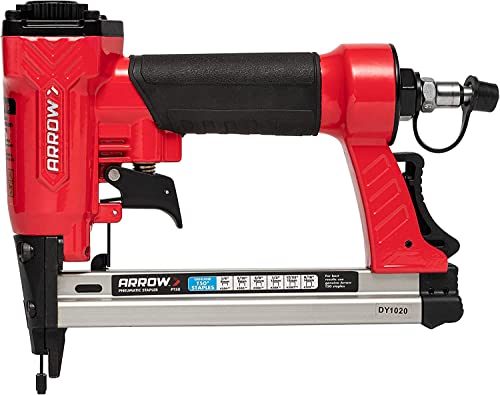
Arrow PT50 Oil-Free Pneumatic Staple Gun

DEWALT DWHT80276 Carbon Fiber 2-in-1 Tacker
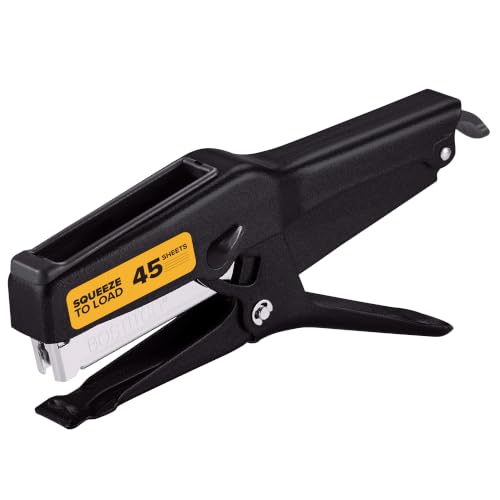
Bostitch Heavy Duty Plier Stapler, 45 Sheet
A Closer Look At Each Pick
The Ryobi P317 steps in for HVAC techs already running the ONE+ battery platform and tired of dragging a hose across crawlspaces. A “compression drive” here means the motor compresses a spring on each shot, then releases it to sink the staple, similar in feel to the Milwaukee unit but on Ryobi’s 18V system. You get cordless reach on ladders and in attics, plus a screen-and-wire attachment that keeps staples from punching through mesh and wire runs.
Compared to the Milwaukee M12 reviewed below, this one trades a smaller, lighter chassis for a longer staple range. That wider envelope helps when you are fastening thicker insulation board or heavier vapor barrier material.
The Case For It
- Drives 1/4 in. to 9/16 in. 3/8 in. crown staples, covering most HVAC staple jobs in one tool
- Dual screen and wire attachment protects mesh and low-voltage wiring from stray staples
- On-board depth knob adjusts sink depth without swapping tips
- Shares batteries with the rest of the Ryobi ONE+ 18V lineup, which lowers cost for existing owners
Things To Consider
- Sold as tool only, so a first-time Ryobi user needs a battery and charger
- Heavier than the Milwaukee M12, so overhead work tires the wrist faster
Feature Snapshot
Who It Suits Best
HVAC installers already invested in the Ryobi 18V ONE+ system who want a cordless stapler that swaps batteries with their drill, impact, and reciprocating saw.
Consider Something Else When
Techs who live on M12 and want the lightest body in the category should reach for the Milwaukee 2447-20 reviewed next.
The Milwaukee 2447-20 is the kind of stapler you forget is in your bag until you need it. The 7.25 in. length and roughly 3 lb. weight are the headline numbers, and they are the reason HVAC service techs reach for it on register swaps, return-duct patching, and ceiling-install work where every ounce compounds across a workday. Compatibility with any M12 battery means you can use the same pack already on your inspection camera and impact driver.
Versus the bulkier Ryobi P317, the M12 trades staple range for a much smaller body. You also get a 5-year limited power tool warranty, a meaningful upgrade for shops that beat up their tools daily.
Notable Gains
- Drives 1/4 in. to 9/16 in. 3/8 in. flat crown staples across HVAC substrates
- Compact 7.25 in. footprint reaches into tight register boots and return boxes
- M12 battery cross-compatibility simplifies fleet management
- Manufacturer 5-year limited warranty supports daily shop use
Honest Caveats
- Tool only, so M12 newcomers need a battery and charger to start
- Smaller battery platform means fewer shots per charge than 18V competitors during long insulation runs
Made For
Service techs on ladders and in tight mechanical rooms who value a compact body over maximum staple length.
Look Elsewhere When
If your work revolves around long production runs at a bench, the Arrow PT50 pneumatic will outpace any cordless stapler in this lineup.
The Arrow PT50 is the bench-press pick. A pneumatic stapler (one driven by shop compressed air) needs a hose and a compressor, but in return you get rapid cycling, repeatable power, and no battery anxiety on long runs. Bump-fire capability means you can hold the trigger and slide the gun along ductwork, firing a staple on each contact, which is the fastest way to fasten insulation or skin sheet metal in a fabrication shop.
Where the Milwaukee and Ryobi cordless units trade raw power for portability, the PT50 stays put and chews through work. Owners should plan on a compressor setup and a coiled air hose to make full use of the bump-fire mode.
A Favorable Mix
- Oil-free design cuts daily maintenance compared to traditional pneumatic tools
- Bump-fire mode accelerates repetitive fastening along sheet metal and insulation
- Contact safety mechanism reduces accidental firing when the nose is not pressed to material
- Adjustable exhaust cover directs spent air away from the work surface
Worth Bearing In Mind
- Tethered to a compressor and hose, so not suited for remote or rooftop work
- Less portable than the Ryobi P317 or Milwaukee 2447-20 on ladders
Quick Technical Notes
Best Suited To
Shop-based HVAC fabricators and installers who run a compressor regularly and want the fastest fastening cadence in this roundup.
Skip It When
Techs doing field service without easy compressor access should look at the DEWALT DWHT80276 manual tacker for hand-driven fastening instead.
The DEWALT DWHT80276 is the manual pick, and the carbon fiber composite housing is its standout feature. The body reportedly weighs roughly 50 percent less than comparable steel-framed tackers, which means less hand fatigue during the long insulation or roofing underlayment runs that show up on retrofit jobs. The 2-in-1 design accepts both heavy-duty staples and 18 gauge brads, so you can pin trim, secure vapor barrier, and tack insulation with one tool.
Pairing this with the Ryobi or Milwaukee in your kit covers both ends of a job. The cordless drivers handle the thick stuff, and the DEWALT picks up low-effort fastening without draining a battery.
What Stands Out
- Carbon fiber composite body keeps weight down for repetitive overhead work
- Accepts both heavy-duty staples and 18 gauge brads in one tool
- Low fastener indicator helps avoid dry-firing in the middle of a run
- Reversible belt hook supports left- and right-handed techs
Practical Considerations
- Manual operation means more hand effort than the cordless or pneumatic picks
- Bottom-load design works fine but takes a moment longer than top-load magazines on some competing tackers
Right Fit For
Techs and remodelers who do repetitive insulation runs, vapor barrier work, and light trim fastening without dragging a compressor or burning battery cycles.
Swap It Out When
If most of your day is fastening into hard ductwork or driving long staples, the Milwaukee 2447-20 cordless will save your hand.
The Bostitch Heavy Duty Plier Stapler belongs in the office half of an HVAC business. Its 2 to 45 sheet capacity covers thick job packets, multi-page work orders, and bound submittal packages that a desktop stapler cannot handle. All-metal construction adds heft that the hand appreciates during long stapling sessions, and the plier action delivers consistent clinch pressure on thick stacks.
This one rounds out the kit in a way the other four do not. While the Ryobi, Milwaukee, Arrow, and DEWALT all attack ductwork and insulation, the Bostitch handles the paperwork that follows every service call.
What Works In Its Favor
- Staples 2 to 45 sheets, covering thick job documents in a single squeeze
- All-metal body holds up to daily counter and shop use
- Doubles for light packaging work, including thin corrugate and plastic
Factors To Consider
- Not designed for HVAC ductwork, insulation, or sheet metal fastening
- Plier action takes more hand strength than a desktop model on lighter stacks
Whose Shelf It Belongs On
Office managers, dispatch desks, and shop counters that handle thick paperwork and need a stapler a desktop unit cannot match.
Reach For A Different Pick When
Anyone needing actual HVAC fastening on a job site should look back to the Ryobi P317 for cordless work or the DEWALT DWHT80276 for manual runs.
What To Weigh Before Choosing Plier Staplers For Hvac
Power Source and Job Location
Cordless staplers, like the Ryobi P317 and Milwaukee 2447-20, free you from hoses and compressors, which matters on ladders, in attics, or anywhere a power outlet is not handy. Pneumatic tools, like the Arrow PT50, deliver faster cycling and consistent force but require a compressor and a hose, so they shine in shop environments. Manual tackers, such as the DEWALT DWHT80276, keep the kit simple and batteries out of the equation, at the cost of hand effort.
Crown Size and Staple Range
A 3/8 in. crown (the width of the staple “hat”) is the common HVAC standard and matches both the Ryobi and Milwaukee reviewed above. Check the staple length range, since thin flashing and thick insulation board call for very different fasteners. A wider range covers more tasks with one tool.
Weight and Ergonomics
A carbon fiber or compact body reduces fatigue on repetitive runs, especially overhead. The DEWALT DWHT80276’s lighter housing is a real advantage during insulation work where you are squeezing a trigger hundreds of times a day. Compact 12V tools, like the Milwaukee M12, also help when reaching into tight register boots.
Staple Compatibility and Loading
Bottom-load, easy-load, and reversible belt hooks all change how a tool feels during a shift. The DEWALT’s low-fastener indicator and reversible hook are small touches that add up when you are stapling for hours. Quick-load magazines reduce downtime and are worth prioritizing for production work.
Key Considerations Across These Picks
Mistakes Worth Dodging
A common slip is buying a cordless stapler without checking platform compatibility. If you already run 18V Ryobi, the P317 makes sense. If your truck is full of M12 gear, the 2447-20 fits naturally. Mixing platforms drives up cost and clutter. Another trap is using an office plier stapler, like the Bostitch reviewed here, on actual ductwork. The wrong tool wastes staples and damages material.
What The Higher Tier Buys
Spending more on a cordless 18V or 12V platform stapler typically buys you better depth control, longer staple ranges, and a warranty that covers shop wear. The upgrade pays off for techs who fasten daily, while occasional users can stay with a manual tacker and skip battery costs entirely. The pneumatic tier, like the Arrow PT50, costs less up front than cordless kits but assumes you already own a compressor.
Frequently Asked Questions
What is a 3/8 in. crown stapler used for in HVAC?
A 3/8 in. crown stapler is the standard for fastening duct insulation, vapor barriers, and thin sheet metal where a wider crown spreads holding force without tearing the material.
Cordless or pneumatic for HVAC stapling?
Cordless 18V and 12V staplers work best on ladders, in attics, and on service calls where compressors are not available, while pneumatic models deliver faster cycling and consistent power in shop settings.
Can a manual tacker replace a cordless stapler?
A manual tacker, like the DEWALT DWHT80276, handles light insulation and vapor barrier work without batteries, but you will use more hand force and slower cycle times than with a cordless or pneumatic model.
What staple length works for HVAC ductwork?
Most HVAC tasks fall between 1/4 in. and 9/16 in., which both the Ryobi P317 and Milwaukee 2447-20 cover, so pick the length to match the substrate thickness.
Is a plier stapler different from a crown stapler?
Yes. A plier stapler, like the Bostitch model in this roundup, is a manual office tool for paper stacks, while a crown stapler refers to construction-grade tools that drive wide-crown staples into insulation and metal.
Final Take
The right pick depends on where you spend your day. Cordless 18V and 12V staplers handle ladders and crawlspaces, pneumatic drivers own the bench, manual tackers cover quick insulation runs, and a heavy-duty plier stapler keeps the paperwork moving. Start with your platform, match the crown size to your most common task, and you will end up with a tool that disappears in the hand.




