


Chainmail work sits at an odd crossroads: the wire is soft enough to bend by hand, yet dense enough that cheap pliers slip, mar the rings, and leave you fighting the material instead of the design. The right tool changes that dynamic completely, letting you close jump rings cleanly and shape wire without crushing the finish.
Reenactors, LARP hobbyists, and jewelry makers chasing a maille look all need the same core thing: slim jaws, smooth action, and enough control to grip a single ring without distorting it. These five picks each address that need a little differently.
A Quick View Of The Lineup

Xuron Chisel Nose 487

Cynamed Heavy Duty Bail Making Pliers

The Beadsmith Wire Looping Pliers
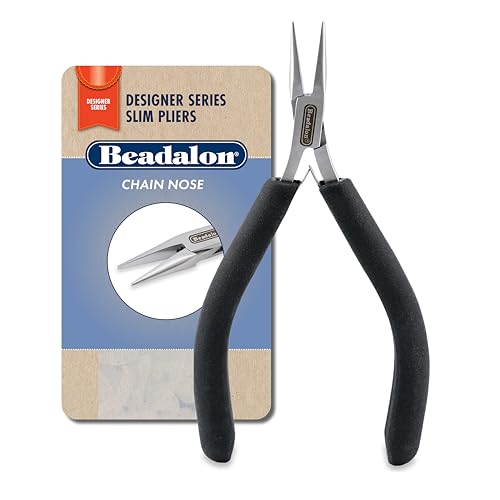
Beadalon Designer Slim Chain Nose Pliers

Xuron 494 Four in One Crimping Pliers
Inside Each Recommended Option
The Xuron Chisel Nose 487 earns its spot by solving the single most common chainmail headache: closing jump rings flush without leaving a gap. The flat, narrow jaws sit parallel when closed, so a ring held across both tips gets squeezed evenly rather than twisted. For anyone weaving a shirt, coif, or bracelet, that matters more than any single spec sheet detail.
You see this tool most often in hobbyist jewelry shops and small maille workshops, where the smooth action and consistent return spring let you settle into a rhythm across hundreds of rings. Compared to bulkier combination pliers, the chisel profile reaches into tight weaves where larger jaws simply cannot follow.
Positive Takeaways
- Flat parallel jaws produce clean, even ring closures on standard jump rings.
- Compact nose reaches inside dense weaves where broader pliers bump adjacent rings.
- Lightweight build reduces hand fatigue during long maille sessions.
- Spring-return action supports a steady assembly pace.
- Smooth jaw faces minimize marks on plated or polished ring finishes.
Things To Consider
- Not designed for heavy gauge wire; pushing past its comfort zone can spring the jaw alignment.
- No built-in cutter, so a separate flush cutter is needed for trimming.
Key Product Details
Right Fit For
Daily chainmail weavers working with standard gauge jump rings who want a dependable primary closing tool.
Consider Something Else When
Reenactors pulling thick butted rings through heavy maille should look at the Cynamed Heavy Duty Bail Making Pliers for more leverage.
Where the Xuron Chisel Nose handles finesse, the Cynamed Heavy Duty Bail Making Pliers step in for raw strength. The stepped jaw set is sized at 13mm, 16mm, and 20mm, so you can form consistent loops in thick wire without guessing the diameter. For maille makers transitioning into heavier armor pieces, that repeatability is the whole point.
The non-slip comfort grip handle earns its name during longer sessions, particularly when forming structural connectors or attaching findings. The tool feels more at home on a workbench than in a travel kit, which matches its purpose.
Where It Helps
- Three stepped jaw sizes deliver uniform loops in heavy wire.
- Non-slip grip holds steady when forming tight bends.
- Stout build handles thicker gauges than standard jewelry pliers.
Worth Noting
- Stepped barrel shape cannot close flat jump rings the way a chisel nose can.
- Larger size makes close-up ring work awkward at small scales.
- Bulkier tool demands more storage space in a compact kit.
Built With In Mind
Reenactors and armorers working with heavy gauge wire who need consistent large loops for structural maille components.
Look Elsewhere When
Jewelry makers focused on lightweight decorative maille will get more value from The Beadsmith Wire Looping Pliers and their finer size range.
The Beadsmith Wire Looping Pliers take a different angle on chainmail altogether, treating it as a design surface rather than just an assembly task. The multi-step jaw supports six loop sizes, so you can add shaped accents and connector rings in a single tool without swapping implements. For mixed projects that blend maille with beaded components, this saves real time.
You will often see this pick in the hands of jewelry designers who dabble in maille for texture rather than full garments. The smaller loop steps pair nicely with finer chainmail weaves.
Advantages To Know
- Multiple loop diameters in one tool expand design options beyond simple ring closing.
- 5.5-inch length keeps the tool nimble in detailed work.
- Polished jaw finish protects delicate wire coatings.
Trade Offs
- Stepped barrel shape is less ideal for closing flat jump rings cleanly.
- Smaller size range limits use on heavier armor-grade wire.
Quick Facts
Who Should Grab It
Jewelry makers blending small-scale chainmail with beaded designs who want loop variety without juggling multiple pliers.
Another Choice May Suit
Reenactors focused on large armor rings should consider the Cynamed Heavy Duty Bail Making Pliers for the right scale.
The Beadalon Designer Series Slim Pliers answer a specific need: reaching into an established weave to grip a single ring without disturbing its neighbors. The slim chain nose profile slips between rings where standard chain nose pliers collide with surrounding metal. For repairs and detailed weaving, that precision is hard to substitute.
This tool pairs naturally with a primary closing plier, handling the directional work while a flatter tool handles the final squeeze. Beginners often find this combination easier to control than a single multipurpose plier.
Features That Help
- Slim chain nose reaches tight spots in dense weaves.
- Lightweight body reduces wrist strain over long sessions.
- Black finish offers a clean visual contrast against bright wire.
Small Caveats
- Not ideal as a standalone ring closer, since the tapered jaw can rock rings slightly.
- Best treated as a companion to a primary closing plier rather than a replacement.
Whose Shelf It Belongs On
Chainmail repair specialists and detail-oriented weavers who need a second tool for positioning rings inside established patterns.
Skip It When
First-time kit builders looking for a single do-it-all tool should start with the Xuron Chisel Nose 487 instead.
The Xuron 494 brings something the rest of the list only hints at: finishing capability. Its folding stations cover 1mm, 2mm, and 3mm crimp tubes, and a built-in chain nose handles the final squeeze. For maille projects that connect to beaded strands or wire-wrapped closures, that combination removes a whole second tool from the bench.
Hobbyists who work across categories, jumping from chainmail into standard jewelry construction, tend to appreciate the consolidation. You can close a ring, fold a crimp, and shape a loop without breaking stride.
Bright Spots
- Three crimp sizes in one tool streamline finishing work.
- Built-in chain nose adds closing and adjusting capability.
- Non-slip Xuro-Rubber grips stay comfortable through long sessions.
- Folded crimp results look cleaner than flat-crushed alternatives.
Honest Caveats
- Heavier than single-purpose pliers, which can tire smaller hands.
- Crimp-specific stations sit unused on pure maille projects.
- Specialized folding stations take practice to use correctly.
Feature Snapshot
Made For
Mixed-media jewelry makers who finish chainmail pieces with crimped connections and want one tool that handles both jobs.
Reach For A Different Pick When
Pure chainmail weavers assembling large armor sections will find the Beadalon Designer Slim Pliers more efficient for positioning work.
What Matters Most Before Choosing Pliers For Chainmail
Jaw Shape Drives Everything
The jaw profile determines whether a plier closes rings cleanly or mars them. Flat chisel jaws, like those on the Xuron 487, apply even pressure across both sides of a jump ring. Tapered chain nose jaws, such as the Beadalon Slim, excel at reaching into a tight weave but can rock a ring slightly when used alone. Stepped looping jaws, found on the Beadsmith and Cynamed picks, form consistent loops but do not close rings as cleanly as a flat profile. Matching jaw shape to the dominant task is the first real decision.
Wire Gauge Sets The Scale
Chainmail spans everything from delicate jewelry wire to thick butted rings for armor. A plier comfortable with 20-gauge craft wire will feel floppy on 14-gauge structural rings, while a heavy bail maker can crush fine jewelry wire out of shape. Check the manufacturer’s gauge guidance before committing; if the source does not list it, assume the tool suits the gauge it was visually designed around.
Handle Comfort Over Hours, Not Minutes
Maille projects reward patience, and hand fatigue punishes impatience. Non-slip grips and spring-return handles keep a steady rhythm possible across hundreds of rings. A plier that feels fine for one closing can turn uncomfortable by the thirtieth. Comfort features show up most when projects stretch into multi-hour sessions.
Companion Tools Often Matter More Than The Plier Alone
Most experienced maille workers use two or three pliers in rotation: a primary closer, a positioning tool, and occasionally a crimping or looping plier for finishing. Buying one tool to do everything usually means compromising on each task. Plan for a small kit from the start rather than a single all-purpose purchase.
Smart Choices Before You Commit
Pitfalls Shoppers Hit
Jumping at the heaviest plier on the shelf is a common trap, since heavy-duty tools look more capable but can crush finer wire. The reverse error, picking a delicate jewelry plier for armor work, leads to jaw spring and bent tips. Size the tool to your dominant gauge rather than your largest imagined project.
Where The Extra Money Goes
Premium pliers earn their cost through tighter jaw alignment, smoother pivot action, and better finish on the gripping surfaces. Those traits matter most on long projects where small inaccuracies compound. For occasional hobby use, mid-tier tools perform well; for daily or production work, the upgrade pays for itself in reduced hand strain and cleaner results.
Frequently Asked Questions
What gauge wire works with standard chainmail pliers?
Most jewelry-scale chainmail pliers handle 18 to 22 gauge wire comfortably, which covers the majority of jewelry and costume projects. Heavier armor rings typically require 14 to 16 gauge wire, which calls for a stouter tool.
Can I close jump rings with looping pliers?
Looping pliers can form consistent loop shapes, but their stepped barrels do not close flat rings as evenly as a chisel nose or chain nose plier. Many experienced makers keep a dedicated closing plier alongside a looping tool for this reason.
How do I prevent pliers from marking plated rings?
Smooth jaw faces, like the polished steel on the Beadsmith, reduce marking on plated or coated rings. Light pressure and a clean jaw surface also help. Some users add a thin strip of tape or leather for extra protection on delicate finishes.
Do I need a crimping plier for chainmail?
Crimping pliers become useful when chainmail pieces connect to beaded strands, clasps, or wire-wrapped findings. For pure ring-and-ring weaving, a crimping tool is optional rather than essential.
How should I store chainmail pliers to prevent rust?
A dry toolbox or drawer with a small desiccant packet works well for most users. Wiping the jaws after use and avoiding humid storage areas, like unheated garages, helps extend tool life considerably.
The Takeaway
The right plier for chainmail comes down to matching jaw shape and strength to your wire gauge and project type. Beginners usually thrive starting with a flat-jawed closer like the Xuron 487, then adding a positioning tool as skills grow. Pick the tool that fits your current project scale, and build your kit outward from there.




