


Pneumatic impact guns earn their keep in shops where battery limits and corded weight get in the way of a full day’s work. You need one when lug nuts, suspension bolts, and stubborn fasteners start to feel like a workout, and your wrist starts to feel like it’s paying the price. Choosing the wrong anvil size or torque class turns a productive afternoon into a frustrating one, so the picks below cover common shop needs from light duty sockets to heavy truck work. Each option is matched to a specific user profile, so the right tool ends up in the right hands.
An Overview Of The Picks

Laser 1119 Air Impact Socket 41mm 1/2″

Trivd Frol 1/2″ Air Impact Wrench 1500 Ft-lbs

Trivd Frol 3/4″ Air Impact Wrench 2100 Ft-lbs
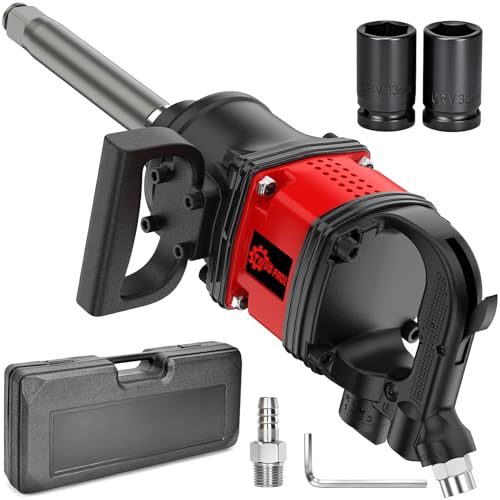
Trivd Frol 1″ Air Impact Wrench 3550 Ft-lbs

AIRCAT 1870-P 1″ Composite Impact Wrench
The Strengths Of Each Pick
The Laser 1119 is not a wrench at all, and that’s the point. It’s a 41mm six-point impact socket on a 1/2″ drive, built to slip onto a gun like the Trivd Frol 1/2″ model below and reach into deep recesses where a shallow socket bottoms out. The single-hex profile grips the flats of a fastener rather than the corners, which spreads load more evenly and is gentler on softer bolt heads.
For anyone already running a 1/2″ pneumatic gun, this is the kind of accessory that solves one stubborn job at a time. Tire shops, suspension work, and big-nut engine applications are where the 41mm size shows up most. It pairs naturally with the Trivd Frol 1/2″ Air Impact Wrench covered next, since that gun’s 1500 ft-lbs of torque has more than enough muscle to push the socket through any fastener the 41mm size fits.
Notable Gains
- Six-point single-hex design grips flat surfaces, reducing the chance of rounding softer bolt heads on aluminum or older fasteners.
- The 41mm opening handles larger fasteners like truck hub nuts and certain suspension bolts that smaller socket sets skip.
- Standard 1/2″ drive compatibility means it slots into the most common impact wrench anvil size in any home shop.
- Deep-wall construction reaches past long studs and threaded projections, where a shallow socket simply stops.
Things To Consider
- This is a single-size socket, not a set, so most home users will still need a range of other sizes for everyday work.
- Availability of 41mm fasteners depends heavily on the vehicle, so this socket may sit unused for long stretches between projects.
Right Fit For
Shop owners and serious DIYers who already own a 1/2″ pneumatic gun and run into oversized hub or suspension nuts that standard socket kits don’t cover.
Where Another Pick Suits Better
Pick the Trivd Frol 1/2″ Air Impact Wrench instead if you don’t yet own a gun at all, since this socket only makes sense paired with one.
Step up from the single Laser socket, and the Trivd Frol 1/2″ Air Impact Wrench is the gun most home mechanics should start with. It runs a twin-hammer impact mechanism, which is the most common design in this class and known for smooth, balanced blows instead of harsh single hits. A 45mm cylinder feeds that mechanism, and the result is up to 1500 ft-lbs of working torque with a free speed of 8000 RPM.
At 4.74 lb with a composite housing, this is the lightest gun in the lineup by a wide margin, which matters more than spec sheets suggest during a long tire rotation day. The compact frame and ergonomic grip make it easy to control in tight engine bays, and the 1/2″ anvil is the universal size for most automotive sockets. Auto repair shops, tire bays, and weekend gearheads get the most from this profile, and the 1/2″ drive also accepts the Laser 1119 socket covered above.
Everyday Wins
- 4.74 lb composite build reduces forearm fatigue during repetitive lug-nut work, which is where lighter guns pay for themselves fastest.
- Twin-hammer impact mechanism delivers smoother blows and longer tool life compared to single-hammer designs in the same torque class.
- 8000 RPM free speed snaps fasteners off quickly, shortening the time per job on a busy day.
- 1/2″ drive anvil accepts the broadest range of automotive impact sockets, so there’s no shortage of compatible accessories.
Worth Noting
- 1500 ft-lbs is plenty for cars and light trucks but starts to feel modest on heavy equipment, where the 3/4″ and 1″ picks below fit better.
- Composite housings handle drops well but commonly show scuffs and wear marks over years of shop use, which is more cosmetic than structural.
Key Specs
Made For
Auto repair techs, tire shop staff, and home mechanics who need a controllable 1/2″ gun for daily vehicle work without paying for heavy-truck torque they won’t use.
Look Elsewhere When
Step up to the Trivd Frol 3/4″ Air Impact Wrench if your day involves semi-truck wheels, large equipment, or other heavy-duty fasteners that overwhelm 1500 ft-lbs.
The mid-tier of the Trivd Frol lineup jumps from a 1/2″ anvil to 3/4″, and the jump in real-world capability is bigger than the size difference suggests. The 3/4″ Air Impact Gun pairs a cold-forged twin-hammer mechanism with a premium alloy steel housing, rated for up to 2100 ft-lbs of torque at 6000 RPM free speed. That extra mass in the housing also helps soak up vibration before it reaches the operator’s hands.
Compared to the 1/2″ model above, this gun trades the lightweight 4.74 lb frame for a tougher build aimed at fleet and heavy-truck work. Lug nuts on commercial trucks, large construction equipment, and oversized industrial fasteners all land in this torque class. The 3/4″ anvil is the most common size for medium-duty impact sockets in professional shops, so the accessory ecosystem is well stocked. For shop owners running mixed vehicles, the 3/4″ model is often the single best compromise between capability and control.
The Upside
- Cold-forged twin-hammer mechanism handles the higher torque class without the rapid wear that plagues softer internal components.
- Premium alloy steel housing improves impact resistance, useful in shop environments where drops and bumps are common.
- 2100 ft-lbs easily covers commercial truck lug nuts, large suspension bolts, and construction equipment fasteners.
- 3/4″ anvil matches the standard socket size for medium-duty truck and industrial work.
Trade Offs
- Heavier than the 1/2″ model, which can wear down operators during a full shift of overhead work.
- 3/4″ sockets are more expensive than their 1/2″ counterparts, and a complete set represents a real added investment.
Best Suited To
Fleet mechanics, tire shops serving commercial trucks, and serious DIYers who regularly work on large vehicles and need more muscle than a 1/2″ gun delivers.
Skip It When
Stick with the Trivd Frol 1/2″ Air Impact Wrench if your workload is mostly cars and light trucks, since the extra weight of this 3/4″ gun is wasted on smaller fasteners.
The 1″ Trivd Frol is the most capable gun in the lineup, and it carries that capability into genuinely industrial territory. A pin-less clutch mechanism replaces the twin-hammer design used in the smaller Trivd Frol models, and the difference shows up in how the gun delivers raw power. With up to 3550 ft-lbs of torque at 5000 RPM and a premium aluminum alloy housing with anti-rust treatment, this is built for sustained heavy use. It ships with 32mm-33mm sockets so it’s ready for big fasteners out of the box.
At 41 lb, this is a serious tool that lives on a cart or in a dedicated bay, not in a portable bag. Mining equipment, large agricultural machinery, and industrial plant maintenance are the natural homes for this class of gun. The pin-less clutch is less common than twin-hammer designs, but it tends to hold up better under the repeated shock loads that 1″ anvil tools experience. Shop owners handling the largest fasteners will find this level of torque essential, while anyone working on passenger cars should look at lighter picks above.
Reasons It Performs
- Pin-less clutch mechanism handles extreme torque output with less internal wear than traditional hammer designs.
- 3550 ft-lbs tackles the largest commercial lug nuts, mining equipment fasteners, and industrial bolts that smaller guns cannot break loose.
- Aluminum alloy housing with anti-rust coating holds up in humid or outdoor work environments.
- Included 32mm-33mm sockets mean the gun is useful for big jobs right out of the box, no separate socket purchase required.
Honest Caveats
- 41 lb weight makes this a cart or hoist tool, not a handheld gun, and operator fatigue sets in fast.
- 5000 RPM free speed is the lowest in the lineup, a deliberate trade-off that prioritizes torque over speed for big fasteners.
Feature Snapshot
Who It Suits Best
Heavy industrial users, mining and agricultural equipment techs, and large-fleet shops that need the maximum torque a 1″ pneumatic gun can deliver on a daily basis.
Not Your Match When
Choose the AIRCAT 1870-P if a 1″ gun is the right size but 41 lb is too heavy for your operators or shop layout.
The AIRCAT 1870-P brings a different design philosophy to the 1″ category than the Trivd Frol model above. Where that gun leans on mass, the AIRCAT uses a composite housing to keep weight to 12.95 lb, which is a striking contrast to the 41 lb Trivd Frol. The 1870-P still delivers up to 1900 ft-lbs of tightening torque and 2100 ft-lbs of loosening torque, and an offset side handle keeps the operator’s hand away from the reaction zone.
The composite body soaks up vibration better than bare metal, which matters during a full shift of truck work. Pistol-grip ergonomics and the lower weight also make this gun usable in handheld applications where the heavier 1″ alternatives are not. Long-haul truck shops, agricultural equipment service, and any operator who wants 1″ drive capability without the fatigue of a 40-plus-pound gun will find this a smart middle ground. The trade-off shows up in raw maximum torque, which is lower than the Trivd Frol 1″ model.
What Earns Its Place
- 12.95 lb composite build is dramatically lighter than other 1″ guns, opening up handheld use for the first time in this drive size.
- Composite housing dampens vibration transmission, reducing hand-arm fatigue during long shifts.
- Offset side handle positions the support hand away from the reaction point, which is a meaningful safety upgrade in this torque class.
- 1900 ft-lbs tightening and 2100 ft-lbs loosening covers the bulk of truck and heavy equipment fasteners.
Points To Keep In Mind
- Composite housings can show wear marks more visibly than steel, which is a cosmetic rather than structural issue but worth knowing.
- 1900 ft-lbs tightening torque is below the Trivd Frol 1″ model, so the most extreme rusted fasteners may still require the heavier gun.
Feature Card
Perfect Match For
Professional truck and heavy equipment techs who need 1″ drive torque without the operator fatigue of a 40-plus-pound steel-bodied gun.
Another Choice May Suit
Reach for the Trivd Frol 1″ Air Impact Wrench if your shop handles the most extreme industrial fasteners and you can manage the 41 lb weight on a cart or hoist.
Picking The Right Pneumatic Impact Gun For Your Shop
Anvil Size And The Fasteners You Actually Touch
The anvil is the square stub on the front of the gun that sockets slide onto, and its size is the single most important decision before anything else. A 1/2″ anvil pairs with the largest socket ecosystem for automotive work, from lug nuts to suspension bolts. A 3/4″ anvil steps up to commercial truck wheels and heavy equipment, while a 1″ anvil lives in mining, agricultural, and industrial plant service. Picking the wrong anvil size means buying sockets that don’t fit, so matching the gun to your typical fastener first saves money and frustration.
Torque Class And How It Plays Out In Practice
Torque ratings on impact guns come in two flavors. Maximum or working torque is the tightening force the gun delivers, while loosening torque is often higher and represents the force needed to break free a stuck fastener. A 1500 ft-lbs gun handles nearly every passenger vehicle job, 2100 ft-lbs steps into commercial truck territory, and 3500-plus ft-lbs is reserved for industrial fasteners. Over-torquing small fasteners with a heavy gun is a real risk, so matching torque to the application matters as much as raw power.
Weight, Ergonomics, And The Long Workday
Weight gets ignored in spec sheets until you hold a 41 lb gun overhead for the third time in an hour. Lighter composite guns in the 5 to 13 lb range fit handheld use, while anything over 25 lb really wants a cart, balancer, or hoist. Vibration-dampening handles and offset side grips reduce fatigue further, and the difference between a comfortable gun and an exhausting one shows up at the end of a long shift.
Air Supply And Shop Setup
Pneumatic guns need a compressor that can keep up. A 1/2″ gun typically runs on 4 to 6 CFM at 90 PSI, while a 1″ gun often needs 10 CFM or more. A small home compressor can choke a heavy gun, costing you torque and triggering the compressor constantly. Before buying, check your compressor’s CFM rating and make sure it can sustain the gun’s demand during realistic work intervals.
Key Considerations Across These Picks
Where Shoppers Go Wrong
The most common mistake is buying a 1″ gun for jobs a 1/2″ gun handles easily, then struggling with the weight all day. Going the other direction is also costly, since an underpowered gun can stall or fail to break free a stubborn fastener, which damages the tool and the bolt. Matching the gun’s anvil size and torque class to your actual workload avoids both problems. Another slip is forgetting the air supply side, where a gun that demands more CFM than the compressor delivers simply will not reach its rated torque in real use.
The Case For Spending Up
Higher-tier models in the pneumatic impact gun category earn their price through better impact mechanisms, composite housings that dampen vibration, and accessories like side handles that improve safety. The jump from a basic steel-bodied gun to a composite, vibration-controlled model is felt most by full-time operators who use the tool every day. For occasional weekend use, the upgrade is harder to justify, but for shop professionals, the reduction in fatigue and the longer service life often pay back the higher cost within a season.
Frequently Asked Questions
What size air compressor do I need to run a pneumatic impact gun?
A 1/2″ pneumatic impact gun typically needs a compressor that delivers 4 to 6 CFM at 90 PSI, while 3/4″ and 1″ guns often require 8 to 12 CFM or more. Small pancake compressors may struggle to keep up with anything beyond light 1/2″ use, so check your compressor’s CFM rating against the gun’s air consumption before buying.
Can one impact gun handle every fastener in a typical shop?
A single gun rarely covers every fastener a shop sees, which is why many technicians run two sizes, often a 1/2″ for general work and a 3/4″ or 1″ for heavy truck or equipment jobs. Choosing the right primary size depends on the most common fastener type in your workload, with the secondary gun filling the gaps.
How do twin-hammer and pin-less clutch mechanisms differ?
Twin-hammer mechanisms use two rotating hammers to deliver balanced blows, and they are the most common design in mid-range guns. Pin-less clutch mechanisms replace those hammers with a different internal arrangement that handles very high torque with less internal wear, and they show up in the largest 1″ industrial tools.
Are composite housings as durable as steel?
Composite housings handle shop environments well, including drops and impacts, and they dampen vibration better than bare steel. They tend to show scuffs and surface wear more visibly than steel, but this is mostly cosmetic. For full-time shop use, the vibration reduction often outweighs the cosmetic concern.
How often should a pneumatic impact gun be oiled?
Most pneumatic impact guns benefit from a few drops of pneumatic tool oil through the air inlet at the start of each workday or before extended use. A few drops per shift, or following the manufacturer’s lubrication schedule, keeps internal vanes and impact components running smoothly and extends tool life.
Wrap Up
The right pneumatic impact gun is the one that matches your anvil size, torque class, and air supply to the fasteners you touch most. Home mechanics and tire shops serving passenger vehicles get the most from a 1/2″ gun like the Trivd Frol 1500 ft-lbs model, while fleet and commercial work calls for the 3/4″ step up. Industrial users with the air supply to back it up will find the 1″ Trivd Frol or the lighter AIRCAT 1870-P a worthwhile investment.




