


A pocket hole jig quietly changes the way you build. Instead of fighting with clamps, biscuits, or visible fasteners, you get clean joints that hold tight and hide away. Most hobbyists who try one wonder how they ever got by without it.
The five picks below span the main Kreg line, the workhorse K4, the upgraded 720 PRO, and a specialty shelf-pin jig. Item 2 is a thoughtful add-on for sewing rooms rather than a woodworking jig; we kept it in the list because storage and organization matter to every maker, and it pairs well with a hobby setup. Your decision really comes down to project scale, material thickness, and how often you build.
An Overview Of The Picks
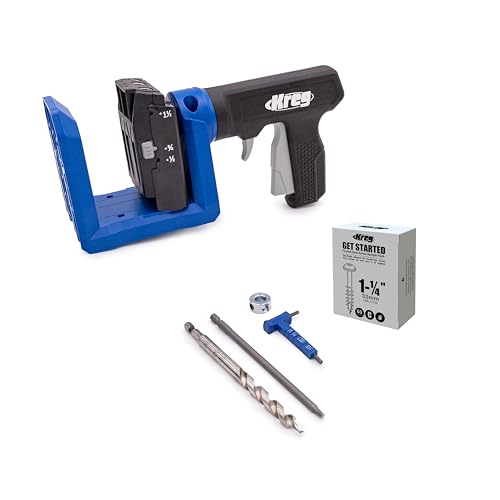
Kreg Pocket-Hole Jig 520 with 60 Screws

YARWO Sewing Machine Cover with Pocket

Kreg Pocket Hole Jig K4 Woodworking Jig

Kreg Pocket-Hole Jig 720PRO (KPHJ720PRO)

Kreg Shelf Pin Jig 1/4 Inch (KMA3225)
Why These Options Stand Out
The Kreg 520 is the entry-level pickup that doesn’t feel like a starter toy. A pocket-hole jig works by clamping your workpiece and guiding a stepped drill bit at a precise angle, so the screws emerge at a fixed geometry every time, producing tight, repeatable joints without visible fasteners. This model handles material from roughly 1/2 inch up to 1 1/2 inches thick, which covers most furniture and cabinetry projects hobbyists tackle on a weekend.
Compared to the heavier K4 covered below, the 520 is lighter and quicker to set up on a small bench. The included 60 screws mean you can start your first project the same day the box arrives. For anyone new to pocket-hole joinery, the learning curve stays gentle, and the anti-slip pad keeps boards locked without extra clamps.
A Favorable Mix
- Anti-slip clamping surface grips material firmly, reducing the need for extra clamps during drilling.
- 360° rotating handle adapts to tight spots and awkward workshop angles.
- Generous 1/2″ to 1-1/2″ material range covers most furniture, cabinet, and shelving builds.
- Includes 60 screws so you can finish a small project straight out of the box.
Points To Note
- Lacks the dual-drill guide and stackable stops found on the K4, so repeat setups take a little longer.
- The plastic body, while portable, can flex under heavy pressure on dense hardwoods.
Feature Snapshot
Who Should Grab It
First-time DIYers and weekend builders who want a forgiving, well-rounded pocket-hole jig without committing to a pro-tier setup.
Where Another Pick Suits Better
Habitual workshop users producing cabinets on repeat should look at the Kreg Pocket-Hole Jig 720PRO for its faster material indexing.
The YARWO cover is technically a sewing accessory, not a pocket-hole machine, but it earns its spot for anyone whose workshop doubles as a craft room. A heavy-duty fabric shell with a water-resistant inner liner shields the machine from dust, spills, and curious pets between sessions. Think of it as the protective outer shell that keeps your gear ready for the next project.
Where the cover really shines is storage. Multiple outer pockets swallow bobbins, thread, scissors, seam rippers, and the foot pedal, so the whole station collapses into one tidy footprint at the end of the day. Translucent side panels let you see what’s inside without rummaging. At 17″ x 8″ x 13″, it fits the bulk of standard home sewing machines from the usual major brands.
Where It Helps
- Roomy outer pockets keep notions, foot pedals, and small tools within easy reach.
- Translucent side panels make identifying stored supplies fast.
- Water-resistant interior lining wipes clean after dusty shop sessions.
Honest Caveats
- Not a true woodworking jig, so it pairs with another pick rather than replacing one.
- Confirm your machine’s footprint falls inside the 17″ x 8″ x 13″ interior before committing.
Whose Shelf It Belongs On
Makers running a multi-purpose home workshop who want to keep a sewing station organized alongside their pocket-hole tools.
Skip It When
You strictly need joinery for thick plywood builds; the Kreg Pocket-Hole Jig K4 is the better woodworking answer.
The K4 is the long-running favorite in the Kreg lineup, and for good reason. Its hardened-steel drill guides and three-hole configuration make it easy to drill one, two, or three pocket holes in a single clamp cycle, so face frames and cabinet carcases come together fast. The large clamping surface handles wide boards without flexing, which is where the budget-friendly 520 can start to feel limited.
If you build a couple of projects a month, the K4 pays for itself in saved time. Compared to the 520, you get a more rigid body, swappable spacers for repeatable setups, and the kind of shop-ready feel that holds up to years of regular use. For hobby woodworkers who want a jig that won’t get replaced in two years, the K4 is a strong, dependable pick.
A Strong Showing
- 3-hole drill guide lets you sink multiple pocket holes in one clamp, speeding up face frames and rails.
- Swappable setup blocks offer consistent material thickness across repeated builds.
- Sturdy clamping mechanism grips wide boards without racking the jig.
Trade Offs
- Bulkier than the 520, so small workbenches may feel crowded during use.
- Screws and drill bit are typically sold separately, adding to the total cost.
Key Product Details
Made For
Regular DIY builders and small-shop hobbyists producing cabinetry, face frames, and furniture on a steady cadence.
Reach For A Different Pick When
You want a softer learning curve and don’t need multi-hole drilling; the Kreg 520 keeps things simpler.
The 720 PRO is the model you graduate to when pocket-hole joinery becomes a regular part of your shop routine. It dials in material thickness with a tool-free adjustment, and its auto-clamp feature grips the workpiece the moment you press down, so you can drill, release, and move on without juggling a hand on the clamp. For plywood cabinetry between 1/2 inch and 1-1/2 inches, the precision is noticeable right away.
Where the K4 stays slightly more manual, the 720 PRO trades some flexibility for pure workflow speed. You also get a built-in dust collection port, which keeps your bench and lungs cleaner over a long build day. If the K4 is the workhorse, the 720 PRO is the streamlined version that assumes you already know why you’re buying it.
Reasons It Performs
- Tool-free material adjustment makes switching thicknesses fast and repeatable.
- Auto-engage clamp secures stock in a single motion for higher output.
- Built-in dust port keeps the bench cleaner during long cabinet runs.
Worth Bearing In Mind
- Heavier than the K4, so bench-portable use is less convenient.
- Premium positioning means a higher entry cost than other picks in this list.
Who Will Love This
Frequent builders producing cabinets, built-ins, and shop furniture who value speed and repeatable setup more than a lower price.
Look Elsewhere When
You only build a few small projects a year; the Kreg K4 covers the same joints at a friendlier price.
The KMA3225 isn’t a pocket-hole jig in the traditional sense; it’s a companion tool that solves one specific headache beautifully. Adjustable shelves sit on small metal or plastic pins that drop into 1/4-inch holes drilled into the cabinet sides. Drilling those holes evenly by hand is a recipe for wobbling shelves, which is exactly where a dedicated shelf-pin jig pays off.
The jig registers against the cabinet edge and steps through a fixed spacing pattern, so every row of holes lines up the same on both sides of the cabinet. The compact size stores easily in a drawer, and you can move it from one cabinet box to the next without recalibrating. For anyone building bookcases, closets, or kitchen cabinets, it brings the same repeatable accuracy to shelf holes that a pocket-hole jig brings to joinery.
Real Benefits
- Edge-aligned design keeps holes straight and consistent across cabinet sides.
- Compact body fits inside a drawer when the project is done.
- 1/4″ hole size matches the most common shelf-pin standard.
Some Limits To Know
- Limited to shelf-pin work; it won’t replace a dedicated pocket-hole jig for joinery.
- Works best on standard cabinet stock, so thicker custom material may need a different guide.
Best Suited To
Cabinet makers and closet builders who want reliable, evenly spaced shelf pin holes without measuring by hand.
A Better Fit Elsewhere
Your priority is structural joinery for furniture frames; the Kreg Pocket-Hole Jig K4 handles that core job.
Picking The Right Pocket Hole Jig For Your Shop
A pocket-hole jig earns its place by saving time, but the right one depends on how often you build and what you’re joining. The single biggest spec to weigh is material thickness range; most hobby work falls between 1/2 inch and 1-1/2 inches, and every pick here covers that span. Beyond thickness, look at how the jig clamps, since a wobbly clamp creates skewed holes and weak joints.
Clamping And Setup Speed
Hands-free or auto-engage clamps feel like a luxury until you build your third cabinet in a week. Tool-free adjustment between material sizes keeps the workflow moving, especially when switching between 3/4-inch plywood and 1/2-inch backs. For occasional use, a manual clamp is fine and saves a meaningful amount of money.
Material Range And Drill Guide Layout
A 3-hole drill guide, as found on the K4, makes face frames faster because you can sink three pocket holes per clamp. A single-hole guide is simpler for beginners but slows you down on repetitive work. Match the guide layout to the joints you build most often.
Bench Size And Storage
A larger jig is more stable but eats bench space. If your shop doubles as a garage or spare room, a compact jig that stows in a drawer makes the hobby more sustainable. Consider the jig’s footprint before committing, especially if you share the bench with other tools.
Matching The Jig To Project Scale
Hobby furniture and small cabinets call for an entry-level or mid-tier jig. Larger projects, or a steady flow of carcases, justify the upgrade. Buying beyond your real workload is the most common mistake; jigs that sit on a shelf collect dust while the basic one does the work.
Key Considerations Across These Picks
Pitfalls Shoppers Hit
The most common slip-up is buying the largest, most expensive jig and using it twice a year. A simpler jig used often outperforms a premium jig that gathers dust. The second trap is forgetting consumables: pocket-hole screws and a stepped drill bit aren’t always included, and using the wrong screw length can blow out the back of thinner stock.
When Paying More Pays Off
Spending up makes sense once pocket-hole joinery becomes a regular part of your workflow. Faster clamping, dust collection, and tool-free setup all add up over a long build day. A pro or frequent hobbyist recovers the premium quickly; a once-a-year user never will.
Frequently Asked Questions
What thickness of wood works with a pocket-hole jig? Most jigs on this list handle stock from 1/2 inch up to 1-1/2 inches, which covers the majority of furniture, cabinet, and shelving builds.
Do pocket-hole jigs need special screws? Yes, pocket-hole screws have a flat shoulder and a self-tapping tip engineered for the angled pocket hole, so they should not be swapped for standard wood screws.
Can a beginner use a pocket-hole jig without prior woodworking experience? A basic jig like the Kreg 520 is friendly to first-timers, since the drill guide handles the angle and the clamp holds the board in place during drilling.
What’s the difference between the Kreg K4 and the 720 PRO? The K4 is a manual workhorse with a 3-hole guide, while the 720 PRO adds tool-free adjustment, auto-clamping, and a dust port for faster, cleaner repeat builds.
Is a shelf pin jig the same as a pocket-hole jig? No, a shelf pin jig only drills aligned 1/4-inch holes for adjustable shelf supports, and it works alongside, not in place of, a pocket-hole jig.
The Takeaway
Pocket-hole jigs turn a frustrating step in woodworking into a quick, repeatable process. Start with the model that matches your real workload rather than your imagined dream shop, and add a shelf pin jig if cabinets are on your build list. The right tool is the one you actually pick up.




