


Hanging a shower door, mounting a towel bar, or running a new water line through a porcelain backsplash all share one common headache: the wrong bit shatters the tile before the job is half done. Picking a diamond or carbide bit that matches your material and your drill makes the difference between clean holes and a costly replacement. This roundup walks through five DECKRKAT sets designed for hard surfaces like porcelain, ceramic, marble, granite, and glass, with notes on which scenarios each one handles best.
A Closer Look At The Lineup

DECKRKAT 7-Piece Diamond Drill Bits Set with Storage Case
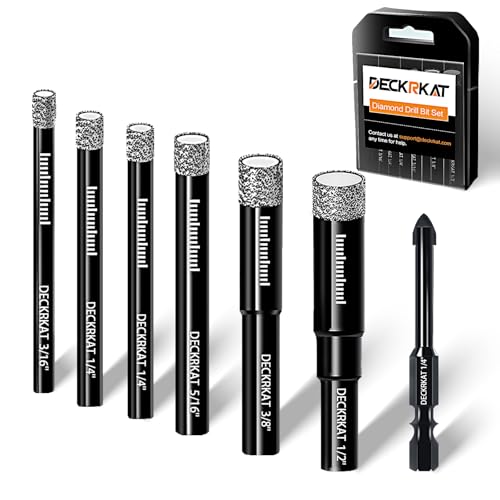
DECKRKAT 7-Piece Dry Diamond & Carbide Tile Drill Bit Set

DECKRKAT 10-Piece Dry Diamond Drill Bits for Tile and Stone

DECKRKAT 5-Pack 3/16″ Vacuum Brazed Diamond Hole Saws

DECKRKAT 5-Pack 1/4″ Vacuum Brazed Diamond Hole Saws
A Closer Look At Each Pick
The seven-piece DECKRKAT set covers the diameters most homeowners reach for first: 3/16″ (twin), 1/4″ (twin), 5/16″, 3/8″, and 1/2″. That spread handles towel bars, shower heads, and standard plumbing stub-outs without forcing a mid-project trip back to the store.
Each bit is built with a hollow dry-drilling core, and the inner wax lubricant helps control heat during longer cuts, which matters when you are pushing through a porcelain tile that runs thicker than budget glass tile. The round shank fits standard cordless drills, and the included case keeps the small sizes from disappearing into a junk drawer.
A Few Highlights
- Size range covers most common household anchor and plumbing needs
- Internal wax core reduces heat buildup during dry drilling on porcelain
- Storage case keeps bits organized and easy to grab on repeat jobs
- Round shank fits the drill you likely already own
Things To Consider
- Dry drilling works, but taking it slow on dense porcelain reduces chip risk
- No dedicated carbide bit, so very hard granite may wear bits faster than a hybrid set would
Key Specs
Who It Suits Best
Homeowners tackling a single bathroom or kitchen refresh who want one set that covers the most common hole sizes without buying extras.
Consider Something Else When
Step up to the DECKRKAT 10-Piece Dry Diamond Drill Bits set if your project involves more than two or three holes in varying sizes, since the extra pieces cut down on bit-switching mid-job.
Where the first set relies entirely on diamond tips, this seven-piece kit layers in a carbide bit alongside the diamond cores. That combination is genuinely useful when a job moves between materials: ceramic tile on the wall, a softer cement backer board, and maybe a touch of masonry behind it.
The size lineup matches the everyday set at 3/16″, 1/4″ (x2), 5/16″, 3/8″, 1/2″, plus the dedicated carbide bit. The dry-drilling diamond design keeps coolant needs low, and the carbide option gives you a backup for tougher or layered substrates where pure diamond can skate on the surface.
Where It Delivers
- Mixes diamond and carbide for varied surface conditions
- Diamond bits use wax core for heat control during dry cuts
- Carbide bit handles layered backer board and masonry sections
- Same practical size range as the all-diamond set
Worth Noting
- More pieces to keep track of than a single-material set
- Carbide bit is rougher on glazed tile, so it suits backer layers more than the finish surface
Made For
Renovators working through walls that combine porcelain tile, backer board, and framing lumber in a single pass.
Look Elsewhere When
Choose the DECKRKAT 7-Piece Diamond Drill Bits Set instead when the job is pure tile, since an all-diamond kit tends to leave cleaner edges on glazed surfaces.
Stepping up to ten pieces, this set repeats the workhorse 3/16″ and 1/4″ sizes so the bits you use most often stay sharp longer. The lineup includes 3/16″ (x2), 1/4″ (x3), 5/16″, 3/8″, 1/2″, and 1/4″ (x2), which adds up to real flexibility when a project calls for a dozen or more holes.
The dry-drilling diamond construction with internal wax cooling helps the bits survive long sessions in porcelain or granite without demanding a separate water source. For a full bathroom remodel, having multiple 1/4″ spares means a worn bit does not stall the day.
Practical Pluses
- Multiple 1/4″ bits for the most-used size in plumbing and anchor work
- Wider size range reduces mid-project bit swaps
- Internal wax cooling supports longer dry-drilling sessions
- Good match for full-room remodels with many hole locations
Trade Offs
- Heavier initial buy than the smaller kits, which is hard to justify for a single project
- No dedicated carbide option for masonry sections, unlike the hybrid set
Feature Snapshot
Best Suited To
DIYers running a full bathroom or kitchen remodel who expect to drill dozens of holes and want backup sizes on hand.
A Better Fit Elsewhere
Pick the DECKRKAT 7-Piece Diamond Drill Bits Set instead for a one-room refresh, since fewer pieces still cover the standard sizes at a lighter entry point.
This pack trades breadth for focus. Five 3/16″ (5mm) vacuum-brazed diamond hole saws, all the same size, ready to drill the small-diameter holes that come up constantly in wall anchor and screw installations.
Vacuum brazing bonds the diamond grit to the steel core, which tends to hold up well under repeated dry drilling in porcelain, ceramic, and glass. The round shank and storage case make it easy to grab one and go, and the five-pack format means you are not stuck if a bit glazes over halfway through a project.
Noteworthy Benefits
- Five-pack provides real spares for the most common small-diameter job
- Vacuum-brazed bond holds up through repeated dry drilling
- 3/16″ matches standard wall anchor and screw pilot holes
- Storage case keeps bits together and easy to locate
Points To Note
- Single size only, so any other diameter means a second purchase
- Not rated for wood, which rules out fast bit changes on framing
Who Will Love This
Anyone mounting towel hooks, soap dishes, or light fixtures where the tile pilot hole is the bottleneck, and where keeping spares on hand matters.
Swap It Out When
Choose the DECKRKAT 5-Pack 1/4″ Vacuum Brazed Diamond Hole Saws for plumbing stub-outs or shower door installs, where 1/4″ is closer to the hardware you are mounting.
The fifth pick mirrors the fourth in form, but lands on 1/4″ (6mm), which is the go-to diameter for shower door mounting hardware and water filter supply lines. Five bits in the pack give you room to finish a multi-hole install without babysitting a worn tip.
Vacuum-brazed diamond construction is the same as the 3/16″ set, so heat management and longevity should track similarly across porcelain, ceramic, granite, marble, and glass. The round shank keeps the bits compatible with the drill most homeowners already own.
What Makes Sense
- 1/4″ diameter lines up with shower door and supply line hardware
- Five-pack format supports multi-hole installs without reordering
- Vacuum-brazed bond handles repeated dry drilling on hard surfaces
- Storage case included for tidy bit management
Honest Caveats
- Limited to a single diameter, so plan other sizes separately
- Not for wood, so it cannot double as a framing bit on the same project
The Right Fit
Homeowners installing a new shower door, kitchen faucet, or under-sink water filter where 1/4″ pilot holes are the standard call.
Where A Sibling Pick Shines
For a mix of anchor, plumbing, and electrical holes, the DECKRKAT 7-Piece Diamond Drill Bits Set covers more diameters in one kit at a similar cost per piece.
What Matters Most Before Choosing Porcelain Tile Drill Bits
Match the Bit Type to the Material
Diamond-tipped core bits cut cleanly through porcelain, ceramic, glass, and stone because the abrasive diamond grit grinds rather than chips. Carbide bits work better on softer masonry and cement board, where a twisting flute design clears dust efficiently. For pure porcelain tile projects, diamond is the safer bet, and a hybrid set makes sense only when the wall or floor combines several substrates.
Pick the Right Diameter First
Before buying, list the hardware you plan to mount: wall anchors usually need a 3/16″ or 1/4″ pilot, shower heads and supply lines often want 1/4″ or 5/16″, and larger plumbing drops can run 3/8″ to 1/2″. Building that list keeps you from buying a kit with too few sizes, and it tells you whether a single-size specialist pack or a multi-size set fits the job.
Dry vs. Wet Drilling
Wet drilling uses a steady water stream to cool the bit and clear dust, and it tends to extend bit life on long sessions. Dry drilling, common in diamond hole saws, relies on internal wax cooling and slower drill speed. For most homeowner projects, dry bits are easier to use indoors, but they reward a patient pace and a steady hand on dense porcelain.
Shank and Drill Compatibility
A round shank fits most standard cordless and corded drills without an adapter. Specialty bits with hex or SDS shanks need a matching chuck, so check your drill before checkout. Buying a set your existing drill cannot run wastes money and forces another trip.
Key Considerations Across These Picks
Common Buying Traps
The most common mistake is buying a standard twist bit for porcelain and watching it skate across the glaze. Another is grabbing a large multi-pack when the project only needs two or three sizes, which leaves half the kit sitting unused. Always check that the bit is rated for porcelain specifically; bits labeled only for ceramic or glass can underperform on harder porcelain.
Where The Extra Money Goes
Higher-tier diamond drill bits typically use vacuum brazing rather than cheaper sintering to bond the diamond grit, which holds up under repeated dry drilling. Larger sets with more pieces cost more up front but spread the per-bit cost down, and they keep spares on hand for long projects. The upgrade pays off when you are drilling more than a handful of holes, since a glazed-over bit in the middle of a remodel stalls everything.
Frequently Asked Questions
What drill speed works best with porcelain tile drill bits?
Keep the drill on a low to medium speed, around 800 to 1500 RPM, and let the bit do the work without forcing it. Slow, steady pressure keeps heat down and reduces the chance of cracking the tile.
Can these bits be used on glass and marble too?
Yes, the diamond-tipped bits in this list handle glass, marble, granite, and most natural stone alongside porcelain. Marking the start point with painter’s tape helps prevent wandering on slick surfaces like glass.
How do I prevent the bit from overheating during dry drilling?
Pause every few seconds to let the bit cool, and avoid pushing hard. The internal wax lubricant in these DECKRKAT bits helps manage heat, but the operator’s pace still matters on dense porcelain.
Are round shank bits compatible with my cordless drill?
Most cordless drills accept round shanks directly, so no adapter is needed. If your drill uses a keyless chuck and the bit spins true, you are set to go.
What is the difference between vacuum brazed and sintered diamond bits?
Vacuum brazing bonds the diamond grit to the steel with a metal alloy, which tends to hold up well under dry drilling. Sintered bits press the diamond into a powder matrix and are often more affordable, though they may wear faster during repeated dry use.
Closing Remarks
For a single bathroom or kitchen project, the seven-piece diamond set covers the common sizes and keeps things simple. Larger remodels benefit from the ten-piece value pack, while the focused 3/16″ and 1/4″ five-packs shine when you know exactly what hardware you are mounting. Pick the set that matches the scope of your job, take it slow, and your porcelain tile will come through with clean, crack-free holes.




