


A good portable plasma cutter earns its keep the first time you slice a clean edge through a rusty trailer frame or trim a stubborn chassis bracket. Hobby fabricators, weekend restoration folks, and small-shop pros all run into the same pain: thick steel, awkward angles, and not enough wall outlet to power a full-size industrial unit. The five options below cover a range of skill levels and budgets, from a simple cutting template to dual-voltage workhorses built for daily use.
An Overview Of The Picks

Plasma Stencil Square Cutter Guide 5 pc. Kit .430″

YESWELDER CUT-50DS 50A Plasma Cutter 1/2 in Clean Cut
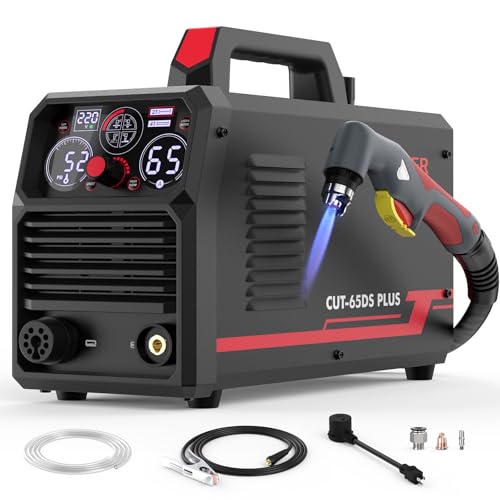
YESWELDER CUT-65DS PLUS 4-in-1 Non-HF Pilot Arc

YESWELDER CUT-55DS PRO 55A Non-HF IPT40 Torch

PRIMEWELD CUT60 60Amp Non-Touch Pilot Arc PT60 Torch
The Details Behind The Selections
This kit is not a plasma cutter at all, but rather the kind of accessory that quietly makes one more useful. The set of five magnetic stencil guides lets you trace perfect squares in steel without measuring, marking, or eyeballing corners on a noisy shop floor.
Designed to fit a .430″ drag shield, each template offsets slightly so you get a little built-in clearance for welding and assembly afterward. Compared to the heavy-duty machines in this roundup, this is a small investment, but you may find it earns a permanent spot in your toolbox.
The Value In It
- Five templates cover ten square sizes from ¼” up to 2″, giving you real range for bracket and plate work.
- Strong magnets hold the guide flat to the workpiece so your hand stays free to run the torch.
- Saves the time you would otherwise spend measuring, scribing, and re-checking layout lines.
- Fits most handheld plasma cutters that use a standard drag shield, including common 911 Motorsports-style shields.
Worth Noting
- The templates only cut squares, so round or irregular shapes call for a different approach.
- You still need a compatible plasma cutter and clean, flat steel to get crisp results.
Who It Suits Best
Hobbyists and small-shop fabricators who frequently cut square mounting holes, gussets, or plate cutouts and value repeatable accuracy.
Consider Something Else When
Shoppers looking for a complete cutting system should skip this and step up to the YESWELDER CUT-50DS instead, since the stencil kit assumes you already own a torch.
For a first plasma cutter in a home garage, the CUT-50DS covers the bases without drowning you in features. It runs on either a 110V household outlet or a 220V shop circuit, and that flexibility alone removes a major barrier for newcomers who do not want to rewire their workshop.
Clean cuts of 1/4″ at 110V and 1/2″ at 220V cover most automotive, trailer, and decorative-metal projects. The IGBT inverter (a modern solid-state power module that keeps weight down and efficiency up) makes the unit relatively light to carry, and the controls stay simple enough that you can focus on torch technique rather than menu settings.
A Strong Showing
- Dual-voltage design lets you start in a home garage and move to a 220V outlet later without buying a second machine.
- Reaches a 1/2″ clean cut on mild steel, which covers most repair and hobby steel thicknesses.
- Compressed-air operation keeps consumables affordable, and air is non-hazardous compared to fuel gas setups.
- Stainless, mild steel, copper, and aluminum all fall within its working range.
Trade Offs
- Maximum sever cuts require slower travel speeds, so thick plate work tests your patience.
- An external air compressor and hose are required, and the duty cycle drops during heavy use.
Feature Snapshot
Made For
First-time plasma owners and weekend hobbyists who want a forgiving entry-level machine that still handles real repair work.
Look Elsewhere When
Professionals cutting production parts every day will want the more capable YESWELDER CUT-65DS PLUS reviewed below, since this unit is built for lighter, less frequent use.
The CUT-65DS PLUS is the Swiss Army knife of this roundup. It handles plate cutting, grid cutting, gouging, and marking in one box, which means you do not have to swap machines when a job shifts from clean cuts to weld removal.
Non-HF pilot arc starting eliminates the high-frequency interference that can upset nearby computers and electronics, a real plus in any shop running CNC or sensitive controls. For fabricators who bounce between cutting, cleaning up bad welds, and scribing layout lines, the 4-in-1 approach saves both bench space and money.
Strong Points
- Four functions in one unit cut down on the gear you need to haul to a job site.
- Non-HF start keeps it friendly around sensitive electronics and reduces arc-start interference.
- Grid mode keeps a stable arc when slicing through expanded metal or perforated sheet.
- Marking function lets you lay out guide lines directly on the workpiece with the same machine.
Possible Compromises
- More modes mean a steeper learning curve, so plan time to practice before production work.
- Still requires a clean dry air supply, and consumables wear faster under heavy gouging cycles.
Right Fit For
Small fabrication shops and serious hobbyists who want one machine to handle cutting, weld prep, gouging, and layout marking.
Reach For A Different Pick When
Someone who only needs a straightforward cutter for clean plate work may find the simpler PRIMEWELD CUT60 a less complicated daily tool.
The CUT-55DS PRO sits comfortably between the entry-level CUT-50DS and the multi-mode CUT-65DS PLUS. It pushes 55 amps of cutting power, runs on dual voltage, and uses a blow-back pilot arc start that feels smooth and predictable every time you pull the trigger.
The included IPT40 torch (a popular mid-size plasma torch with widely available consumables) keeps replacement parts easy to source. Owners commonly report the non-HF start plays well in shops packed with electronics, from inverter welders to laptop-driven CNC controllers.
Positive Points
- Blow-back start delivers a clean, reliable arc without high-frequency noise.
- IPT40 torch uses consumables you can find at most welding suppliers, which simplifies ownership.
- Dual-voltage input matches the same wall-outlet flexibility as the smaller CUT-50DS.
Points To Keep In Mind
- More cutting power than the CUT-50DS means it draws more current, so your 110V circuit needs to be in good shape.
- Lacks the 4-in-1 gouging and marking modes of the CUT-65DS PLUS, so it is a cutter first and foremost.
Best Suited To
Regular hobbyists and part-time pros who want more cutting headroom than a 50A entry unit without stepping up to a full multi-process machine.
A Better Fit Elsewhere
Shoppers needing gouging and marking alongside cutting will find the YESWELDER CUT-65DS PLUS a more complete package for the same shop footprint.
The CUT60 has been a workhorse in small fabrication shops for years, and for good reason. Its continuous pilot arc (a small maintained arc that lets you cut without re-striking on every pass) keeps you moving across expanded, painted, or rusty metal without losing the cut, which is exactly the kind of mess you face on repair and demolition jobs.
The PT60 torch with a Euro central connection (a quick-disconnect torch coupling common on professional plasma machines) makes swapping consumables fast, and the 60 amp output pairs naturally with a 60% duty cycle. Dual-voltage input and a three-year warranty round out a package that feels built for daily production rather than occasional use.
Where It Excels
- Continuous pilot arc cuts through painted, rusted, or expanded metal without constant re-strikes.
- 60% duty cycle at full output supports longer production runs before the machine needs to cool down.
- PT60 torch with Euro connector gives you fast consumable changes and broad parts availability.
Less Ideal Details
- Heavier than the smaller YESWELDER CUT-50DS, so portability drops a step.
- Higher amperage means a dedicated 220V circuit gives the best results, which not every home shop has wired in.
Who Should Grab It
Working pros, restoration shops, and serious fabricators who run their plasma cutter for hours at a time and need the continuous pilot arc to handle rough or coated steel.
Swap It Out When
Casual home users who only cut thin sheet a few times a month will be better served by the lighter YESWELDER CUT-50DS and its easier 110V operation.
What Matters Most Before Choosing Portable Plasma Cutters
Power, Voltage, And Real-World Cutting Depth
A cutter rated at 50A on 110V handles a 1/4″ clean cut with room to spare, while stepping to 220V at the same amperage nearly doubles that ceiling. For most home shops, dual-voltage machines like the YESWELDER CUT-50DS let you start small and grow. If your work leans toward 1/2″ plate or heavier, a 55A to 60A unit pays off in fewer passes and cleaner edges.
Pilot Arc, Non-HF Starting, And Shop Safety
A pilot arc lets the torch start a cut without touching the workpiece, which is invaluable on rusty, painted, or uneven metal. Non-HF (non-high-frequency) start methods remove the electrical noise that can disturb nearby electronics, an important detail in any shop running CNC or computer-controlled equipment. Machines like the YESWELDER CUT-65DS PLUS and CUT-55DS PRO lean on non-HF starts for that reason.
Duty Cycle, Air Supply, And Torch Compatibility
Duty cycle (the percentage of a 10-minute window a machine can run before needing to cool) decides how long you can cut before the unit has to rest. Production shops should look for at least 60% at full output, while hobbyists can live with 35% to 40%. Every plasma cutter on this list also needs a dry, regulated compressed-air supply, and using the right torch consumables (PT60, IPT40, and similar) keeps replacement parts affordable.
Portability, Weight, And Workshop Footprint
Lighter 50A inverter units are easier to carry to a job site or a friend’s garage, while 60A workhorses like the PRIMEWELD CUT60 tend to stay on a bench. If you cut outdoors, on a trailer, or in tight spaces, weight and handle design matter as much as raw amperage.
Key Considerations Across These Picks
Pitfalls Shoppers Hit
The most common mistake is buying a single-voltage machine only to discover the home outlet cannot feed it properly. A close second is underestimating air requirements: small compressors with undersized tanks leave you waiting for pressure between cuts. Finally, ignoring consumable costs on cheap torches turns a bargain cutter into an expensive one once replacement tips and electrodes add up.
Where The Extra Money Goes
Stepping up from a basic 50A unit to a 60A machine with a continuous pilot arc and higher duty cycle pays off in two ways. You spend less time fighting the arc on rough or coated steel, and you walk away from a long day of cutting with a cooler machine and cleaner edges. For shops that cut daily, that productivity gain is where the higher price earns its keep.
Frequently Asked Questions
What thickness can a portable plasma cutter actually handle?
Most 50A dual-voltage units cleanly sever up to 1/2″ mild steel on a 220V circuit, while 60A machines stretch that ceiling further. Cutting beyond the rated thickness is possible but the edge quality drops and travel speed slows.
Do plasma cutters need compressed air?
Yes, every machine in this roundup uses shop air as the cutting gas. A regulator, moisture filter, and a tank big enough to maintain steady pressure during the cut are essential for clean results.
Can a beginner run a plasma cutter safely?
Pilot arc and non-HF start features make modern machines much more forgiving, and the CUT-50DS in particular suits first-time owners. Eye protection, gloves, and a clear work area still matter, just as they do with any welding process.
What is a duty cycle rating?
Duty cycle tells you how long, within a 10-minute window, the cutter can run at its rated output before it needs to cool. A 60% duty cycle at 60A means 6 minutes of cutting and 4 minutes of rest.
How do pilot arc and non-HF start differ?
A pilot arc keeps a small arc going inside the torch so you can cut without re-striking, while non-HF starting simply means the machine uses a blow-back or contact method instead of high-frequency electricity to begin the cut.
Final Verdict
The right portable plasma cutter comes down to how often you cut and how thick your steel tends to be. Hobbyists will find a friendly home in the YESWELDER CUT-50DS, while multi-process shops can lean on the CUT-65DS PLUS. Daily production work and rough metal belong in the hands of the PRIMEWELD CUT60, and the 911 Motorsports stencil kit is a smart add-on for anyone chasing repeatable square cuts. Pick the tool that matches the work already on your bench, and the upgrade path will reveal itself over time.




