


Welding used to mean dragging a 200-pound transformer to a client’s driveway or borrowing a shop outlet for a weekend project. Today’s compact inverter welders flip that script, fitting in a backpack and running on a household outlet. If you’re patching a gate, fabricating a trailer repair, or learning stick for the first time, this list cuts through the spec noise. Below, five portable stick welders get compared on output, voltage flexibility, and how they handle the kind of jobs that actually show up on a Saturday.
The Lineup, Simplified
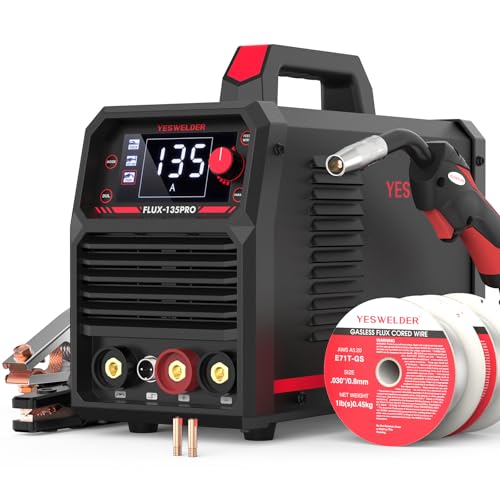
YESWELDER 135A MIG Welder 3-in-1

YESWELDER 160A MIG Welder 4-in-1

YESWELDER 205A MIG Welder 5-In-1
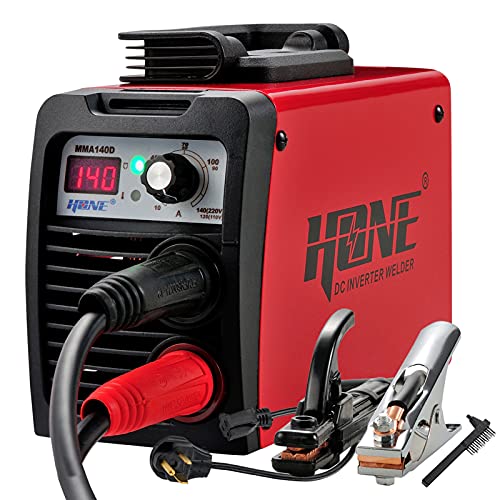
HONE Stick Welder 140Amp IGBT Inverter

DEKOPRO 160A MMA Welder IGBT
A Breakdown Of The Leading Choices
Most entry-level welders force a compromise between MIG convenience and stick versatility. The YESWELDER 135A sidesteps that by folding three processes, gasless flux-core MIG, lift TIG, and stick, into a single 110V unit that runs from a standard household outlet. For homeowners patching exhaust brackets or assembling a small trailer, that outlet-friendly design removes the need for a dedicated 220V circuit in the garage.
The trade-off shows up in thickness: at 135A, you’ll want to stay around 1/8-inch steel for clean results, and thicker plate may push the duty cycle. Where this pick earns its place is the learning curve, since the included flux-core wire feeds smoothly and forgives minor technique mistakes. Compared to the heavier 205A model later in this list, this one trades raw power for portability and a smaller learning cliff.
Why It Works Well
- Three processes in one box, MIG, lift TIG, and stick, cover most home repair scenarios without buying extras.
- 110V input means plugging into a standard wall outlet at home or on a job site without a transformer.
- Gasless flux-core operation lets you weld outdoors without hauling a shielding gas cylinder.
- The included .030-inch and .035-inch flux-core wires are common sizes, so replacements stay easy to find.
Things To Consider
- Lift TIG requires a separate torch purchase, so budget more if aluminum work is on your list.
- At 135A, sustained heavy plate welding can trip thermal limits on longer beads.
- Owners commonly report that the ground clamp and gun consumables wear out faster under frequent use, so spare consumables are worth stocking.
Quick Facts
Made For
First-time welders and homeowners handling light repair work on standard 110V household circuits.
Look Elsewhere When
You regularly weld thicker plate above 1/4-inch, where the YESWELDER 160A MIG Welder 4-in-1’s 220V capability becomes useful.
Dual-voltage welders earn their keep in mixed environments, and the YESWELDER 160A lands in that practical middle. It accepts both 110V and 220V input, so the same machine handles fence post repair at home on a household outlet and heavier fabrication at a shop with 220V service. For hobbyists splitting time between garage projects and weekend fabrication work, that flexibility is the headline feature.
Adding gas MIG to the process list (alongside flux-core, lift TIG, and stick) is a quiet upgrade from the 135A, since it opens the door to cleaner welds on body panels and thinner sheet metal. A separate shielding gas cylinder is required for that gas-MIG mode, which is worth knowing before purchase. Versus the 135A we covered first, this one trades a bit of beginner simplicity for headroom and the option to expand into more polished work down the road.
Real-World Strengths
- 110V/220V dual-voltage design covers household outlets and shop wiring with one unit.
- Four processes in one chassis, including gas MIG, expand project options beyond basic stick.
- 160A output gives more headroom for medium-thickness steel than the 135A sibling.
Trade Offs
- Gas MIG mode requires buying a shielding gas cylinder and regulator, an added ownership step.
- The lift TIG torch is sold separately, so TIG work adds to the total spend.
- The learning curve grows with the feature list, and the included manual is reported as thin, so first-timers may need outside resources.
Whose Shelf It Belongs On
Garage hobbyists and part-time fabricators who want one machine that travels between home and shop power sources.
Skip It When
Aluminum fabrication is the priority, where the YESWELDER 205A MIG Welder 5-In-1’s spool-gun compatibility is the right tool.
When one process isn’t enough, the YESWELDER 205A stretches into five: gas MIG, flux-core MIG, spool-gun aluminum MIG, lift TIG, and stick. That range reflects the reality of a small fabrication shop where Monday’s job is a steel trailer and Tuesday’s is an aluminum boat bracket. Dual-voltage 110V/220V input keeps the unit usable in different shops, and the higher 205A ceiling gives more room for thicker plate work than the 160A sibling.
Aluminum welding with a standard MIG gun is notoriously tricky because soft aluminum wire kinks and feeds poorly. A spool gun (sold separately) feeds the wire in shorter increments from a small built-in spool, which dramatically improves aluminum results. Without that spool gun, the aluminum MIG process on this unit isn’t usable, so factor that accessory into the budget. For stick-focused work, this machine is overkill, and the HONE covered next is a leaner fit.
Useful Highlights
- Five processes in one machine cover steel, stainless, and aluminum projects from a single platform.
- 205A output on 220V handles thicker plate and longer beads without thermal throttling.
- Spool-gun compatibility opens aluminum MIG, a process that frustrates standard guns.
- Dual-voltage input keeps the unit useful at home and at a job site.
Honest Caveats
- Spool gun and lift TIG torch are not included, so realistic total cost climbs well past the unit alone.
- The feature count makes setup more complex, and beginners may find the menu system dense at first.
- Size and weight grow with capability, making this less backpack-friendly than the 135A.
Feature Card
Right Fit For
Multi-process fabricators and small-shop owners working across steel, stainless, and aluminum in one workspace.
Swap It Out When
Your work is strictly stick welding on repair jobs, where the HONE Stick Welder 140Amp IGBT Inverter keeps things simpler and lighter.
Sometimes a multi-process welder is just clutter, and that’s where the HONE Stick Welder makes its case. This is a focused stick-only machine with IGBT inverter technology, meaning the internal electronics regulate current more efficiently than older transformer designs, which translates to a lighter unit and smoother arc behavior. The digital LCD display gives precise amperage readouts, a small but appreciated detail when dialing in different rod sizes.
Hot start, arc force, and anti-stick are the three features that separate a usable stick welder from a frustrating one. Hot start boosts current briefly to ignite the arc cleanly, arc force keeps the arc stable when the puddle shifts, and anti-stick prevents the electrode from welding itself to the workpiece when your technique slips. For repair work on farm equipment, gates, or trailer hitches, those three features matter more than MIG or TIG ever will. Compared to the YESWELDER 205A covered earlier, this HONE trades versatility for focus.
A Favorable Mix
- IGBT inverter design keeps the unit compact and lighter than transformer-style welders.
- Hot start, arc force, and anti-stick built in, three features that make stick welding more forgiving.
- Dual 110V/220V input suits both home outlets and shop wiring.
- Handles 1/16-inch to 1/8-inch rods, the most common sizes for repair and fabrication work.
Less Ideal Details
- Stick-only design, no MIG or TIG, so this is a single-purpose tool, not a shop center.
- 140A ceiling sits below the YESWELDER 160A and 205A, limiting the thickest plate work.
- Owners commonly report that the included stinger and ground clamp feel lightweight, so upgrading consumables is a common early add-on.
Best Suited To
Repair-focused welders and tradespeople who stick weld gates, trailers, and equipment in the field without needing MIG or TIG.
Not Your Match When
Sheet metal or thin-gauge welding is part of the work, where the YESWELDER 135A MIG Welder 3-in-1’s flux-core MIG is the better fit.
MMA welding, the technical name for stick welding that uses a manual electrode, doesn’t require much to get started, and the DEKOPRO 160A keeps that promise lean. Like the HONE covered just before, this is a stick-focused inverter machine with IGBT electronics, so the package is light, the arc is stable, and the learning curve is short. The 160A ceiling is also a step up from the HONE’s 140A, useful when you occasionally push into thicker plate.
The kit ships with the basics: electrode holder, work clamp, input power adapter cable, and a brush for cleaning slag off completed welds. That inclusion list matters for first-timers, who otherwise need to source those accessories separately. The DEKOPRO lacks the digital display found on the HONE, instead using a simple analog current knob, which keeps the interface approachable but less precise. For shop or garage work on mild steel, stainless, and cast iron, this is a low-friction entry point.
What Stands Out
- IGBT inverter design with 160A output, more headroom than typical entry-level stick units.
- Accessories ship in the box, including electrode holder, work clamp, adapter cable, and slag brush.
- Dual 110V/220V input covers common outlet configurations at home and in the shop.
- Approachable analog interface keeps the controls simple for new welders.
Points To Keep In Mind
- Stick-only, like the HONE, so MIG and TIG work requires a different machine.
- The analog current dial lacks the precision of the HONE’s digital LCD readout.
- ETL certification is mentioned, but users commonly report that the included consumables wear faster than branded replacements, so factor that into long-term ownership.
Who Should Grab It
Occasional home welders and beginners who want a low-cost stick welder with accessories included and a forgiving interface.
Another Choice May Suit
You weld frequently and want process flexibility, where the YESWELDER 160A MIG Welder 4-in-1 covers more ground for not much more spend.
Choosing Portable Stick Welders Without Regret
Voltage And Where You’ll Plug In
The single biggest filter is your available power. A 110V-only unit plugs into any household outlet, which makes it friendly for apartments, rentals, and quick driveway work. A 110V/220V dual-voltage machine gives more output headroom, since 220V circuits deliver the same power at half the amperage, meaning less heat buildup in the machine and longer duty cycles on heavier welds. For most homeowners, 110V is enough; for small shops and frequent fabricators, dual voltage earns its keep.
Output Amperage And The Work You Do
Amperage determines how thick a piece of steel you can weld cleanly. A 135A machine handles up to roughly 1/8-inch steel in a single pass, suitable for brackets, small trailer frames, and exhaust work. Moving to 160A or 205A opens up 3/16-inch and 1/4-inch plate, the territory of heavier fabrication and structural repairs. In our view, picking a machine that exceeds your current need by about 25% saves you from thermal cutouts on longer beads.
Process Count And Honest Use
Multi-process welders look tempting on paper, but the question is whether you’ll actually switch between MIG, TIG, and stick. Each process requires its own consumables, gas setup (for gas MIG), and technique. A focused stick-only machine like the HONE or DEKOPRO keeps the workspace simpler and the learning curve shorter. A multi-process unit like the YESWELDER 205A makes sense once those extra processes are part of regular work, not aspirational ones.
Common Buying Mistakes With Portable Stick Welders
Pitfalls Shoppers Hit
The most common trap is buying a process-loaded machine for one type of work. Owners who only stick-weld rarely need the MIG gun, gas regulator, or spool gun that come with 4-in-1 or 5-in-1 units, and the unused features raise the price without raising the value. Another mistake is overlooking duty cycle, the percentage of a 10-minute window the welder can run before needing to cool down, since a low duty cycle means more waiting between beads on longer projects.
Where The Extra Money Goes
Stepping up to a higher-tier machine buys more than just a bigger number. Better inverter electronics mean smoother arcs with less spatter, dual-voltage input for shop and field flexibility, and stronger internal components that hold calibration over years of use. The upgrade pays off most when work sessions grow longer or materials get thicker, but for occasional home repairs, a budget unit often delivers identical results on the same job.
Frequently Asked Questions
What thickness of steel can a portable stick welder handle?
Most portable stick welders handle 1/8-inch steel comfortably, and 160A-plus units manage 3/16-inch to 1/4-inch plate on a single pass. Anything thicker often needs multiple passes or a higher-amperage shop machine.
Do I need shielding gas for stick welding?
No, stick welding uses a flux-coated electrode that creates its own shielding gas as it burns. That’s why stick works outdoors in wind, unlike gas MIG, which needs the cylinder and regulator setup to protect the weld pool.
Can a beginner use a portable stick welder safely?
Yes, with proper PPE including an auto-darkening helmet, welding gloves, and flame-resistant clothing. Stick has a steeper learning curve than MIG, but features like hot start and anti-stick on modern inverter units make the first beads much more forgiving.
Is dual-voltage worth the extra cost?
Dual-voltage machines earn their keep when you split time between a 110V home outlet and a 220V shop circuit. For one-location use, a single-voltage unit keeps the budget lean without sacrificing capability.
How portable are these welders really?
Most portable stick welders weigh between 10 and 25 pounds, which makes them backpack-friendly or easy to throw in a vehicle. The included shoulder strap or carry handle, present on most inverter models, makes field work manageable without a cart.
Final Verdict
The right portable stick welder depends on what you’ll actually weld, where you’ll plug in, and how often you’ll fire it up. For first-timers and light home repairs, the YESWELDER 135A keeps things simple. For shop-grade work across multiple processes, the YESWELDER 205A earns its place. Pure stick-focused welders, the HONE and DEKOPRO, are the honest picks when versatility isn’t part of the job. Match the machine to the work, and the tool will earn its keep for years.




