


Soldering fumes and laser smoke are not just unpleasant. They carry fine particles and volatile organic compounds (VOCs) that no hobbyist should breathe in for hours. A portable fume extractor pulls that contaminated air through activated carbon and HEPA-style filtration (a dense filter media that traps 99.97% of particles down to 0.3 microns), keeping your workbench air noticeably cleaner. The five picks below cover electronics soldering, heavier solder workloads, and entry-level laser engraving, so you can match the right tool to your actual bench.
The Shortlist At A Glance

WEP 948DQ-II Double Filter Fume Extractor Soldering Station

KQZ B1 Solder Fume Extractor 168m³/h Smoke Absorber with H13 HEPA
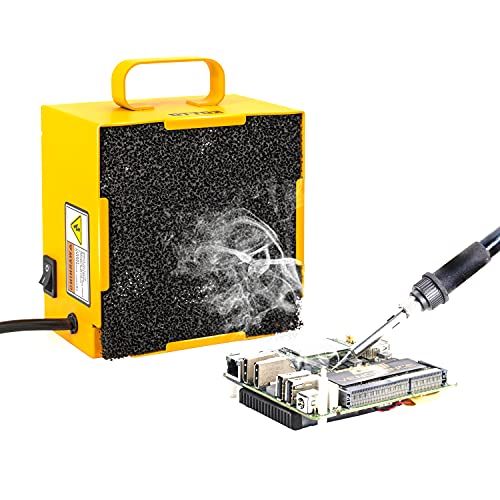
KOTTO Solder Smoke Absorber Remover Fume Extractor Soldering Filter

KQZ Fume Extractor for Solder Lasering with H13 HEPA 250m³/h Strong Suction

KQZ Laser Fume Extractor with Exhaust for Under 60W Laser Engraver Cutter
A Closer Look At Each Pick
The WEP 948DQ-II pulls double duty as a fume extractor and a soldering station, which makes it a strong fit for hobbyists who don’t want two bulky boxes competing for bench space. PID control (a temperature regulation system that holds the tip at a precise, steady heat rather than letting it swing hot and cool) keeps the iron steady during long joints, and the sleep mode cools the tip automatically when you set the iron down.
You get a tip cleaner, three soldering tips, and a 35-gram solder roll in the box, so a new setup is genuinely unbox-and-go. Double filtration and a quiet fan add to the appeal, though the absorbent pads do need periodic replacement to stay effective.
Useful Strengths
- 2-in-1 design saves bench space by combining a soldering station and smoke absorber in one unit.
- PID temperature control with Fahrenheit and Celsius display keeps the tip stable during extended work sessions.
- Sleep mode and tip cleaner help extend tip life and reduce burned residue buildup.
- Includes three tips, a solder wire dispenser, and 35g of solder, covering most hobbyist needs out of the box.
Worth Noting
- The bundled filtration adsorbers are consumables and need replacing on a regular schedule to keep performance up.
- Suction is tuned for soldering-scale fumes, so it may feel modest if you plan to drift toward laser or chemistry work later.
Feature Snapshot
Made For
Electronics hobbyists who want a tidy, all-in-one soldering and fume-control setup without buying separate pieces.
Where Another Pick Suits Better
The KOTTO Solder Smoke Absorber Remover Fume Extractor Soldering Filter is a more budget-friendly option if you only need a dedicated fan and don’t require an iron.
Where the WEP above combines an iron and extractor, the KQZ B1 focuses purely on pulling fumes away from the work area, and it does so with real conviction. A 168 m³/h airflow rating (the volume of contaminated air it can cycle per hour) means it can clear a small room-scale bench area quickly, and the H13 HEPA element inside handles the fine particles that cheaper carbon-only filters leave behind.
The thicker 9mm pre-filter adds lifespan to the main HEPA stage by catching larger particles first. Compared with the WEP combo, the trade-off is clear: you give up the built-in iron, and you gain a more serious extraction unit.
Notable Gains
- 168 m³/h airflow handles continuous soldering sessions without saturating the filter quickly.
- H13 HEPA plus coal-based activated carbon targets both fine particles and odor-causing VOCs.
- 9mm thicker pre-filter extends the life of the primary HEPA layer.
- Pure extractor focus means it pairs nicely with the iron you already own.
Trade Offs
- Higher airflow comes with more audible fan noise, which can be noticeable in a quiet room.
- No soldering iron or accessories included, so total cost climbs once you add those.
Whose Shelf It Belongs On
Makers and technicians who already own a quality iron and want stronger, more focused extraction for daily bench work.
Swap It Out When
The KQZ Fume Extractor for Solder Lasering with H13 HEPA 250m³/h Strong Suction makes more sense for stations producing heavier smoke or running longer jobs.
The KOTTO is the entry point on this list, and it shows in the price without feeling like a toy. A 0.4-inch-thick activated carbon filter (carbon pellets that chemically bind to fumes and odors as air passes through) tackles the smoke you can see and the odors you can smell, and a 3000 RPM fan moves enough air to capture fumes 5 to 6 inches away from the work area.
It is a simple benchtop fan, not a sealed HEPA system, so expectations matter. For light hobby soldering a few times a week, it pulls its weight, and four non-slip feet keep it planted on the bench.
Features That Help
- Thick activated carbon layer absorbs solder fumes, flux gases, and odors before they spread.
- 3000 RPM fan clears smoke from 5-6 inches away, which covers most handheld soldering tasks.
- Low-noise operation makes it appropriate for apartment or shared-space benches.
- Four non-slip feet keep the unit stable during long sessions.
- Replaceable filter design keeps long-term cost down.
Small Caveats
- Carbon-only filtration cannot match the fine-particle capture of an H13 HEPA element.
- Best suited to lighter, shorter soldering tasks rather than all-day production work.
- Filter replacements add up over time, an honest ownership cost to plan for.
Quick Facts
Right Fit For
Beginners and casual hobbyists who solder occasionally and want a low-fuss fan that improves basic air quality without overspending.
Consider Something Else When
The WEP 948DQ-II Double Filter Fume Extractor Soldering Station is the better match when you also need a soldering iron and a more polished all-in-one setup.
The KQZ 250 m³/h is the muscle car of this list: a step up in airflow and filtration depth from the B1 above, with a composite filter that pairs H13 HEPA with high-iodine activated carbon. The carbon variant here is rated to capture 99.97% of fine particles along with stubborn VOC odors that lighter carbon pads let through.
You feel the upgrade most in busy sessions where rosin-core solder smoke would otherwise linger. It is louder and more substantial than the KOTTO, and you may want to plan for a permanent spot on the bench rather than casual stashing.
Practical Pluses
- 250 m³/h airflow keeps up with sustained heavy soldering or light laser jobs.
- Composite H13 HEPA plus 85% high-iodine activated carbon targets fine particles and strong odors.
- Long-lasting suction design aims to maintain airflow as the filter loads up.
- Versatile enough for both soldering and modest laser work in a small shop.
Points To Note
- Larger footprint than the B1 and not as portable if your bench moves around.
- Premium filtration components raise the replacement cost when service time comes.
Best Suited To
Fabrication benches running longer or higher-volume soldering where basic carbon filters lose effectiveness quickly.
A Better Fit Elsewhere
The KQZ B1 Solder Fume Extractor 168m³/h Smoke Absorber with H13 HEPA is the smarter pick for tight budgets or smaller bench footprints.
Laser engraving produces a different kind of smoke than soldering: hotter, finer, and full of vaporized material from wood, leather, or acrylic. Generic extractors struggle with that combination, and that is exactly the gap the KQZ laser-focused unit is designed to close. Heat-resistant internals and a high-power suction stage handle long engraving runs without cooking the filter media.
It is built to pair with common diode engravers under 60W, which covers most hobby and small-business machines on the market. If you only solder, you are paying for laser-specific engineering you will not use, and the KQZ B1 above will serve you better.
A Few Strong Suits
- Heat-resistant construction handles the hotter, finer smoke created during laser engraving.
- Engineered for compatibility with popular under-60W diode engraver models.
- Higher-power suction stage keeps the engraving area clearer during long jobs.
- Specialized design extends filter life compared to a generic solder-focused unit in the same role.
A Few Limitations
- Laser-focused design is overkill for users who only solder electronics.
- Higher-capacity filtration media means a steeper replacement cost down the road.
Feature Card
Who Should Grab It
Laser engraving hobbyists and small shops running under-60W diode cutters who want a purpose-built extractor instead of a soldering unit doing double duty.
Look Elsewhere When
The KQZ Fume Extractor for Solder Lasering with H13 HEPA 250m³/h Strong Suction is a more flexible choice for mixed soldering and occasional light laser work.
What To Weigh Before Picking A Portable Welding Fume Extractor
Airflow vs. Filtration Quality
Airflow numbers like 168 m³/h or 250 m³/h tell you how fast the unit can cycle air, but a fast fan with a thin carbon pad still lets fine particles through. H13 HEPA filtration (dense media certified to trap 99.97% of particles at 0.3 microns) is the real differentiator, and pairing it with activated carbon is what handles both visible smoke and the chemical odors you can smell but not see. For light soldering a few times a month, carbon alone may be enough, while daily production work benefits from a true HEPA stage.
Bench Footprint and Portability
A 2-in-1 station like the WEP 948DQ-II saves space, while a dedicated extractor plus a separate iron takes more room. Consider how often you stow the unit, since heavier high-airflow models like the KQZ 250 m³/h feel less portable once they are placed.
Filter Replacement and Long-Term Cost
Every extractor here uses consumable filters, and the cost of those replacements adds up over years. Units with thicker pre-filters tend to extend HEPA life, while pure carbon designs have cheaper media but more frequent swap intervals.
Match the Extractor to the Workload
Soldering electronics, heavy fabrication, and laser engraving each create different smoke profiles. A laser-rated unit has heat-resistant internals, while soldering units are tuned for the cooler, more resinous smoke from flux and solder. Picking a unit matched to your actual workload prevents the disappointment of a filter that clogs in weeks.
Key Considerations Across These Picks
Where Shoppers Go Wrong
The most common slip-up is buying on airflow alone, then wondering why odors still linger. Particle capture and odor capture are two different jobs, and a strong fan with a thin carbon pad will leave chemical smell behind. Another trap is assuming any extractor handles laser smoke, since laser fumes run hotter and finer than solder fumes and need heat-tolerant internals.
When Paying More Pays Off
Higher-tier models in this category earn their keep through better filtration layering, longer-lasting filter media, and quieter brushless motors. The upgrade matters most for daily users, where filter life and noise directly shape how often you actually turn the unit on instead of letting smoke fill the room.
Frequently Asked Questions
What is H13 HEPA filtration and why does it matter?
H13 HEPA is a high-efficiency filter media rated to capture 99.97% of particles down to 0.3 microns. In a fume extractor, that means fine solder smoke and laser particles get trapped instead of being recirculated into the room.
Can one extractor handle both soldering and laser engraving?
Some heavy-duty units like the KQZ 250 m³/h can stretch across both tasks, but laser-specific extractors are built for hotter smoke and tend to last longer in that role. Pure soldering units may clog faster when exposed to laser vapor.
How often do the filters need replacing?
Filter life depends on workload and smoke volume. Light hobby use may stretch replacement to several months, while daily production work often needs new media every few weeks.
Are activated carbon filters enough without HEPA?
For light, occasional soldering, activated carbon alone can be acceptable. For daily work or laser use, adding a HEPA stage makes a noticeable difference in fine-particle capture.
Do fume extractors eliminate the need for ventilation?
Extractors clean the air at the workbench, but they do not replace general room ventilation. A garage or shop with open airflow still benefits from a window or exhaust fan during longer sessions.
Closing Remarks
The right portable welding fume extractor comes down to what you actually solder or cut, how often, and how clean you want the air in your workspace. Hobbyists soldering occasionally will find the KOTTO or the WEP combo plenty capable, while daily users and laser engravers will feel the difference a true HEPA stage and higher airflow make. Match the tool to the workload, plan for filter replacements, and the air in your shop will be noticeably easier to breathe.




