A weekend driveway, a muddy bike, patio furniture caked in last season’s pollen. You don’t need contractor-grade equipment to handle the routine grime around your home, but you do need something more capable than a garden hose and patience. Electric pressure washers in the sub-200 range have quietly grown up, offering enough muscle for cars, fences, and concrete without the gas-engine headache. These four picks balance pressure, portability, and practical accessories for households that want to clean smarter, not harder.
The Picks In Brief
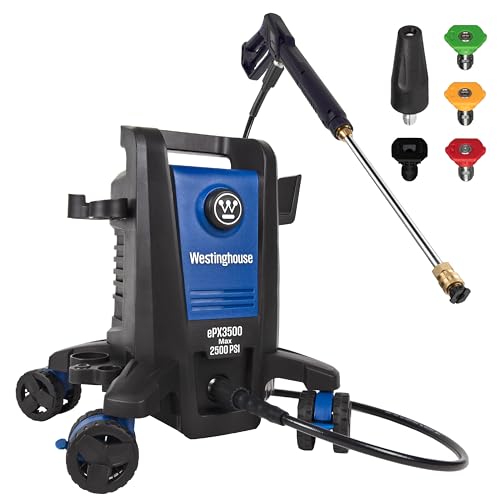
Westinghouse ePX3500 Electric Pressure Washer, 2500 Max PSI

Adjustable Electric Pressure Washer 5000PSI with 33FT Flexible Hose

KVAOK Pressure Washer, 2600 Max PSI with 35-ft GFCI Cord

Zelonpro 5000PSI Power Washer with Foam Cannon
More Details On Our Top Picks
The Westinghouse ePX3500 sits in a comfortable middle ground. Its 2500 max PSI and 1.76 max GPM flow rate handle the kind of jobs suburban households actually face, from salt-stained concrete to patio furniture that hasn’t seen soap since last summer. The onboard soap tank eliminates the need to juggle a separate detergent container, which makes weekend car washes feel less like a production.
Five quick-connect nozzles and a pro-style steel wand give you flexibility across surfaces, whether you’re rinsing a delicate paint job or stripping algae off a fence. The anti-tipping base design helps when you yank the hose around corners, a small but welcome detail for anyone who has watched a lighter washer topple mid-job.
Features That Help
- 2500 max PSI and 1.76 max GPM deliver enough force for cars, fences, driveways, and patio furniture without overwhelming lighter surfaces
- Onboard soap tank simplifies detergent work and cuts down on accessory clutter
- Five-nozzle set covers a wide spread of spray patterns, from gentle rinse to focused blast
- Anti-tipping technology steadies the unit during hose tugs and direction changes
- Pro-style steel wand feels sturdier than the plastic alternatives common at this tier
Things To Consider
- At 1.76 max GPM, deep grease and heavy oil stains may need pretreatment or repeat passes
- The five-nozzle set is versatile, but swapping tips mid-job slows you down compared to foam cannon setups
Made For
Homeowners juggling a mix of vehicle, patio, and fence cleaning who want a reliable all-rounder without paying for features they’ll never touch.
Consider Something Else When
Car detailing enthusiasts chasing a thick foam cannon experience will get more from the Imdot Adjustable Electric Pressure Washer, which ships with foam-cannon-ready accessories out of the box.
The Imdot pressure washer markets serious numbers, and the accessory package backs it up. A 33-foot flexible hose gives you the kind of reach that makes washing a two-car driveway or a long fence line far less frustrating. Four quick-connect nozzles plus a dedicated foam cannon put detailing-friendly tools in your hands from the first unboxing, which is unusual at this price point.
Where the Westinghouse leans toward general household duty, this one leans toward the detailer crowd. The flexible hose reduces kinks, and the foam cannon preps a thick layer of suds that clings to panels during contact washing, the kind of pre-soak that makes hand washing safer and faster.
The Value In It
- Foam cannon and four nozzles included, so there’s no extra accessory shopping to start detailing
- 33-foot flexible hose reaches around full-sized vehicles and long driveways without constant repositioning
- Quick-connect nozzle system speeds up pattern changes mid-job
- High pressure rating handles stuck-on road grime, bug residue, and mildew on outdoor surfaces
Points To Note
- Higher pressure demands respect on softer materials, so a distance test on wood decks is smart before going full blast
- The flexible hose is a usability win but owners commonly report it requires careful coiling for storage to avoid internal kinks over time
Key Product Details
Best Suited To
Detailers and weekend car enthusiasts who want foam-cannon capability and flexible reach in a single package.
Look Elsewhere When
Shoppers cleaning mostly wide concrete pads will find the KVAOK Pressure Washer with 35-foot GFCI cord more convenient for outdoor jobs far from an outlet.
The KVAOK washer trades peak PSI for usable convenience. Its 2600 max PSI sits in a comfortable zone for most home tasks, but the 35-foot GFCI cord, a cord that shuts off power if it detects a ground fault, is the headline feature for anyone whose outdoor outlet sits a long way from the driveway. GFCI protection also matters around wet conditions, so it’s a meaningful safety plus, not a marketing checkbox.
Four 360-degree swivel casters with individual wheel locks keep the unit stable and mobile. Roll it to the car, lock the wheels, work your way around the vehicle, unlock, and move on. Compared to the Westinghouse’s anti-tipping stance, this one prioritizes active mobility over stationary stability.
Everyday Wins
- 35-foot GFCI cord reaches distant outdoor outlets without an extension cord, and adds a layer of electrical safety in wet conditions
- Four 360-degree swivel casters make repositioning around vehicles and lawn furniture easy
- Individual wheel locks keep the unit planted during use, which matters when you lean into a stubborn stain
- 2600 max PSI handles driveway oil spots, deck mildew, and general outdoor cleanup reliably
Trade Offs
- No foam cannon or soap tank built in, so car detailing requires a separate accessory purchase
- Wheels and frame add a bit more bulk for storage in tight garage corners
Who It Suits Best
Homeowners with large driveways, long sidewalks, or detached garages where outlet distance and mobility matter more than foam detailing accessories.
A Better Fit Elsewhere
Detailers who want suds-on-demand will be happier with the Zelonpro 5000PSI Power Washer, which ships with a foam cannon and quick-connect nozzles ready to go.
The Zelonpro lands in a similar lane to the Imdot, with a 5000 PSI rating and a foam cannon in the box. Where it tries to differentiate is the quick-connect nozzle system, which is genuinely useful when you’re switching between a wide fan for the car door and a pinpoint jet for wheel wells. No tools, no threading, just a click and a pull.
For multi-surface households, the nozzle flexibility matters as much as the pressure. Soaping a car, rinsing a lane, and blasting a patio all call for different spray shapes, and a quick-connect system removes the friction of swapping tips by hand each time.
Positive Takeaways
- Foam cannon included, so you can start pre-soaping vehicles and outdoor surfaces immediately
- Four quick-connect nozzles make pattern changes fast during multi-surface jobs
- High pressure rating clears stuck-on grime, moss, and oily residue that lower-PSI units leave behind
- Setup leans toward tool-free assembly, which helps first-time users get started without hunting for wrenches
Honest Caveats
- Top-end pressure is overkill for gentle tasks like rinsing windows, so you’ll need discipline with nozzle choice
- Storage and hose management become more important at this power level, since tangled lines can kink and reduce flow over time
Feature Snapshot
Whose Shelf It Belongs On
Households splitting time between vehicle care and outdoor surface cleaning, where quick nozzle changes add up to real time savings.
Swap It Out When
Shoppers with smaller jobs and tighter storage should consider the Westinghouse ePX3500, which trades some peak PSI for a more compact, general-purpose footprint.
What To Weigh Before Choosing Power Washers Under 200
Pressure ratings grab attention, but they tell only part of the story. Two units with the same PSI can feel completely different in use because of flow rate, nozzle design, and how the wand handles recoil. For routine home work, 2000 to 2600 PSI handles most car, fence, and patio tasks without risking damage to softer surfaces, while 5000 PSI models give detailers more cutting power at the cost of needing more care around paint and wood.
Hose and cord length quietly shapes your experience more than any spec sheet suggests. A 33-foot flexible hose or 35-foot GFCI cord, the kind you see on the Imdot and KVAOK units, means you spend time cleaning rather than hunting for an outlet or moving the machine. GFCI protection, which is a built-in safety switch that cuts power instantly if current leaks through water, is worth prioritizing for any washer used outdoors where splashes are inevitable.
Accessories decide how enjoyable a pressure washer actually is. A foam cannon transforms car washing from a soapy spray-and-hope operation into a deliberate pre-soak. Quick-connect nozzles save real minutes across a long session. If your cleaning leans heavily toward vehicles, prioritize a unit that ships with foam capability. If your work skews toward concrete and decks, a longer hose and stable wheels matter more than suds.
Finally, storage and mobility shape daily use. Swivel casters with individual locks, like the KVAOK setup, are a small detail that compounds over dozens of repositioning moves during a single job. Lighter units without wheels are easier to lift but require more dragging, which wears on frames over time. Match the form factor to where you’ll actually use and store it, not just the headline PSI.
Key Considerations Across These Picks
Pitfalls Shoppers Hit
Chasing the highest PSI number is the most common trap in this category. A 5000 PSI washer sounds impressive, but without proper nozzle discipline it can scar wood, etch concrete, or strip paint. Many first-time shoppers overlook flow rate (GPM), which determines how much surface area you actually cover per minute. A 2500 PSI unit with strong flow often out-cleans a high-PSI unit with weak flow on broad flatwork like driveways.
Another frequent miss is ignoring cord and hose length. A washer with 25 feet of hose that sits 30 feet from your driveway becomes an exercise in repositioning rather than cleaning. Measure the distance from your outdoor outlet to your typical cleaning spot before settling on a model, and factor in GFCI protection if your existing outlet doesn’t already include it.
Where The Extra Money Goes
Stepping up within the sub-200 tier usually buys better accessories, not raw power. Foam cannons, quick-connect systems, longer hoses, and swivel casters all add convenience that compounds over years of use. Higher-tier units also tend to use sturdier wands and frames, which hold up better to seasonal storage in unheated garages.
The upgrade pays off most for households that detail vehicles regularly or clean large outdoor areas. For someone washing a car once a month and hosing off patio furniture seasonally, a mid-tier unit with a solid nozzle set and decent hose length delivers most of the practical value without the premium for foam-cannon extras.
Frequently Asked Questions
What PSI do I need for home use? For cars, fences, and patio furniture, 2000 to 2600 PSI covers most jobs safely. Heavier concrete and oil stains benefit from higher ratings, but always test on a small area first.
Are electric pressure washers good for driveways? Yes, especially models in the 2500 to 5000 PSI range. Use a wider fan nozzle and keep the wand moving to avoid etching the surface.
Do I need a foam cannon? A foam cannon isn’t required, but it makes car washing faster and reduces swirl risk. Pre-soaking with foam lifts grit before you touch the paint with a mitt.
How important is GFCI protection? Very important for any outdoor electric tool. A GFCI cord or outlet shuts off power instantly if current leaks through water, which is a real risk around wet cleaning work.
Can I use regular dish soap in a pressure washer? Most washer manufacturers recommend detergents specifically formulated for pressure washers. Dish soap can create excess suds and potentially clog the soap system over time.
Closing Remarks
The right pressure washer depends less on chasing the biggest number and more on matching the unit to your routine. For mixed household cleaning, the Westinghouse ePX3500 covers the bases with solid accessories. Detailers and car enthusiasts get more from the Imdot or Zelonpro foam-cannon setups. And anyone with a long driveway benefits from the KVAOK’s extended cord and mobile base. Pick the one that fits how you actually clean, and the machine will earn its place in the garage for years.