HVAC work punishes the hands that rush it. Whether you’re sealing PEX joints on a residential retrofit or crimping spiral duct on a commercial install, the right tool turns a tedious afternoon into a clean, repeatable job. The picks below cover copper-ring PEX work, sheet-metal duct crimping for furnace and HVAC pipe, and the replacement parts that keep your setup alive. Each one earns its slot for a different reason, and the trade-offs matter as much as the strengths.
The Shortlist At A Glance

iCrimp PEX Crimp Tool Kit for 1/2″ 3/4″ Copper Ring

C5A2 Impact Power Assisted Crimper HVAC Duct Tool

C5A2 Impact Power Assisted Crimper (C5A2 Body)

C5A2 Crimper with C5A2RD Drive Shaft
C5A2 Crimper Drive Shaft (Replacement)
More Details On Our Top Picks
This is the only pick on the list aimed squarely at PEX plumbing rather than sheet-metal duct work, and it owns that lane well. The kit is built around the ASTM F1807 standard, which is the specification covering copper-ring crimp connections on PEX tubing. For anyone running 1/2-inch or 3/4-inch lines, that match matters because off-standard joints are where leaks start.
You mostly see this kind of tool on residential service calls: a water heater swap, a branch-line repair, a manifold tie-in. The polished jaw profile helps avoid scarring the copper ring during compression, and a short handle geometry keeps your knuckles clear of studs and joists in tight cavities. Where duct crimpers are about repetition on flat stock, this one is about precision on a single joint.
The Good Stuff
- Conforms to ASTM F1807 for 1/2-inch and 3/4-inch copper-ring PEX connections, so the joints you produce line up with code-recognized practice.
- Smooth jaw surfaces reduce the chance of deforming the copper ring mid-crimp.
- Short handle design improves access in narrow stud bays and tight mechanical rooms.
- Light enough to carry on a service truck without becoming dead weight on long days.
- Covers the most common residential PEX sizes in a single tool, reducing the need to swap heads mid-job.
Points To Keep In Mind
- Limited to 1/2-inch and 3/4-inch copper rings, so larger commercial PEX runs or alternative fitting systems call for another tool.
- Manual operation means high-volume installs will slow you down compared with powered crimpers.
- Jaw alignment and finish should be checked periodically; debris on the crimp surface can mark rings and weaken seals.
Best Suited To
Residential plumbers and HVAC techs running PEX water lines, especially service calls and remodel work where a compact manual tool is enough.
Skip It When
Your day revolves around sheet-metal duct connections, in which case the C5A2 Impact Power Assisted Crimper is the more relevant tool for the job.
This is the tool that turns duct crimping from a wrist-burning chore into something almost automatic. The C5A2 hooks up to a standard 1/4-inch hex impact driver, the same chuck you already have on your drill or impact wrench, and uses the driver’s torque to do the actual swaging. Compared with the iCrimp kit above, it’s a completely different category: that one crimps copper rings on PEX, this one crimps sheet metal for HVAC, gutters, and downspouts.
The build is where this version of the C5A2 separates itself from its lighter siblings later in this list. A solid forged metal body wraps hardened chromium steel internal gears, and the entire gear train sits around HRC 35-40 on the Rockwell hardness scale, which is a standard way to express how resistant a metal is to indentation. Thickened gear blocks and a reinforced hex shaft mean it can soak up the kind of repeated impact cycles that show up on long fabrication days.
Useful Strengths
- Full metal construction with hardened chrome-steel internals handles heavy daily use on commercial duct runs.
- Standard 1/4-inch hex chuck fits most common impact drivers already in your tool bag.
- Power-assisted action reduces fatigue on large fabrication jobs with dozens or hundreds of crimps.
- Works on round duct, downspouts, and gutter stock, expanding its use beyond a single trade.
Trade Offs
- Heavier than the aluminum-bodied C5A2 variant, so overhead work or ladder work gets tiring faster.
- Requires a separate impact driver, which is an extra purchase for anyone starting from scratch.
- Overkill for occasional residential HVAC repairs where a manual tool would do.
Feature Snapshot
Whose Shelf It Belongs On
Full-time HVAC fabricators and sheet-metal shops running high-volume duct, gutter, and downspout work where durability beats weight savings.
Not Your Match When
You mainly need a light occasional-use body, in which case the C5A2 Impact Power Assisted Crimper (C5A2 Body) is friendlier on the arm and easier to handle.
Think of this as the lighter sibling of the heavy-duty C5A2 you just read about. It runs the same 1/4-inch hex chuck pattern, so it works with the same impact drivers, but the body itself is trimmed for weight rather than maximum impact endurance. That tradeoff shows up immediately on a ladder or in a tight ceiling cavity, where every extra pound compounds over a long shift.
The size window is the headline detail: it covers galvanized round pipe from size 30 to size 24 (about 0.41 to 0.71 mm wall thickness) and black furnace pipe from 0.31 to 0.61 mm. That range covers the most common residential and light-commercial HVAC pipe you run into, including standard furnace flue and round supply duct transitions. If your work stays inside those gauges, this body is plenty.
A Strong Showing
- Lighter body reduces fatigue during overhead and ladder work.
- Accepts the same standard 1/4-inch hex impact drivers used elsewhere on the jobsite.
- Covers the gauge ranges used in most residential HVAC pipe and duct transitions.
- Lower cost of entry than the all-metal heavy-duty variant.
Worth Bearing In Mind
- Will not handle the abuse level of the heavy-duty C5A2, so shop production rates may shorten its life.
- Range tops out at 0.71 mm on galvanized and 0.61 mm on black pipe, ruling out thicker commercial stock.
Made For
Residential HVAC techs and remodel crews doing occasional sheet-metal crimps without the wear of daily shop use.
Look Elsewhere When
You’re buying a fresh setup and want the drive shaft included out of the box, in which case the C5A2 Crimper with C5A2RD Drive Shaft bundle is the smarter first purchase.
The standalone C5A2 body in pick 3 assumes you already have a drive shaft or don’t need one. This bundle pairs that same body with the C5A2RD drive shaft so the tool arrives ready to mount on an impact driver. The compatibility math is what makes it attractive: a tech buying their first C5A2 gets both halves of the system without hunting down a separate part number.
The drive shaft is the part that takes the worst beating, since it absorbs the rotational shock from every crimp. Replacing the whole crimper just because the shaft fatigues is wasteful, and having a dedicated replacement on the truck keeps a single worn shaft from sidelining an entire workday. The matched bundle just removes a step from that equation.
What Stands Out
- Includes the matching C5A2RD drive shaft, so a new buyer gets a complete working setup.
- Uses the same gauge range as the body-only version, covering typical residential and light-commercial HVAC pipe.
- Standard 1/4-inch hex compatibility means it pairs with existing impact drivers and drills.
- Saves the trouble of cross-referencing part numbers for first-time C5A2 owners.
Honest Caveats
- Bundled cost runs higher than the body alone, which only makes sense if you actually need both pieces.
- Body and shaft are still lighter-duty than the all-metal heavy-duty variant covered in pick 2.
Right Fit For
First-time C5A2 owners who want a single purchase that includes everything required to start crimping.
Swap It Out When
Your existing C5A2 already has a healthy drive shaft, in which case the C5A2 Crimper (C5A2 Body) alone avoids paying for a duplicate shaft.
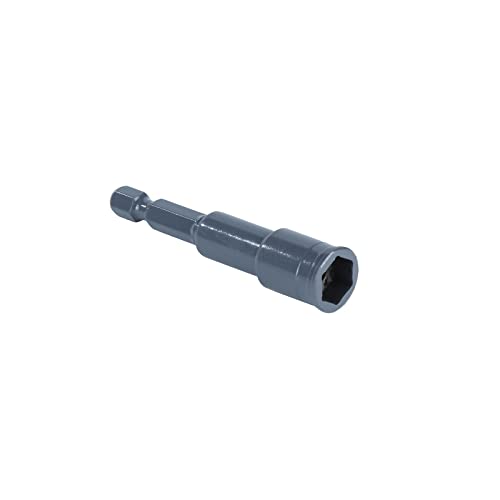
Drive shafts are consumables on impact crimpers, and this is the factory-spec replacement for the C5A2 platform. It is not a complete tool, and that is the point: the shaft is the part that takes the brunt of every crimp, and once it develops play or wear, the whole tool starts producing inconsistent results. Swapping the shaft restores the original feel without forcing a full re-buy.
The material is 20CrMoTi, a low-alloy steel that gets its toughness from a carburization process, which is a heat treatment that adds carbon to the outer surface for hardness while keeping the core tough. In plain terms, you get a hard-wearing outer skin that resists galling and wear, backed by a more ductile core that handles shock loads without snapping. Owners commonly report that replacing the shaft at the first sign of wobble keeps the rest of the crimper alive for years.
Points In Its Favor
- 20CrMoTi construction with carburized surface for wear resistance and shock toughness.
- Direct fit for the C5A2 impact crimper platform covered in picks 2 through 4.
- Far cheaper than replacing the entire crimper when the shaft is the only worn component.
- Smart inventory item for shops running multiple C5A2 crimpers on rotation.
Small Caveats
- Only useful if you already own a compatible C5A2 body, so it is a non-starter for new shops.
- Requires basic mechanical comfort to swap out, which may not suit every apprentice-level tech.
Feature Snapshot
Who Should Grab It
Existing C5A2 owners and shops that prefer to service their own tools and keep spare shafts on the truck.
Where Another Pick Suits Better
You don’t yet own a C5A2 at all, in which case the C5A2 Crimper with C5A2RD Drive Shaft bundle is the place to start instead of buying a lone shaft.
What Matters Most When Picking HVAC Press Tools
Knowing your pipe and gauge range is the first filter. PEX plumbing calls for a manual copper-ring crimp tool sized to the tubing, while HVAC sheet-metal work calls for an impact-driven swaging tool matched to the wall thickness. Mixing those two worlds tends to produce leaky joints or crushed duct, so start by naming the job before you name the brand.
Drive method changes everything about daily use. Manual tools like the iCrimp kit are quiet, simple, and cheap, but they slow you down on repeat crimps. Power-assisted C5A2 variants hand the hard work to your impact driver, which trades added cost and weight for serious speed on long runs. The right answer depends on how many crimps a typical day actually contains.
Build materials tell you how long the tool will last. Hardened chromium steel gears and forged metal bodies hold up to commercial use, while lighter aluminum bodies suit residential schedules. A 20CrMoTi drive shaft with a carburized surface keeps the high-wear part serviceable, which matters more than the body finish once the tool is in regular rotation.
Standard chucks and replacement parts reduce future headaches. A 1/4-inch hex chuck fits nearly every impact driver already in your bag, and having a replaceable drive shaft means a worn part does not end the tool’s life. That kind of compatibility is what keeps a tool useful years after the original purchase.
Key Considerations Across These Picks
Pitfalls Shoppers Hit
The most common mistake is buying a PEX crimp tool for sheet-metal work, or vice versa, because the listings look similar at a glance. Always confirm the standard or material the tool is built for before checking out. Skipping that check is how you end up with deformed copper rings or crushed duct.
Another trap is ignoring gauge range. The lighter C5A2 body stops at 0.71 mm on galvanized and 0.61 mm on black pipe, which rules out some commercial applications. Buying the smaller tool to save weight only to discover it cannot reach your work gauge is a frustrating and avoidable loop.
What The Higher Tier Buys
Stepping up to the all-metal heavy-duty C5A2 costs more in weight and price, but the hardened internals last longer under daily impact cycles. The premium tier also gives you thicker gear blocks and stronger shafts, which translate to fewer replacements and more consistent crimps over years of shop use. For high-volume fabricators, that extra durability is what the markup actually buys.