


A weekend driveway, a salt-stained sedan, patio furniture gone grey from pollen: dirt does not wait, and a decent pressure washer turns those jobs from a sweaty afternoon into a coffee-length task. For shoppers weighing a cordless handheld against a full electric unit, the lineup below covers both ends of the spectrum. Each pick was chosen for what it actually does in a driveway or garage, not for how loud the box is. Read on to find which one fits your space, your power outlet situation, and the kind of mess you deal with most often.
The Choices Worth Comparing
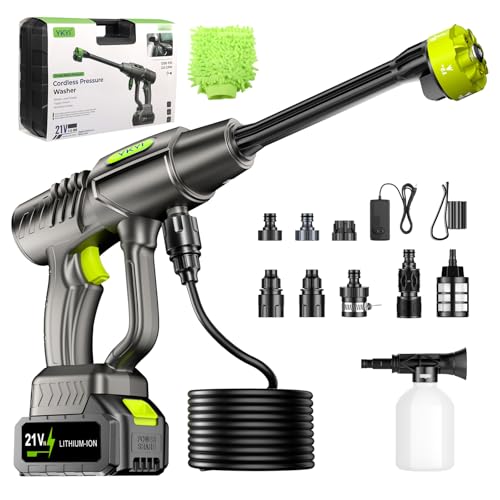
YKYI Cordless Pressure Washer, 1200 PSI Portable

Westinghouse ePX3500 Electric Pressure Washer
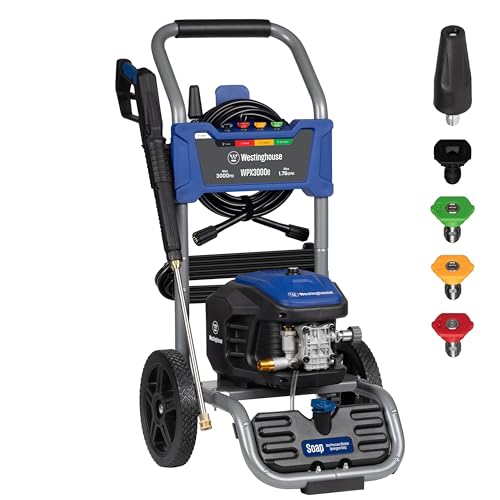
Westinghouse WPX3000e Electric Pressure Washer

Westinghouse ePX3100v Electric Pressure Washer

MZK Lightweight Pressure Washer with Foam Cannon

Imdot 5000 PSI Electric Pressure Washer
Inside Each Recommended Option
For apartment dwellers and renters who do not want to drag a hose across a hallway, the YKYI handheld unit skips the cord and the outlet entirely. It runs on a rechargeable battery, which means you can rinse off a bike, a muddy dog paw print on a balcony, or a salt-frosted bicycle frame without hunting for an exterior outlet.
Where it fits best is quick, low-volume work: pet bowls, trash cans, gardening tools, and the lower half of a sedan that caught road grime. For anyone moving from a building with no outdoor spigot, that freedom is the whole point of the tool.
The Practical Payoff
- Cordless design means no extension cord or outdoor tap required, a real win for balconies and shared parking
- Light enough at handheld size to carry up stairs or to a community carport without strain
- Adjustable pressure levels help avoid stripping wax on a freshly detailed car
- Quieter operation than a full electric unit, helpful in noise-sensitive neighborhoods
Worth Noting
- At 1200 PSI, you may find the unit short on muscle for caked-on driveway mildew or second-story siding
- Battery runtime is the limiting factor, so longer jobs require planning around a recharge
- Owners commonly report that the small reservoir calls for multiple refills on a full car wash
Who It Suits Best
Urban dwellers, renters, and anyone cleaning a sedan or a small patio on a balcony will appreciate the grab-and-go design.
Consider Something Else When
The Westinghouse WPX3000e suits homeowners with a long concrete driveway and a standard outdoor outlet far more naturally.
The ePX3500 lands in the middle of Westinghouse’s electric range, and that middle ground is where most weekly car detailers live. It pairs 2500 max PSI with a five-nozzle set, giving you a wide spray for soapy rinses and a narrow jet for stuck-on bug residue on a front bumper. The onboard soap tank cuts out the separate foam bottle shuffle, which streamlines the routine.
Compared to the YKYI handheld, this is a real garage tool, not a portable rinse. The anti-tipping frame also helps on uneven driveways, where a lighter unit tends to scoot when you pull the trigger.
Noteworthy Benefits
- 2500 max PSI handles bug splatter, road film, and tire sidewall grime in fewer passes
- Five quick-connect nozzles cover everything from gentle rinses to concentrated jet work
- Anti-tipping base keeps the unit planted when the hose tugs, useful on sloped driveways
- Pro-style steel wand feels solid in hand during long detail sessions
Trade Offs
- Corded electric design means a dedicated outdoor outlet and an extension cord rated for the draw
- Heavier than compact models, so storage and wheeling it out of a shed takes a moment
- At 1.76 max GPM, expect longer dwell times on truly oily garage stains than gas models
Key Specs
Made For
Car owners running weekly rinses and homeowners handling a fence or two will find the balance of pressure and control comfortable.
Look Elsewhere When
The Imdot 5000 PSI unit is the better call for large driveways with deeply embedded stains, where raw pressure outweighs mid-range balance.
The WPX3000e is the muscle of the Westinghouse electric family, and the induction motor is the detail that justifies the step up. An induction motor runs cooler than a standard universal motor, so a long Saturday cleaning a driveway, two cars, and a back deck does not push the unit into thermal shutdown. The 3000 max PSI rating puts it in gas-comparable territory for homeowners who would rather not maintain a small engine.
Where the ePX3500 handles a sedan in twenty minutes, this one chews through a long driveway in roughly half the time. The trade-off is weight and footprint, which makes a garage corner the natural home for it.
A Few Strong Suits
- Induction motor tends to outlast universal motors under frequent, long sessions
- 3000 max PSI strips mildew from concrete and built-up road grime in fewer passes
- Onboard soap tank streamlines wash routines without juggling a separate siphon
- Five-nozzle set supports a wide range of spray angles for cars, fences, and furniture
Some Limits To Know
- Heavier and bulkier than the ePX3500, so moving it up basement stairs can be a workout
- Higher PSI demands respect around older paint, soft trim, and window seals
- Owners commonly report that the higher flow can oversoap if the nozzle setting is too wide
Best Suited To
Suburban homeowners with long driveways, multiple vehicles, and the storage space to park a full-size unit will get the most out of this model.
Another Choice May Suit
For smaller patios and a single sedan, the Westinghouse ePX3100v covers the workload with less bulk and a friendlier footprint.
The ePX3100v is the entry point into the Westinghouse electric family, and that is exactly who it is built for: first-time owners who do not need the heaviest machine in the lineup. The detachable foam cannon is a nice touch for car owners who enjoy the visual payoff of a snow-foam pre-wash, and the 2100 max PSI is plenty for weekly rinses without the risk that comes with higher-tier units.
Where the WPX3000e leans into long, heavy sessions, this one leans into simplicity. The built-in carry handle and lighter frame make it a tool that does not demand a permanent spot in the garage.
Where It Excels
- Detachable foam cannon brings a touch of detailing fun without extra gear to buy
- Built-in carry handle encourages you to actually use it rather than leave it in storage
- Pro-style steel wand feels reassuring for new owners who worry about flimsy parts
- Three-nozzle set keeps the choice simple for anyone who finds five tips overwhelming
Honest Caveats
- 2100 max PSI may fall short on deeply stained concrete or older, weathered fencing
- Smaller nozzle selection means less fine-tuning for delicate surfaces like softwood decks
- Foam cannon detergents tend to require more frequent refills than onboard tank systems
Feature Snapshot
Perfect Match For
Newcomers to pressure washing and anyone cleaning a single car or small patio will appreciate the uncomplicated setup and forgiving pressure.
Skip It When
The Westinghouse ePX3500 suits drivers who detail often and want the extra nozzle options for varied jobs around the property.
The MZK portable leans into the same grab-and-go idea as the YKYI, but with a foam cannon ready to go out of the box. It is the kind of tool you carry to the garden hose, hook up, and have fun with for thirty minutes. For bikes, patio chairs, a muddy stroller, or the lower bodywork of a daily driver, it earns its place on the shelf.
Where it differs from the Westinghouse units is in expectations: this is a quick clean tool, not a deep-clean workhorse. Treat it that way and it does not disappoint.
A Few Highlights
- Light frame reduces fatigue when carrying up apartment stairs or across a yard
- Included foam cannon adds visual appeal for casual car enthusiasts on a budget
- Adjustable four-gear nozzle covers common spray angles without extra purchases
- Simple setup means you can be rinsing within minutes of unboxing
Factors To Consider
- Lower pressure ceiling means deep stains on a garage floor may need repeat passes
- Foam cannon reservoir tends to call for refills during a full vehicle wash
- Storage in small spaces is easy, but the lighter frame can shift on uneven ground
Quick Facts
Who Should Grab It
Casual users cleaning a bike, a small patio, or a single car on weekends will appreciate the approachable size and easy setup.
Reach For A Different Pick When
For longer jobs on a wide driveway, the Westinghouse WPX3000e is a more comfortable match.
The Imdot 5000 sits at the top of the heap in this list by raw pressure, with three adjustable levels on the gun to keep that power manageable. The 20-foot hose and 35-foot GFCI cord, a GFCI being a ground-fault circuit interrupter that cuts power instantly if it detects a short, give you a wide working radius around an outlet, which matters on bigger properties. For homes with long driveways, multiple vehicles, and serious grime, the muscle is genuinely useful.
Where it differs from the MZK and YKYI units is intent: this is heavy-duty weekend equipment, not a balcony rinse. The foam cannon and four-nozzle set keep it versatile, but the learning curve around pressure discipline is real.
Practical Advantages
- 5000 PSI ceiling handles the deepest concrete stains and weathered fencing
- Three pressure levels on the gun let you dial down for cars and up for masonry
- 20-foot hose and 35-foot GFCI cord cover large properties without extension cords
- Foam cannon included broadens its use for car owners who want a pre-wash
Where It Is Less Suited
- Top pressure demands care around paint, glass, and softer trim to avoid etching
- Bulkier footprint means a dedicated garage corner for storage
- Owners commonly report a steeper learning curve when first adjusting between pressure levels
Feature Card
Whose Shelf It Belongs On
Owners with large driveways, multiple vehicles, and the patience to learn pressure control will find this unit earns its keep quickly.
A Better Fit Elsewhere
For a smaller property with a single car, the Westinghouse ePX3100v is a friendlier starting point with less to manage.
What To Weigh Before Choosing Pressure Washers For Home And Car
PSI and GPM in plain terms
PSI (pounds per square inch) measures the force of water hitting a surface, while GPM (gallons per minute) measures how much water flows through. Higher PSI cuts through stuck grime, while higher GPM speeds up rinses. For most car and home jobs, 2000 to 3000 PSI paired with around 1.7 GPM strikes a comfortable middle. Anything above 3000 PSI demands more care around paint and softer surfaces.
Cordless, electric, and gas categories
Cordless handheld units like the YKYI offer freedom from outlets and hoses, but trade away top-end pressure. Electric plug-in models cover the bulk of home and car needs without engine maintenance. Gas units deliver more power, but for most homeowners handling cars, fences, and driveways, an electric unit keeps life simpler.
Nozzle sets and spray control
More nozzles mean finer control: wider fans for soapy rinses, narrow jets for stubborn spots. A five-nozzle set covers nearly every car and home task. A three-nozzle set keeps things simple, which suits beginners. Foam cannons are a fun add-on for car owners who enjoy a thick pre-wash layer, though they require extra detergent refills.
Storage, weight, and footprint
A pressure washer that does not fit your storage space tends to collect dust in a corner. Compact and lightweight models disappear onto a shelf or into a closet. Full-size electric units with induction motors and higher PSI need a dedicated garage spot. Match the size to the space, and the tool actually gets used.
Key Considerations Across These Picks
Wrong Turns To Avoid
A common slip is chasing the highest PSI on the spec sheet without thinking about what you actually wash. Caked-on concrete stains on a driveway are one thing, but a sedan only needs enough force to lift road film. Buying more pressure than you use leads to accidental paint etching and wasted money. Another mistake is underestimating GPM: a unit with strong PSI but weak flow will leave you rinsing forever, which is its own kind of frustration.
Also, skipping a GFCI-equipped cord on a higher-power unit is a real safety miss. A GFCI cuts power instantly if water finds its way into a fault, and that protection is not optional around a wet driveway. Read the cord spec before you commit.
The Upgrade Payoff
Higher-tier models in this category tend to add three things worth paying for: an induction motor that runs cooler during long jobs, a wider nozzle selection for varied surfaces, and longer hose and cord reach for larger properties. For homeowners cleaning a single car and a small patio once a month, the extra spend rarely shows up in the results.
The upgrade earns its keep when you are running the unit weekly, working on a long driveway, or detailing multiple vehicles. In those cases, the cooler-running motor and broader spray control pay back in time saved and longer service life. Match the upgrade to the workload, not to a spec sheet fantasy.
Frequently Asked Questions
What PSI is safe for washing a car?
For most vehicles, 2000 to 2500 PSI is plenty for routine washes. Higher pressure works, but you need a wider nozzle angle and a steady hand to avoid etching paint or forcing water past window seals. Staying below 3000 PSI on a car is the safer call for most home detailers.
Can electric pressure washers handle concrete driveways?
Yes, within reason. An electric unit in the 2500 to 3000 PSI range handles most driveway mildew and road film with the right nozzle. Deep oil stains may need pretreatment with detergent, and very old, crumbling concrete should be cleaned at a wider spray angle to avoid surface damage.
Do cordless pressure washers have enough power for home use?
For quick jobs like a bicycle, a trash can, a small patio, or the lower bodywork of a daily driver, cordless units are genuinely useful. They fall short on long driveways and deep stains, where the battery runtime and lower PSI cap the result.
How often should a pressure washer be maintained?
A quick wipe-down after each use, a hose flush to clear detergent residue, and a periodic nozzle cleaning keep most electric units running smoothly. Induction motor models are largely maintenance-free on the motor side. Storing the unit out of freezing temperatures protects seals and pumps from cracking.
What is the difference between a foam cannon and a soap tank?
A foam cannon mixes detergent with air and water to produce a thick clinging foam, popular for car pre-washes. An onboard soap tank siphons liquid detergent into the spray at a set ratio, which is faster but produces a thinner suds. Both work well; the choice is mostly about how much you enjoy the visual side of detailing.




