


A pressure washer pump that groans, leaks, or loses pressure halfway through the job usually points to one overlooked fluid: the oil. The right lubricant keeps plungers, seals, and bearings alive, and the wrong oil can foam up, break down in heat, or leave deposits that shorten pump life. This roundup covers eight picks worth knowing, from petroleum-based pump oils and rust-resistant blends to storage additives and a small fitting that solves a frustrating seal problem.
A Side-By-Side Look

AR Blue Clean 30W Multi-Viscosity Pump Oil
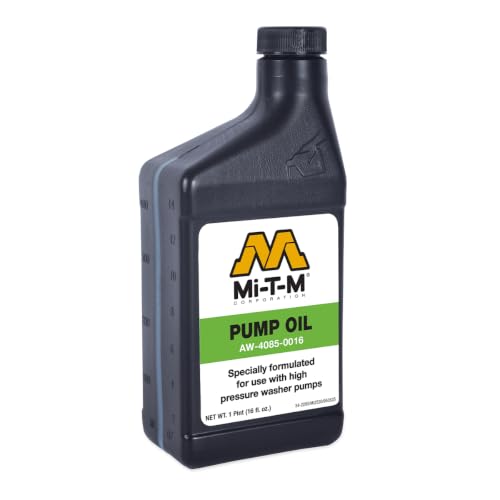
Mi-T-M Anti-Wear Premium Pump Oil, 16 oz

Valley Industries Premium Pump Oil 1 Liter

STA-BIL Pump Protector 4 oz

Briggs & Stratton OEM Pump Saver 4 oz 2-Pack

Briggs & Stratton 6151 Anti-Freeze Pump Saver 10.7 oz

M22 x 1.5 Stainless Steel Threaded Plug Fitting

SIMPSON Pressure Washer Pump Oil, 1 Pint
A Deeper Look At The Lineup
Owners of AR Annovi Reverberi plunger pumps often notice the manual keeps circling back to one specific oil recommendation, and this is it. The 30W multi-viscosity petroleum blend ships in a 16 oz bottle with a twist cap that’s heat-sealed for tamper evidence, which is a small but welcome touch for a fluids shelf in a busy garage.
Unlike the storage protectors later in this list, this is a true working lubricant, not a winterization foam. It runs through the crankcase, coats the plungers, and keeps everything moving on long cleaning sessions. Compatible AR models listed on the bottle include the AR610, AR620, AR630, AR613, AR675, and the JRA series, though owners of other pumps commonly reference the same spec sheet for cross-checking.
The Good Stuff
- Non-detergent, non-foaming formula that resists air entrainment under heavy cycling
- Multi-viscosity 30W grade that holds up across temperature swings in a typical garage
- Direct compatibility with popular AR residential and prosumer plunger pumps
- Heat-sealed 16 oz bottle helps confirm you are not getting refilled stock
Things To Consider
- Bottle size is modest for shops running multiple machines, so replacement comes around quickly
- Manual check still required for older AR models not listed on the label
Quick Facts
Right Fit For
Owners of AR610, AR620, AR630, AR675, or JRA series plunger pumps who want the exact oil referenced in their user manual.
Consider Something Else When
The Mi-T-M Anti-Wear Premium Pump Oil is a stronger fit if you run a triplex or axial pump from a different brand, since its additive package targets those geometries.
Where the AR bottle on this list targets a brand ecosystem, the Mi-T-M oil leans the other direction and is built to play nicely with most pumps on the market. The label specifically calls out triplex and axial designs, both of which run hotter and faster than a basic residential plunger pump.
The formula carries anti-wear additives along with rust and corrosion inhibitors, which matters in humid garages or coastal climates where plain petroleum oil can oxidize and leave deposits. Compared to the AR Blue Clean option above, you trade brand specificity for broader compatibility and a more aggressive additive package.
Points In Its Favor
- Anti-wear chemistry helps triplex and axial pumps reach longer service intervals
- Rust and corrosion inhibitors suit damp storage environments
- Confirmed by the maker to fit Mi-T-M units and a wide range of other pumps
- Reported to help pumps run cooler than with conventional motor oils
Honest Caveats
- Pint-sized bottle can run out mid-season on machines with larger sumps
- Worth confirming seal compatibility with older pumps that may have already been run on heavier oils
Who It Suits Best
Operators with triplex or axial pumps who want one bottle that can rotate across several machines in a small fleet or workshop.
Look Elsewhere When
The Valley Industries Premium Pump Oil is a better match if you simply need more volume per bottle, since it ships in a full liter.
Frequent users tend to chase one specific feature in pump oil: a bottle large enough that the level does not drop below the dipstick between jobs. The Valley Industries 1 liter bottle directly addresses that, sitting between the pint-sized options from AR and Mi-T-M and the much larger bulk containers used by commercial shops.
It is a non-detergent, non-foaming formula built around rust and oxidation protection, and the wide fill neck is a real-world bonus. Anyone who has tried to thread a small spout into a tight pump housing will appreciate not having to use a funnel or deal with splashback.
What Earns Its Place
- Generous 1 liter volume suits users who change oil more than once per season
- Easy-fill neck reduces spills during top-offs in awkward pump housings
- Non-foaming formula holds up under sustained high-RPM cycling
- Strong rust and oxidation package for stored equipment
Softer Spots
- Brand ecosystem is thinner than the AR or Mi-T-M bottles, so you lean on generic spec matching
- Larger bottle means more storage space and slightly slower consumption tracking
Quick Facts
Best Suited To
Homeowners and small contractors who run their pressure washer monthly or more, and who would rather stock one liter than chase a refill every few cycles.
Skip It When
Pick the STA-BIL Pump Protector instead, since the use case shifts to off-season storage rather than active lubrication.
The first three picks on this list are working oils for the crankcase, but STA-BIL’s Pump Protector sits in a different corner. It is a storage additive that gets pulled through the water line, sprays a white protective foam into the pump, and coats pistons and seals before you put the machine away for the winter.
It is sold as a 4 fl oz bottle, and the same product is also sold in multi-packs. For anyone who has pulled a pressure washer out of the garage in April only to see a puddle under the cracked pump housing, this category of product is essentially preventive medicine. It also doubles as a lubricant, which helps during the first start-up of the new season.
Notable Upsides
- Anti-freeze chemistry guards the water side of the pump during cold storage
- Lubricant properties keep seals from drying out over idle months
- Simple connect-and-spray application, no tools required
- Compact bottle stores easily in a shed or truck box
Worth Noting
- Not a replacement for crankcase oil, so you still need a working pump oil in rotation
- Small bottle means you go through it quickly if you own several machines
Feature Snapshot
Who Should Grab It
Owners in cold or humid climates who store the pressure washer in an unheated garage or shed for several months at a time.
Reach For A Different Pick When
The Briggs & Stratton OEM 6039 Pump Saver 2-Pack is a stronger fit if you specifically run Briggs & Stratton engines and prefer factory-branded storage fluid.
When the pump housing on a Briggs & Stratton engine is cracked from a frozen winter, the warranty conversation gets awkward. The OEM 6039 Pump Saver is the storage fluid that came with the machine’s care guide, sold here as a 2-pack of 4 oz bottles, which is the right amount for two seasonal treatments on a single pump or one treatment across two machines.
Like the STA-BIL option, this is a through-the-inlet additive rather than crankcase oil. The difference is brand alignment. If your machine wears a Briggs & Stratton badge, using the same fluid the factory specifies keeps maintenance records tidy and removes a small variable if a service question comes up later.
Key Advantages
- Genuine OEM fluid matched to Briggs & Stratton pressure washer service recommendations
- Two-pack format suits two-machine households or two winter seasons on one machine
- Compact bottles fit on a workshop pegboard without taking up shelf space
Trade Offs
- Costs more per ounce than the STA-BIL 4 oz bottle, and the OEM markup is real
- Still a seasonal product rather than a working lubricant, so it does not replace your crankcase oil
Perfect Match For
Owners of Briggs & Stratton pressure washers who want factory-recommended winterization fluid and plan to keep the machine for several seasons.
A Better Fit Elsewhere
The Briggs & Stratton 6151 Pump Saver is a more interesting choice if you want a larger single bottle rather than two 4 oz units.
Where the 2-pack above is a measured approach, the 6151 sits in a single 10.7 oz bottle that one person can pour into a pump without juggling two containers. It carries the same anti-freeze and lubricant role, just in a more convenient single-dose format.
This is the product many Briggs & Stratton owners end up reaching for at the end of the cleaning season, when harsh weather or extended downtime would otherwise risk weakening pistons and seals. The 10.7 oz size also works well for owners with larger pumps that swallow more fluid per treatment.
Practical Pluses
- Single 10.7 oz bottle covers larger pumps in one pass
- Anti-freeze and lubricant formula extends seal life during storage
- Recommended before extended downtime and at startup the following season
- Backed by Briggs & Stratton’s own service documentation
Some Limits To Know
- Bottle is larger than the OEM 4 oz, so it may sit for a while between uses in single-machine households
- Not a substitute for regular crankcase oil changes
Key Product Details
Whose Shelf It Belongs On
Briggs & Stratton owners with a single full-size pressure washer who want to winterize in one clean step rather than split doses between bottles.
Swap It Out When
Pick the SIMPSON Pressure Washer Pump Oil if your machine is a SIMPSON unit and you would rather stock a working lubricant in addition to a storage additive.
Technically this is not a pump oil at all, but the roundup earns its place because oil-related maintenance often exposes a secondary problem. The M22 x 1.5 stainless steel plug with copper washer seals off a metric threaded port, useful when a pump has a drain, sensor, or accessory port that no longer needs to be open.
316 stainless is the right call for anything that might see moisture, chemicals, or outdoor storage. The slim Allen key head sits flush rather than protruding, which avoids snag points in tight engine bays. Compared to the working oils earlier on this list, the value here is a finished repair, not a fluid refresh.
Real-World Strengths
- 316 stainless steel construction resists corrosion in damp or chemical-heavy environments
- Copper washer provides a soft, reliable seal on metal-to-metal threads
- Flush Allen key head reduces snag risk in tight machinery bays
- Compatible with hydraulic, fluid, and industrial metric thread standards
Where It May Fall Short
- Niche purchase: only useful for shoppers with a specific M22 x 1.5 port to seal
- Requires the matching Allen key, which is not always in a basic tool drawer
Built With In Mind
Shops and homeowners working on hydraulic or fluid systems that need a corrosion-resistant plug to close off an unused or replaced port.
Where A Sibling Pick Shines
The Briggs & Stratton 6151 Pump Saver is a better match when the real problem is freeze damage, not an open port, since the 6151 protects from the inside.
SIMPSON is one of the better-known names in consumer and light-commercial pressure washing, and its branded 1 pint pump oil is the working fluid many of those machines ship expecting to see in the crankcase. The 15W40 grade is a familiar multi-viscosity weight that handles both startup and steady running.
The 475 mL bottle is a comfortable middle ground for a single household machine, larger than the AR and Mi-T-M 16 oz options but smaller than the Valley Industries 1 liter. For anyone whose machine wears a SIMPSON badge, this is the spec-matched lubricant and the easy answer when the manual says “use SIMPSON pump oil”.
Positive Points
- Genuine SIMPSON-branded oil matching factory service guidance
- 15W40 multi-viscosity grade handles cold starts and warm running
- Pint-size bottle suits a single household machine without waste
- Wide compatibility with SIMPSON residential and prosumer pumps
What To Weigh
- Less aggressive additive marketing than the Mi-T-M bottle, so it may not stand out on the shelf
- Brand-specific label means less appeal for mixed-brand fleets
The Right Fit
SIMPSON pressure washer owners who want factory-branded oil and a bottle sized for one or two changes per season.
Not Your Match When
Pick the Valley Industries 1 Liter bottle if you rotate between several pumps and would rather stretch a single container across multiple machines.
Choosing Pump Oil That Actually Protects Your Pump
The pump oil decision looks like a small one until a worn seal or a scorched crankcase forces a repair. A few attributes tend to decide whether a given bottle is the right call.
Viscosity grade and pump type. Viscosity is a measure of how thick a fluid is at a given temperature, and pumps are designed around a specific range. Most residential plunger pumps are happy with 30W, while many triplex and axial designs run better on multi-viscosity weights like 15W40. Match the grade in your manual first, brand second.
Detergent versus non-detergent. Detergent oils contain cleaning additives that help suspend contaminants, but pressure washer pumps generally want a non-detergent formula. Detergent additives can lift deposits and carry them through tight seal clearances, which tends to shorten seal life. Every crankcase oil on this list is non-detergent.
Additive package for storage and corrosion. Anti-wear, rust, and oxidation inhibitors matter most in humid garages, coastal climates, or any pump that sits idle for long stretches. A bottle with stronger inhibitor chemistry pays off when the machine lives outside or in an unheated shed.
Brand alignment versus cross-brand compatibility. Brand-matched oil removes any guesswork and keeps warranty paperwork simple. Cross-brand bottles are useful for households that own several pumps or shop for a single fluid to rotate across machines. Both approaches are valid, depending on how many pumps you maintain.
Where Shoppers Go Wrong, and What the Higher Tier Buys You
Common Shopping Slip Ups
A frequent mistake is reaching for the cheapest bottle without checking whether the formula is non-detergent. Pressure washer pumps do not behave like car engines, and a detergent oil can shorten seal life quickly. Another trap is using a through-the-inlet storage additive in place of crankcase oil; the two products do different jobs. Finally, many shoppers ignore bottle size, then end up making four or five orders a season when a single liter would have been a better fit from the start.
Where The Extra Money Goes
Premium pump oils tend to justify their higher price through additive chemistry: stronger anti-wear packages, better rust inhibitors, and base oils that resist oxidation at sustained high temperatures. The upgrade tends to be worth it for triplex and axial pumps that run hot, for machines used in coastal or humid environments, and for anyone who would rather change oil once a season than chase seal repairs every few years.
Frequently Asked Questions
Do pressure washer pumps actually need oil? Most axial and triplex pumps do, and plunger pumps almost always do. The owner’s manual lists a fill port and a recommended grade. Using pump oil rather than a generic motor oil is the safer choice because the formula is tuned for the seal and load profile of pressure washer components.
How often should pump oil be changed? A common interval is once per season for casual residential use, with a check at the start of spring. Commercial machines or pumps that run hard and hot may need changes twice per season. The pump manual is the better source than any general rule.
Can I use 30W non-detergent oil from a hardware store? A bottle labeled 30W non-detergent is often the same chemistry as dedicated pump oil, and many owners run it successfully. The trade-off is that dedicated pump oils tend to carry rust and anti-wear additives the hardware store bottle does not, which is why many manuals still recommend the branded product.
What does a pump saver additive actually do? Pump saver is a storage fluid that runs through the water side of the pump, leaves a protective film on seals and pistons, and resists freezing in cold conditions. It is not a replacement for crankcase oil, but it is a useful complement during the off-season.
Is thicker oil always better for a pressure washer pump? Not always. Thicker oil can protect at high temperatures but flows poorly at startup, which is when most wear happens. The viscosity grade in the manual reflects a balance between cold-start flow and hot-running protection, and deviating from it usually causes more problems than it solves.




