


You don’t need a six-figure fab shop to lay clean, repeatable beads anymore. The new generation of multi-process inverters packs serious output into something a single person can wheel across a concrete floor, plug into a standard dryer outlet, and start fusing steel within minutes. The trick is matching the machine to the work you actually do, not the wish list in your head.
How The Shortlist Stacks Up

ARCCAPTAIN MB15 15AK MIG Welding Gun Kit .030″
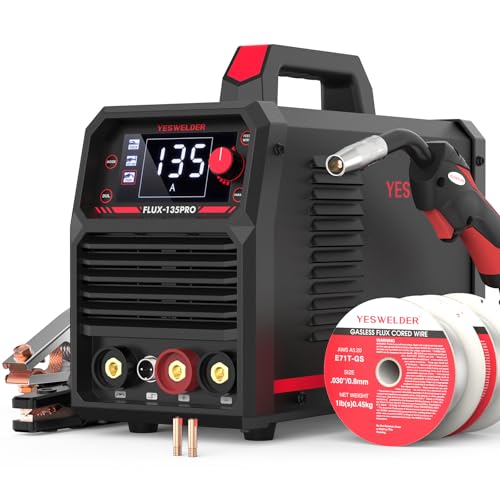
YESWELDER 135A 110V Flux Core Gasless MIG 3-in-1

YESWELDER 205A 110V/220V 5-in-1 MIG Welder

BESTMIG 135A 3-in-1 Flux Core MIG Welder

BESTMIG 165S 110V/220V 4-in-1 Multi-Process Welder

YESWELDER Firstess DP200 120V/240V Pulsed Welder

BESTMIG 200A 6-in-1 IGBT Inverter Welder

BESTMIG 145A 4-in-1 Multi-Process Welder
More On The Choices That Made The List
If you already own a 15AK-style MIG torch and the consumables have turned into a spatter magnet, this ARCCAPTAIN kit is the kind of unflashy purchase that keeps a shop running. It’s a small bag of replacement parts, not a welder, which makes it a different kind of entry on this list. The 0.030-inch contact tip fits a range of 15AK-compatible guns, and the nickel-plated copper nozzle is the part most owners reach for first because old nozzles stay caked even after a wire brushing.
For someone working through a backlog of steel patch panels, swapping in fresh tips and a clean nozzle is often the difference between a bird-nested wire feed and a smooth arc. Unlike the multi-process machines below, nothing here generates current; it just supports the gun you already trust.
Positive Takeaways
- Nickel-plated copper nozzle resists spatter adhesion, so clean-up takes less time between long bead runs.
- 0.030-inch contact tip is a common size for light-gauge steel work, meaning you’ll likely already use it.
- A spare set of consumables on the bench saves you a trip to a local supplier when a tip wears mid-project.
Worth Noting
- This is a consumable kit only; you still need a separate MIG power source and gun body to weld anything.
- Verify the connection style matches your existing torch before ordering, since 15AK-style fittings vary between import and domestic guns.
Whose Shelf It Belongs On
Anyone already running a 15AK-style gun who wants a low-cost way to refresh worn tips and nozzles without a special order.
Skip It When
The YESWELDER 135A makes more sense for new DIYers who don’t yet own a torch and need a complete welding system.
The YESWELDER 135A is the welder you hand to a friend who has never struck an arc and doesn’t own a gas cylinder. Running off a standard 110V household circuit, it ships with both 0.030-inch and 0.035-inch flux-core wire, which is the gasless variety that lets you weld outdoors without shielding gas getting blown away. For hobbyists working in a breezy driveway or a rural property, that matters more than raw amperage.
The 3-in-1 process list (gasless flux core MIG, lift TIG, and stick) means the same box can stay useful as your skills grow. Compared to the ARCCAPTAIN kit above, this is a complete starter platform rather than a parts bag. You trade some duty cycle and max output for portability and a gentler learning curve.
A Favorable Mix
- 110V input means no special outlet; you can run it in a garage, shed, or basement with a standard 20-amp circuit.
- Gasless flux core removes the need to store, transport, or refill a shielding gas tank, which is a real perk for occasional projects.
- Three welding modes let you practice stick for thicker steel and lift TIG on thinner sheet without buying a second machine.
Trade-Offs To Consider
- 135A peak output limits you to roughly 1/8-inch steel in single passes, so heavy plate work will feel underpowered.
- Flux core produces more spatter and visible smoke than solid wire with gas, so cleanup takes longer and ventilation matters more.
At A Glance
Right Fit For
First-time welders and rural homeowners who want one portable machine for fence repairs, trailer patches, and weekend fabrication.
Consider Something Else When
Shops needing more output should look at the YESWELDER 205A 5-in-1, which adds spool gun compatibility and real dual-voltage flexibility.
The YESWELDER 205A sits in the sweet spot for someone who has outgrown a beginner 110V-only unit but doesn’t want to drop serious cash on a 240V shop machine. The dual-voltage input means you can plug it into a regular outlet at home, then run it on a 220V dryer circuit in a real shop. With 200 amps of output and five welding modes, it covers gas MIG, flux core MIG, spool gun aluminum MIG, lift TIG, and stick.
For shop fabricators and small-business owners who weld a few hours a day, the extra amperage translates to longer duty cycles and the ability to push through 3/16-inch steel without overheating. Compared to the YESWELDER 135A above, you give up some portability for the headroom to keep working when a job gets thick.
Notable Upsides
- Dual 110V/220V input means the same machine can move between a home garage and a small fabrication shop without rewiring.
- Spool gun compatibility opens up aluminum MIG work, which a 3-in-1 starter welder simply cannot do.
- 200A peak gives real headroom for welding 1/4-inch steel in multiple passes without frequent thermal cutouts.
Points To Keep In Mind
- Spool gun and lift TIG torch are sold separately, so budget for those add-ons if you want every mode the unit claims.
- The interface packs five modes into a small panel, which feels crowded until you spend a week learning the menu layout.
Quick Facts
Made For
Small-shop fabricators and serious hobbyists who need aluminum capability and the option to push heavier steel in longer sessions.
Not Your Match When
Beginners still dialing in steel MIG should start with the YESWELDER 135A and graduate to this once they have some seat time.
The BESTMIG 135A is a first-time-garage-owner package: a 3-in-1 welder, an auto-darkening helmet, and a pair of welding gloves arrive in a single box. At 135 amps on 110V input with IGBT inverter electronics, the machine is aimed squarely at hobbyists and homeowners working on automotive patches, trailer floors, and small repair jobs. The “true” 135A current rating gives it enough muscle to handle 1/8-inch steel cleanly.
What you really pay for here is the bundle. Anyone buying just the welder can find similar specs elsewhere, but the included helmet and gloves remove the awkward “now I need to find PPE” second shopping trip. Compared to the YESWELDER 135A above, this trades two extra included wire sizes for the safety gear, which may matter more to someone with literally nothing in their shop yet.
Standout Benefits
- All-in-one package means you can unbox, plug in, and start welding in the same afternoon.
- IGBT inverter design keeps the unit compact and lighter than older transformer-style welders in this class.
- Ground clamp and electrode holder come included, sparing you a separate parts run for the basics.
Small Caveats
- The included helmet and gloves are entry-level; once you weld more than a few hours a month, you may want to upgrade the auto-darkening cartridge.
- Single-voltage 110V input caps the duty cycle on heavier steel, so long beads on thicker material mean more cooling breaks.
Feature Snapshot
Who It Suits Best
Homeowners and hobbyists stepping into welding for the first time who want a complete kit on a single shopping trip.
A Better Fit Elsewhere
The BESTMIG 165S suits people who already own PPE and need dual-voltage flexibility for serious farm or property work.
The BESTMIG 165S is the welder that lands in the middle of most owners’ wish lists: dual voltage for garage-to-shop flexibility, four welding modes, and a synergic inverter that tunes wire feed speed for you once you set the material thickness. With 165A of output and a 60% duty cycle at rated load, it can handle carbon steel, stainless, and mild steel up to 3/16 inch thick.
For farm and ranch owners fixing gates, implements, and trailer hitches, the dual-voltage input is the headline feature. You can plug into a barn outlet at 110V, then run it on 220V in a heated shop when winter hits. Compared to the BESTMIG 135A bundle above, this gives up the included helmet and gloves but picks up real welding muscle and the synergic control that makes dialing in parameters less of a guessing game.
Where It Helps
- Synergic control simplifies setup: select material thickness, and the machine maps wire speed and voltage together for cleaner beads.
- Four modes (gas MIG, gasless flux core, lift TIG, stick) cover almost any repair you’ll face on a property or small job site.
- 60% rated duty cycle on MIG means you can run a series of longer beads without constant cool-down breaks.
Honest Caveats
- Lift TIG operation requires a separate torch that is typically not included, so factor in the add-on cost.
- Synergic presets are tuned for common wire sizes; running unusual wire diameters may still demand manual adjustments.
Technical Sheet
Best Suited To
Farmers, ranchers, and property owners who need a portable machine that can plug into any available outlet and tackle steel up to 3/16 inch.
Where Another Pick Suits Better
The YESWELDER Firstess DP200 is a better match for fabricators who specifically want pulsed MIG for thinner sheet and aluminum.
The YESWELDER Firstess DP200 brings pulsed MIG technology down to a price point that used to be reserved for industrial machines. Pulsed MIG, in plain terms, is a current waveform that alternates between a high peak and a low background, giving you TIG-like bead appearance without a foot pedal and without a shielding gas swap. For thin stainless and aluminum body panels, the difference in cleanliness is visible right away.
The 8-in-1 mode list covers MIG, pulsed MIG, dual-pulsed MIG, flux core, spool gun MIG, spot welding, lift TIG, and stick, with 120V/240V dual-voltage input. Compared to the BESTMIG 165S above, you trade simplicity for control; the DP200 is the right pick for fabricators chasing cosmetic-quality welds on sheet metal, not for someone just patching a steel post.
What Pays Off
- Dual-pulse MIG produces a stacked, rippled bead that resembles a TIG weld, useful for visible joints on aluminum and stainless.
- Eight welding modes consolidate MIG, flux core, spool gun, spot, TIG, and stick in a single enclosure.
- 120V/240V dual voltage gives the same machine a path from home outlet to professional shop without a second unit.
A Few Limitations
- Lift TIG torch and spool gun are required for those modes and typically ship separately, adding to the total cost.
- Learning to tune pulse parameters takes longer than dialing in a basic CV MIG setup, so expect a real ramp-up period.
Who Will Love This
Thin-sheet specialists and custom fabricators who want TIG-like cosmetic results without committing to a dedicated TIG machine.
Look Elsewhere When
Someone focused on heavy steel repairs should pick the BESTMIG 200A 6-in-1, which skips pulse complexity in favor of raw process count and amperage.
The BESTMIG 200A is the unit you picture in a small auto body shop or a fabrication bay that sees daily use. Six welding modes, dual 110V/220V input, and adjustable 2T/4T trigger control, meaning you can choose between a simple pull-and-hold trigger or a latched mode for long continuous welds without finger fatigue. With 200 amps available, it handles automotive repair, light industrial fabrication, and most general shop work.
What separates this from the YESWELDER 205A above is the inclusion of spot welding and spool gun compatibility in the standard mode list, plus 2T/4T trigger control, which matters for production-style welds. The trade-off is weight and footprint; this is a bench-dedicated machine more than a grab-and-go unit.
What It Does Well
- Spot welding mode is genuinely useful for sheet metal patch panels, where a short timed arc replaces plug welds drilled by hand.
- 2T/4T trigger control keeps long beads consistent without holding the trigger down, a real comfort on extended jobs.
- Spool gun compatibility opens up aluminum MIG for body shops and trailer builders without buying a separate machine.
Potential Drawbacks
- The unit is heavier than the 135A and 145A-class machines, so it lives on a cart or bench rather than in a backpack.
- Spool gun and lift TIG torch are not always bundled, so verify the included accessories before finalizing the order.
Feature Rundown
Perfect Match For
Auto repair shops and small fabrication businesses that need one machine capable of body work, frame repairs, and aluminum MIG.
Another Choice May Suit
The YESWELDER Firstess DP200 suits fabricators focused on cosmetic pulse welding more than spot welding and production triggers.
The BESTMIG 145A is the middle child in this lineup that quietly does the most for hobbyists who want flexibility without a full shop. A 4-in-1 multi-process design runs on 110V or 220V, supports solid and stainless steel wire in the 0.030-inch range, and accepts flux-cored wire up to 0.040-inch. The synergic IGBT inverter claims a 30% efficiency bump over older transformer designs, which mostly shows up as less heat bleed and a smaller chassis.
Compared to the BESTMIG 135A bundle above, this gives up the included helmet and gloves but adds dual-voltage input, synergic control, and a higher 145A output. For someone who already owns PPE and wants a portable machine that fits in a closet, it’s a tidy step up.
What Helps Most
- Dual 110V/220V input means the same machine handles home projects and heavier shop work without buying a second unit.
- Synergic control tunes wire feed and voltage together once you set the thickness, so beginners avoid the trial-and-error phase.
- Wide wire compatibility, including 0.040″ flux core, lets you work on thicker steel with a single spool change.
Some Limits To Know
- The bundle does not include a lift TIG torch, so plan a separate purchase for the TIG mode to be usable.
- At 145A peak, the unit is not a heavy plate welder; for 3/8″ steel and up, look at the 200A-class units earlier in this list.
Built With In Mind
Mid-level hobbyists and small-shop workers who want a portable four-mode welder with dual-voltage flexibility and included safety gear from the PPE they already own.
Swap It Out When
Shop owners needing spot welding or 2T/4T trigger control should move up to the BESTMIG 200A 6-in-1 instead.
Factors To Weigh Before Buying Your Next Welder
Output, Voltage, and the Outlet You Actually Have
Amperage is the headline spec, but voltage input is the spec that decides whether a machine can run in your shop at all. A 110V-only unit works on any standard household outlet. Dual-voltage machines accept both 110V and 220V, where 220V delivers more output and a steadier arc, but it also requires a dryer-style outlet or a dedicated 30-amp circuit. For most home users, dual-voltage is the most forgiving choice because the same machine can grow with your shop setup.
Process Count vs. Real-World Use
“5-in-1” and “8-in-1” labels are eye-catching, but the question is whether you will actually use lift TIG or pulse MIG. Stick and flux core cover the majority of farm, garage, and repair work. Gas MIG (solid wire with shielding gas) is what most production shops run because the beads are cleaner. If you never intend to weld aluminum, skip the spool gun models and save the budget for thicker capability.
Duty Cycle, Weight, and Where It Will Live
Duty cycle is the percentage of a 10-minute window a welder can run before thermal protection kicks in. A 60% duty cycle at rated output is solid for a serious hobbyist. Weight matters more than people expect: a 25-pound 110V inverter is genuinely portable, while a 200A dual-voltage machine in the 40-plus-pound range lives on a cart. Match the machine to the space you have, not the space you wish you had.
Key Considerations Across These Picks
Pitfalls First-Time Shoppers Hit
The most common mistake is buying the highest-amperage machine on the page without checking the input voltage. A 200A welder running on a 110V outlet rarely delivers 200A; it throttles hard and frustrates the operator. Another trap is underestimating consumables: contact tips, nozzles, gas diffusers, and shielding gas all add to the real cost. Finally, ignoring duty cycle leads to constant thermal cutoffs on real production days.
Where the Higher Tier Earns Its Price
Spending more on a top-tier unit typically buys three things: pulse MIG control for cleaner thin-sheet work, dual-voltage flexibility, and stronger IGBT inverter electronics that hold their arc longer under heat. For occasional hobbyists, those upgrades are hard to justify. For small shops welding daily, the time saved on cleanup, the wider process range, and the longer duty cycle pay back the difference in months, not years. Decide which side of that line you stand on before chasing the most expensive model.
Frequently Asked Questions
What thickness of steel can a 135A to 200A MIG welder handle?
Most machines in the 135A to 200A range handle mild steel up to about 1/4 inch in multiple passes, with single-pass comfort around 3/16 inch. Thicker plate usually requires a 240V machine and a higher duty cycle.
Do I need shielding gas to MIG weld?
Gasless flux core wire is self-shielding, so you can weld outdoors or in windy conditions without a tank. Solid wire MIG with argon/CO2 mix gives cleaner beads and less spatter, but you need a shielding gas cylinder and a regulator.
Can a hobby welder run on a standard 110V household outlet?
Yes, 110V-only and dual-voltage welders under about 150A typically run on a standard 15-amp or 20-amp household circuit. For higher output, a dedicated 220V outlet is recommended.
Is a multi-process welder worth it over a single-process MIG unit?
For most users, yes. A multi-process machine covers MIG, flux core, stick, and sometimes lift TIG in one box, so you don’t buy a second machine when you need to weld a different material or a thicker repair.
What safety gear do I need to start MIG welding at home?
An auto-darkening welding helmet, flame-resistant gloves, a leather apron or jacket, and proper ventilation are the basics. The BESTMIG 135A bundle ships a helmet and gloves so you can start the same day you unbox the welder.




