Sweating a copper joint behind a tight cabinet wall is the kind of work that tests patience. A press tool flips the script: no torch, no open flame, no waiting for solder to cool while the clock runs on a service call. The best modern kits let plumbers, HVAC techs, and ambitious homeowners make repeatable, flameless connections in seconds, even in narrow joist bays where a torch simply cannot reach. The picks below cover hand-crimp, hydraulic, and battery-powered options across the size ranges you’ll actually meet on the job, with notes on who each one genuinely suits.
The Leading Options At A Glance

IWISS iCrimp PEX Crimp Tool Kit (1/2″ & 3/4″)
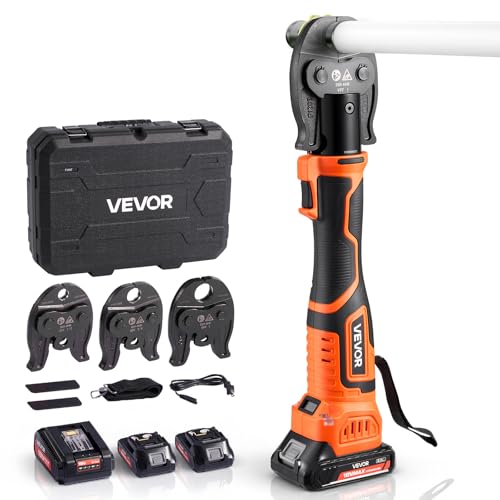
VEVOR 18V Electric Press Tool (3 VPF Jaws)

HUYARPEX Lightweight Press Tool (32KN, 3 Jaws)

VEVOR 18V Press Tool (1/2″–2″ Copper)

DJYIYEW Copper Pipe Crimping Tool (3 Jaws)

VEVOR Hydraulic Copper Crimper (VUS 3-Jaw)

VEVOR Hydraulic Copper Crimper Kit (ProPress)

VORXEON 8-Ton Pro Press Crimper (VUS, 360°)

HUYARPEX Lightweight Press Tool (32KN, 11 Molds)
A Breakdown Of The Leading Choices
Manual go-no-go crimp tools have earned their reputation as the no-fuss workhorse of PEX service work, and this IWISS kit lands squarely in that tradition. The jaws are polished smooth, which matters more than it sounds: a rough jaw surface can nick a copper ring and create the exact slow leak you’d rather not chase six months later.
Covering 1/2-inch and 3/4-inch copper rings, the kit suits the sizes you’re most likely to encounter on residential supply lines. Short handles open up access in joist bays and tight lav cabinets where a longer tool simply won’t swing. The lighter weight also makes it approachable if you’re climbing a ladder or working overhead, where arm fatigue adds up faster than you’d expect.
Useful Strengths
- Go/no-go verification built into the jaw, so you get a clear signal when a ring is fully compressed.
- Lightweight design reduces fatigue during long days of repair work.
- Covers the two PEX sizes used in the majority of home supply lines.
- Compact head reaches into joist bays and tight wall cavities where bulkier tools stall out.
Honest Caveats
- Manual force is required for each crimp, which wears on wrists during large jobs.
- Limited to 1/2″ and 3/4″, so 1″ copper work calls for a different tool.
Who It Suits Best
Plumbers and serious DIYers who mainly handle residential PEX supply lines and value a simple, no-battery tool for service calls.
Where Another Pick Suits Better
The VEVOR 18V Electric Press Tool is the better fit when you need battery-driven speed and routinely press 1″ PEX runs.
If you’ve ever finished a long PEX rough-in with sore forearms, an 18V press tool feels like cheating in the best way. VEVOR’s battery model leans on a brushless motor (the kind that runs cooler and lasts longer than brushed designs) to deliver 24 kN of crimping force, and it ships with three VPF press jaws covering 1/2-inch, 3/4-inch, and 1-inch PEX.
You also get two 2Ah batteries, a charger, and a toolbox to keep everything organized, so you’re not hunting for the right jaw in a service van at 6 a.m. Compared to the manual IWISS pick above, the speed difference on a multi-bath repipe is noticeable enough to change how you plan a day.
Where It Excels
- Brushless motor output supports consistent, repeatable crimps across long jobs.
- Three VPF jaws span the most common PEX sizes you’ll meet on supply work.
- Dual-battery setup keeps the workflow moving when one pack runs low.
- Toolbox case reduces lost-jaw headaches on crowded job sites.
Worth Noting
- Optimized for PEX stainless rings, not copper, so it won’t cover mixed-material rough-ins.
- 24 kN is solid for PEX but lighter than the copper-rated tools further down this list.
- Spare batteries and replacement jaws represent an ongoing expense to plan for.
Key Specs
Made For
Service plumbers and remodel crews who press PEX daily and want a cordless setup that won’t slow them down.
Look Elsewhere When
The VEVOR 1/2″–2″ Copper Press Tool is the smarter pick if copper, not PEX, dominates your project list.
Reach and balance matter more than raw force on a copper press tool, and HUYARPEX leans into that idea with a 350° rotating head that lets you angle the jaws without twisting your wrist into a knot. The 32 kN output is a real step up from the 18 to 22 kN you see on budget presses, and the 2.5Ah battery keeps the tool running through a typical service van’s day.
Three jaws handle 1/2-inch, 3/4-inch, and 1-inch copper, which covers the bulk of residential water distribution. If you spend time in ceilings or on a step ladder, the lighter build pays off fast, especially compared to older press tools that feel like holding a brick at arm’s length.
Key Advantages
- 350° rotating head opens up awkward angles in joist bays and behind fixtures.
- 32 kN copper motor output delivers consistent crimps on standard residential sizes.
- Compact frame reduces fatigue during overhead or ladder-based installs.
- 2.5Ah battery strikes a workable balance between runtime and tool weight.
Points To Note
- Limited to 1/2″–1″ copper, so larger commercial mains need a different setup.
- Spare jaws and battery packs are specialized items, worth budgeting for.
Right Fit For
Residential plumbers and HVAC techs who frequently work overhead and value a tool that won’t punish their shoulders by lunchtime.
Skip It When
You’ll want the VEVOR 18V Press Tool (1/2″–2″ copper) if your work regularly calls for 1-1/4″ and larger copper mains.
When the job scales up to 2-inch copper mains, the lightweight residential presses run out of road. VEVOR’s 1/2-inch to 2-inch model stretches the range significantly, backed by a fully enclosed electric hydraulic system that completes a crimp in roughly 3 to 6 seconds and pushes a stable 32 kN of force.
That kind of speed changes the rhythm of a commercial rough-in, where each fitting matters and downtime adds up. Keep in mind that this kit ships with copper-specific jaws; pressing PEX or stainless with this tool means buying the matching jaw set separately, which is a real planning point for mixed-material jobs.
Practical Pluses
- Covers 1/2″ through 2″ copper in a single platform, rare in this price bracket.
- 3–6 second crimp cycle keeps large jobs moving at a steady pace.
- Hydraulic output stays consistent across many cycles per charge.
- Wide jaw range reduces the number of separate tools you carry to a site.
A Few Limitations
- Copper-specific out of the box; other materials need separately purchased jaws.
- Heavier than the smaller HUYARPEX unit, so plan for ladder fatigue.
- Larger dies mean more storage space in the truck or shop.
Spec Overview
Best Suited To
Commercial plumbers and HVAC contractors who run copper mains and need one press that handles the full residential-to-light-commercial range.
Reach For A Different Pick When
The VEVOR Hydraulic Copper Crimping Tool (VUS 3-Jaw) is the better match if you’re working with ProPress fittings and need a slimmer, single-handed tool for tight tees.
Somewhere between a manual crimper and a full cordless press rig sits this hydraulic hand tool from DJYIYEW, and it carves out a real niche for copper work that doesn’t justify dragging out a battery kit. The 1/2-inch, 3/4-inch, and 1-inch jaws cover the most common residential sizes, and the tool is designed to play nicely with Viega ProPress fittings.
Build quality leans on steel and aluminum alloy, which keeps the weight reasonable without feeling flimsy. For shop owners handling a steady stream of repair calls rather than full rough-ins, the simplicity of a manually pumped hydraulic press is part of the appeal, no batteries to charge, no firmware to update.
Positive Takeaways
- Hydraulic force makes 1″ copper joints much easier than a manual crimp tool.
- Steel and aluminum construction balances durability with manageable weight.
- Compatible with widely available Viega ProPress copper fittings.
- No battery means no charging downtime on a busy service day.
Trade Offs
- Manually pumped, so cycle time is slower than a battery press.
- Stuck with three sizes out of the box; 1-1/4″ and up require other equipment.
Feature Snapshot
Whose Shelf It Belongs On
Small-shop plumbers and remodel specialists who want ProPress compatibility without committing to a battery platform.
Not Your Match When
The HUYARPEX 32KN Cordless Press is the stronger pick if you’d rather skip the pumping and let a motor do the work.
The “VUS” in this VEVOR model’s spec list refers to a jaw profile designed to work with ProPress-style copper fittings, the same standard Viega helped establish. Three VUS dies cover 1/2-inch, 3/4-inch, and 1-inch copper, and the hydraulic drive delivers even, stable pressure on each cycle so connections come out uniform.
Narrow-space work and tee fittings are explicitly called out, and the tool’s slimmer profile backs that up. For plumbers who already own a stockpile of ProPress fittings and need a press that matches, this is a sensible way to avoid a drawer full of adapters.
The Helpful Details
- VUS jaws are compatible with widely available ProPress copper fittings.
- Hydraulic system holds pressure consistently across many cycles.
- Slim profile reaches tees and elbows where a bulkier press stalls out.
- Three sizes cover the typical residential service range.
Potential Drawbacks
- Manual hydraulic pumping is slower than a battery-driven alternative.
- Confined to 1/2″–1″ copper, so larger commercial work calls for a different tool.
Who Should Grab It
Tradespeople already invested in ProPress copper fittings who want a matching press that doesn’t fight them in tight walls.
Consider Something Else When
The VORXEON 8-Ton Pro Press Crimper fits better when you need a 360° head for awkward behind-the-fixture runs.
Where the previous VEVOR tool is a focused single-purpose press, this kit rounds out the workflow with a copper pipe cutter, a deburring tool, and a carrying case alongside the 1/2-inch, 3/4-inch, and 1-inch VUS jaws. That matters in practice: prepping a copper end properly is half the battle, and a dedicated deburring tool beats a utility knife every time.
The 360° rotating head and aluminum-alloy handle with a non-slip grip make the press comfortable to use on long runs, and the case keeps the jaws, cutter, and deburrer from rattling around in a truck bed. For a small crew setting up a dedicated copper workflow, the kit approach saves the separate-tool-buying step.
Everyday Advantages
- Includes a matching cutter and deburring tool, so prep work stays consistent.
- Carrying case keeps the kit together on busy job sites.
- 360° head supports crimps in tight behind-the-wall layouts.
- Non-slip grip reduces hand fatigue during repeated cycles.
Where It May Fall Short
- Manual hydraulic pumping is slower than cordless press options.
- Capped at 1″ copper, so 1-1/4″ and larger mains need a separate press.
Perfect Match For
Plumbing shops and remodel crews who want a complete copper prep-and-press kit in one organized case.
A Better Fit Elsewhere
The HUYARPEX 32KN Cordless Press Tool is a smarter choice for solo techs who’d rather skip manual pumping on every joint.
Die changes are usually the moment a good press tool turns into a slow one, and the one-button release on this VORXEON unit tackles that head-on. A single press swaps the 1/2-inch, 3/4-inch, or 1-inch VUS die in seconds, with no extra tools and no wrestling with retaining pins. The 8-ton hydraulic force is heavy-duty enough to handle copper, carbon steel, and stainless steel pipe, which broadens the use cases well beyond a single material.
The 360° rotating head keeps the tool maneuverable in joist bays and behind water heaters, and the included storage case keeps the dies from getting lost in a van. For tradespeople who move between plumbing, electrical conduit (where applicable), and HVAC work, the multi-material coverage is a meaningful workflow advantage.
Practical Advantages
- One-button die release dramatically speeds up size changes on real jobs.
- 8-ton hydraulic force handles copper, carbon steel, and stainless.
- 360° rotating head reduces wrist strain in awkward positions.
- Storage case protects dies and keeps the kit organized.
Honest Caveats
- Hydraulic hand pump means more effort per cycle than a battery press.
- 8 tons of force requires a steady platform, so plan your stance in tight spaces.
Core Details
Built With In Mind
Multi-trade service techs who split time between plumbing, HVAC, and light electrical work and want one press that covers several materials.
Swap It Out When
The VEVOR 18V Electric Press Tool (1/2″–2″ copper) is the stronger pick for crews prioritizing cycle speed and larger copper diameters.
The headline feature of this HUYARPEX kit is range: 1 jaw plus 11 dies cover standard copper and ASTM F877 pipes in 1/2-inch, 3/4-inch, and 1-inch, plus ASTM F1807 PEX systems in 3/8-inch through 1-inch. For remodel work where you don’t know what’s behind the wall until you open it, that coverage removes a lot of the “I hope this die fits” guessing.
The 32 kN copper motor output matches the smaller HUYARPEX model, and the 350° rotating head carries over too. If you split time between copper repipes and PEX retrofits, one platform that handles both materials is genuinely useful rather than a marketing bullet point.
A Few Strong Suits
- 11-mold set spans copper, ASTM F877, and ASTM F1807 PEX in one kit.
- 350° head eases work in tight mechanical rooms and soffits.
- 32 kN motor handles both copper and stainless PEX rings cleanly.
- One platform reduces the number of separate tools carried to a job.
Practical Considerations
- More dies mean more pieces to track and store between calls.
- Capped at 1″ copper, so larger commercial work calls for a different press.
- Specialty die shapes may not be locally available if one is lost or damaged.
Right Fit For
Remodel plumbers and service techs who regularly encounter mixed copper and PEX systems on the same job.
Not Your Match When
The IWISS iCrimp Manual Kit is the simpler, lighter choice if you only do occasional PEX repairs and don’t need battery power.
What To Weigh Before Picking A Press Tool
A copper press tool earns its keep on speed and reliability, but the spec sheet only tells part of the story. Start with the pipe sizes you actually work on; a 1/2″–1″ range covers most residential jobs, while commercial mains push you toward 1-1/2″ and 2″ capability. Jaw profile matters just as much: VUS dies match ProPress-style fittings, while VPF jaws are designed for PEX stainless rings, and mixing the two can produce a connection that leaks under pressure.
Power source is the next real fork in the road. Manual hydraulic presses cost less and never need a charge, but cycle speed drops on big jobs. Battery-driven 18V tools cost more up front, yet pay back quickly on multi-bath rough-ins where each crimp matters. For most homeowners and remodel crews doing occasional work, a manual or compact battery tool is enough; daily service plumbers usually justify the cordless platform within a season.
Build quality and ergonomics are the quiet heroes. Aluminum-alloy handles with rubber grips reduce fatigue on long days, and a 350° or 360° rotating head turns a frustrating angle into a routine crimp. Look at the jaw material too, since 40Cr steel and similar alloys hold their shape longer than softer metals, which directly affects how consistent your connections stay over years of use.
Key Considerations Across These Picks
Where Shoppers Go Wrong
A common mistake is choosing a press tool by force rating alone, without checking the jaw profile and fitting compatibility. A high kN number on a VPF-only tool won’t help if your existing fittings are ProPress-style copper, and you’ll burn time returning the wrong kit. Always match the die profile to the fittings already on the shelf or truck.
Another trap is underestimating how often you’ll swap sizes. If your work bounces between 1/2″ copper tees and 1″ PEX runs, a single-size press turns into a productivity drag. Kits with quick-change dies and broad size coverage, like the HUYARPEX 11-mold set, pay off faster than they look on paper, and one-button die releases are worth the small premium once you’ve used one.
When Paying More Pays Off
The jump from a manual hydraulic crimp to a battery-powered 18V press is the most noticeable upgrade in this category. Cycle times drop from many seconds to a handful, arm fatigue nearly disappears, and consistency improves because the motor delivers the same force on every crimp. For pros pressing dozens of joints a day, that upgrade usually returns the cost difference within a few months.
Higher-tier tools also tend to ship with better die-change systems, broader jaw compatibility, and carrying cases that actually protect the dies. The extra cost buys you less downtime on the truck, fewer lost jaws, and more comfortable work in tight spaces. If you already have the fittings and a steady workload, spending up for those workflow gains is rarely a regret.
Frequently Asked Questions
What size copper pipe can a press tool handle?
Most residential press tools cover 1/2″ through 1″ copper, which matches the standard supply-line range. Commercial models, like the VEVOR 1/2″–2″ press, stretch that to 2″ copper for larger mains. Always match the tool’s rated range to the pipe sizes on your project before pressing.
Do I need a battery or is a manual hydraulic press enough?
A manual hydraulic press works well for occasional repairs and small jobs where you only press a handful of fittings. Daily service work and full rough-ins go much faster with a battery-driven 18V press, since the motor handles the force and your arms stay fresh. The choice mostly comes down to job volume and budget.
Are press fittings as reliable as soldered copper joints?
Press fittings from major systems like ProPress are widely used in residential and commercial plumbing, and when pressed with the correct tool and die, they form consistent, leak-resistant connections. The reliability depends on using the right jaw profile, a clean pipe end, and a fully cycled press. A poorly pressed joint is no better than a cold solder, so technique still matters.
Can one press tool handle both copper and PEX?
Some kits, like the HUYARPEX 11-mold set, include dies for both copper and multiple PEX standards in one platform. Other presses are dedicated to a single material, so check the included jaws and whether the maker sells additional die sets. Matching the die to the fitting is the key step either way.
How do I maintain a copper press tool?
Keep the jaws clean and free of debris, store the tool in its case, and follow the maker’s guidance on lubrication for moving parts. Battery-powered models benefit from partial-charge storage and keeping contacts clean. Inspect jaws periodically for cracks or wear, since a damaged die compromises every joint it makes.