


Every wall eventually needs a patch. A nail pop appears, a doorknob leaves a divot, or a remodel leaves you staring at old caulk, and suddenly that flimsy knife from the dollar bin feels like a toy. Picking the right putty knife turns a frustrating afternoon into a clean, smooth repair you can actually be proud of.
A good scraper handle should feel secure in your grip, flex just enough to glide compound without gouging drywall, and clean up quickly between passes. This lineup covers single-blade precision tools, multi-tool hybrids, and full size sets so you can match the blade width to the job, from hairline cracks to wide seam fills.
A Closer Look At The Lineup

Goldblatt 9-in-1 Paint Scraper Tool

JasDraevillor 2in Putty Knife Scraper

JasDraevillor 1in Putty Knife Scraper

DEWALT 2″ Putty Knife DXTT-2-148
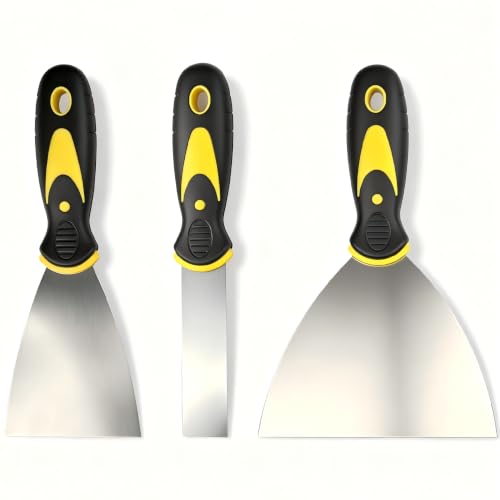
JasDraevillor 3pc Putty Knife Set

JasDraevillor 3in Putty Knife Scraper
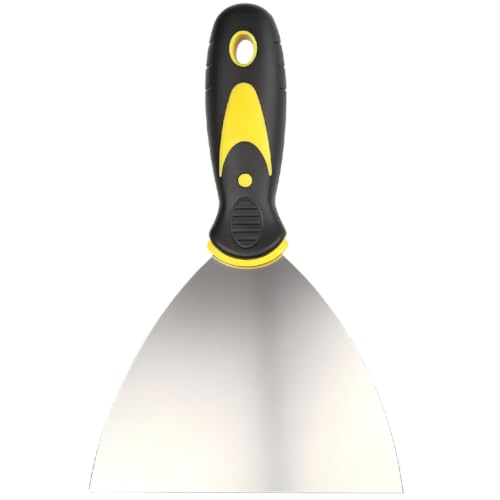
JasDraevillor 5in Putty Knife Scraper

JasDraevillor 4in Putty Knife Scraper

JasDraevillor 5pc Putty Knife Set
More On The Choices That Made The List
The Goldblatt 9-in-1 earns its spot when your project list sprawls beyond drywall. The 4-inch blade handles standard spackle passes, but the tool also pulls nails, opens paint cans, scrapes rollers, and doubles as a flathead screwdriver, so one implement covers half a toolbox on a Saturday repair run. The stainless steel head holds a ground edge that resists rust during damp storage in a garage or basement.
You give up the comfort of a dedicated soft-grip drywall handle for the versatility of a hard composite grip, which feels fine during short bursts but tires faster on all-day taping sessions. For a homeowner juggling paint prep, hardware store runs, and odd jobs, though, the trade-off feels worth it.
Everyday Wins
- Replaces roughly nine single-purpose tools, clearing clutter from a junk drawer
- Stainless steel construction shrugs off rust in humid basements or outdoor sheds
- Built-in bottle opener and screwdriver cover small tasks without a second trip to the toolbox
- Compact enough to toss in a kitchen drawer for quick label and sticker scraping
Things To Consider
- Harder grip surface may bother hands during long drywall sessions
- Multi-tool bulk makes precision detail work feel slightly clumsy
- Cleaning around all the integrated edges takes a bit more time after messy spackle jobs
Feature Snapshot
Best Suited To
Homeowners and renters who want one tool for paint prep, small repairs, and general household scraping without buying a full drywall kit.
Look Elsewhere When
You spend full days hanging and finishing drywall, where the JasDraevillor 5pc Putty Knife Set offers dedicated widths for cleaner seams.
The 2-inch JasDraevillor fills a gap that wider blades struggle with. Window trim, door casings, and the edges of outlet boxes all need a narrow profile, and this knife slips into those spaces without leaving compound smeared on adjacent surfaces. The stainless head rinses clean under a faucet, so switching from spackle to caulk removal is quick.
Compared to the multi-function Goldblatt up top, this is a focused single-purpose tool with no extras built in. That’s actually the point. For a tight corner or a recurring project like patching anchor holes in a nursery wall, the narrow width keeps the repair tidy.
The Good Stuff
- Two-inch width reaches into corners wider blades leave messy
- Stainless steel resists rust during wet cleanup sessions
- Lightweight handle reduces wrist fatigue on overhead trim work
Honest Caveats
- Too narrow for covering large patches or full seam work efficiently
- No soft-grip padding, so longer projects can leave mild hand pressure points
Who It Suits Best
Anyone patching nail holes along baseboards, removing old caulk, or scraping labels off glass and tile.
Skip It When
You mainly fill medium patches, where the JasDraevillor 4in Putty Knife Scraper covers more ground in fewer passes.
The 1-inch JasDraevillor is the scalpel of the lineup. When a screw hole needs filling and you don’t want to gouge the surrounding paper face of the drywall, a tiny blade like this gives you the control to press compound exactly where it belongs and wipe clean with a single pass. It also handles caulk touch-ups in tight shower corners where standard knives can’t reach.
Realistically, you won’t hang a sheet of drywall with a 1-inch blade, and it isn’t meant to. Think of it as a finishing companion, not a primary tool. Pairing it with the 3-inch version later in this list gives you the precision-plus-coverage combination most patch jobs actually need.
Why It Works Well
- One-inch width excels at nail holes, screw pops, and hairline cracks
- Stainless steel head wipes clean in seconds, ready for color-matched spackle
- Slim handle gives precise control around outlet covers and switch plates
Points To Note
- Far too small to spread compound over patches wider than a coin
- Easy to lose in a crowded toolbox without a dedicated slot
Right Fit For
Detail-oriented homeowners doing small spot repairs and color touch-ups between full repaints.
A Better Fit Elsewhere
General drywall patching calls for the JasDraevillor 5pc Putty Knife Set, which includes this size alongside wider blades for bigger jobs.
The DEWALT DXTT-2-148 lands at the narrow 2-inch width, but it brings pro-tier ergonomics that separate it from budget scrapers. The hollow-ground blade flexes smoothly across compound, and the double-riveted soft-grip handle stays comfortable even when you’re holding it at awkward angles to feather out a seam. There’s also an alloy hammer end for resetting popped nails, a small touch that matters on old plaster walls.
Versus the JasDraevillor 2-inch option earlier in this list, the DEWALT costs more for a single blade, but the comfort upgrade is noticeable if you patch regularly. For a one-off hole, a budget knife does the job. For someone taping out a full room, the hand relief adds up fast.
Everyday Perks
- Soft-grip handle reduces fatigue during long taping and feathering sessions
- Hollow-ground blade flexes with consistent pressure, leaving smoother finishes
- Stainless steel resists corrosion through repeated wet cleaning
- Hammer end handles nail resets without reaching for a second tool
Points To Keep In Mind
- Priced noticeably above basic 2-inch scrapers in the same width class
- Only one width, so most projects require pairing it with another blade size
Key Product Details
Made For
Contractors, remodelers, and serious DIYers who value hand comfort and blade control over headline cost savings.
Not Your Match When
You only need a quick patch knife for occasional use, where the JasDraevillor 2in Putty Knife Scraper handles the same width at a friendlier entry cost.
The 3-piece JasDraevillor bundle skips the extreme narrow and wide ends to deliver the three widths you actually reach for most: 1, 2, and 3 inches. That selection covers the majority of household patching, from picture-hanger holes to a fist-sized dent in a hallway wall. Stainless steel heads across the set mean consistent rust resistance no matter which blade you grab first.
Compared to the full 5-piece set later in this roundup, the trio costs less and feels less wasteful for someone who rarely tackles seam work. If you find yourself reaching for a 5-inch blade, the larger set makes more sense, but most small repairs never get that wide.
What Makes Sense
- Three core widths cover the vast majority of interior patching jobs
- Stainless steel construction holds up through repeated rinsing and reuse
- Compact bundle fits in a single kitchen drawer or small toolbox tray
- Reasonable entry cost for first-time homeowners building a tool kit
Trade Offs
- No 4- or 5-inch blade for wide seam or wallpaper projects
- Handles lack the soft padding found on contractor-grade picks like the DEWALT DXTT-2-148
Perfect Match For
New homeowners or renters who want a complete patching setup without paying for widths they may never use.
Swap It Out When
You remodel multiple rooms, where the JasDraevillor 5pc Putty Knife Set adds the 4- and 5-inch blades needed for taping and seam coverage.
Three inches is the sweet spot for most drywall repairs, and this single JasDraevillor scraper leans into that role. The blade is wide enough to skim over a golf-ball-sized patch in a couple of passes, yet narrow enough to follow a door frame edge without slopping compound onto the wood. Stainless steel makes rinse-and-go cleanup a habit rather than a chore.
If you only buy one putty knife for general household use, this width is arguably the most forgiving. It’s also the same width you find inside the 3-piece and 5-piece JasDraevillor bundles, so standalone purchase makes sense mainly as a replacement or a quick add-on.
Advantages To Know
- 3-inch width strikes a balance between coverage and corner control
- Stainless head rinses clean and resists corrosion in damp basements
- Works well across spackle, joint compound, and scrape-off tasks alike
Minor Gripes
- Single-blade purchase offers less value than the bundled sets at similar cost
- No soft-grip cushioning for extended feathering sessions
Who Should Grab It
Anyone who already owns a narrow detail knife and needs a mid-range blade to round out the kit without buying a full set.
Another Choice May Suit
First-time patchers get more mileage from the JasDraevillor 3pc Putty Knife Set, which includes this size plus 1- and 2-inch companions.
When you tape drywall seams or spread a skim coat over a section of textured wall, a 5-inch blade pays for itself in fewer passes. This JasDraevillor pulls compound across a broad arc, feathering edges into the surrounding surface so the repair blends instead of leaving a visible hump. The stainless head keeps its shape through repeated pressure on long joints.
The honest read is that 5 inches is too much knife for filling nail holes or patching a kitchen tile. If most of your work involves wide seams, scraped wallpaper, or patching plaster, though, this width earns its place at the front of the drawer.
Positive Takeaways
- 5-inch width covers drywall seams and large patches efficiently
- Stainless steel head holds its edge across multiple skim-coat passes
- Helpful for removing wallpaper strips and old adhesive layers
Worth Bearing In Mind
- Bulky in tight corners and trim work where narrower blades excel
- Too wide for precise detail spackling on small holes
Built With In Mind
Anyone taping out drywall seams, skim-coating plaster walls, or scraping large sections of old adhesive.
Reach For A Different Pick When
Your projects are smaller and more varied, since the JasDraevillor 5pc Putty Knife Set includes this blade plus narrower ones for every other scenario.
The 4-inch JasDraevillor lives in the middle of the size range, and that middle ground is more useful than it sounds. Wider than a trim knife, narrower than a full taping blade, it covers medium patches, smoothing over repaired dents, and spreading joint compound along shorter seams. The stainless head holds up through the kind of mixed-use life this blade tends to lead.
Picking this as a standalone makes sense if you already have a narrow scraper and want more coverage without jumping straight to a 5-inch trowel. For someone buying fresh, the 5-piece set covers this size alongside everything else, so weigh whether you need the 4-inch alone or the whole family.
A Few Strong Suits
- 4-inch width handles medium patches and short seam fills comfortably
- Stainless steel resists rust through frequent wet cleanup
- Useful for spreading joint compound smoothly across repaired dents
Room For Improvement
- No grip padding for marathon taping sessions
- Costs more per blade than buying the same width inside the 5-piece bundle
The Right Fit
Homeowners handling mid-sized repairs on a recurring basis, where a 3-inch knife feels too small but a 5-inch feels like overkill.
Where A Sibling Pick Shines
The JasDraevillor 5pc Putty Knife Set pairs this 4-inch blade with the rest of the lineup, which suits someone starting from scratch more than a single-width add-on.
The 5-piece JasDraevillor set is the full spread: 1, 2, 3, 4, and 5 inches, all in one bundle. For someone remodeling multiple rooms, this kit eliminates the mid-project hardware store run when a job suddenly needs a wider blade. Stainless steel across all five heads keeps corrosion at bay even when blades sit in a damp bucket between coats.
Compared to the DEWALT DXTT-2-148 earlier, the JasDraevillor set trades ergonomic refinement for raw width variety. The 5-piece also bundles less comfortably than the 3-piece for someone who only patches occasionally, since two of those blades may sit unused. For a serious remodel, though, the variety wins.
Strengths Worth Knowing
- Five widths cover every common patching and taping scenario in one purchase
- Stainless steel construction holds up through repeated wet use and storage
- Cost per blade compares favorably against buying five individual scrapers
- Useful for paint scraping, wallpaper removal, drywall work, and label lifting
Points To Weigh
- Bigger bundle takes more drawer space than a single knife or 3-piece set
- Handles lack the soft padding found on premium picks like the DEWALT DXTT-2-148
Quick Facts
Whose Shelf It Belongs On
Remodelers, landlords, and homeowners tackling multi-room renovations who want every width on hand without buying knives piecemeal.
Consider Something Else When
Your repairs stay small and occasional, since the JasDraevillor 3pc Putty Knife Set covers the core widths at a lower entry point.
What To Weigh Before Picking a Putty Knife
Match Blade Width To The Repair
A narrow 1- or 2-inch blade gives you the control to fill nail holes, work along baseboards, and reach inside tight corners. Wider 4- and 5-inch blades cover drywall seams, skim coats, and large patches in fewer passes. Most households benefit from owning at least two widths, since the wrong size either overfills the area or takes forever to cover a bigger spot. Blades in the 1- to 3-inch range handle roughly 80% of everyday patching, and seam work is the main reason to step up to 4 or 5 inches.
Look At Blade Material And Flex
Stainless steel resists rust through repeated wet cleaning, which matters when blades live in a damp bucket between coats. Carbon steel holds a sharper edge but demands drying and oiling to prevent corrosion. Flex is the other half of the equation: a blade that bends too easily feels floppy on compound, while one with no flex drags and leaves trowel marks. Hollow-ground designs, like the DEWALT DXTT-2-148, balance flex and stiffness in a way that feels broken-in even on the first pass.
Consider Handle Comfort For Longer Sessions
A solid wood or hard composite handle works fine for a five-minute patch on a Saturday. For taping out a full room or scraping an entire ceiling, a soft-grip or rubberized handle reduces hand fatigue and pressure points. Double-riveted attachments also matter, because a wobbly handle quickly turns a quality blade into a frustrating tool. If you only patch occasionally, handle comfort is a nice-to-have, but if you DIY every weekend, it’s worth prioritizing.
Plan For Storage And Cleaning
Putty knives come out of the bucket wet and need somewhere to dry without bashing other tools. A dedicated slot in a toolbox, a magnetic strip, or a small caddy keeps blades from dulling against each other. Stainless construction simplifies cleanup, since a quick rinse and wipe handles most of the mess, while carbon steel needs drying time to avoid rust spots. The easier a tool is to clean, the more likely you are to actually put it away properly after the job.
Key Considerations Across These Picks
Where Shoppers Go Wrong
The most common slip is buying the widest blade you can find, assuming bigger means more useful. Wide blades are clumsy in corners and tend to push compound where you don’t want it, leaving extra sanding later. Another frequent mistake is choosing carbon steel for its edge without planning for the drying and oiling routine that prevents rust. Finally, shoppers often skip matching width to repair and end up with a single knife that either overfills or underperforms on the work they actually do.
The Case For Spending Up
Premium picks like the DEWALT DXTT-2-148 cost more because the handle and blade geometry get genuine attention. Soft grips, double-riveted construction, hollow-ground flex, and alloy hammer ends all add up to a tool that stays comfortable across longer sessions and survives the inevitable drop off a ladder. For occasional patches, the upgrade is hard to justify. For anyone taping out a room or scraping multiple walls, paying up front usually means fewer sore hands and a cleaner finish on the first pass.
Frequently Asked Questions
What Width Putty Knife Should I Buy First?
A 3-inch blade is the most versatile starting point for general drywall patching, covering medium holes and short seams without being clumsy in corners. Pair it with a 1-inch detail knife once you’re ready to handle nail holes and tight trim work.
How Do I Keep My Putty Knife From Rusting?
Rinse off compound immediately after use, wipe the blade dry, and store it in a dry drawer or toolbox slot. Stainless steel handles this naturally, while carbon steel benefits from a thin coat of light oil between uses.
Can A Putty Knife Remove Old Paint?
Yes, especially stiffer blades with a ground edge. Multi-tools like the Goldblatt 9-in-1 are designed specifically for paint scraping, and wider 4- or 5-inch blades speed up large flat surfaces.
What’s The Difference Between A Putty Knife And A Scraper?
The terms overlap, but putty knives typically have a flexible blade suited for spreading compound, while heavier scrapers feature stiffer blades built for removing paint, adhesive, or wallpaper. Many tools on the market serve both functions.
Do I Need Different Widths For Drywall Taping?
Yes. Narrow 1- to 2-inch blades embed tape into corners, mid-range 3- to 4-inch blades apply the first coat over flat seams, and wide 5-inch blades handle the final feathering coat. A full set like the JasDraevillor 5pc Putty Knife Set covers all three steps.




