


Cutting PVC cleanly used to mean a hacksaw, a steady hand, and a lot of fine sanding to chase the burrs off. Modern ratcheting cutters, scissor-style shears, and ratcheting internal cutters have made that ritual almost optional. The right tool turns a Saturday irrigation repair into a thirty-minute job, and the wrong one leaves you with cracks, crushed ends, and fittings that refuse to seat.
The list below covers the practical situations you are most likely to face: trimming a half-inch line under a sink, snipping three-quarter-inch PEX in a tight joist bay, slicing two-inch schedule 40 in a trench, or retro-cutting a buried stack when only a hub remains. Every pick here is built for one of those jobs, and the buying guide breaks down which attributes actually matter when you are shopping.
A Fast Comparison Of The Options

IWISS iCrimp PEX Pipe Cutters for 1/8″-1″ Tubing

Bates PEX Pipe Cutter Set with PTFE Tape

DIYSELF 2 Pack Retractable Box Cutters

MCC 2″ PVC and CPVC Pipe Tubing Cutter
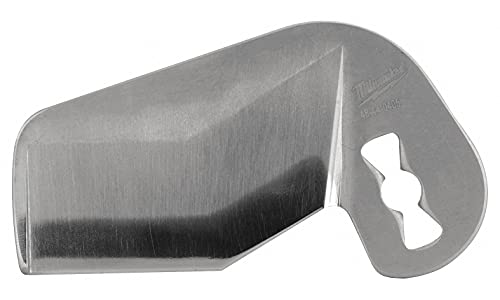
Milwaukee 48-44-0405 M12 Shear Blade

Klein Tools 50031 Ratcheting PVC Cutter

LIBRATON PVC Pipe Cutter up to 2-1/2″

Inside PVC Pipe Cutter Kit 1-1/2″ to 8″
What Each Pick Brings To The Table
The IWISS iCrimp is a small scissor-style shear sized for the modern PEX job, not the older schedule PVC world. It opens with a spring-loaded handle and snaps shut on a clean ratchet, which keeps your hand in one position while you rotate the pipe a quarter turn and squeeze again. In a tight manifold box or under a vanity, that one-handed action is what saves the job from turning into a swearing contest.
The cutting range covers 1/8-inch through 1-inch PEX in any common grade. If you are repiping a bathroom or running a new line to an outdoor faucet, that range handles nearly every residential branch you will encounter. The trade-off shows up in the name itself: this is not a PVC cutter, and pushing it into schedule 40 plastic tends to flatten the cut or stall the ratchet.
What It Does Well
- Spring-loaded handle stays open between squeezes, which keeps the cut lined up during long runs
- Handles 1/8″, 1/4″, 3/8″, 1/2″, 3/4″, and 1″ PEX without swapping tools
- Compact head fits inside standard stud bays and joist pockets where ratcheting cutters cannot reach
- Blade produces a square, burr-light end, so PEX fittings seat without extra deburring
Things To Consider
- Not designed for PVC or CPVC, despite living in the same aisle
- Blade dulls faster on hard plastic than dedicated PVC ratchet cutters, so heavy PVC work shortens its life
- One-handed design feels cramped for users with larger hands during all-day work
Who It Suits Best
Homeowners and pros running new PEX supply lines for a single fixture or repiping a small bathroom.
Where Another Pick Suits Better
For larger-diameter plastic pipe, the Klein Tools 50031 Ratcheting PVC Cutter is a better match for anyone cutting schedule 40 or 80 daily.
Where the IWISS is a specialist, the Bates set thinks like a starter kit for the whole plumbing drawer. It ships with a main ratcheting cutter that handles pipe up to 1-1/4 inches, a smaller tube cutter rated 1/8 to 7/8 inches for the slender lines, and three rolls of PTFE thread seal tape. The cutters use an aluminum alloy steel body, which keeps the weight down while still feeling solid in the hand during a long afternoon under a mobile home.
You will likely reach for the tube cutter when trimming a riser or a refrigerator water line, and the larger cutter when tackling main supply runs. The included tape covers the threaded connections that follow, which is a small touch but a real one for someone assembling a kit from scratch.
Useful Touches
- Two cutters cover 1/8″ through 1-1/4″ range without buying separately
- Aluminum alloy body stays light enough for overhead work
- PTFE tape included, so you can make threaded joints the same day you cut the pipe
- Ergonomic handle keeps one-handed operation realistic on ratcheting strokes
Trade Offs
- Set covers PEX and plastic well, but the smaller cutter struggles on thick schedule pipe
- Carrying case is minimal, so pieces tend to drift around a toolbox over time
- Two-tool setup means you occasionally pick up the wrong one for the diameter in front of you
Key Specs
Made For
First-time homeowners assembling a plumbing repair kit and pros who want a single bundle for service calls.
Consider Something Else When
If your work is mostly heavy two-inch schedule 40, the LIBRATON PVC Pipe Cutter offers the capacity the Bates set cannot reach.
The DIYSELF retractable utility knife is not technically a pipe cutter at all, which is exactly why it earns a spot here. A surprising amount of plastic cutting around the house is actually scoring and snapping thin-walled plastic, slicing flexible tubing, or opening the packaging around a new fitting before you even start the real work. For those moments, you do not need a $40 ratchet tool, you need a comfortable, replaceable-blade utility knife in your apron pocket.
The two-pack format means one lives in the truck and one lives in the kitchen junk drawer, which is roughly the lifecycle of these tools. The wider-than-standard blade is the practical upgrade over a traditional box cutter, since it tracks straighter on plastic sheet and thick cardboard without wandering.
Benefits That Matter
- Two-pack pricing keeps a spare on hand, since one always disappears
- Wider blade tracks straight on plastic sheet and dense cardboard
- Retractable mechanism protects the blade between cuts and reduces pocket wear
- Comfortable grip stays usable during long packing or workshop sessions
Room For Improvement
- Not designed for rigid pipe, and using it on schedule 40 risks cracking or splitting the cut end
- Replacement blades are not standard snap-off utility blades, so swaps require the matching refill
- Plastic body feels light, which is fine for the kitchen but less reassuring on a job site
Right Fit For
Anyone who needs a sharp general-purpose cutter for packaging, thin plastic, and the prep work around a real pipe cutter.
Not Your Match When
Reach for the IWISS iCrimp if the job is actually cutting PEX pipe, not slicing the wrapper it came in.
The MCC cutter is the kind of tool you find buried in the back of a plumber’s truck, rusted but still cutting. The ratcheting head drives a curved blade around the pipe, and the quick-release lever lets you pop the jaw open mid-cut when you have misjudged the line. The result is a one-handed tool that performs well in awkward positions, like a valve box full of mud or a sprinkler lateral with no slack left.
Its two-inch rated capacity extends to about 2-1/2 inches, which puts it squarely in residential irrigation and pool-plumbing territory. Schedule 40 PVC, the gray stuff used in irrigation, and CPVC hot-water lines all fall within its comfort zone. You will not catch it cutting cast iron or ABS drain pipe, and it is not designed to.
What Earns Its Place
- Quick-release lever rescues you when the ratchet locks on a misaligned cut
- One-handed operation keeps the other hand free to hold a fitting in place
- Handles up to roughly 2-1/2″ outer diameter, covering most residential PVC work
- Cuts both PVC and CPVC cleanly, which matters for mixed plumbing repairs
Points To Note
- Not suited for schedule 80 PVC, which is thicker and harder than the irrigation plastic this tool targets
- Blade wears faster when used heavily on CPVC, which is denser than standard PVC
- Body finish tends to corrode if stored in a damp truck bed without wiping down
Quick Facts
Best Suited To
Homeowners and irrigation techs rebuilding a sprinkler manifold or swapping a pool plumbing section in tight dirt.
Look Elsewhere When
For cutting inside an existing hub without excavation, the JUNXILPPD Inside PVC Pipe Cutter Kit is the only tool on this list that fits that scenario.
Strictly speaking, the Milwaukee 48-44-0405 is a 4-inch by 2.5-inch replacement shear blade, not a complete tool. It fits the Milwaukee 2470-21 M12 plastic pipe shear, which is a cordless ratcheting cutter that drives a flat blade through PVC and PEX without the open jaw of a hand tool. For someone who already owns that tool, this blade is the difference between a working shear and a brick sitting on the shelf.
The honest read is that this listing is narrow on purpose. It earns its spot because cordless shear owners do eventually need a fresh blade, and tracking down the exact Milwaukee-spec replacement in a local hardware aisle is harder than it should be. If you do not already own the M12 shear platform, this part is not a meaningful purchase.
The Case For It
- Factory-spec blade keeps the cordless shear cutting at original performance after wear
- Compact 4″ x 2.5″ footprint ships in any drawer without taking over the bench
- Direct fit for the Milwaukee 2470-21 M12 platform, no shimming required
- Restores the clean, chip-free cut that justifies the cordless platform in the first place
Honest Caveats
- Not a standalone tool, so it has no value without the matching M12 shear body
- Priced higher per blade than universal utility blades, since it is platform-specific
Who Should Grab It
Existing Milwaukee M12 plastic pipe shear owners who need a fresh blade without swapping the whole tool.
Skip It When
Anyone shopping for a first PVC cutter will get more use from the LIBRATON PVC Pipe Cutter, which is a complete tool out of the box.
The Klein Tools 50031 is the cutter you buy once and forget about for a decade. It is built for the schedule 40 and schedule 80 PVC that actually shows up inside walls and under slabs, with a ratcheting drive and a quick blade release that lets you work one-handed in a wet, awkward hole. Klein has been making plier-style tools since before most of us were born, and the handle on this one shows it: comfortable, balanced, no pinch points.
The rated cut range is 1/2-inch to 1-1/4-inch nominal PVC, with an outside diameter window of roughly 5/8-inch to 1-5/8-inch. That covers most residential drain, waste, and vent lines along with standard supply. The 1-5/8-inch outer diameter limit keeps it out of the two-inch main drain conversation, but anything below that falls inside the cutter’s comfort zone.
Real-World Strengths
- Cuts both schedule 40 and the thicker schedule 80 PVC cleanly
- One-handed blade release keeps you moving when a cut goes off-line
- Lightweight handle reduces fatigue during a long day of repetitive cuts
- Works on white and gray PVC, which matters for older homes with mixed inventory
Points To Keep In Mind
- Outer diameter limit rules out two-inch main drains, so larger jobs still need a bigger cutter
- Replacement blades are Klein-specific, so sourcing spares takes a beat longer than universal blades
- Not ideal for repeated CPVC hot-water work, since the harder plastic dulls the blade faster
Spec Overview
Who Will Love This
Plumbers and serious DIYers cutting schedule 40 and 80 PVC in drain, vent, and supply applications.
A Better Fit Elsewhere
For irrigation-scale work above 1-5/8 inches, the MCC 2″ PVC and CPVC Pipe Tubing Cutter covers ground the Klein cannot reach.
The LIBRATON is the chunky brother of the standard PVC ratcheting cutter, sized for thicker pipe and longer days. The body is cast aluminum alloy steel, which keeps weight reasonable while still surviving a drop off a ladder. The blade itself is a 3mm SK5 steel (a high-carbon tool steel often used for cutting edges) with a Teflon coating to keep PVC dust from sticking and gumming up the cut.
Rated for 2-1/2 inches of outer diameter, it bridges the gap between a small supply-line tool and a heavy-duty drain cutter. The trade-off is size: this is a two-hand tool in tight crawl spaces, even though it ratchets one-handed at the jaw. You will feel the difference cutting two-inch schedule 40 versus the smaller cutters on this list.
What Stands Out
- SK5 blade with Teflon coating resists gumming from PVC dust and shavings
- Aluminum alloy body keeps weight manageable despite the larger jaw
- 2-1/2″ outer diameter capacity covers thick residential and light commercial pipe
- Wide handle span gives real leverage for the last quarter-inch of a stubborn cut
Less Ideal Details
- Bulky head struggles in 2×4 wall cavities where the Klein 50031 fits easily
- Heavier than small ratcheting cutters, so overhead work tires faster
- Teflon coating wears with heavy use, exposing the blade to corrosion if stored damp
Perfect Match For
Contractors and homeowners working on two-inch schedule 40 irrigation, pool plumbing, or larger supply lines.
Reach For A Different Pick When
For cutting inside an existing buried hub, the JUNXILPPD Inside PVC Pipe Cutter Kit handles the access problem the LIBRATON cannot.
The JUNXILPPD kit is the one tool on this list that solves a problem the rest cannot touch. When a PVC hub cracks inside a wall, under a sink, or beneath a slab, you cannot get a standard cutter around the pipe. This kit slides a diamond-coated cutting wheel inside the broken hub, mounts to an 11-inch guide bar, and shaves the hub away from the inside out. The 7-inch adjustable depth and laser-marked scale let you control how far the wheel travels, which is critical when the next fitting is only inches behind the cut.
The kit ships with eleven diamond wheels (six 40mm and five 50mm), a fixture, two wrenches, and a pair of gloves. That sounds like a lot of parts, and it is, but the wheels burn down over time, so the extras matter. For most homeowners this is a once-in-a-decade purchase, while for plumbers it is a regular fix for a recurring problem.
Practical Advantages
- Removes broken PVC hubs without opening the wall wider than necessary
- Laser scale delivers repeatable depth control on multiple cuts in the same line
- Includes 11 diamond wheels, so you are not buying consumables the first time the wheel burns out
- Works on pipe from 1-1/2″ to 8″ in diameter, covering most residential DWV and supply situations
Worth Bearing In Mind
- Not a daily-use tool, and the kit takes longer to set up than a ratcheting cutter
- Diamond wheels generate plastic dust and require cleanup between cuts
- Best results come with a steady hand, since the cutting wheel can walk if not properly seated
Feature Snapshot
Built With In Mind
Plumbers and remodelers cutting out broken PVC hubs from inside walls, floors, and tight under-sink cavities.
Swap It Out When
For open pipe in a trench, the LIBRATON PVC Pipe Cutter makes the same diameter cut much faster.
Matching The Right Cutter To The Job
The right PVC cutter comes down to three honest questions: what diameter, what material, and what kind of access. Diameter is the first filter, because a 1/2-inch supply line and a 2-inch drain line want entirely different tools. Material comes next, since CPVC and schedule 80 are harder than standard schedule 40 and will chew through a light blade in a weekend.
Access is the variable most shoppers forget. A ratcheting cutter needs clear space around the pipe, which is fine in a basement or a trench but useless inside a wall cavity. Inside-cutters solve that exact problem, but they are specialty tools, not daily drivers. For most homeowners, the right answer is one ratcheting cutter in the right size range plus a small PEX shear for the supply side.
Ratchet mechanism quality matters more than brand prestige. A smooth ratchet with a reliable quick-release saves your wrist and your timeline on every cut, while a sticky mechanism turns each cut into a fight. Blade material is the other long-term factor, and SK5 or carbide edges out standard tool steel on dense plastic.
Blade Material And Edge Life
SK5 steel is a high-carbon tool steel that holds an edge well on plastic and soft metal. Teflon coating reduces friction, which keeps PVC dust from welding itself to the blade and dulling the edge. Diamond wheels, used in inside-cutters, are the most aggressive option and the only one that works on buried hubs where steel blades cannot physically reach.
Capacity And Diameter
Most residential supply lines sit between 1/2-inch and 1-inch, and a 1-1/4-inch cutter handles the upper end. Drain lines push into the 2-inch to 4-inch range, which is where the larger ratcheting cutters and the inside-cutter kit earn their keep. Always check the outer diameter rating, since schedule 80 wall thickness can push a 1-1/4-inch nominal pipe past the cutter’s stated outer diameter limit.
Ratchet Action And Ergonomics
Ratcheting cutters with a quick-release lever let you back the jaw off mid-stroke, which is critical when a cut starts to drift or the pipe is under tension. A comfortable grip matters more than weight for most users, since the difference between a five-minute and a fifty-minute job is hand fatigue as much as blade quality.
Specialty Tools And When They Matter
An inside pipe cutter is not a replacement for a ratcheting cutter, it is a complement. It earns a place in the kit only when you have hit the “broken hub in a finished wall” problem, and most homeowners will hit that exactly once every decade. The rest of the time, a standard ratcheting cutter in the right size does the work faster.
Smart Spending And Slip Ups To Avoid
Where Shoppers Go Wrong
The most common buying mistake is choosing a cutter by nominal pipe size instead of outer diameter. Schedule 40 and schedule 80 have the same nominal size but different wall thicknesses, and a cutter rated for 1-1/4-inch schedule 40 may not open wide enough for 1-1/4-inch schedule 80. The other trap is assuming a PEX cutter handles PVC, when the jaw geometry and blade angle are designed for flexible tubing and will crush or stall on rigid plastic.
What Separates Premium From Basic
The upgrade from a budget ratcheting cutter to a mid-tier one usually shows up in three places: blade material, ratchet mechanism smoothness, and handle ergonomics. SK5 or coated blades last noticeably longer on dense plastic. A precise ratchet with a reliable quick-release turns a frustrating cut into a clean one. And a handle that fits your hand without pinching keeps you working through a long repair instead of reaching for a different tool halfway through.
Frequently Asked Questions
Can you use the same cutter for PVC and PEX?
Most ratcheting PVC cutters also handle PEX within their diameter range, since PEX is softer than PVC. Dedicated PEX shears like the IWISS produce a cleaner cut on PEX, but a PVC cutter will work in a pinch. The reverse is not true, since PEX shears are not designed for rigid plastic.
How do you keep a PVC cutter blade sharp?
Wipe the blade clean after each session, store the tool dry, and avoid cutting anything harder than the rated plastic. A light coat of machine oil on the pivot and blade face helps prevent corrosion, which is the most common cause of premature dulling on stored cutters.
What size cutter handles most home repairs?
A 1-1/4-inch nominal capacity ratcheting cutter covers the majority of residential supply and branch drain work. For irrigation and main drains above that, a 2-1/2-inch capacity tool or an inside-cutter kit fills the gap.
Do ratcheting PVC cutters work on schedule 80?
Standard ratcheting cutters work on schedule 80 within their stated outer diameter range, but the denser plastic dulls the blade faster. A heavier-duty tool with a thicker SK5 or coated blade is a better long-term choice for regular schedule 80 work.
When is an inside pipe cutter actually necessary?
An inside pipe cutter is the right tool when a broken hub is stuck inside a wall, floor, or fitting and you cannot get a standard cutter around the pipe. For open pipe in a trench or basement, a regular ratcheting cutter is faster and easier to use.




