Cutting plastic pipe cleanly is one of those small jobs that turns ugly fast with the wrong tool. A ratcheting, slipping, or cracking cut wrecks the fitting, the seal, and your afternoon. The right cutter matches your pipe size, the material you’re working with, and how often you actually cut pipe. This roundup walks through eight solid options covering everything from tight PEX runs in a bathroom remodel to heavy schedule-40 PVC repairs out in the yard, so you can match the tool to the job without overbuying.
The Lineup, Simplified

IWISS iCrimp PEX Pipe Cutter 1/8″-1″ (Pack of 2)
LIBRATON Pex Cutter 1-1/4″, PEX Tube Cutter 1/8″ to 7/8″
Milwaukee 48-44-0405 M12 Plastic Pipe Shear Blade

LIBRATON Pex Cutter 1-1/4″ PEX Tube Cutter

LIBRATON PVC Pipe Cutter, Up to 2-1/2″ Ratchet PVC Cutter, PEX Hose Cutter

LIBRATON PVC Pipe Cutter 2-1/2″ Ratchet Pipe Cutter Tool
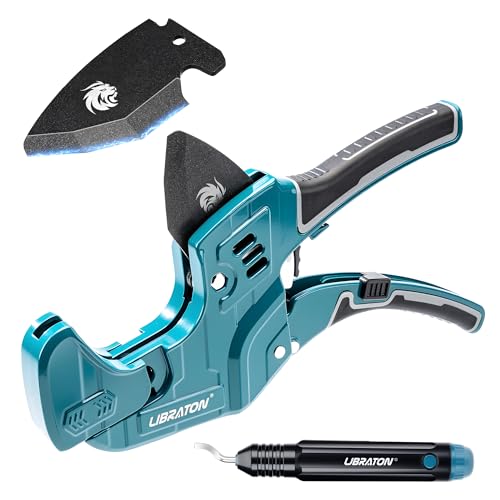
LIBRATON 2-1/2″ Ratchet PVC Pipe Cutter, 2 Adjustable Ranges
LIBRATON 1-5/8″ Ratchet PVC Pipe Cutter, 2 Adjustable Ranges
Inside Each Recommended Option
The IWISS iCrimp lands as the PEX-purist pick of the list, and the title is unusually honest about it: NOT for PVC pipes. PEX is the flexible plastic tubing used in modern potable water and radiant heating lines, and it cuts very differently from rigid PVC. IWISS tunes the spring-loaded jaws to bite through PEX cleanly in the 1/8″ to 1″ range without crushing the tube wall. You get two cutters in the pack, which makes it a natural fit for a two-bath remodel where one tool stays in each workspace.
For homeowners doing a bathroom repipe or a radiant floor retrofit, that second cutter earns its keep. The compact head fits inside joist bays and behind pedestal sinks where a larger scissor-style tool would never reach. If you only cut PEX and want a clean square cut every time, this stays out of the way and gets the job done.
Everyday Perks
- Pack of two keeps one in the truck and one in the shop bag
- Spring-return action speeds up repetitive cuts during a long repipe
- Narrow profile reaches into joist bays and tight wall cavities
- Square, burr-free cuts help crimp rings seat properly
Things To Consider
- Not rated for PVC, CPVC, or any rigid plastic pipe
- Smaller capacity ceiling than the ratcheting cutters in this lineup
- Spring tension can loosen after years of heavy daily use
Best Suited To
Homeowners and remodelers running new PEX supply lines who need clean, repeatable cuts in confined spaces.
Where Another Pick Suits Better
Anyone working with mixed plastic pipe types should look at the LIBRATON Pex Cutter 1-1/4″ instead, which handles PEX and several rigid plastics.
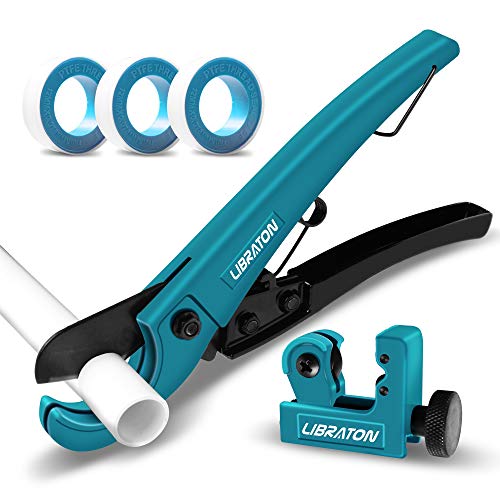
The LIBRATON 1-1/4″ PEX Cutter covers a much wider material list than the IWISS above, working through PVC, CPVC, PP-R, PEX, PE, and rubber hose. The body uses a hardened aluminum alloy frame, and the blade is SK4 steel, a tool-grade alloy known for holding an edge under repeated cutting. A small safety lock at the bottom keeps the jaws from opening in your tool bag, which is one of those touches you only appreciate after a blade catches on a sock.
The 1/8″ to 1-1/4″ range handles most residential supply and drain work, including 3/4″ and 1″ PEX risers. You may find the 1-1/4″ ceiling tight on 1-1/2″ schedule-40 drain lines, but for the typical DIY weekend under a sink, it’s plenty. Owners commonly reach for it as a one-cutter drawer solution when they don’t want to own three specialty tools.
Key Advantages
- Cuts six different plastic and rubber materials with one blade
- SK4 steel blade holds an edge through frequent use
- Bottom safety lock prevents accidental opens in storage
- Aluminum body keeps weight down for overhead work
Points To Keep In Mind
- Stops at 1-1/4″ outer diameter, too small for 2″ drain stacks
- Blade replacement requires disassembly
Feature Snapshot
Perfect Match For
DIYers handling a mix of PEX and small PVC repairs who want a single drawer-friendly cutter instead of a specialty collection.
Swap It Out When
Step up to the LIBRATON PVC Pipe Cutter, Up to 2-1/2″ for any work that hits 1-1/2″ or 2″ schedule-40 drain and vent lines.
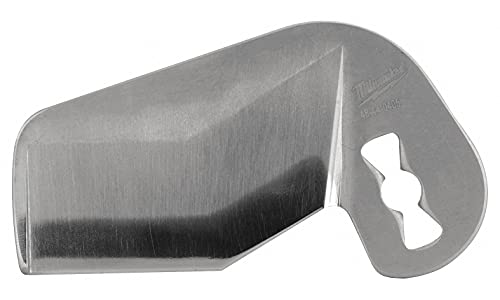
The Milwaukee 48-44-0405 is a replacement shear blade, not a standalone cutter, designed to fit the Milwaukee 2470-21 M12 plastic pipe shear. The M12 line is Milwaukee’s 12-volt cordless platform, and the dedicated pipe shear uses a ratcheting blade assembly to slice through PEX, PVC, and CPVC with a trigger pull. This replacement blade keeps an existing tool working after the factory edge dulls or chips, which matters because shearing a fresh blade through plastic eats into the steel over time.
Trades already running M12 batteries and chargers will find this a no-brainer add to the inventory. It also makes the article a useful reference if you already own the shear body and just need to track down the correct blade part. For anyone starting from scratch, the standalone manual cutters ahead are a more practical entry point.
Benefits That Matter
- Restores cutting performance to an existing M12 shear
- Matches the 2470-21 tool’s geometry for drop-in fit
- Saves the cost of a whole new power tool when only the blade wears
Worth Noting
- Not a standalone cutter, requires the M12 shear body and battery
- Limited to homeowners and pros already invested in the M12 ecosystem
Right Fit For
Existing Milwaukee M12 owners who need a fresh blade for their 2470-21 plastic pipe shear.
Consider Something Else When
First-time shoppers should start with the LIBRATON Pex Cutter 1-1/4″ PEX Tube Cutter for a manual tool that needs no battery.
Functionally close to the second pick on this list, this LIBRATON PEX Cutter (ASIN B0BPD4L33T) carries the same 1-1/4″ capacity, the same aluminum alloy body, and the same SK4 precision-sharpened blade. The difference shows up in the listing framing, which leans harder into the handyman and plumber use case. For anyone sorting by application rather than model number, it lands in a similar role: a reliable mid-range cutter for plastic supply and irrigation work.
The cutting range spans 1/8″ up to 1-1/4″, which covers most residential PEX risers, sprinkler laterals, and small PVC repairs. It also handles rubber hose, which makes it handy for draining a water heater or trimming washing-machine supply lines. You may find the absence of a replaceable-blade design limiting for very heavy volume, but for weekend plumbing, the SK4 edge holds up well.
What Pays Off
- Hardened aluminum frame balances strength and low weight
- SK4 blade resists dulling on abrasive plastic pipe
- Works through PVC, CPVC, PEX, PE, and rubber hose
- Compact enough for under-sink and crawlspace work
Honest Caveats
- No quick blade-swap system like the heavier ratcheting models
- 1-1/4″ max stops it short of schedule-40 drain repairs
Feature Snapshot
Who Should Grab It
Handymen and homeowners looking for a single, durable cutter for general PEX and small PVC repairs around the house.
Look Elsewhere When
Anyone cutting 1-1/2″ or 2″ schedule-40 pipe should reach for the LIBRATON PVC Pipe Cutter, Up to 2-1/2″ for the larger capacity.
The LIBRATON 2-1/2″ Ratchet Cutter is where this roundup shifts from light PEX work into serious schedule-40 territory. The 3mm blade is SK5 steel (a step up in hardness from the SK4 used on smaller cutters) and carries a Teflon coating that helps the blade glide through pipe without sticking. SK5 is a high-carbon tool steel commonly used in blades that need to hold an edge under repeated heavy load. The ratchet mechanism steps through the cut in stages, so you trade wrist strength for a slower, more controlled squeeze.
For irrigation mainlines, pool plumbing, and outdoor repairs, that 2-1/2″ capacity opens up a lot of jobs the smaller LIBRATON models can’t touch. You may find the longer handles a little bulky for a tight vanity trap replacement, so it earns its keep on bigger pipe rather than under-sink work. Owners commonly keep this one in the truck and a smaller PEX-only cutter in the kitchen drawer.
Everyday Wins
- 2-1/2″ capacity covers most residential drain, vent, and irrigation pipe
- SK5 steel blade resists edge rollover on thick-walled PVC
- Teflon coating reduces sticking and helps the cut feel smoother
- Ratcheting action reduces hand fatigue during long cut sessions
Trade Offs
- Bulkier than the smaller PEX-only cutters ahead of it
- Overkill for simple 1/2″ or 3/4″ supply line work
Key Product Details
Made For
Homeowners and tradespeople cutting 1-1/2″ and 2″ schedule-40 PVC for irrigation, pool, or drain repairs.
Not Your Match When
For confined 1/2″ PEX supply work, the LIBRATON Pex Cutter 1-1/4″ PEX Tube Cutter is a lighter, easier fit.
This LIBRATON 2-1/2″ model (ASIN B093PRY4ZQ) overlaps closely with the previous pick in raw capacity, but the listing leans into an improved hardening process for the SK5 blade. That extra heat-treatment step aims at longer service life under heavy volume, which matters if you’re cutting through a full re-pipe of 2″ PVC rather than a single irrigation repair. The 2-1/2″ (63mm) outer diameter ceiling matches the larger cutters in this roundup.
The tool covers PVC, PEX, CPVC, PP-R, PE, and rubber hose, so it earns its place as a versatile shop cutter. It is not recommended for use on thick-walled PEX or hard plastic tubing that exceeds its rating, which is a common-sense note worth respecting. For most residential drain, waste, and vent work, the capacity and blade quality hit a useful middle ground.
Well-Handled Touches
- Improved hardening extends blade life under frequent use
- 2-1/2″ capacity covers most home drain and vent work
- Works across PVC, PEX, CPVC, PP-R, PE, and rubber hose
- Ratchet mechanism controls the cut without brute force
Where It May Fall Short
- Not rated for thick-walled PEX or very hard plastic tubing
- Bigger footprint than the smaller PEX-only cutters
Who It Suits Best
Plumbers and serious DIYers running 2″ PVC drain lines who want a blade that lasts through a full project.
Reach For A Different Pick When
For adjustable two-range cutting in mixed sizes, the LIBRATON 2-1/2″ Ratchet PVC Pipe Cutter, 2 Adjustable Ranges adds flexibility.
The newest entry in this LIBRATON family adds an adjustable telescoping head with two cutting ranges, letting you match the cut to the pipe size without changing tools. The blade uses 3CR13 stainless steel (a corrosion-resistant grade often found in cutting tools) with a surface coating for impact and rust resistance. The replaceable blade design also matters: when the edge dulls, you swap the blade rather than retire the whole tool.
For job sites where you’re bouncing between 3/4″ PEX, 1-1/2″ PVC, and 2″ drain, the two-range adjustment removes the need to grab a second cutter. You may find the telescoping mechanism slightly heavier than a fixed-range tool, but the trade is flexibility across a full workday. It’s the most versatile of the LIBRATON ratcheting models in this list.
Standout Benefits
- Two adjustable ranges cover small and large pipe without a tool swap
- 3CR13 blade with corrosion-resistant coating for outdoor and damp use
- Replaceable blade extends the working life of the tool
- Ratcheting action reduces hand strain on thick pipe
Practical Considerations
- Telescoping head adds a bit of weight over fixed-range models
- Adjustment range maxes out at 2-1/2″ outer diameter
Feature Card
Built With In Mind
Trades and remodelers who jump between pipe sizes all day and want one adjustable tool to cover the range.
A Better Fit Elsewhere
For lighter under-sink work in smaller sizes only, the LIBRATON Pex Cutter 1-1/4″ is easier on the wrist.
The 1-5/8″ Ratchet Cutter mirrors the design language of the 2-1/2″ adjustable model above, with the same 3CR13 coated blade and replaceable-blade construction. The smaller 1-5/8″ capacity caps the maximum pipe size, but the trade is a noticeably more compact tool that fits where a 2-1/2″ cutter simply won’t. For indoor work behind water heaters, in utility closets, and around tight sink cabinets, that smaller reach is the whole point.
The two adjustable cutting ranges still let you switch between small supply and medium drain sizes without a tool change. For pros working in finished basements and older homes with cramped mechanical rooms, this lands as the most practical ratcheting option in the lineup. It carries the same surface coating for corrosion resistance, so a damp crawlspace won’t rust the blade overnight.
What Stands Out
- 1-5/8″ capacity in a compact body fits tight mechanical rooms
- Two adjustable ranges add flexibility within its size class
- 3CR13 blade with protective coating resists job-site moisture
- Replaceable blade extends the tool’s working life
Less Ideal Details
- Cannot reach the 2″ pipe a full-size ratchet cutter handles
- Adjustment mechanism adds a small step before each cut
Whose Shelf It Belongs On
Service plumbers and homeowners in older homes with tight utility spaces who rarely cut pipe larger than 1-1/2″.
Where A Sibling Pick Shines
For jobs that include 2″ drain and mainline work, the LIBRATON 2-1/2″ Ratchet PVC Pipe Cutter, 2 Adjustable Ranges covers the larger size.
What Matters Most Before Choosing Pvc Pipe Cutting Tools
Match the Cutter to the Pipe, Not the Other Way Around
The single biggest decision is the maximum pipe diameter you need to cut. A 1″ PEX supply line and a 2″ schedule-40 drain require different tools, and oversizing means wrestling a heavy cutter in a tight space. Measure the outside diameter of the largest pipe you realistically expect to encounter, then choose a cutter that comfortably exceeds that number. The ratcheting LIBRATON 2-1/2″ models handle the wide end, while the smaller PEX cutters stay nimble on supply work.
Material Compatibility Goes Beyond PVC
PVC is the obvious target, but most modern plumbing mixes PEX, CPVC, and rubber supply lines into the same project. A cutter rated for PVC, CPVC, PEX, PE, and rubber hose covers a typical residential repair without forcing a tool change. Some specialty cutters, like the IWISS PEX model, are intentionally limited to one material to optimize the cut. Pick the material list that matches the kind of pipe you actually run.
Blade Steel and Maintenance
Blade steel (SK4, SK5, or 3CR13) determines how long the edge lasts and how it tolerates tough plastic. Replaceable-blade designs cost a little more up front but extend the tool’s life when the edge finally dulls. Coated blades resist corrosion in damp basements and outdoor irrigation work. A light wipe-down after each project goes a long way toward keeping the cut clean.
Power vs. Manual: Pick the Right Drive
Manual ratcheting cutters give you control and silence, with no battery to charge. Power shears like the Milwaukee M12 platform speed up repetitive cuts on a long day, but only pay off if you already own the battery system. For most homeowners, a quality manual cutter covers years of plumbing without the extra cost of a cordless platform.
Key Considerations Across These Picks
Common Shopping Slip Ups
The most frequent mistake is buying a cutter sized for supply pipe and then discovering the drain line is 2″ schedule-40. The next is ignoring material compatibility: a PEX-only tool like the IWISS iCrimp cannot handle a single PVC repair. Check the maximum outer diameter, the material list, and the blade type before adding anything to the cart. A $15 to $30 tool difference up front usually beats a $50 replacement later.
What The Higher Tier Buys
The ratcheting LIBRATON models cost more because the blade steel is harder, the capacity is wider, and the mechanism reduces hand fatigue. If you cut pipe weekly, those features earn their keep. For a single bathroom repair, the smaller LIBRATON PEX cutter delivers the cut you need without the heavier price tag. The upgrade pays off when the workload justifies it, and sits unused when it doesn’t.
Frequently Asked Questions
What size Pvc pipe cutting tools do I need for home plumbing?
Most residential supply and drain work falls between 1/2″ and 2″ outer diameter. A cutter with a 1-1/4″ capacity covers the supply side, while a 2-1/2″ ratcheting model covers drain, vent, and irrigation mainlines. Match the maximum size to the largest pipe you expect to encounter, not the smallest.
Can Pvc pipe cutting tools cut PEX tubing as well?
Some can, some cannot. The IWISS iCrimp is specifically labeled NOT for PVC and is tuned for PEX only. Most LIBRATON models list PVC, CPVC, PEX, PE, and rubber hose as supported materials. Always check the listing before assuming a cutter works across plastic types.
How do I keep a ratcheting Pvc pipe cutter blade sharp?
Wipe the blade clean after each session, lightly oil the pivot, and avoid cutting hardened materials or metal. Replaceable-blade models let you swap in a fresh edge when performance drops rather than retiring the whole tool. A coated blade lasts longer in damp basements or outdoor work.
Is a power Pvc pipe shear worth it over a manual cutter?
Power shears like the Milwaukee M12 platform speed up repetitive cuts and reduce hand fatigue, but only if you already own the battery system. For occasional plumbing, a manual ratcheting cutter delivers the same cut quality at a lower total cost. Pros cutting pipe daily see the most return on the power investment.
What is the difference between SK4 and SK5 blade steel?
Both are tool-grade steels, but SK5 has a higher carbon content and holds an edge longer under heavy use. SK4 is plenty for light PEX and small PVC work, while SK5 is the better match for thick schedule-40 pipe and frequent cutting sessions. Either resists dulling far better than generic carbon steel.