


There’s a particular kind of frustration that hits when you’re halfway through a stubborn lug nut or a deck build, and your old drill starts groaning like it owes you money. Rechargeable impact drivers solve that problem in a way corded tools never quite managed, trading a little brute force for real freedom around the garage, the job site, or the back of a truck bed. The category has matured a lot lately, and the gap between a basic kit and a serious prosumer tool has widened into something worth understanding before you commit.
This roundup looks at nine corded-free drivers and wrenches worth your attention, from compact 12V pocket drivers for tight cabinet work to heavy-duty 1/2-inch guns built for suspension jobs. You’ll find a mix of bare tools and complete kits, brushless motors alongside brushed ones, and at least one pair of safety gloves for the welders and fabricators in the crowd. Each pick gets a clear look at strengths, real trade-offs, and which kind of work it’s genuinely built for, so you can match the tool to the task instead of the other way around.
Your Options, Compared

ARCCAPTAIN Cordless Impact Wrench 1350N.m 1/2″
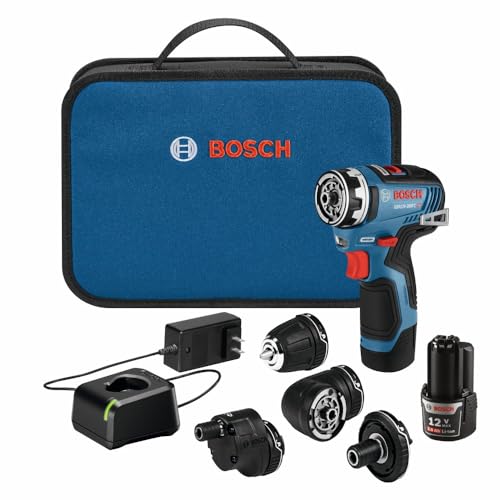
Bosch GSR12V-300FCB22 12V Max Flexiclick Drill/Driver

Milwaukee 2656-20 M18 18V Hex Impact Driver
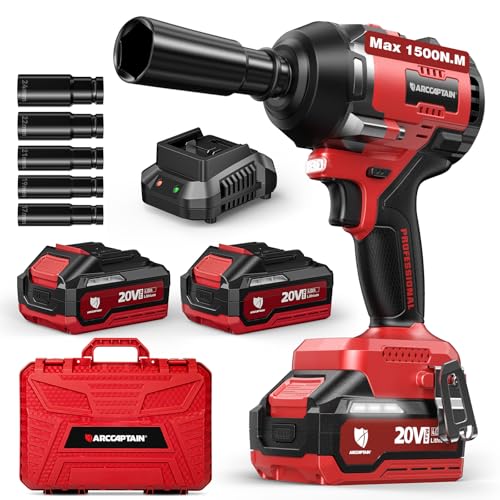
ARCCAPTAIN Cordless Impact Wrench 1500N.m 1/2″
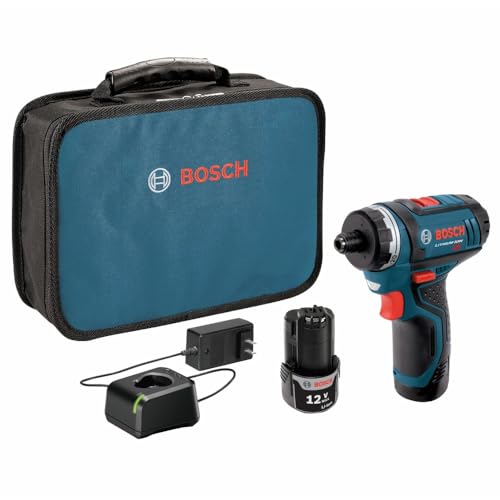
Bosch PS21-2A 12V Max Pocket Driver Kit

Bosch GSR12V-140FCB22 12V Max Flexiclick Drill/Driver

ARCCAPTAIN Tig Welding Gloves Goatskin

Makita XDT131 18V LXT Brushless Impact Driver Kit

PORTER-CABLE 20V MAX Impact Driver Kit
A Closer Look At Each Pick
Most weekend warriors don’t need a 1/2-inch impact gun until the day a seized caliper bolt turns a two-hour job into an all-day saga. This ARCCAPTAIN sits in that breakaway-torque category, with the reverse spec reaching the kind of numbers that make rusty fasteners think twice. The 1/2-inch anvil (the square drive that accepts sockets) accepts the same impact sockets you’re already using for tire work and suspension repairs.
Three forward torque settings and three variable speed modes give you room to back off on delicate work, like aluminum wheels or smaller lugs, without losing the top-end punch when you need it. The 1/2-inch drive is the same standard you’ll find on air tools at tire shops, so swapping sockets between systems is painless.
Points In Its Favor
- 1350N.m reverse breakaway torque handles rusted fasteners that stall smaller drivers
- Three forward torque presets let you match power to the fastener instead of over-torquing
- Variable speed trigger provides finer control on smaller hardware like caliper bolts
- 1/2-inch anvil works with standard impact sockets you likely already own
Honest Caveats
- Power and weight add up, so extended overhead work can wear your wrist out
- Overkill for assembling flat-pack furniture or driving wood screws
Right Fit For
Shade-tree mechanics and DIYers tackling suspension, brake, and tire work on cars and light trucks.
Look Elsewhere When
The Bosch PS21-2A 12V Max Pocket Driver Kit suits homeowners focused on cabinet assembly and light fastening far better than this much heavier gun.
Right-angle drilling inside a cabinet is one of those jobs that separates a real tool from a paperweight. Bosch’s FlexiClick system tackles that pain by letting you swap between a keyless chuck (the rotating collar that grips drill bits), a right-angle head, an offset attachment, and a few others, all without reaching for extra tools. The 12V platform keeps weight down to about 1.2 lbs for the bare tool, which matters on a long day of trim work.
Two-speed transmission covers both the low-end grunt for larger bits and the high-speed range for small pilot holes. The brushless motor (a design that uses electronic commutation instead of physical brushes, reducing wear and extending runtime) helps stretch battery life, and the right-angle head rotates to 16 positions so you can fine-tune your approach without removing the attachment.
Reasons It Performs
- Modular head system replaces several specialty tools in your bag
- Brushless motor stretches runtime and trims long-term maintenance
- Lightweight 12V platform suits overhead and precision work
Trade Offs
- 12V power caps out where the ARCCAPTAIN 1/2-inch wrenches begin
- Flexiclick attachments are a Bosch-specific ecosystem, not cross-brand
- You’ll need to budget for additional heads to unlock the full value
Who It Suits Best
Cabinet installers, electricians, and finish carpenters who change angles and bit types throughout the day.
Where Another Pick Suits Better
For heavy vehicle work where torque matters more than modularity, the ARCCAPTAIN Cordless Impact Wrench 1350N.m 1/2″ makes more sense.
For crews already running Milwaukee M18 batteries, bare tools like this one are how you expand a kit without buying yet another charger. The 2656-20 ships as tool-only, which keeps the cost down for tradespeople who already own a stack of packs. The 1/4-inch hex chuck (the quick-release collet that accepts driver bits directly) handles the standard 1/4-inch bit shanks common to most driver bits.
Torque lands at 1,500 in-lbs, which puts it comfortably in mid-tier territory for a professional driver. The no-load speed range of 0 to 2,750 RPM and 3,450 BPM (blows per minute, the hammering pulses that define an impact driver’s characteristic feel) mean it chews through long screws and lag bolts without bogging down. LED work lighting around the chuck keeps the workpiece visible in dim basements and crawl spaces.
Useful Highlights
- 1,500 in-lbs of torque handles most framing and decking work
- Bare-tool pricing helps when you already own M18 batteries
- LED lighting ring reduces shadows on the bit
- Soft-grip handle helps during all-day use on site
Points To Keep In Mind
- Tool-only means you’ll need an M18 battery and charger to run it
- Brushed motor (older design with carbon brushes that wear over time) requires more maintenance than brushless alternatives
- For non-Milwaukee shops, the platform lock-in adds up fast
Made For
Tradespeople committed to the M18 system who need a reliable 1/4-inch hex driver for general fastening.
Skip It When
Homeowners without Milwaukee batteries will get more out of a kit like the PORTER-CABLE 20V MAX Impact Driver Kit, which ships with everything needed to start driving.
If you found the 1350N.m ARCCAPTAIN useful, this newer sibling pushes the envelope further. The 1500N.m breakaway torque spec is paired with a 15C (15C discharge rate, a measure of how fast a battery can safely deliver current) 4000mAh battery, the kind of power capacity that holds up across a full afternoon of tire rotations or a busy day on a lift. The pure copper brushless motor design claims longer runtime and quieter operation than older brushed designs.
Where the 1350N.m model is more than enough for most home shops, this version leans toward users who push tools hard. The bigger battery matters most when you’re running the gun at full power for extended stretches, since high-torque work drains packs fast.
What Pays Off
- 15C discharge rate sustains high-torque output without voltage sag
- 4000mAh capacity extends runtime between charges on busy days
- Brushless copper motor reduces noise and extends service life
- 1500N.m covers commercial-grade automotive work
Worth Noting
- Larger battery adds weight for users who rarely need full-day runtime
- Price premium over the 1350N.m model may not pencil out for casual users
- Storage and transport get bulkier than a compact 12V alternative like the Bosch PS21-2A
The Right Fit
Small shop owners and serious DIYers who need sustained high torque for automotive and farm equipment work.
Consider Something Else When
If your work rarely involves seized fasteners or large vehicles, the Makita XDT131 18V LXT Brushless Impact Driver Kit offers a more balanced all-rounder with a much lighter profile.
Some tasks punish a heavy tool, and overhead cabinet work is at the top of that list. The Bosch PS21-2A keeps things light at 1.4 lbs, which sounds trivial until you’ve spent an hour installing under-cabinet lighting with a heavier driver. The 12V platform drops raw power compared to the 18V Milwaukee and Makita options above, but for screwdriving into wood, drywall, and light metal, it has more than enough muscle.
Two speed settings (0-350 RPM and 0-1,300 RPM) cover both controlled fastening and faster driving. The 20+1 clutch settings (the adjustable torque collars that slip past a threshold to prevent overdriving screws) prevent stripping screw heads, a feature professionals appreciate when working with expensive cabinet hardware.
Standout Benefits
- 1.4 lb weight reduces arm fatigue during extended overhead work
- Two-speed gearbox handles both precision and production driving
- 20+1 clutch settings protect delicate fasteners from stripping
- Kit includes batteries and charger for out-of-box use
Possible Compromises
- 12V power limits use to screwdriving and light drilling
- 265 in-lbs of torque is modest for larger lag bolts or dense hardwoods
Best Suited To
Homeowners, electricians, and remodelers focused on assembly, cabinetry, and finish work where weight matters more than raw power.
A Better Fit Elsewhere
For framing and deck work requiring serious torque, the Milwaukee 2656-20 M18 Hex Impact Driver serves better, assuming you already own M18 batteries.
The Flexiclick system returns here in a slightly different configuration, with the right-angle attachment as the headline feature. Sixteen locking positions let you rotate the head around tight corners without unmounting the attachment, which sounds small until you’re doing repetitive assembly work inside a server rack or piece of furniture. Compared to the GSR12V-300FCB22 above, this 140-series sits in a more accessible price tier for trades who want the modularity without the top-end torque.
At 1.8 lbs for the bare tool, it’s heavier than the pocket-style PS21-2A but lighter than the 18V impact drivers later on the list. For electricians, HVAC techs, and appliance installers, the right-angle head alone can justify the investment.
Key Advantages
- 16-position right-angle head reduces repositioning in cramped work
- Modular design supports additional Flexiclick attachments as needs grow
- Brushless motor extends runtime and lowers maintenance
Soft Spots
- Lower torque ceiling than the 300-series Flexiclick sibling
- Heavier than dedicated pocket drivers for pure overhead work
Whose Shelf It Belongs On
Multi-trade professionals who work at awkward angles more than they push fasteners to their limit.
Swap It Out When
If you rarely need the right-angle head and want maximum portability, the Bosch PS21-2A Pocket Driver Kit is the lighter, simpler choice for everyday fastening.
Power tools get most of the spotlight, but a fabricator’s hands are worth protecting. These ARCCAPTAIN TIG (Tungsten Inert Gas) gloves use premium goatskin grain leather, prized in welding gloves for being thinner and more tactile than cowhide while still resisting spark splash. TIG work demands fingertip precision to feed filler rod, and heavy gloves make that nearly impossible.
Goatskin also breathes better than full cowhide, which matters during long sessions in a warm shop. For occasional stick welding, heavier gloves may serve better, but for anyone doing regular TIG or light fabrication, dexterity is the main concern.
What It Does Well
- Goatskin offers better fingertip feel than thicker cowhide options
- Lightweight construction reduces hand fatigue on long welds
Less-Strong Areas
- Not suited for heavy stick welding with high heat and spatter exposure
- Fit and sizing can vary, so checking measurements matters before committing
Who Should Grab It
Hobbyist and professional TIG welders who value dexterity over maximum heat protection.
Another Choice May Suit
If you mostly run stick or MIG (Metal Inert Gas) welds with heavier spatter, a thicker cowhide or split-leather glove is a safer pick than these dexterity-focused gloves.
Among 18V brushless impact drivers, the Makita XDT131 hits a sweet spot for users who want a complete kit out of the box. The included 3.0Ah battery reaches a full charge in roughly 30 minutes, one of the faster turnaround times in this category. That speed matters on job sites where spare batteries are scarce, since a quick top-up during a break keeps the work moving.
The brushless motor claims up to 50% longer runtime than brushed Makita equivalents, plus longer overall tool life. As part of the broader LXT platform, the battery works across a wide range of Makita tools, from drills to reciprocating saws.
Positive Takeaways
- 30-minute charge time minimizes downtime between sessions
- Brushless motor extends runtime and tool life over brushed designs
- LXT battery compatibility covers a wide ecosystem of Makita tools
- Kit includes battery and charger, no extra purchases needed
Small Caveats
- Heavier and bulkier than 12V pocket drivers like the Bosch PS21-2A
- 1/4-inch hex chuck limits it to driver-bit use, not socket work
Who Will Love This
Loyal Makita users and professional contractors who need a kit-ready brushless driver with fast charging.
Reach For A Different Pick When
For pure 1/2-inch socket work on vehicles, the ARCCAPTAIN Cordless Impact Wrench 1350N.m 1/2″ offers far more torque in a tool purpose-built for that task.
Not every project demands prosumer-grade gear, and PORTER-CABLE has long been a value-driven name in the cordless world. The PCCK647LB kit ships with a battery, charger, and the brushless motor you usually find on pricier models. The motor claims roughly 50% more runtime than older brushed PORTER-CABLE drivers, a meaningful upgrade for the price.
The 1/4-inch hex chuck handles the same driver bits as the Milwaukee and Makita models above, while the 2,700 RPM top speed keeps production work moving. For homeowners stepping up from a basic drill/driver, this kit covers most fastening tasks without the sticker shock of a professional platform.
Where It Delivers
- Brushless motor at an entry-level price point
- Complete kit means no extra battery or charger purchases
- Lightweight enough for occasional home use without arm strain
Practical Considerations
- 20V platform lacks the battery ecosystem breadth of Milwaukee M18 or Makita LXT
- Plastic gearing and lower torque cap compared to higher-tier models
- Long-term durability favors heavier-duty brands for daily professional use
Perfect Match For
Homeowners and DIYers building a starter cordless kit on a reasonable budget.
Not Your Match When
For daily professional use or expanding into a larger cordless system over time, the Makita XDT131 18V LXT Brushless Impact Driver Kit offers a more capable long-term platform.
What To Weigh Before Picking A Rechargeable Impact Driver
Voltage and platform size matter more than most shoppers expect. A 12V driver like the Bosch PS21-2A handles cabinet and trim work with finesse, but lags behind 18V and 20V models for framing and heavy lag bolts. The 18V class, including the Milwaukee 2656-20 and Makita XDT131, hits the middle ground, while 1/2-inch impact wrenches like the ARCCAPTAIN 1350N.m step into automotive and farm territory. Match voltage to your most common task, not your most extreme one.
Chuck type shapes everyday use. A 1/4-inch hex chuck (the quick-release collar that grips standard driver bits) is the standard for driving screws and small bolts. A 1/2-inch anvil accepts impact sockets for vehicle and equipment work. Brushless motors extend runtime, run cooler, and last longer than brushed equivalents, and most newer models in this price range include one.
Battery ecosystem lock-in is the hidden cost. Milwaukee M18, Makita LXT, Bosch 12V, and PORTER-CABLE 20V each use proprietary packs. If you already own tools from one of these families, expanding within that line saves you from accumulating chargers and batteries. If you’re starting from scratch, factor that future cost into today’s decision.
Weight and ergonomics become real issues over a long day. The Bosch PS21-2A pocket driver at 1.4 lbs is a genuine relief for overhead work, while 1/2-inch impact wrenches at the top of this list trade portability for torque. For pros, a lighter tool with adequate power often beats a heavy tool with excess.
Key Considerations Across These Picks
Mistakes Worth Dodging
Going for a heavy-duty 1/2-inch wrench when your work is cabinet assembly is one of the most common shopping errors. That extra torque won’t get used, and the weight will wear you out. Match the tool to the task, not the spec sheet. Buying bare tools without checking whether you own the right battery and charger is another trap, especially with the Milwaukee 2656-20, which ships as tool-only. Finally, ignoring chuck type leads to frustration: a 1/4-inch hex driver cannot accept standard impact sockets, so vehicle owners need a wrench, not a driver.
Why Top Tier Costs More
Premium models like the Makita XDT131 and the higher-output ARCCAPTAIN 1500N.m justify their cost with brushless motors, faster charging, larger batteries, and platform depth. The upgrade makes sense for daily users who depend on their tools, where downtime, runtime, and longevity translate into real money saved. For occasional weekend projects, the entry-level PORTER-CABLE kit covers the same tasks at a lower upfront cost, and that’s a perfectly reasonable trade-off.
Frequently Asked Questions
What is the difference between an impact driver and an impact wrench?
An impact driver uses a 1/4-inch hex chuck and is designed for driving screws and small bolts with rotational impacts. An impact wrench uses a 1/2-inch square anvil (the squared drive stub that sockets lock onto) and delivers much higher torque for loosening and tightening nuts and bolts, like lug nuts on a car.
How long does a rechargeable impact driver battery last per charge?
Runtime depends on battery capacity, workload, and motor type. A 12V 1.5Ah pack may run a few hours of light driving, while an 18V 3.0Ah or larger pack can power a full day of moderate work. Brushless motors stretch runtime noticeably compared to brushed designs.
Can a rechargeable impact driver remove lug nuts?
Standard 1/4-inch impact drivers lack the torque for vehicle lug nuts, which is why dedicated 1/2-inch impact wrenches like the ARCCAPTAIN 1350N.m exist. These wrenches deliver the high breakaway torque needed to loosen stubborn lugs without rounding them off.
Is a brushless motor worth the extra cost?
For frequent users, brushless motors offer longer runtime, less heat buildup, and extended tool life, which usually justify the premium. For occasional DIY use, brushed motors remain capable, just less efficient and slightly less durable over years of service.
What safety gear should I wear when using an impact driver?
Safety glasses protect against flying debris, especially when driving into masonry or working with old, rusty fasteners. Work gloves improve grip, and hearing protection matters during extended use of high-torque 1/2-inch models, which can produce significant noise.




