


When a reciprocating saw is built for demolition or rough metal work, the blade decides everything. A wrong tooth pattern chews up thin-wall pipe, while the wrong thickness snaps the first time it hits a hidden nail. The right reciprocating saw blades for metal feel different in the cut, holding an edge and keeping a straight line even when the steel gets thick. You want a set that covers routine cuts, surprise plumbing, and the occasional heavy-gauge bar.
This list focuses on blades actually aimed at metal cutting, with a few mixed sets that include metal-capable options. Read for the spec mix that fits the work you actually do.
The Choices Worth Comparing

Milwaukee 49-22-1129 12-Piece Demolition Blade Set (2 Sets)

Milwaukee 49-22-1129 Sawzall Reciprocating Saw Blade Set, 12 Pc

DEWALT 12-Piece Bi-Metal Reciprocating Blade Set with Case (DW4892)
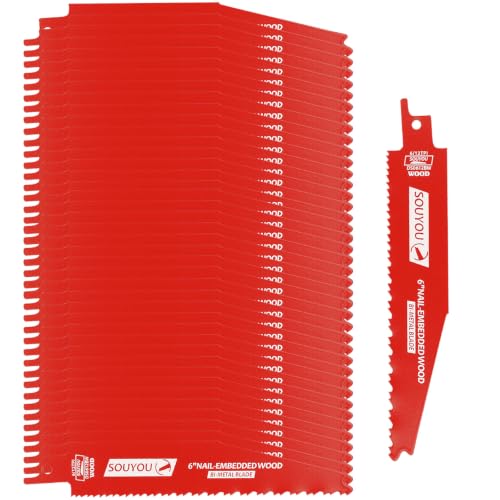
Souyou 50-Pack 6 Inch 6/12 TPI Bi-Metal Reciprocating Blades

DEWALT 10-Piece Bi-Metal Combination Blade Set with Case (DW4898)

Souyou 3-Pack 6 in 8 TPI Carbide Saw Blades for Auto Dismantling

Souyou 50-Pack 6 in 18 TPI Bi-Metal Reciprocating Blades
More On The Choices That Made The List
The Milwaukee 49-22-1129 set lands squarely in heavy-duty territory, with the kind of blade thickness that shrugs off nail-embedded wood and the extra-tall profile that helps keep long cuts from wandering. Each bundle covers a real demolition range: one blade optimized for rough wood, a general-purpose cutter, and a metal-focused tooth pattern for pipe, angle iron, and rebar. Two full sets means you start with 24 blades on the bench, which matters on a job that chews through consumables.
For trades running a Sawzall on a remodel or gut job, the higher upfront cost amortizes fast. The catch is that these blades are not the right tool for finishing work in thin sheet metal, where finer teeth and a slimmer body serve better. Compared with the standalone Milwaukee 12-piece in this list, this bundle doubles the inventory at the cost of a second carry case on the shelf.
Useful Touches
- Thick body construction adds rigidity on long, straight metal cuts
- Tall blade profile resists bending when cutting heavy stock
- Includes a dedicated metal-cutting blade alongside wood and general-purpose options
- Two full sets supply a working inventory for an active job site
Trade Offs
- Demolition thickness makes the blades overkill for trim or thin sheet metal
- Storage space grows noticeably once both sets are on the shelf
Quick Specs
Whose Shelf It Belongs On
Contractors, remodel crews, and anyone running a Sawzall through a gut or demo job where blades disappear by the end of the week.
Look Elsewhere When
Homeowners doing light plumbing repairs will find the DEWALT DW4892 12-Piece Bi-Metal Reciprocating Blade Set easier to justify for the workload.
The single 12-piece version of the Milwaukee Sawzall set takes the same blade DNA and drops it into a smaller, easier-to-store package. The thick .042-inch and .062-inch blade bodies give the teeth a rigid backbone, so they keep cutting in a straight line when the work is heavy and the access is awkward. The 1-inch blade height adds a meaningful amount of strength for plunging into wood and pulling through old pipe.
On a residential jobsite, this set earns its keep when the cut is tight and the material is unpredictable. The trade-off is real: owners commonly report that these thicker blades can feel coarse in thin sheet, where a finer-tooth design would skate across the steel with less chatter. Step back to the DEWALT DW4892 set if you want a comparable footprint with a slightly more balanced tooth mix.
Noteworthy Benefits
- Thick body options stand up to repeated heavy cutting sessions
- Reinforced 1-inch height resists flex on long plunges
- Compact 12-piece count fits easily in a standard tool drawer
Worth Noting
- Demolition thickness is more blade than thin sheet metal really needs
- Fewer spare blades in the case compared with the 24-piece bundle
Feature Snapshot
Best Suited To
Tradespeople and serious DIYers working in tight quarters on stubborn metal and mixed-material teardown jobs.
Consider Something Else When
A high-volume shop that burns through blades daily will prefer the Milwaukee 12-piece Demolition Blade Set (2 Sets) for the spare inventory.
The DEWALT DW4892 set hits a useful middle ground between durability and reach. The tall, thick blade profile helps push the cut straight through heavy stock, and the patented tooth geometry clears chips efficiently so the blade does not bog down in long passes. For anyone regularly cutting metal, wood, and iron with the same reciprocating saw, this is the kit most likely to stay in the case until it is empty.
Bi-metal construction (a high-speed steel cutting edge welded to a tougher spring-steel back) gives the blades a real flex zone, so the teeth survive the bend that comes with starting a cut on a curved pipe. The storage case is a small but meaningful upgrade, keeping the working set organized on the bench. Compared with the Milwaukee 49-22-1129, this DEWALT tends to feel more balanced on mixed-material work and slightly less aggressive in pure demolition.
Strengths Worth Knowing
- Patented tooth geometry aims for longer life across repeated cuts
- Tall profile helps long, straight cuts in heavy metal and iron
- Bi-metal build flexes without snapping when the cut wanders
- Hard case keeps the kit organized and ready to grab
Trade Offs
- Not as thick as dedicated demolition blades for the roughest teardown work
Feature Card
Right Fit For
Trades and DIYers who cut metal, wood, and iron on the same day and want a set that stays sharp across all of them.
Skip It When
Bulk buyers running a high-volume shop will get more value per blade from the Souyou 50-Pack 6 Inch 6/12 TPI Bi-Metal Reciprocating Blades.
When a project chews through blades, the Souyou 50-pack earns a hard look. The 6/12 TPI (teeth per inch) pattern, where one section has 6 teeth per inch and the next 12, is a versatile split for medium-gauge metal and wood, balancing faster chip removal with a cleaner finish. A non-stick coating helps the blade shed heat, which matters on longer cuts where friction dulls teeth fast.
The price-per-blade math is the real story, especially for a shop that pulls a blade out as soon as it starts wandering. The trade-off surfaces in fit and finish: these are consumable blades designed to be used up, not heirloom tools, and the bundled organizer is a thin plastic sleeve rather than a hard case. For homeowners with occasional metal work, the DEWALT DW4898 10-Piece Bi-Metal Combination Blade Set delivers a stronger storage case for the same kind of mixed workload.
What Makes Sense
- High-volume pack keeps a working inventory on the bench for months
- Non-stick coating reduces heat buildup during extended cuts
- 6/12 TPI variable tooth pattern handles both metal and wood
- Rated for 1/16-inch to 5/16-inch medium metals, the common plumbing range
Points To Note
- No hard storage case, just a thin organizer sleeve
- Variable TPI cuts a little slower in pure metal than a dedicated high-TPI blade
Quick Specs
Made For
Workshops, contractors, and homeowners who cut medium-gauge metal and want a deep bench of ready blades without a big upfront spend.
Reach For A Different Pick When
Anyone needing a tougher storage solution will appreciate the DEWALT DW4892 12-Piece Bi-Metal Reciprocating Blade Set with its hard case.
The DEWALT DW4898 is the all-purpose option in the lineup, and the multiple blade lengths, ranging from 6 inches to 9 inches, are what make it click. A 6-inch blade slips into tight corners behind a stub wall, while a 9-inch blade clears the center of a cast-iron pipe without forcing you to push. Bi-metal construction (a hardened tooth edge welded to a flexible steel body) keeps the cutting edge sharp while the back half absorbs the bend, so the blade survives angled starts on round stock.
The combination design lands naturally in a household tool kit. The 10-piece count is small enough to fit in a drawer, but the included case is sized to slide into a standard tool chest. Compared with the DEWALT DW4892, this set trades some pure-metal specialization for a more flexible length range. The honest read: it does most things well without being the best at any one job.
Everyday Wins
- Range of blade lengths covers tight and open cuts
- Bi-metal teeth stay sharp across varied materials
- Case fits inside a standard tool kit box for tidy transport
Room For Improvement
- Ten blades can run thin in a busy shop before the next refill
- Less optimized for heavy demolition than the thicker Milwaukee sets
Who It Suits Best
Homeowners and part-time renovators who want one Sawzall kit that handles plumbing, framing, and the occasional metal repair without switching brands.
A Better Fit Elsewhere
Heavy demolition crews should step up to the Milwaukee 12-Piece Demolition Blade Set (2 Sets) for the thicker blade bodies and larger spare count.
Salvage and auto-dismantling work calls for an aggressive cut, and the Souyou 3-pack delivers with an 8 TPI tooth pattern that chews through exhaust tubing, suspension brackets, and sheet-metal panels without stalling. The carbide alloy steel body holds up under the kind of repeated impact you get when a blade hits a hidden bolt or frame rail. The non-stick coating keeps the cut cooler when the work drags on, which is most weekend afternoons in a garage.
This is a specialty pick, and the 3-blade count tells you that. It is meant to be supplemented with a finer-tooth blade for trim and fasteners, not to replace a general-purpose set. Compared with the Souyou 50-pack 6/12 TPI set, this 3-pack trades volume for a more aggressive tooth that clears chips fast. For pure sheet-metal finish work, the Souyou 50-pack 18 TPI set is the smoother alternative.
A Few Strong Suits
- 8 TPI tooth pattern pulls through sheet metal and exhaust components quickly
- Carbide alloy steel body holds up to repeated automotive impact
- Non-stick coating controls heat during longer dismantling sessions
Things To Consider
- Only three blades in the pack, so it pairs with a finer set
- Aggressive tooth leaves a rougher edge than higher TPI options
- Rough cut on automotive fasteners may require a separate metal-cutting blade
Perfect Match For
Backyard mechanics, scrap-yard workers, and restoration hobbyists pulling exhaust systems, brackets, and panels from older vehicles.
Where Another Pick Suits Better
Anyone cutting stainless exhaust or doing finish metal work will prefer the Souyou 50-Pack 6 in 18 TPI Bi-Metal Reciprocating Blades for the cleaner tooth geometry.
On the finer end of the spectrum, the Souyou 50-pack 18 TPI set is built for the kind of metal work where a rough edge is the problem. The higher tooth count slices thin-wall tubing, copper, and sheet metal with a noticeably cleaner kerf, which saves time on the deburring step that follows. Like the 6/12 TPI pack, the non-stick coating helps the blade glide through the cut without grabbing, and the bulk format means you do not have to think about replacing blades mid-project.
The trade-off is speed: 18 TPI is slower to clear chips than 6 or 8 TPI, so pushing one through thick stock is a workout. For pure plumbing or trim work, this is the better blade; for heavy bar and angle iron, the 8 TPI Souyou 3-pack or the DEWALT DW4892 set will keep pace more comfortably. The included organizer sleeve is functional, though it does not match the protection of a hard case.
Advantages To Know
- 18 TPI tooth geometry leaves a smoother edge in thin metal
- Bulk 50-blade format keeps an active shop supplied for months
- Non-stick coating reduces heat and chip sticking during long runs
- Rated for 1/16-inch to 5/16-inch medium metals, the common plumbing range
Worth Bearing In Mind
- Slower than lower TPI blades on thick steel and angle iron
- Thin organizer sleeve is less protective than a hard case
Feature Rundown
Who Should Grab It
Plumbers, HVAC techs, and detail-focused DIYers who regularly cut thin metal and want a steady supply of clean-cutting blades.
Swap It Out When
Aggressive cutting in auto salvage or thick stock calls for the Souyou 3-Pack 6 in 8 TPI Carbide Saw Blades for Auto Dismantling instead.
What Separates A Good Metal-Cutting Blade From A Frustrating One
The first spec that matters is TPI, or teeth per inch, the count of tooth points along each inch of blade edge. Low TPI (6 to 10) cuts fast but leaves a rough edge and works best on thick stock, while high TPI (14 and up) cuts slower and smoother, ideal for thin pipe and sheet metal. Variable tooth patterns (like 6/12) split the difference and earn their keep on mixed-material work. Match the TPI to the thinnest material you cut, then add a coarser blade for the rare heavy job.
Blade thickness and profile control how the blade behaves under load. Thicker bodies (around 0.042 to 0.062 inches) resist bending during long cuts and plunge work, while thinner bodies flex more and fit into cramped spots. Tall profiles straighten a wandering cut, but a shorter body slides behind a wall more easily. The right answer depends on access: the tighter the cut, the shorter and slimmer the blade should be.
Tooth material and coatings shape longevity. Bi-metal construction welds a high-speed steel tooth edge to a flexible spring-steel back, giving you a sharp cutting edge that does not snap on angled starts. Carbide-tipped or carbide alloy steel blades hold up under heavier impact, which matters in demolition and auto work. Non-stick coatings reduce friction and heat, extending blade life during extended cutting sessions where the blade would otherwise gum up.
Length and pack size round out the practical math. A 6-inch blade handles most residential plumbing, while 9-inch blades reach across wider pipe. Bulk packs drive down cost-per-blade for shops that burn through consumables, while smaller sets with hard cases suit homeowners who cut occasionally and want tidy storage. Pick the pack size that matches the rhythm of your work, not just the cheapest box on the shelf.
Smart Considerations Before You Commit
Common Pitfalls When Buying Reciprocating Saw Blades For Metal
A frequent mistake is choosing a low TPI blade for thin metal, which rips the edge and leaves a jagged kerf. Another is buying the cheapest bulk pack and expecting the same life as a premium blade, when in practice the right blade for the material saves time and frustration. Check that the blade shank matches the saw’s universal or proprietary mount before clicking buy.
Why Premium Blades Cost More In This Category
Higher-tier blades cost more because of the materials and the geometry. Carbide tooth edges, bi-metal welds, and patented tooth shapes hold an edge longer and survive angled starts that destroy cheaper teeth. For high-volume shops and frequent users, the upgrade pays back in fewer blade swaps, cleaner cuts, and less time fishing for the right blade in a crowded case. For occasional users, a mid-tier set with a hard case is often the better balance.
Frequently Asked Questions
How Many Teeth Per Inch Do I Need For Cutting Metal?
For thin metal and pipe, pick a blade with 14 to 24 TPI for a clean cut. For thick stock and demolition, 6 to 10 TPI cuts faster and resists binding.
Are Bi-Metal Blades Better Than Standard Steel For Metal?
Bi-metal blades combine a high-speed steel tooth edge with a flexible back, which keeps the teeth sharp longer and lets the blade flex without snapping. Standard steel dulls faster and breaks more easily under load.
Can One Reciprocating Saw Blade Cut Both Metal And Wood?
Variable TPI blades like 6/12 cover both, but they compromise speed in each material. Most tradespeople keep at least two blade types on hand to match the work.
What Blade Length Works For Most Home Plumbing Jobs?
A 6-inch blade handles most residential pipe and supply-line cuts. Reach for a 9-inch blade when the pipe is wider or the cut sits in the middle of a long run.
How Do I Keep Metal-Cutting Blades From Overheating?
Let the blade do the work without forcing the cut, pause periodically on long passes, and use a blade with a non-stick coating. A steady feed rate extends blade life more than any other habit.




