


A concrete sealer job goes off the rails long before the bucket is empty. Pick the wrong cover, and you’ll watch the sealer pool into streaks, leave lint behind, or refuse to lay down an even coat on a rough slab. The roller in your hand quietly controls how the sealer bonds, how thick the film builds, and whether you end up re-doing the patio next spring.
A few minutes spent matching nap (the length of the fuzzy fibers on a roller cover) and core type to your surface saves hours of frustration. Driveways, garage floors, and block walls all want different things from a roller. Below, nine rollers that handle sealing work well, plus a few worth borrowing from the flooring aisle when the moment calls for it.
A Closer Look At The Lineup

Linzer RC 152 1200 Driveway Roller Refill 12″

MARSHALLTOWN Automotive Rubber Sound Deadening Roller

Everhard Roll-N-Chek Seam Roller with Probe MR05018
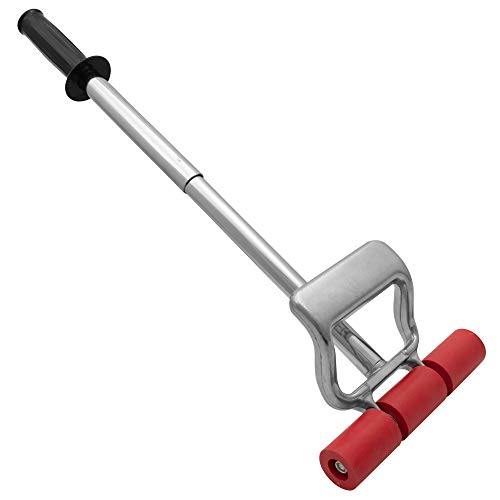
Peachtree Extendable Heavy Duty Floor Roller 17-27″

DCT Heavy-Duty Seam Press Roller Extendable 17-27″

HXBYX Rubber Brayer Floor Roller 4.3″x6″

JIADING Ergonomic Silicone Seam Roller 1-7/16″ Single-Head

A.A Steel Seam Roller 2″x2″ Radius End

Bates Choice 9-Inch Paint Roller Kit with Microfiber Covers
The Picks, Examined More Closely
The Linzer RC 152 1200 sits in a category of its own on this list. It is a refill cover, not a complete roller, designed to slide onto the matching Linzer driveway frame. At 12 inches wide with a 3/4-inch nap, it carries enough material to push a sealer into the pores of a broom-finished slab without flooding the surface. For a one-car driveway or a back patio, that width covers ground at a sensible walking pace.
Most homeowners sealing a weekend project reach for a cover like this one. It works on walkways, patios, garage floors, and block walls. The replacement-only format keeps the cost reasonable for a single use, though serious contractors tend to swap covers between colors rather than buy new frames each time.
Everyday Perks
- 12-inch width gives solid coverage on a standard driveway in just a few passes
- 3/4-inch nap is thick enough for textured or broom-finished concrete, so sealer reaches the low spots
- Refill-only design keeps replacement cost low for one-off sealing projects
- Compatible with sealers, paints, and waterproofing products on a wide range of masonry surfaces
- Slides onto the matching Linzer frame, so swapping a worn cover takes seconds
Points To Keep In Mind
- It is a cover only, so you need the matching Linzer frame to use it
- On very rough or aggregate-exposed slabs, the 3/4-inch nap may load up fast and require frequent re-dipping
Made For
Homeowners sealing a one- or two-car driveway, patio, or garage floor on a single weekend.
Consider Something Else When
The Bates Choice 9-inch roller kit suits you better when the project includes walls and ceilings, not just flat slabs.
MARSHALLTOWN built this roller for pressing down sound-deadening mats inside car doors and floors, not for pouring sealer on a patio. That is exactly the point. A rubber-faced roller handles sealer detail work and small seam pressing without leaving fuzz behind, which is the usual complaint with a fabric cover on a tight corner. The DuraSoft grip keeps your hand comfortable during long detail sessions.
Assembled in the USA from parts sourced globally, the roller uses a hard rubber wheel and a balanced handle that the brand offers in several sizes. For sealer work, it shines on the edges and transitions where a fabric cover would leave lint or skip.
Reasons It Performs
- Rubber face leaves zero lint, so cured sealer shows no fuzz contamination
- DuraSoft grip cuts hand fatigue during long detail or edge sessions
- Compact size fits tight spots, edges, and the wall-to-floor transition a 12-inch cover cannot reach
- Hard rubber wheel lays down even pressure on patches and seam tape
Some Limits To Know
- Too small for broad-coverage sealer rolling on a full driveway
- Best treated as a companion tool to a larger cover rather than a primary roller
Feature Snapshot
Right Fit For
Detail-focused users sealing edges, control joints, and small patch repairs on a larger slab.
Look Elsewhere When
The Linzer RC 152 1200 is the better match for full-driveway coverage with one tool doing the bulk of the work.
The Everhard Roll-N-Chek folds two jobs into a single tool. A wood-handled roller presses a seam flat, and a probe tip in the end of the handle tests that same seam for integrity right after the roll. There is no pick-up-and-put-down dance between two tools, which speeds up welded or taped membrane work considerably.
For concrete sealing crews, the combo shows its value around welded seams on a containment pad or along a curb. The wood handle balances the dual-ended design, and the seam tester fits in line with the roller axis so you can switch between the two without resetting your grip.
What Stands Out
- Combo design removes the need to grab a second tool to verify seam quality
- Wood handle keeps weight centered and absorbs the impact of seam pressing
- Probe tip lets you check a seam right after rolling, while the adhesive is still workable
- Speeds up QA on membrane or welded seam work where stopping to test costs real time
Trade Offs
- Specialized for seam work, so it is not a primary sealer applicator
- Wood handle needs a dry storage spot to avoid swelling between uses
Whose Shelf It Belongs On
Contractors and serious DIYers pressing and verifying tape or membrane seams on a sealing project.
Skip It When
The JIADING silicone seam roller is a better fit when heat resistance matters more than built-in seam testing.
The Peachtree segmented roller earns its keep when the sealer job involves large vertical or overhead surfaces. The extendable shaft telescopes from 17 to 27 inches, letting you roll sealer across a tall block wall or wide garage face without dragging a ladder behind you. Segmented rollers deliver even pressure across the face, so the sealer film lays down uniformly even on slightly bowed surfaces.
For sealing a basement wall or a poured concrete fence, the added reach means you control the pressure with your hands rather than relying on a step stool. Most users will appreciate the heavy-duty build the moment they feel how solid the handle locks in place.
The Value In It
- Telescoping shaft extends from 17 to 27 inches for walls and high garage faces
- Segmented roller spreads even pressure on slightly uneven wall surfaces
- Strong handle locks in place, so the tool does not collapse under load
- Useful well beyond sealer work, including laminate, veneer, and wall covering projects
Honest Caveats
- Heavier than a non-extending roller, which may fatigue overhead work on long sessions
- Locking mechanism should be checked before each use to prevent mid-stroke slippage
Best Suited To
Users sealing a tall block wall, garage face, or any project where stepping off a ladder feels like a hassle.
A Better Fit Elsewhere
The DCT extendable roller suits you better when weight matters more than maximum reach.
The DCT extends from 17 to 27 inches, much like the Peachtree roller, but it leans toward flooring materials such as vinyl, tile, and linoleum. The non-marking roller face keeps the sealer film clean, and the inset axle prevents the edges of the roller from gouging into freshly laid material. For sealer work, it shines on countertops and small wall sections where control beats brute force.
The build is noticeably lighter than most extendable rollers in this size range, which makes overhead work less punishing on your shoulders. The trade-off is that very heavy press jobs may need a more substantial tool.
What Pays Off
- Non-marking roller face protects the sealer film from scuffing during the press
- Lightweight frame reduces arm fatigue during long ceiling or wall sessions
- Inset axle keeps the roller edges from marking freshly sealed material
- Telescoping range covers most residential wall and counter heights
Some Limits To Know
- Lightweight build may flex on heavy, industrial-scale pressing tasks
- Best paired with a heavier roller for very large wall sections
Feature Snapshot
Who Should Grab It
Lightweight-loving users sealing a counter, backsplash, or short wall without straining their shoulders.
Reach For A Different Pick When
The Peachtree extendable roller is the better match for very tall block walls that demand more rigidity.
The HXBYX brayer is a small hand roller, the kind you grip in your palm and press with thumb pressure. At roughly 4 by 6 inches with a smooth rubber face, it does the work a brayer is supposed to do: drive glue or sealer into a seam without flooding the surrounding area. The rubber compound is high-elasticity, which means it deforms slightly under load to follow the contour beneath it.
For concrete sealer work, the brayer handles corners, control joints, and detail patches where a 9- or 12-inch cover simply cannot reach. The wooden core keeps weight down to about 190 grams, so your hand does not cramp up during extended detail sessions.
The Helpful Details
- Compact 4.3″ x 6″ face fits corners, joints, and detail patches easily
- Smooth rubber surface lays down even pressure on narrow strips of sealer
- Lightweight 190-gram build keeps hand fatigue in check during detail work
- High-elasticity rubber conforms to slight surface variations under thumb pressure
Points To Note
- Too small for full-coverage rolling on any slab larger than a stoop
- Rubber face cleans easily, but solvent-based sealers may swell the material if left in contact
Feature Snapshot
Who Will Love This
Detail-oriented users sealing control joints, corners, and small patch repairs on a larger slab.
Not Your Match When
The A.A steel seam roller is a stronger pick when you need firm, repeatable pressure on tape work.
The JIADING roller trades rubber for silicone, and that swap changes the use case. Silicone tolerates heat up to roughly 500 degrees F, so the roller keeps its shape around hot-welded seams on PVC, TPO, and EPDM roofing or decking membranes. The non-stick surface means uncured adhesive wipes off rather than building up on the wheel.
For sealer work, the small single-head design focuses pressure into a tight line. It is the kind of roller you reach for when the sealer task brushes up against membrane flashing or detail work on a waterproofed deck.
Notable Gains
- Silicone face resists heat up to about 500 degrees F for hot-welded seams
- Non-stick surface wipes clean easily when adhesive builds up
- Small 1-7/16″ diameter delivers focused pressure on tight seam lines
- Wear-resistant build suited to repeated detail work on membrane projects
Trade-Offs To Consider
- Single-head design means slower progress on anything longer than a seam
- Specialty tool, so it earns its slot only when heat or non-stick matters
Feature Snapshot
Perfect Match For
Detail workers handling heat-welded membrane seams where a standard rubber roller would deform or stick.
Another Choice May Suit
The A.A steel seam roller is a better match for cold-applied tape on Eternabond-style repairs.
The A.A steel roller is a chunky, no-nonsense press tool. A 2-inch steel wheel with a radius end sits on enclosed bearings, so the rolling action stays smooth even under firm downward pressure. The 7.5-inch handle and 2-pound weight give the tool a planted feel, and the curved-end roller lets you press right up to a wall without leaving a gap.
On a concrete sealing job, the steel face shines when you are pressing Eternabond tape or similar repair tape over a cracked control joint. The steel drives out air and activates the adhesive more thoroughly than a softer roller would.
Everyday Advantages
- Steel wheel drives out trapped air under repair tape for stronger adhesion
- Enclosed bearings keep the rolling action smooth under heavy pressure
- Radius end lets you press tape right up to a wall without missing the edge
- 2-pound body weight does much of the pressing work for you
Worth Bearing In Mind
- Steel face can mark softer surfaces, so use caution on visible sealer film
- Heavier than rubber rollers, which may tire your hand on long taping runs
Feature Snapshot
Built With In Mind
Users pressing repair tape on cracks, control joints, and seam overlaps during a sealing project.
Swap It Out When
The Everhard Roll-N-Chek is a better match when you also need to test seam integrity with the same tool.
The Bates Choice kit is a generalist package: a 9-inch roller frame, two microfiber covers, and a grip handle sized for walls, ceilings, and floors. The 1/2-inch nap on the included covers handles most concrete sealers well, especially on smooth or lightly textured slabs. For a homeowner who plans to seal the garage floor and then repaint the basement walls next month, the kit covers both without buying more gear.
Microfiber holds a surprising amount of sealer, which means fewer trips back to the tray. The trade-off is that heavily textured concrete can pull fibers loose, leaving a faint peach-fuzz look if you press too hard.
Bright Spots
- Kit includes frame plus two microfiber covers, so you can start the job immediately
- 9-inch width is the comfortable standard for most residential sealer projects
- 1/2-inch nap handles smooth to lightly textured concrete well
- Microfiber holds a generous load of sealer, so you reload the tray less often
Some Limits To Know
- Microfiber covers may shed slightly on rough broom-finished concrete
- 1/2-inch nap is shorter than the Linzer 3/4-inch option, so coverage on rough slabs is thinner
Right Fit For
DIYers sealing a smooth or lightly textured slab and tackling other paint projects around the house.
Where A Sibling Pick Shines
The Linzer RC 152 1200 is the better match when the slab is broom-finished or has exposed aggregate.
What Matters When Choosing Rollers For Concrete Sealer
Nap Length and Surface Texture
Nap is the length of the fuzzy fibers on a roller cover, and it controls how much sealer the cover holds and how deeply it pushes the liquid into the surface. Smooth garage floors and polished slabs are happy with a 3/8-inch nap, which lays down a thin, even film. Broom-finished driveways and exposed aggregate want 1/2 to 3/4 inches so the sealer reaches the low points between the texture. A short nap on a rough slab leaves dry spots; a long nap on a smooth slab floods the surface and risks puddles that cure cloudy.
Roller Width and Project Scale
Width changes how fast you cover ground. A 9-inch roller, like the Bates Choice kit, is the comfortable residential standard and fits standard trays. A 12-inch cover, like the Linzer refill, finishes a driveway in noticeably fewer passes, though it is harder to control on edges and corners. For large garage floors, the wider cover wins on time. For tight patios with planters and steps, the 9-inch option keeps you out of trouble.
Cover Material and Reusability
Roller covers come in microfiber, woven fabric, foam, and rubber. Microfiber is the everyday workhorse for sealers, holding a generous load and releasing it evenly. Foam is too soft for textured concrete. Rubber and silicone show up on detail rollers, where lint-free contact and heat tolerance matter more than coverage area. Plan on disposable microfiber covers for solvent-based sealers, since the fabric rarely cleans up well enough to reuse.
Roller Body Type and Reach
The frame matters as much as the cover. Fixed-length frames keep things simple and feel balanced. Extendable handles, like the DCT or Peachtree rollers, let you reach up a wall or across a wide slab without dragging a ladder. For purely flat slab work, the extension is overkill. For a block wall or a tall garage face, the extra reach changes the job from awkward to manageable.
What These Picks Reveal About the Category
Where Shoppers Go Wrong
The most common slip-up is buying a short-nap cover for a textured slab and ending up with dry patches. The opposite mistake is grabbing a long-nap cover for a polished floor and watching sealer pool at the roller marks. Both situations come from skipping the texture check before buying. Run your hand across the slab. If it grabs your palm, you need at least 1/2-inch nap. If your hand slides easily, 3/8-inch is plenty.
When Paying More Pays Off
Higher-tier rollers earn their keep through bearings, balance, and frame rigidity. The MARSHALLTOWN and A.A rollers feel the difference in your hand the first time you press down. For a one-time patio seal, a budget kit does the job. For anyone sealing multiple slabs a year, the smoother rolling action and the longer tool life justify the step up. The upgrade pays off most when the sealer is expensive, since a quality roller lays down a more uniform film and reduces rework.
Frequently Asked Questions
Can a regular paint roller work for concrete sealer?
Yes, but a standard paint roller cover is usually too short a nap for most concrete surfaces. A dedicated concrete sealer roller with at least a 1/2-inch nap holds and releases sealer properly on textured slabs.
What nap roller is best for concrete sealer?
A 3/8-inch nap works for smooth or polished slabs, while broom-finished or aggregate-exposed concrete wants 1/2 to 3/4 inches. Anything longer than 3/4 inches is generally overkill for residential sealer work.
Can I reuse a roller after using it for sealer?
Water-based sealers sometimes allow a thorough rinse and reuse, but solvent-based products tend to ruin the cover. Plan on disposable microfiber covers for most sealer jobs, since the cost of a fresh cover is small compared to the risk of a contaminated second coat.
How long should a sealer roller last?
For a single driveway or patio project, one roller cover usually lasts the whole job if you keep it wet between passes. Once the cover dries out with sealer cured inside it, the cover is done, and you should swap it for a fresh one rather than trying to salvage it.
Do you need a special roller for penetrating concrete sealer?
Penetrating sealers, which soak into the concrete rather than forming a film on top, are often applied with a pump sprayer or a short-nap roller that lays down a thin wet coat. A long-nap cover wastes material on these products, since the sealer is meant to absorb, not build up.




