


A fresh coat of polyurethane can transform tired wood floors, but the difference between glassy and wavy usually comes down to the roller. The wrong nap leaves bubbles, lint, or drag marks that cure right into the finish. The right roller spreads the coating thin and even so each coat lays down flat, saving you sanding between passes and giving the whole room a more professional read.
The lineup below mixes J-rollers, segmented floor rollers, and texture-coating roller kits so you can match the tool to the job. Several picks handle more than polyurethane too, doubling for laminate adhesive work, veneer pressing, and even cabinet finishes. Here’s a closer look at the standout nine for this year.
A Quick View Of The Lineup
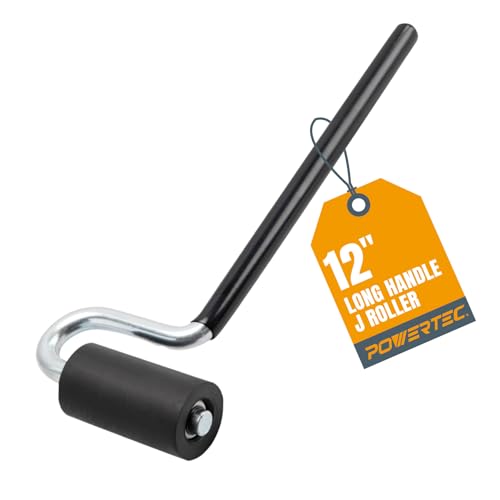
POWERTEC 12″ Long Handle J Roller 3″ Wide (71010)

POWERTEC 14″ Curved Handle J Roller 3″ Wide (71011)

DuraTex Roller Grade Gallon Texture Coating (Black)
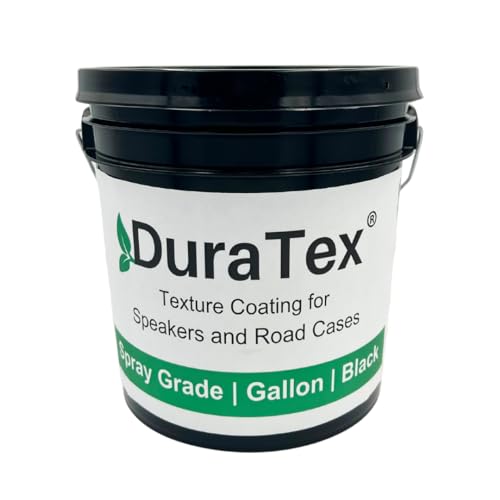
DuraTex Spray Grade Gallon Texture Coating

DuraTex Speaker Cabinet Coating Roller Grade Kit

POWERTEC Extendable Floor and Wall Roller 7.5″ Wide (71033V)
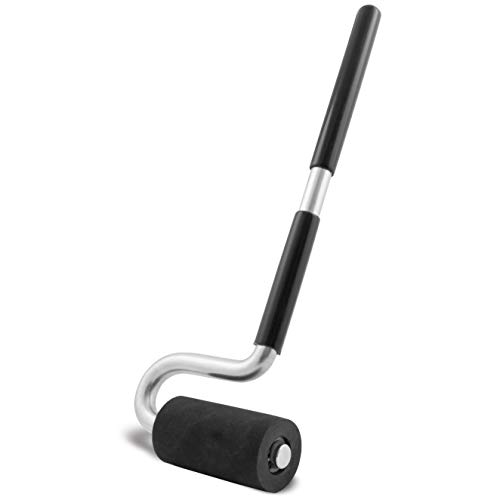
Fulton Long Handle J Roller Thick Rubber

Mister Rui 4″ Foam Paint Roller 8 Pack
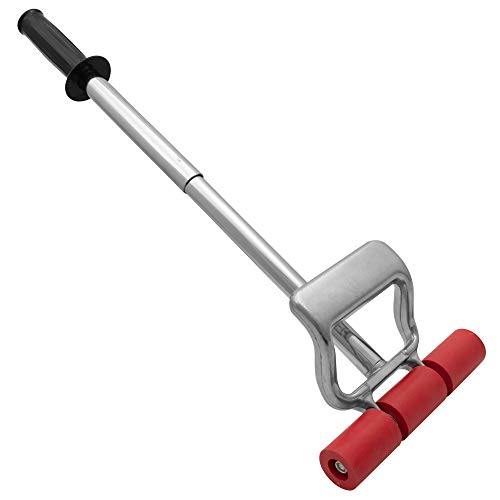
Peachtree Extendable Heavy Duty Floor Roller 17″-27″
The Picks, Examined More Closely
The POWERTEC 71010 is a classic J-roller, a small, handheld tool shaped a bit like a candy cane, built for pressing laminate, veneer, and edge banding into a glued substrate. The rubber barrel measures about 1-1/2 inches across and 3 inches wide, which gives you focused contact without flattening too much adhesive out of the seam. On wood floor installs it shines in tight spots where a wide segmented roller cannot reach, like along baseboards, in closets, and around door jambs.
For polyurethane work specifically, you won’t be dipping this roller into a tray of finish, because J-rollers are not designed for liquid coating. They press and bond. Their true value for floor finishers sits one step before the topcoat: rolling down the paper release sheet, knocking out air pockets, or burnishing contact adhesive under trim pieces. Reach for this one when your main floor roller is too bulky to access an awkward zone.
The Case For It
- Compact 12-inch handle reaches into tight floor edges where larger rollers cannot fit.
- Rubber barrel applies even pressure on laminate, veneer, and edge banding without scratching prefinished wood.
- Lightweight, so hand fatigue stays low during long detailing sessions on a refinishing job.
- Doubles as a general-purpose shop tool for cabinet veneer work and wallpaper seams.
Worth Noting
- Not intended for spreading liquid polyurethane, so it pairs with a larger floor roller rather than replacing one.
- The straight handle can feel awkward in low-clearance areas, since a curved profile lies flatter against the floor.
- Owners commonly report the rubber roller can pick up adhesive residue, so cleaning between uses matters.
Quick Facts
Whose Shelf It Belongs On
Wood floor refinishers and trim carpenters who need precise edge work between full-room passes of a larger roller.
Reach For A Different Pick When
The POWERTEC 14″ Curved Handle J Roller (71011) is the better match for longer sessions where an ergonomic curved grip matters more than compact reach.
Where the 71010 trades compactness for an upright straight handle, the POWERTEC 71011 leans the other way. The handle sweeps into a gentle curve, so the roller sits flatter against the work surface and your wrist rests at a more natural angle. Same rubber barrel, same 1-1/2-inch diameter, same 3-inch width, but a noticeably different feel in your hand over a long floor session.
For wood floor finishing prep, this version earns its place on jobs where you are pressing out laminate or burnishing seams along entire walls rather than just spot detail. The curved handle reduces the bridging of your wrist, which matters more than people expect during a full afternoon of rolling. Most owners reach for it after a few hours with the straight-handle sibling and do not switch back.
Practical Advantages
- Curved handle keeps your wrist in a relaxed, neutral position for long rolling passes.
- Same dependable rubber barrel as the 71010, so behavior on wood stays consistent across the line.
- 14-inch reach sits between a standard J-roller and a segmented floor roller, covering medium-length seams comfortably.
- Useful on flooring, wall coverings, and edge banding without swapping tools mid-project.
Points To Note
- Still a pressing tool rather than a liquid-finish applicator, so it complements a wider roller for actual polyurethane coats.
- The curved profile adds a small amount of length that may not fit every tool belt or apron loop.
Made For
Anyone refinishing multiple rooms at once who wants less wrist strain during repetitive pressing work along baseboards and seams.
Where Another Pick Suits Better
The Fulton Long Handle J Roller with Thick Rubber is the stronger option when you need more down-pressure for stubborn veneer or laminate seams.
DuraTex Roller Grade sits in a different category than the J-rollers above. It is a water-based texture coating formulated for speaker cabinets, road cases, and metal surfaces, with a consistency tuned to lay down evenly through a paint roller. The black gallon covers roughly 100 to 200 square feet depending on the substrate and how heavy you want the texture, and it adheres without a separate primer, which saves a step on prep day.
It is not a traditional wood floor polyurethane, and that is the honest caveat. Where it earns a place in this roundup is for hardwood projects with a different end goal: workshop furniture, road cases, garage workshops, and bar tops where a rugged, scuff-resistant texture beats a glossy floor finish. If your “wood floor” is really a utility room or a workshop platform that needs grip, this roller-grade formula deserves a real look.
The Good Stuff
- Roller-grade viscosity is tuned for even laydown with a standard 7-inch or 9-inch roller frame.
- Coverage of 100 to 200 square feet per gallon keeps material cost predictable for medium-sized projects.
- Water-based formula cleans up with soap and water rather than solvents, which is friendlier in home shops.
- No primer step required, so most surfaces accept the coating directly after light scuffing.
Trade Offs
- Texture coating, not a clear finish, so it changes the look of the wood rather than sealing it transparently.
- Not formulated as a topcoat for traditional interior hardwood floors where you want a clear protective sheen.
- Owners commonly report that achieving an even stipple pattern takes a wet edge and a steady hand.
Spec Overview
Best Suited To
Workshop builders and road case makers who want a scuff-resistant textured finish on wood, metal, or composite surfaces rather than a glossy clear topcoat.
Skip It When
The DuraTex Spray Grade Gallon makes more sense if your project has a lot of curves, mesh, or recessed hardware that a roller cannot reach cleanly.
The Spray Grade version of DuraTex is the same water-based texture coating as the roller gallon, thinned for HVLP and conventional spray systems. The formulation leans on low-VOC coalescents, which is industry shorthand for the solvents that help the resin particles fuse as the water evaporates, to deliver a high-relief spatter texture that holds its shape after it dries.
On a wood floor refinish, the spray grade rarely fits the bill, since most homeowners want a smooth clear coat, not a stippled surface. Where it shines is in the same workshop niche as the roller gallon: road cases, speaker cabinets, and metal-clad fixtures where you want the rugged finish but the geometry rules out a roller. If you already own a spray rig, this gallon plugs right in.
A Few Highlights
- Thinned for spray application, so it reaches mesh grilles, recessed hardware, and curved corners cleanly.
- Same low-VOC coalescent base as the roller grade, so cleanup stays straightforward.
- Delivers a high-relief spatter texture that professional road case builders rely on for grip and durability.
- Covers 100 to 200 square feet per gallon, matching the roller version for budget planning.
Some Limits To Know
- Requires a compatible spray gun and proper ventilation, which adds setup time and gear cost.
- Not a transparent wood floor finish, so it belongs in workshop projects rather than living-area refinishes.
Right Fit For
Builders with an HVLP rig who need a textured protective finish on speaker cabinets, road cases, and similar workshop projects.
Consider Something Else When
The DuraTex Speaker Cabinet Coating Roller Grade Kit is a more practical starter option if you do not already own spray equipment.
The Roller Grade Kit bundles the water-based DuraTex texture coating with the roller supplies you need to apply it, which removes a lot of guesswork for first-timers. You get the coating itself plus the roller cover, frame, and tray components sized for the project, so you are not sourcing each piece separately from three different aisles. The substrate list is broad: speaker cabinets, road cases, metal, and furniture all fall in scope.
For the wood floor crowd, the honest framing is this: the kit targets workshop and cabinet projects, not traditional interior hardwood floors. If your shop floor, bar top, or garage workbench needs a scuff-resistant textured finish, the kit shortens the learning curve. For a clear gloss topcoat on living-room oak, you will want a dedicated polyurethane system instead.
Standout Benefits
- Bundle format reduces the planning step, since roller cover, frame, and coating arrive together.
- Water-based formula means low odor and soap-and-water cleanup, which is friendlier than solvent finishes in small shops.
- Adheres to multiple substrates without a separate primer, saving an entire prep pass.
- Weather-resistant once cured, which matters for shop floors exposed to humidity swings.
Potential Drawbacks
- Not a clear wood floor polyurethane, so the visual result is a textured opaque finish, not a glossy seal.
- Kit quantities assume small-to-medium projects, so larger floor areas may need a separate bulk gallon.
Feature Snapshot
Who It Suits Best
First-time cabinet and road case builders who want a single purchase that includes coating plus the right roller to lay it down.
Look Elsewhere When
You actually want a clear gloss polyurethane for traditional interior hardwood floors, where a dedicated water-based floor finish and a segmented roller like the POWERTEC 71033V make more sense.
This is the tool most people picture when they hear “floor roller.” The POWERTEC 71033V combines a 7.5-inch segmented roller with a telescoping handle that extends from 17 to 27 inches, giving you a comfortable standing posture while the segmented barrel presses out air and bonds the surface. The die-cast second handle near the head adds leverage for stubborn seams without twisting your wrist.
For a polyurethane topcoat on wood floors, this style of roller is what you want for the actual liquid finish pass: the segmented design pushes the coating into a thin, even layer, and the wide barrel means fewer strokes across a given board. The extension range also covers wall coverings, vinyl plank, and LVP installs, so it doubles as a year-round shop tool rather than a one-job specialty.
Positive Takeaways
- Segmented 7.5-inch barrel lays down thin, even coats of polyurethane across full floor boards.
- Handle telescopes from 17 to 27 inches, fitting both short and tall workers without forcing awkward posture.
- Die-cast secondary handle near the roller head gives real leverage when pressing seams or stubborn vinyl.
- Works across LVP, vinyl, linoleum, veneer, and wall coverings, so it earns its keep between floor jobs.
Points To Keep In Mind
- Wider than compact J-rollers, so it cannot reach inside cabinet faces or behind fixed toe kicks.
- Owners commonly report the extension lock can loosen with heavy downward pressure, so a quick check mid-job helps.
Details At A Glance
Built With In Mind
Homeowners and pros finishing a full room of hardwood who want one tool that handles polyurethane coats, vinyl plank, and LVP installs in sequence.
Not Your Match When
The Peachtree Extendable Heavy Duty Floor Roller is the stronger call for very large installs where the segmented head needs extra weight and durability.
Fulton’s take on the long-handle J-roller leans into the word “thick.” The rubber barrel is denser and a bit wider than the POWERTEC pair, which translates to more aggressive contact on stubborn veneer seams and contact adhesive work. The handle is longer than a typical J-roller, so you can stand more upright when pressing large panels, which is a quiet upgrade your back will appreciate halfway through a long day.
For wood floor finishing prep, the thick rubber barrel helps when you are pressing laminate transition strips or burnishing edge banding on a stair nose. It is still a pressing tool rather than a finish applicator, so it pairs with a segmented floor roller for the actual polyurethane pass. Most woodworkers who buy one end up reaching for it on cabinet builds as well.
Reasons It Performs
- Thick rubber barrel delivers more down-pressure on stubborn seams than thinner J-rollers.
- Extended handle length keeps you more upright during large panel pressing work.
- Versatile across veneer, laminate, and contact adhesive applications in addition to floor prep.
Honest Caveats
- Heavier in hand than slimmer J-rollers, which can wear on smaller users during long sessions.
- Not sized for liquid polyurethane application, so it remains a prep-and-press tool rather than a topcoat applicator.
Who Should Grab It
Veneer specialists and cabinet builders who need extra down-pressure for contact adhesive and thick laminate work, with occasional floor-prep duties on the side.
Another Choice May Suit
For pure floor finishing with a clear polyurethane topcoat, the POWERTEC 71033V extendable roller is a better primary tool.
Foam rollers get a bad rap in some wood-finishing circles, but the right foam cover has a real place in a polyurethane job. The Mister Rui 8-pack gives you a 4-inch frame, foam covers, a tray, and a tray liner, so you have a full mini-kit ready to go for small flat surfaces. The high-density foam leaves an even, lint-free finish on cabinets, doors, table tops, and the occasional floor repair patch.
For whole-room floor coating, the 4-inch width is too narrow to be efficient. Where this kit earns its slot is for touch-ups, stair treads, narrow hallways, and furniture pieces that need the same smooth polyurethane read as the main floor. Foam also resists shedding fibers, which is the kind of detail that saves you from sanding a stray lint out of a cured coat.
Notable Gains
- High-density foam covers leave a smooth, lint-free finish on small flat wood surfaces.
- Eight-pack format means you can swap in a fresh cover mid-project without breaking stride.
- Tray and liner included, so the kit is ready to go without extra supply runs.
- Works with both oil and water-based finishes, adding flexibility to a small-shop setup.
Practical Considerations
- 4-inch width is too narrow for efficient whole-room floor coating on standard plank flooring.
- Foam covers tend to lose resilience after multiple uses, so expect to rotate through the pack over a big project.
Perfect Match For
Touch-up work, stair treads, and small furniture pieces where a narrow lint-free roller beats a full-size floor frame.
Swap It Out When
You are tackling a full-room floor refinish, in which case the POWERTEC 71033V extendable floor roller will save you hours.
The Peachtree roller is the heavyweight sibling of the segmented floor roller category. Same general idea as the POWERTEC 71033V: a segmented roller head on a telescoping handle that extends from 17 to 27 inches, designed to apply firm, even pressure on laminates, vinyl, tile, and wall coverings. The construction tilts more rugged, with weight and feel that read “contractor-grade” rather than “weekend DIY.”
On wood floor projects, this is the right tool when you are pressing large sheet goods, working on an expansive commercial-style floor, or running through a big install where the extra weight saves you effort. The heavier head does the pressing, so you are guiding more than you are muscling. For a single-room residential refinish, the POWERTEC version is the more comfortable everyday choice.
Good Reasons To Consider
- Heavier segmented head delivers strong contact pressure on stubborn seams and large sheet goods.
- Extendable handle covers both compact and tall user heights without forcing posture compromises.
- Useful across laminate, vinyl, tile, and wall covering projects, not just wood floors.
- Ergonomic grip reduces forearm strain during long rolling sessions on bigger rooms.
Things To Weigh Up
- Heavier than lighter segmented rollers, which can feel like overkill on small residential rooms.
- Bulkier head can be hard to maneuver in tight closets and short hallways.
Who It Suits Best
Pros and serious DIYers running big flooring installs who want extra roller weight to do the pressing work for them.
Not Your Match When
The POWERTEC 71033V is the lighter, friendlier pick for a single-room refinish where maneuverability matters more than raw pressing force.
What Matters When Choosing Rollers For Polyurethane On Wood Floors
Roller Type Versus Finish Type
A clear polyurethane topcoat wants a segmented roller or a high-density foam cover that lays a thin, even film without shedding fibers into the wet finish. A J-roller, despite the name, is a pressing tool for laminate adhesive and veneer, not a finish applicator. Matching the roller shape to the liquid or the bond you are working on is the first decision, and it saves you from fighting the tool all afternoon.
Handle Length And Ergonomics
Long floor sessions punish a short handle. Look for an extendable shaft in the 17 to 27 inch range, or at minimum a handle long enough that you can roll without hunching. Curved-handle J-rollers reduce wrist strain; straight-handle J-rollers reach into tight spots more easily. The right choice depends on which body part you would rather spare.
Roller Width And Coverage
Wide segmented rollers (7 to 7.5 inches) cover full floor boards in fewer passes and keep a wet edge longer. Narrow 3 to 4 inch rollers handle edges, stairs, and detail zones. Most refinish jobs need at least two widths: a primary floor roller for the main field and a smaller roller for borders, closets, and doorways.
Compatibility With Your Finish
Water-based polyurethanes clean up easily and play well with synthetic covers and foam. Oil-based polyurethanes need rollers that resist solvent breakdown and shed fewer fibers. The Mister Rui foam kit works with both formulas, while the DuraTex coatings are water-based texture products built for a completely different look and use case.
Key Considerations Across These Picks
Common Slip Ups Worth Dodging
Reaching for a J-roller to spread liquid polyurethane is a frequent error, since J-rollers are pressing tools, not finish applicators. The result is streaky, uneven coverage and a finish that does not level. Pair a segmented floor roller or foam cover for the actual topcoat, and save the J-roller for seam work and edge banding.
Another trap is skipping roller width variety. A 7.5-inch roller on a full floor becomes a 7.5-inch liability in a closet or stair landing. Plan on owning at least one narrow roller or a foam kit alongside your main floor tool.
Why The Higher Tier Costs More
Premium segmented rollers earn their keep through build quality: a die-cast secondary handle, a tighter extension lock, and a more durable segmented head that keeps its shape across years of use. Heavier models like the Peachtree roller trade a bit of maneuverability for head weight, which means less effort per pass on large installs. For a single-room refinish the lighter tier is plenty, and for a contractor running job after job, the heavier tier pays back in saved time and fewer tool replacements.
Frequently Asked Questions
Can I use a J-roller to apply polyurethane on wood floors?
No, J-rollers are pressing tools designed for laminate adhesive, veneer, and edge banding rather than liquid finishes. For a polyurethane topcoat, use a segmented floor roller or a high-density foam cover that lays down a thin, even film.
What roller nap is best for polyurethane on wood?
Most polyurethane jobs do well with a short nap (around 3/8 inch) or a high-density foam cover to keep the film thin. Longer naps hold too much finish and can leave texture in the cured coat, especially on water-based polyurethanes that do not level as freely as oil-based versions.
Do I need a special roller for water-based polyurethane?
A high-quality synthetic cover or a high-density foam cover works well with water-based formulas because they resist shedding and do not break down in the water carrier. Natural-fiber covers can clump and shed lint, which is the kind of problem that costs you an extra sanding pass.
How do I avoid bubbles when rolling polyurethane on wood?
Work in thin coats, keep a wet edge, and avoid overworking the finish, since back-rolling already-applied poly pushes air back into the film. A segmented roller, like the POWERTEC 71033V, tends to release trapped air more effectively than a fluffy nap cover.
Can the same roller be used for polyurethane and DuraTex texture coating?
In practice, no. Texture coatings like DuraTex are pigmented and gritty enough to permanently clog a fine foam cover or a segmented roller head. Keep a dedicated roller for each finish type, and label them so they do not cross-contaminate between projects.




