


Refreshing cabinetry is one of those projects where the tool quietly decides the result. A wrong roller leaves orange peel, lap marks, or fuzzy lint in the finish. A right one lays down a thin, even coat that levels out before it tacks. This roundup pulls together eight roller setups that genuinely fit cabinet work, from tight 4-inch frames for door panels to full kits built around foam sleeves. Each pick was chosen for how it handles small, flat, repeatable surfaces. The goal here is simple: help you match a roller to the kind of cabinet project sitting in front of you, without overspending on gear built for walls.
Your Options, Compared

Purdy White Dove 6-1/2″ Mini Roller Replacements, 2-Pack

Pro Grade Paint Roller Kit with 4″ and 9″ Covers

Pro Grade 9″ Microfiber Roller Covers, 1/2″ Nap, 6-Pack
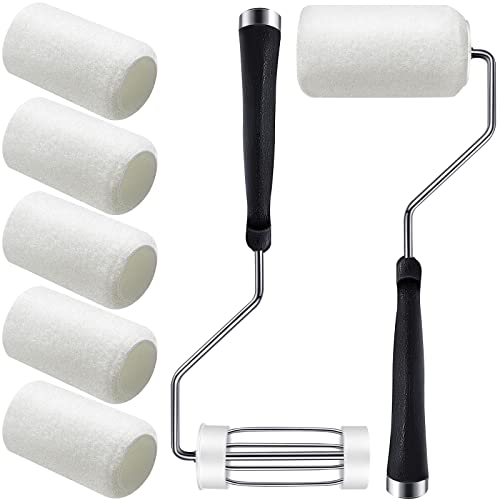
Tessco 2-Pack 4″ Roller Kit with Anti-Fatigue Handle

LemonRoad 18-Piece Cabinet Paint Set with Sponge Rollers
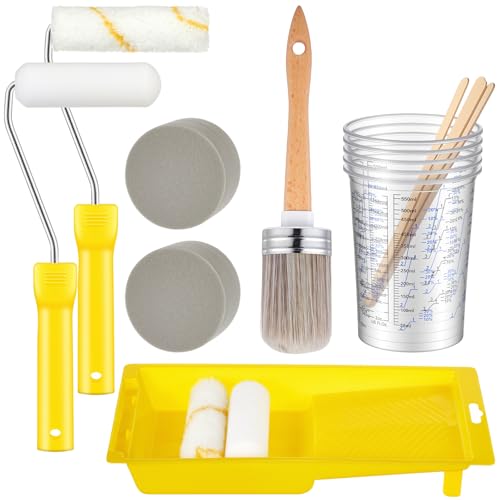
LemonRoad 18-Piece Cabinet Paint Set with Microfiber Rollers

LemonRoad 20-Piece Cabinet Painting Kit with Gloves

Wooster R564 9″ Contractor Roller Covers, 3/4″ Nap, 12-Pack
The Details Behind The Selections
The Purdy White Dove covers are a familiar name among painters for a reason: the woven fabric is tight enough to leave a clean, almost sprayed-looking finish on flat panels. At 6-1/2 inches long with a 1/2-inch nap (nap refers to the length of the roller fibers, which dictates how much paint the cover holds and how much texture it leaves), the size lands between trim work and full door coverage, which works well on shaker-style cabinet doors where you want a short, controllable roll.
Each cover slips onto a standard wire mini frame (a small wire-handled roller frame), and the two-pack format means you can dedicate one sleeve to primer and another to topcoat without a mid-project wash. If you have ever pulled fuzz out of a freshly painted cabinet door, the Woven fabric’s lint-free claim is the part to notice here.
Useful Touches
- Woven cover lays down a smooth, low-texture coat on flat panels
- Works with both latex and oil-based formulas, primers, stains, and clears
- Handcrafted construction tends to shed less than cheaper knit covers
- 6-1/2-inch length suits single cabinet doors without overloading the frame
Trade Offs
- Doesn’t include a frame, so you need a compatible mini roller handle on hand
- Only two sleeves, which can feel light for a full kitchen of doors
Right Fit For
Homeowners refinishing a handful of cabinet doors who already own a compatible mini frame and care more about a clean topcoat than raw coverage speed.
Skip It When
A full kitchen overhaul is on the schedule, since the LemonRoad 20-Piece Cabinet Painting Kit with Gloves comes with multiple roller frames, spare sleeves, and the trimmings for a larger run.
Most cabinet jobs end up touching walls, ceilings, or trim at the same time, which is the case this Pro Grade kit is built around. It pairs a 9-inch frame for broad surfaces with a 4-inch mini frame for cabinet faces, plus three brushes in a range of widths for corners and edges. The microfiber sleeves carry a 1/2-inch nap, which loads paint heavily but still leaves a controlled finish on smooth wood.
For a first-time cabinet painter, the appeal is straightforward: nothing gets sourced separately. Frames, covers, brushes, and a plastic tray all arrive together, and the included 4-inch roller gives you a usable tool for door panels on day one. Compared to the Purdy covers above, this set trades premium fabric feel for completeness.
A Few Highlights
- Two frame sizes cover both wall areas and cabinet panels in one kit
- Microfiber covers wash out and reuse, so leftovers don’t go to waste
- Three brush widths handle edges and recessed panel details
- Plastic tray and frames are ready to use straight from the package
Room For Improvement
- Microfiber can leave slight texture on fine cabinet finishes compared to a foam sleeve
- Brush quality is serviceable rather than premium, so heavy users may replace them later
Quick Facts
Whose Shelf It Belongs On
First-time DIYers tackling a kitchen refresh who want a single kit to handle both the cabinet doors and the walls behind them.
Look Elsewhere When
Cabinet-only refinishing is the focus, because the LemonRoad 18-Piece Cabinet Paint Set with Microfiber Rollers is designed around panel and door work rather than broad wall rolling.
This is the same Pro Grade microfiber sleeve as in the kit above, sold in a six-pack for people who already own a 9-inch frame. For cabinet projects, these covers earn their keep when you are rolling the wall areas surrounding the cabinets, the back of a pantry, or a full accent wall as part of the same job. On cabinet doors themselves, a 9-inch cover is too wide for most shaker or raised-panel layouts.
The microfiber holds paint evenly and the 1/2-inch nap is a balanced choice for walls that aren’t perfectly smooth. If your cabinet project is really a “cabinets plus everything around them” project, having a stack of these ready keeps the wall phase from bottlenecking.
Useful Strengths
- Six-pack format spreads cost per cover down for larger rooms
- Microfiber washes out cleanly and holds up across multiple sessions
- Compatible with any standard 9-inch roller frame
- Suitable for latex, oil-based paints, and stains
Points To Note
- 9-inch length is wider than most cabinet door panels, so door work still needs a smaller frame
- Microfiber nap can leave a touch of texture compared with foam on ultra-smooth finishes
Made For
Shoppers who already own a roller frame and want a budget-friendly sleeve refill for the wall and ceiling phases of a cabinet project.
Another Choice May Suit
For actual cabinet door rolling, the Purdy White Dove 6-1/2″ Mini Roller Replacements handle small panels with noticeably less texture.
Long cabinet runs punish the hand, which is where the Tessco kit earns its place. It comes with two 4-inch self-locking frames, a soft-grip handle designed to reduce hand fatigue, and a six-pack of replacement covers. The 4-inch width is the right size for shaker door panels, narrow cabinet sides, and any face-frame edge you need to roll close to.
The self-locking frame is a small detail that matters: covers pop on and off without the end caps that some other mini frames use, so swapping a spent sleeve for a fresh one mid-door is faster. For a kitchen with twenty-plus doors, that small convenience adds up.
Noteworthy Benefits
- Anti-fatigue soft-grip handle stays comfortable across many doors
- Two frames mean one can be soaking clean while the other stays loaded
- Six covers are enough to rotate between coats without rushing the wash step
- 4-inch size fits narrow door panels and face-frame edges
Honest Caveats
- Doesn’t include brushes for edges, so trim work needs a separate tool
- Covers are a basic knit, so expect some fiber compared to woven options
Feature Snapshot
Who Should Grab It
DIYers painting a full wall of upper and lower cabinets who want a small-format roller frame that won’t fight back over the course of an afternoon.
Reach For A Different Pick When
You need brushes and sponges in the same package, in which case the LemonRoad 18-Piece Cabinet Paint Set with Sponge Rollers is the more complete starter.
Foam rollers are a popular choice for cabinet doors because the dense foam leaves almost no texture, and the LemonRoad 18-piece set builds its whole approach around that idea. Inside, you get a 9.5-inch round brush for detail work, two round sponge applicators, four high-density foam mini rollers, two roller frames, a tray liner, four plastic mixing cups at 20 ounces each, and four mixing sticks.
For anyone intimidated by sourcing a dozen separate items, this kit is the “everything arrives together” path. The trade-off is that foam sleeves are single-task tools: great for smooth, flat panels, less forgiving on textured or MDF edges that want a touch of nap.
A Favorable Mix
- High-density foam leaves a near-spray finish on flat cabinet doors
- Mixing cups and sticks mean you can stage multiple batches for larger kitchens
- Tray liner simplifies cleanup at the end of the project
- Round sponge applicators reach inside profile edges that flat rollers miss
Less Ideal Details
- Foam sleeves don’t load as much paint as microfiber, so coverage takes more passes
- Foam tends to be single-use, so leftovers don’t carry over to future projects
Perfect Match For
First-time cabinet refinishers who want one box to open and follow from primer through final coat, especially on smooth flat-panel doors.
Where A Sibling Pick Shines
For textured melamine or rougher MDF doors, the LemonRoad 18-Piece Cabinet Paint Set with Microfiber Rollers offers nap-based coverage that grips uneven surfaces better.
The sibling version of the previous kit swaps the all-foam approach for a mixed sleeve lineup: two microfiber covers paired with two high-density foam sleeves, plus a 4-inch paint tray to match. The result is a kit that handles both the smooth, flat panels where foam shines and the slightly rougher cabinet surfaces where a touch of microfiber nap helps the paint grab.
If you have worked with cabinets before and know that not every door is perfectly flat, the mixed lineup keeps you from having to step away mid-project to grab different covers. Compared to the all-foam kit, the microfiber addition gives you more room to adapt.
Notable Upsides
- Microfiber and foam combination adapts to different door textures
- Two roller frames let you keep a clean sleeve staged for final coats
- Microfiber covers wash and reuse, which helps the kit stretch across multiple rooms
- 4-inch tray and roller size match common cabinet door dimensions
Potential Compromises
- Microfiber can leave faint stipple (a slight dotted texture from the roller fibers) on the smoothest finishes, which a foam-only kit avoids
- Only one round brush, so detailed edge work means buying extras for ornate doors
Spec Overview
Best Suited To
Mid-skill DIYers working on a mix of flat and slightly textured cabinet doors who want one kit that handles both without swapping brands halfway through.
Swap It Out When
Every door in the kitchen is a perfectly flat slab, since the LemonRoad 18-Piece Cabinet Paint Set with Sponge Rollers leans fully into foam for the smoothest result.
The 20-piece version of the LemonRoad cabinet lineup adds the small items that usually end up on a separate shopping list: nitrile gloves, a polish sponge block, plus the same roller frames, foam sleeves, brushes, tray liner, and mixing cups from the 18-piece kits. For a single weekend cabinet project, having the polish block in particular is a quiet time-saver when knocking down cured drips between coats.
Two roller frames and four high-density foam sponge heads support rolling flat panels without scrubbing a sleeve in the middle of a coat. The two round sponges handle profile edges and corners where a rigid roller would leave a line.
What Pays Off
- Gloves, polish block, and cups arrive in the same box, removing a second shopping trip
- Four foam heads allow color or coat rotation without immediate washing
- Round sponges reach the curved profiles on raised-panel doors
- Mixing cups at 20 ounces suit the smaller batches cabinet work usually requires
Worth Bearing In Mind
- All-foam roller setup is less ideal for heavily textured or worn cabinet surfaces
- Brush selection is limited to one round brush, so very ornate doors need extras
Feature Rundown
Who It Suits Best
Shoppers planning a full kitchen cabinet repaint who want a single bundle that covers primer through final coat, including the protective and finishing extras.
A Better Fit Elsewhere
If your project is a small powder-room vanity rather than a full kitchen, the LemonRoad 18-Piece Cabinet Paint Set with Sponge Rollers is the lighter, lower-cost option.
The Wooster R564 pack is a working contractor’s sleeve: twelve 9-inch covers at a 3/4-inch nap, built around a green double-thick polypropylene core that resists water, solvents, and cracking. For cabinet work, that longer nap is too aggressive for smooth door panels, but it earns its place when the project also includes a textured ceiling, a stucco-style backsplash wall, or a set of garage cabinets that need more paint loaded per pass.
For homeowners with one focused cabinet project, twelve heavy covers may be more than necessary, which is worth weighing against the value of having every cover pre-staged.
What Earns Its Place
- Twelve covers cover a full multi-day project without washing
- 3/4-inch nap loads paint heavily for rough or stippled surfaces
- Polypropylene core holds shape across repeated use and cleaning
- Made in the USA with a reputation for production-grade durability
Softer Spots
- 9-inch width is too large for most cabinet door panels
- 3/4-inch nap lays down too much texture for smooth cabinet finishes
Built With In Mind
Shoppers with a broad scope project, including cabinet boxes in a garage or workshop, plus a textured wall or ceiling, who want one sleeve order to handle every rough surface.
Not Your Match When
The focus is fine-finish interior cabinet doors, where the Purdy White Dove 6-1/2″ Mini Roller Replacements produce a cleaner result on smooth panels.
Picking The Right Roller Setup For Cabinet Work
Cabinet rolling rewards control over speed. A 4-inch frame fits the typical 11-to-15-inch shaker door panel without forcing you to drag paint across an edge, and a 1/2-inch nap or dense foam sleeve lays down enough material without leaving visible stipple. Brushes still matter: a quality 1- to 2-inch angled brush handles the inside corners of face-frame cabinets where a roller can’t reach.
Cabinet paint choice is a real factor, too. Latex enamel and waterborne alkyd formulas (water-based paints that dry to a hard, furniture-like finish) both behave well with foam or short-nap microfiber, while high-build oil paints can foam up a cheap sleeve. Sleeve material also matters: woven fabric sheds the least lint, microfiber balances pickup and reuse, and foam gives the smoothest look but wears out fastest. The right combination depends on how many doors you have, how smooth they are, and how often you want to wash covers instead of swapping them.
A Few Things To Weigh Before You Add To Cart
Pitfalls Shoppers Hit
The most common cabinet roller mistake is buying a wall-sized 9-inch cover and forcing it onto door panels. The result is paint pushed up against face-frame edges and lap marks where the sleeve runs dry mid-panel. Another easy miss is treating microfiber and foam as interchangeable: microfiber grips textured surfaces, foam levels out smooth ones, and picking the wrong one for your door type shows up in the final coat.
Where The Extra Money Goes
Higher-priced kits tend to include woven lint-free sleeves, multiple roller frames, and matching brushes, while basic kits focus on refill sleeves alone. The premium tier earns its keep on large kitchens where cover washing time becomes the bottleneck. For a single vanity or a small set of upper cabinets, the mid-range kits cover the same finish without the extra sleeves you would not use.
Frequently Asked Questions
What size roller works best for cabinet doors?
A 4-inch mini roller is the most common cabinet door size because it fits inside a standard shaker panel without rolling over the edges. Smaller 6-inch rollers also work for narrower doors, while 9-inch sleeves are best reserved for the wall and ceiling phases of the same project.
Are foam or microfiber rollers better for cabinets?
Foam rollers lay down the smoothest, lowest-texture finish on flat cabinet doors, while microfiber sleeves grip slightly rougher or factory-finished surfaces with more paint per pass. For most DIY kitchens with smooth panels, high-density foam is the safer pick.
Can the same roller be used for primer and paint?
Yes, as long as the cover is thoroughly washed and dried between uses. Many painters keep a dedicated sleeve for primer to avoid cross-contamination, especially when switching from oil-based primer to a water-based topcoat.
How many roller covers are needed for a full kitchen of cabinets?
A typical kitchen of 20 to 30 doors uses three to five covers per coat when rolling, since covers wear out and load up with dried paint over time. Buying a kit with at least four sleeves avoids mid-project washing breaks.
Do cabinet rollers work on textured or melamine surfaces?
Textured melamine and rougher MDF benefit from a short microfiber nap, around 1/4 to 1/2 inch, which grips the surface better than foam. Foam tends to skate over textured melamine, so sleeve choice matters as much as the paint itself.




