


A roof nail gun is the difference between a shingle job that drags on and one that flows. The right tool sinks fasteners flush, keeps pace with the coil, and saves your wrist when the deck stretches longer than expected. This list mixes corded and cordless options for light trim work, plus serious pneumatic coil nailers built for asphalt shingle tear-offs and full re-roofs. Most picks need a compressor, while a couple run on house current or battery, which is a real plus for quick interior projects. Read on for seven solid choices that cover weekend repairs, pro roofing crews, and everything in between.
The Leading Options At A Glance

Batavia 2-in-1 Electric Staple Gun Brad Nailer 18 Gauge

BATAVIA 2-in-1 Cordless Brad Nailer & Stapler Kit

Metabo HPT NV45AB2 Pneumatic Roofing Nailer

Makita AN454-R 1-3/4 in. Coil Roofing Nailer (Renewed)

BHTOP CN45N 15 Degree Coil Roofing Nailer
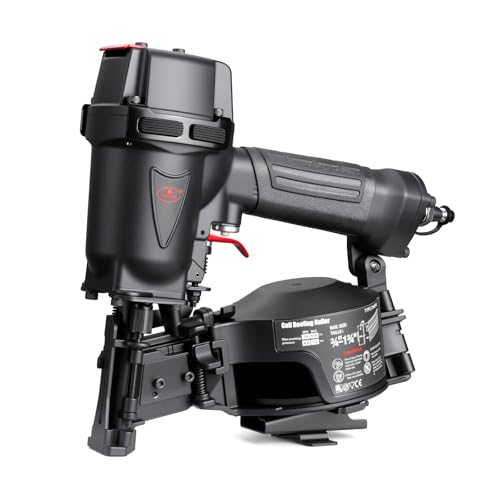
AEROPRO 15 Degree Coil Roofing Nailer

toolant Pneumatic Roofing Coil Nailer 15 Degree
Taking A Closer Look At The Options
Roofers working overhead reach for a compressor-fed coil nailer, but for everything that is not shingles, the Batavia 2-in-1 electric staple gun pulls double duty without dragging an air hose around the house. The 120V corded driver fires 18-gauge brads from 5/8 inch up to 1-1/4 inch and switches to 1/4-inch narrow crown staples for upholstery, picture framing, and pet-house builds. You simply plug it in, drop in the fasteners, and pull the trigger.
It comes with 200 staples and 800 brads, which is enough to finish a chair reupholstering or several small craft projects before restocking. Owners commonly report that the cord is long enough to span a living room without an extension, and the weight stays manageable for overhead tasks like tacking insulation board in a garage. The honest read is this is a household repair tool, not a roof tool, but it covers more ground than a single-purpose stapler would.
Good Reasons To Consider
- Switches between brad nails and staples with a quick magazine change.
- No compressor, hose, or regulator required, so setup takes seconds.
- Comes with a generous starter pack of 800 brads and 200 staples.
- Handles wood, leather, fabric, and thin paneling without bogging down.
- Corded power means consistent firing without battery fade mid-project.
Worth Noting
- Not designed for asphalt shingles, sheathing, or any roof fastening.
- Limited to fasteners under 1-1/4 inch, so thicker trim is off the table.
Who It Suits Best
DIYers tackling upholstery, crafts, and light trim who do not want to buy a compressor just to drive a few brads.
A Better Fit Elsewhere
Anyone reshingling a roof should skip this and reach for the Metabo HPT NV45AB2 instead, which is built for that workload.
The cordless sibling to the previous Batavia trades the wall plug for a 4V lithium-ion pack, which is a small battery that suits short bursts rather than marathon runs. The bottom-loading magazine is the quiet win here, since adding brads or staples means flipping the tool over rather than fumbling at the front. You also get 1000 staples and 1000 brads in the box, double the previous kit, so a Saturday of small projects goes by without a hardware store stop.
Fabric, paper, carpet underlayment, leather, foam, and softwood are all fair game, which makes this a natural fit for craft rooms, small upholstery jobs, and decorative trim. For most home workshops, the 4V platform is enough to finish a headboard or a couple of picture frames before needing a charge. Where it falls short is any project that asks for more than 1 inch of penetration or any kind of roofing work, so the honest framing is cordless convenience over raw power.
Useful Highlights
- Cordless design means no hose to trip over or extension cord to manage.
- 1000 staples and 1000 brads included, which covers several small projects.
- Bottom-loading magazine makes refill changes fast and intuitive.
- Light enough for overhead work like stapling fabric to ceiling-mounted frames.
Trade Offs
- 4V battery limits cycle counts before recharging, so heavy sessions slow down.
- Not rated for shingles, sheathing, or any exterior roofing application.
- Small fastener range compared to 18-gauge pneumatic brad nailers.
Made For
Crafters, decorators, and homeowners doing short bursts of fabric, trim, and light repair work away from a compressor.
Consider Something Else When
Roofers or remodelers running long fastening sessions will find the corded Batavia 2-in-1 electric stapler a steadier pick.
When the deck is open and the shingles are stacked, the Metabo HPT NV45AB2 is the kind of tool that earns its place on a roofer’s belt. It runs on 70 to 120 PSI from a standard pancake or hot-dog compressor and fires up to 10 nails per second, which translates to moving across a 30-square roof in a fraction of the time a hand-nailed job would take. The 16-degree magazine angle matches the collated roofing nail coils that most yards stock, so sourcing fasteners stays simple.
Tool-less depth adjustment sits right at the nose, which lets you dial in flush driving without walking down to the truck for an Allen key. The grip and balance tend to suit extended use, and the side-load canister feeds coils smoothly when the operator keeps a steady pace. One thing worth flagging is that a reliable compressor is mandatory, and on a 2-gallon pancake the cycle time may frustrate a roofer used to a larger tank.
Key Advantages
- Fires up to 10 nails per second, which keeps shingle pace moving.
- Tool-less depth dial at the nose for quick flush adjustment on the fly.
- Accepts standard 16-degree collated roofing coils from major brands.
- Side-load canister design reduces reload fumbles on a sloped deck.
Things To Consider
- Requires a compressor capable of 70 to 120 PSI sustained output.
- Heavier than battery-powered alternatives, which adds fatigue over a full day.
Best Suited To
Roofing crews and experienced DIYers running full re-shingle jobs with a compressor already on site.
Quick Specs
Not Your Match When
Homeowners with no compressor who only need occasional repairs should look at the cordless BATAVIA kit instead.
The Makita AN454-R is the renewed version of Makita’s well-regarded 1-3/4 inch coil roofing nailer, which is a chance to get pro-grade hardware for less than a new unit. The aluminum housing keeps the tool down to about 5.2 pounds, which on a ladder is a real advantage when you are holding an armful of shingle bundles. A built-in magnet at the nose ensures the last nail in the coil always gets driven, so you do not lose a fastener to a missed trigger pull.
Carbide inserts at the nose resist wear from thousands of impacts, and the one-step open canister speeds up coil swaps. Renewed tools may show light cosmetic wear but are checked for function, which fits a contractor who cares more about performance than shelf appearance. The honest read is you get most of what a new Makita offers, with the trade-off that warranty terms are typically shorter than a fresh-from-factory model.
A Few Highlights
- Aluminum body trims weight to 5.2 pounds, easing ladder fatigue.
- Magnet at nose ensures the final nail in a coil gets driven cleanly.
- Carbide nose inserts hold up under heavy daily use.
- One-step open canister simplifies coil changes mid-job.
Small Caveats
- Renewed status means a shorter factory warranty than new tools.
- Cosmetic blemishes are possible on the housing or grip.
Perfect Match For
Roofers who want Makita-grade ergonomics and durability without paying full retail for a brand-new tool.
Look Elsewhere When
Anyone needing a brand-new factory warranty should pick up the Metabo HPT NV45AB2 instead.
The BHTOP CN45N uses a moving cylinder engine, which is the same internal mechanism found in many higher-priced roofing guns, and that translates into lower felt recoil at the handle. The 15-degree magazine takes collated roofing nails from 3/4 inch up to 1-3/4 inch, so the tool covers everything from a thin underlayment layer to a thick cedar shingle job. The 120-nail coil capacity is generous, meaning you reload less and drive more on each ladder position.
Asphalt shingles, cedar shakes, roof sheathing, and even crate assembly all fall within its range, which makes this a flexible pick for someone whose workload spans more than shingles. Owners commonly report that the depth adjustment holds its setting well across temperature changes, which matters when a roof deck heats up in afternoon sun. The trade-off is the brand is less established than the legacy names, so long-term parts availability can be a question for heavy commercial users.
Notable Upsides
- Moving cylinder engine keeps recoil low for better control on ladders.
- Wide fastener range covers underlayment, shingles, and sheathing.
- 120-nail coil capacity means fewer trips down to the truck.
- Tool-less depth dial speeds up flush adjustment during shingle work.
Honest Caveats
- Brand recognition is lower than legacy names, which may worry some contractors.
- Needs a compressor in the 70 to 120 PSI range to operate at full speed.
Best Suited To
Roofers and remodelers who want a multi-material pneumatic nailer for shingles, sheathing, and side jobs like crate work.
Swap It Out When
Brand-conscious pros who prefer a long-established name should pick the Makita AN454-R instead.
At 5.5 pounds, the AEROPRO 15 Degree Coil Roofing Nailer is one of the lighter pneumatic roofing tools on the market, which matters when you are spending eight hours a day with a gun in your hand. The cylinder valve drive fires up to three nails per second, which is a measured pace suited to clean, accurate driving rather than pure speed. The 15-degree magazine matches standard collated roofing nails from 3/4 inch to 1-3/4 inch, giving wide flexibility across shingle types.
Tool-free depth adjustment is accessible at the nose, and the improved nail feeder is designed to reduce misfires and jams that slow down a crew. The 120-nail high-capacity magazine keeps reloading interruptions to a minimum. One thing worth considering is the firing rate is lower than some competitors, so on huge tear-off projects you may feel the pace difference compared to the Metabo HPT NV45AB2.
Everyday Advantages
- 5.5 pound weight is among the lightest in the pneumatic roofing category.
- Tool-free depth dial lets you tune driving depth without extra tools.
- Improved nail feeder design reduces jams on long runs.
- 120-nail magazine capacity supports extended work before reload.
Points To Keep In Mind
- Three nails per second is slower than top-tier pneumatic roofing guns.
- Still requires a compressor to operate, adding gear to the truck.
Who Should Grab It
Roofers prioritizing reduced fatigue on long days, especially when working off ladders or on steeper pitches.
Reach For A Different Pick When
Crews running maximum production speed on large commercial roofs will be happier with the Metabo HPT NV45AB2.
The toolant Pneumatic Roofing Coil Nailer rounds out the list with a heavy-duty build aimed at contractors who run their tools across many job sites. The 15-degree magazine accepts 3/4 inch to 1-3/4 inch collated roofing nails, and the 120-nail coil keeps reloads infrequent. Operating between 70 and 120 PSI, it pairs with the same compressors most roofing trucks already carry, so integrating it into an existing setup is straightforward.
Depth adjustment is tool-free, and the firing action is tuned for clean, flush sinks without splintering shingle surfaces. Owners commonly report that the tool feels balanced in hand despite its durable construction, which helps reduce end-of-day wrist strain. The trade-off is this is a compressor-only tool with no cordless fallback, so for one-off repairs the cordless BATAVIA kit may actually be a more convenient choice.
What Stands Out
- Compatible with widely available 15-degree collated roofing nails.
- 120-nail coil capacity minimizes trips down to the truck.
- Tool-free depth adjustment speeds up shingle flush calibration.
- Balanced feel in hand helps reduce operator fatigue across long days.
A Few Limitations
- Pneumatic only, so a compressor is required to operate.
- Less brand recognition than legacy names, which can matter at resale.
Feature Snapshot
Whose Shelf It Belongs On
Roofing contractors who value durable construction and standard nail compatibility over brand prestige.
Where A Sibling Pick Shines
For lighter weight and lower recoil during all-day ladder work, the AEROPRO 15 Degree Coil Roofing Nailer is the smarter pick.
What To Weigh Before Choosing A Roofing Fastener Tool
A roofing nailer that drives too shallow will leave nails proud above the shingle, and one that over-drives cuts through the mat, both of which shorten roof life. Before choosing, match the tool to the fastener and the substrate, not just the brand name on the box.
Power Source And Compressor Match
Corded electric and cordless brad nailers handle trim, upholstery, and small repairs without an air compressor. For shingle work, pneumatic coil nailers are still the standard, and they need a compressor that can sustain 70 to 120 PSI without constant cycling. Pairing a hungry nailer with a small pancake compressor leads to slow recovery and uneven driving pressure.
Roofer note: a hot-dog or wheelbarrow compressor with at least 4 gallons of reserve tends to keep pace with a 10-nail-per-second gun on a typical residential re-roof. A compact pancake works for short patch jobs, but it will not keep up on a 25-square tear-off.
Nail Type And Collation Angle
Most asphalt shingle nailers use 15-degree or 16-degree wire-collated coils, and the two are not interchangeable between guns. Galvanized roofing nails are the common choice for exterior shingle work because they resist rust. Using the wrong collation angle in the wrong gun means misfires, jams, and the kind of downtime no roofer wants on a hot day.
For underlayment and sheathing, the same coil gun often handles shorter nail lengths, but for cedar shakes or thick synthetic shingles you may need to step up to 1-3/4 inch fasteners. Confirming the gun’s nail length range before you buy prevents the awkward moment of opening a box of nails your tool cannot accept.
Ergonomics And Roof-Day Reality
Roof work is overhead, off-angle, and often on a ladder, so tool weight and balance matter as much as firing speed. A one-pound difference between two coil nailers becomes noticeable by hour four on a steep pitch. Lighter tools like the AEROPRO at 5.5 pounds reduce wrist strain, while heavier models often offer more durable internals for daily commercial use.
Depth adjustment accessibility is another quiet factor. Tool-less dials at the nose save time when switching between courses of shingle or moving from a thick ridge cap to a thin starter strip, and they keep you from climbing down to grab an Allen wrench every time you change materials.
Key Considerations Across These Picks
Common Buying Slip Ups
The most common mistake is buying a roofing coil nailer for light household tasks like upholstery or trim, which leads to frustration since the gun is tuned for thicker nails and pneumatic pressure. The reverse is just as costly, picking up a brad nailer or stapler thinking it will handle shingles, only to find the fasteners do not hold.
Another trap is underestimating compressor requirements. A coil nailer marketed for shingle work still needs steady airflow, and pairing one with a too-small compressor leads to misfires and uneven depth. Match the tool to the substrate, and match the compressor to the tool, before pulling the trigger on a purchase.
What The Higher Tier Buys
Premium-tier roofing nailers typically bring faster cycle rates, longer internal lifespans, and refined depth adjustment systems that hold calibration across thousands of cycles. They also tend to use higher-grade seals and O-rings, which matters when the tool sits in a dusty truck bed between jobs. The case for spending up is strongest for full-time roofers running daily production, where a jam or a slow-firing gun costs real money.
For weekend warriors or part-time remodelers, a mid-tier pneumatic nailer like the BHTOP CN45N or the AEROPRO often delivers the same shingle-ready performance at a friendlier cost. The honest read is paying more pays off when uptime matters, and adds little when the tool comes out of the case a few times a year.
Frequently Asked Questions
What PSI do I need to run a roofing nailer?
Most pneumatic roofing nailers operate between 70 and 120 PSI, which is within the range of a standard jobsite compressor. Always check the manufacturer’s recommended pressure for the specific tool you choose.
Can a brad nailer or stapler handle asphalt shingles?
No. Brad nails and standard staples are too short and thin to hold asphalt shingles under wind load. Roofing coil nailers drive galvanized roofing nails specifically engineered for shingle fastening.
Are cordless roofing nailers strong enough for full re-roofs?
Cordless roofing nailers exist but are still catching up to pneumatic models in cycle rate and consistent depth. For a full residential re-roof, pneumatic coil nailers remain the more dependable choice.
What collation angle should I choose?
15-degree and 16-degree collated roofing nails are both widely available and correspond to specific nailers. The angle is fixed by the tool’s magazine, so confirm which collation your nailer accepts before buying nails.
How long does a pneumatic roofing nailer typically last?
With regular oiling and proper storage, a quality pneumatic roofing nailer can run for several hundred thousand cycles before major service. Daily users report years of reliable service from well-maintained tools.




