


Anyone who has wrestled with a stack of denim or a roll of burlap knows the limits of ordinary scissors. A proper rotary scissor turns hours of hand cramping into a smooth, guided pass, and the right pick depends on whether you cut quilting cotton, carpet padding, or upholstery leather. This roundup covers seven solid options across manual and electric styles, so you can match a tool to the material you actually work with.
The Main Contenders

Westcott 8-Inch Titanium Bonded Straight Scissors (4-Pack)
OLFA 45mm Tungsten Tool Steel Rotary Blades (10-Pack)

BAOSHISHAN Electric Rotary Fabric Cutter 65mm (110V)
OLFA 60mm Tungsten Tool Steel Rotary Blades (10-Pack)

Elan 45mm Rotary Cutter for Fabric, Green

CGOLDENWALL Electric Rotary Fabric Carpet Cutter (110V)
VLOXO Cordless Electric Rotary Scissors Power Fabric Cutter
A Breakdown Of The Leading Choices
Straight-edge scissors, not rotary wheels, anchor this opening slot because many crafters reach for a familiar pair of 8-inch shears before they ever consider a rolling blade. The Westcott set ships four pairs with titanium-bonded blades, which is a surface treatment that hardens the steel edge for longer-lasting sharpness than untreated stainless. Soft-grip handles reduce pinch during long trimming sessions in a busy classroom or home studio.
You likely already own one good pair of scissors, so the value here is the bulk count. Spreading four pairs across a craft table means students or kids each get their own, and you stop hoarding the lone sharp pair. Compared to the electric models further down this list, the Westcott set is purely manual, which keeps the price low and the maintenance to nothing more than occasional blade wiping.
What Works In Its Favor
- Four-pair bundle suits shared workspaces, classrooms, and craft nights.
- Titanium-bonded edge resists dulling longer than plain stainless in everyday paper and fabric trimming.
- Soft, ergonomic handle reduces hand fatigue during repeat cuts.
- 8-inch length handles long sweeping cuts on craft paper and felt.
Things To Weigh Up
- Straight blades cannot roll through multiple fabric layers the way a rotary wheel can.
- Gray and yellow color scheme is fixed; no alternative finish to match a specific décor.
Right Fit For
Classroom teachers, parents, and home crafters who want a dependable multipack of general-purpose scissors for paper, felt, and light fabric projects.
Skip It When
You mostly cut stacked quilting cotton or leather, in which case the OLFA 45mm Tungsten Tool Steel Rotary Blades deliver a cleaner wheel cut.
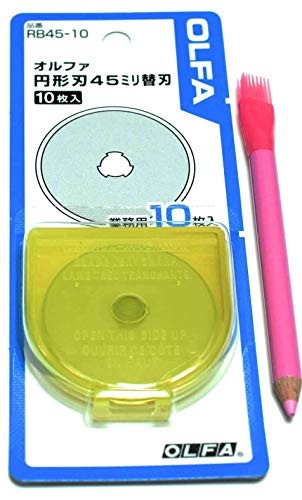
Refill blades are the unsung consumable of any rotary cutting setup, and this OLFA pack delivers ten 45mm circles sized to fit the brand’s popular hobby cutter. Tungsten tool steel holds an edge through hours of fabric passes, and a marking pen comes bundled so you can lay out pattern lines before each cut. You are buying replacements here, not a handle, so existing OLFA owners will feel right at home.
For quilters cutting cotton, the 45mm diameter (about 1.77 inches) traces gentle curves without the wobble of larger wheels. Compared to the Westcott straight scissors in slot one, this is a genuine rotary cutter, but only the blade, so plan on pairing it with a compatible OLFA handle. You may find the small circumference slightly slower on long straight edges than the 60mm version covered next.
Everyday Advantages
- Ten-blade count keeps a serious quilter cutting for months without reordering.
- Tungsten tool steel construction resists dulling on layered cotton.
- 45mm wheel traces tight curves on appliqué and patchwork.
- Included marking pen supports pattern transfer without a separate purchase.
Trade Offs
- Requires a compatible OLFA rotary handle, sold separately.
- Blades are consumables, so disposal of used circles needs a small sharps plan.
Made For
Quilters and sewists who already own an OLFA 45mm handle and need a steady supply of fresh blades for cotton, paper, and thin film work.
Consider Something Else When
You cut primarily thick stacks of denim or leather, where the BAOSHISHAN Electric Rotary Fabric Cutter applies powered pressure that a manual wheel cannot match.
When fabric stacks push past a few millimeters, a manual rotary wheel starts to feel like pushing a knife through plywood. The BAOSHISHAN 65mm electric cutter uses a powered blade head and a wide cutting platform, so the operator guides the tool along a straightedge rather than supplying the cutting force. The included housing keeps fingers away from the spinning disk, and a built-in whetstone resharpens the blade with a three-second press.
You trade portability for raw cutting power. The 110V cord tethers you to an outlet, which is fine in a drapery workshop or upholstery bench but limiting on a job site. Compared to the OLFA 45mm blades in slot two, this tool does in one pass what a manual wheel takes many slow rolls to manage, especially through leather and carpet. For most home crafters, the throughput is more than the daily workload requires.
Useful Touches
- Cuts up to roughly 27mm of layered fabric in a single guided pass.
- All-inclusive plastic shell shields hands from the spinning blade.
- Built-in sharpening stone refreshes the edge without disassembly.
- LED work light illuminates the cut line in dim workshops.
Honest Caveats
- 110V corded design limits movement around large cutting tables.
- Heavier than a manual wheel, which can fatigue smaller operators.
- Best suited to stacks of material; less useful for single-layer precision work.
Key Product Details
Best Suited To
Upholstery shops, drapery workrooms, and small production spaces that push through stacked cotton, leather, or carpet daily.
Look Elsewhere When
You work on ladders or at customer locations without reliable power, where the VLOXO Cordless Electric Rotary Scissors deliver untethered cutting.
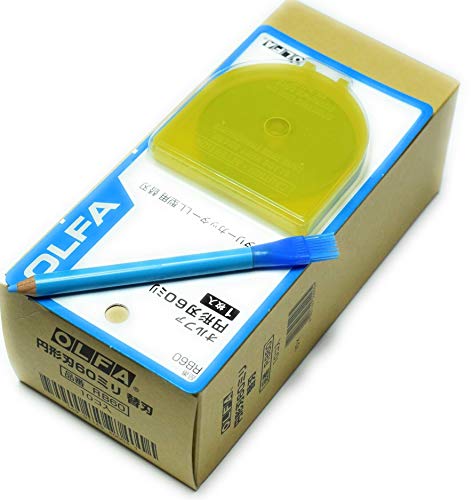
The 60mm sibling to the 45mm pack addresses the main weakness of smaller rotary wheels, which is the slow travel on long straight edges. Each blade is a 60mm tungsten tool steel circle (about 2.36 inches), and ten of them ship with a marking pen for pattern transfer. You still need to bring a compatible 60mm OLFA handle to the table, but most owners upgrading from a starter cutter already have one.
On heavier cotton or multiple layers of fleece, the wider wheel helps the blade track straighter with less wrist drift. Compared to the 45mm pack in slot two, this set sacrifices some curve precision for faster straight-line work, so the choice between them comes down to whether you cut more blocks or more binding strips. In a busy home workshop, ten blades keep the cutter rolling through long quilting sessions without interruption.
The Value In It
- 60mm wheel covers more ground per pass than smaller rotary blades.
- Tungsten tool steel edge holds sharpness across many projects.
- Ten-blade count suits quilters who change blades every few weeks.
- Marking pen bundled in the same package as the blades.
Points To Note
- Larger wheel radius slightly limits tight curve work compared to 45mm.
- Replacement blades must be matched to a 60mm OLFA handle.
Who Will Love This
Quilters and pattern makers who cut mostly straight strips across broad fabric and want fewer blade swaps between sessions.
Another Choice May Suit
You mostly cut tight appliqué curves, in which case the 45mm OLFA pack traced in slot two handles intricate work with less wandering.
For a first-time rotary cutter, the Elan 45mm model pairs an SKS-7 Japanese steel blade with a built-in safety lock, which is a button that holds the wheel still between cuts. The ergonomic, non-slip grip keeps the tool planted in the hand during long passes, and the 45mm diameter is a versatile size for general sewing. The cutter ships as a complete tool, not a refill, so beginners can start cutting without hunting down a handle.
Safety matters most when children share a craft room, and the lock does double duty by preventing accidental engagement in a drawer. Compared to the OLFA 45mm refill pack in slot two, this is the full handle-and-wheel package, just with one blade instead of ten. For most sewing beginners, that one blade is plenty to learn on, and the low commitment feels right for a first purchase.
Everyday Wins
- Built-in safety lock keeps the blade stationary between cuts.
- SKS-7 Japanese steel edge cuts clean through cotton and light fabric.
- Non-slip ergonomic grip reduces hand fatigue on long seams.
- Complete starter tool, no separate handle purchase required.
Less Ideal Details
- Single included blade means a replacement must be sourced when it dulls.
- Body is bright green, which may not match a neutral craft room aesthetic.
Feature Snapshot
Perfect Match For
New sewists, parents teaching kids to cut fabric, and hobby quilters who want a ready-to-use rotary cutter with a built-in safety lock.
Reach For A Different Pick When
You cut thick upholstery or carpet, where the CGOLDENWALL Electric Rotary Fabric Carpet Cutter provides powered, high-speed cutting.
When the material gets genuinely industrial, a 70mm octagonal blade spinning at roughly 2400 RPM slices through what other cutters stall on. The CGOLDENWALL electric cutter pushes that blade through up to 25mm of carpet or leather in one pass, with a built-in sharpening stone for quick edge refresh between jobs. A 110V mains feed keeps the motor at full power for extended production runs.
You will feel the difference the first time you trim a roll of carpet underlay, where manual shears slow to a crawl. Compared to the BAOSHISHAN 65mm cutter in slot three, this one uses a slightly larger octagonal blade and a higher stated speed, which is the kind of detail that matters only on heavy commercial materials. Most home crafters will find the throughput far beyond their weekly output, and the corded power requirement ties you to a wall outlet.
A Few Highlights
- 70mm octagonal blade handles dense carpet padding and stacked leather.
- Built-in sharpening stone restores the edge between jobs.
- Industrial-grade motor sustains 2400 RPM through long cuts.
Practical Considerations
- Corded 110V design restricts movement around large work areas.
- Sharpening stone requires a short pre-use routine to seat a fresh edge.
Quick Facts
Built With In Mind
Carpet fitters, leather workshops, and industrial sewing rooms that need sustained powered cutting through heavy materials.
Swap It Out When
You work on ladders, scaffolds, or anywhere power access is unreliable, in which case the VLOXO Cordless Electric Rotary Scissors cover the same materials without a plug.
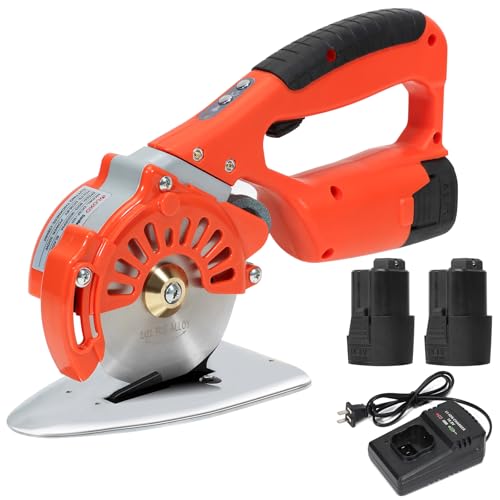
Cordless rotary cutting is the answer to the workshop problem of dragging extension cords across the floor. The VLOXO ships with two batteries, so you can swap in a fresh pack when the first runs dry and keep cutting without a charging break. The electric drive replaces the manual wrist effort of a hand-held wheel, and the high-standard cutting head aims at precise lines for pattern work.
You may find the cordless body slightly heavier than a manual 45mm wheel, which is the trade for the powered assist. Compared to the BAOSHISHAN and CGOLDENWALL corded cutters in slots three and six, this one trades throughput for mobility, fitting the contractor who trims carpet on site or the upholsterer who works at the customer’s location. For quiet home use, the lack of a tether is the main draw.
What Pays Off
- Two batteries included for continuous cutting without charging downtime.
- Cordless design suits ladders, scaffolds, and on-site trimming.
- Powered drive reduces wrist and arm fatigue on long sessions.
Some Limits To Know
- Run time per battery is finite, so heavy workloads need swap discipline.
- Heavier than a manual wheel, which may slow detailed curve work.
Feature Rundown
Whose Shelf It Belongs On
Mobile installers, on-site upholsterers, and crafters who need portable power for trimming carpet, leather, or heavy fabric away from a workbench.
Where A Sibling Pick Shines
You work from a fixed workshop with constant power and want the strongest sustained cuts, in which case the CGOLDENWALL Electric Rotary Fabric Carpet Cutter offers wired muscle.
Picking Rotary Scissors That Match the Job
The right rotary scissor depends on what you cut, how often, and where the cutting happens. Start with the material: cotton, fleece, and felt give way to manual wheels, while carpet, leather, and stacked upholstery want powered torque. Next, weigh ergonomics: a heavy industrial cutter saves time on production runs but punishes a small hand during a single Saturday project. Look at blade material too, since tungsten tool steel and Japanese SKS-7 hold edges longer than untreated stainless, which means fewer blade swaps and cleaner seams over months of use. If you change projects often, owning a starter manual cutter and a powered backup covers most situations without overcommitting budget to a single tool.
Wheel Size and Cut Shape
The 45mm wheel traces tight appliqué curves with control, while the 60mm version glides straighter across long fabric stretches. Pick the smaller diameter for patchwork circles and intricate templates, and the larger one for bias strips and yardage cuts.
Power Source and Mobility
Corded electric cutters deliver constant torque for heavy production, but the cord limits reach. Cordless models with swappable batteries free you to cut at a customer’s site or on a ladder, at the cost of run time per charge. For occasional home use, a manual rotary wheel with replaceable blades often covers the workload without batteries or outlets.
Safety and Maintenance
A built-in blade lock protects curious hands between cuts, and a sharpening stone on electric models keeps the edge fresh without disassembly. Manual blades still need periodic replacement, so factor the cost of refill packs like the OLFA 10-blade sets into long-term ownership.
Key Considerations Across These Picks
Mistakes Worth Dodging
First-timers often grab a 28mm or 18mm craft blade thinking smaller equals safer, only to find the wheel stalls on layered fabric. A 45mm wheel balances safety and cutting power for most sewing tasks, and the lock button on the Elan model handles the rest. Another common slip is buying a powered cutter for occasional craft use, then storing it in a closet because the cord feels like a hassle, which is the exact scenario the VLOXO cordless design addresses.
What The Higher Tier Buys
Stepping up from a manual OLFA refill pack to a powered CGOLDENWALL or BAOSHISHAN cutter trades quiet simplicity for raw throughput. You pay for a motor, a housing, and a sharpening stone, and you get cuts that would take a manual wheel dozens of passes. For a production shop cutting carpet padding or upholstery daily, the upgrade is the only way to hit a reasonable pace. For a home quilter cutting a few layers of cotton a month, the manual tool is the honest fit.




