


Turning a rough live-edge slab into a usable table top takes a router built to chew through real material, not toy through it. The tools below span dedicated flattening bits, full CNC bit kits, and sled-based systems that bring precision to hobby and pro shops alike. You’ll find options for first-time slab workers, weekend woodworkers, and small production shops that need repeatable results across multiple pieces.
The Lineup, Simplified

IDC Woodcraft 9-Piece CNC Router Bit Set with 1/4″ Shank

BINSTAK 1/4″ Spoilboard Surfacing Router Bit, 1-3/8″ Cut

BINSTAK 1/2″ Spoilboard Surfacing Router Bit, 3″ Cut
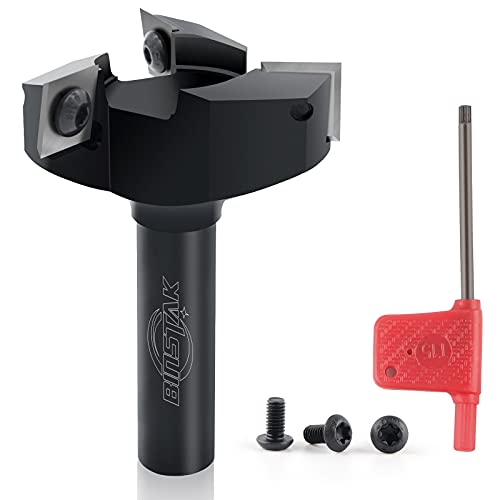
BINSTAK 1/2″ Slab Flattening Bit, 2″ Cut Diameter

Amana Tool 45525 Spoilboard Surfacing 3-Flute Bit

SpeTool S03003 Slab Flattening Mill Router Sled
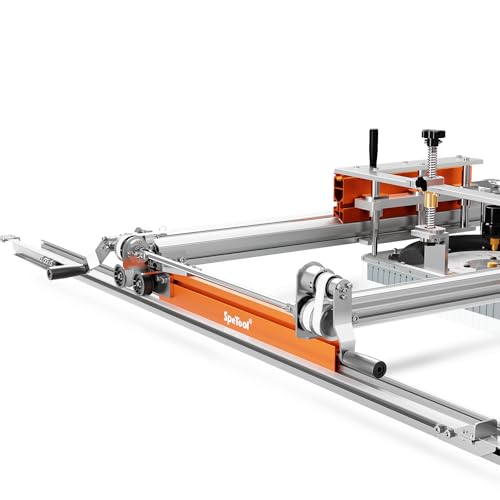
SpeTool Easy Manual Driver for Slab Flattening Mill

SpeTool 1450mm Extending Linear Rails for Sled
The Picks, Examined More Closely
Starting a CNC setup means facing a wall of bit options, and IDC Woodcraft’s nine-piece collection trims that decision down to a single box. The set ships with a 1/4-inch shank profile bit, several carving shapes, a dedicated surfacing bit, and two reducing collets, so you can swap between detail work and flattening without buying extras.
The bits use solid carbide (a tungsten-carbide steel blend known for holding a sharp edge through repeated cuts), which holds up across softwoods, hardwoods, and plywood. Compared to the dedicated surfacing options further down this list, this kit is a generalist, not a specialist, but for a hobbyist who wants one purchase to cover V-carving, edge profiling, and spoilboard work, it covers the bases.
Real Benefits
- Nine bits plus two collets replace a stack of single-purpose purchases
- Solid carbide construction extends edge life across common sheet goods
- Reducing collets let you run 1/8-inch shank bits in a 1/4-inch router
- Surfacing bit handles basic spoilboard truing for hobby CNC owners
Things To Consider
- The included surfacing bit is narrower than dedicated slab-flattening bits, so passes take longer on wide material
- Insert-style replacement blades aren’t a feature here; once a profile bit dulls, the whole tool is replaced
Feature Snapshot
Who It Suits Best
First-time CNC owners who want one boxed set to handle carving, edging, and the occasional spoilboard cleanup without sourcing bits individually.
Where Another Pick Suits Better
Shops focused on flattening full-size live-edge slabs should reach for the BINSTAK 1/2″ Spoilboard Surfacing Router Bit, 3″ Cut, which clears material much faster per pass.
Smaller CNC routers can’t always accept a 1/2-inch shank, and that’s exactly the gap this BINSTAK bit fills. The 1/4-inch shank pairs with a 1-3/8-inch cutting diameter, giving hobby machines enough reach to skim spoilboards and trim small slabs without bogging down the spindle.
The 2+2 insert design places two cutting wings on top and two on the bottom, which balances load on the bit during sideways passes. Each 12mm carbide insert rotates to expose a fresh edge, so the tool stays productive long after a solid bit would have dulled. For light-duty flattening on a desktop CNC, this is a sensible match.
Real-World Strengths
- 2+2 flute layout keeps cuts balanced, reducing chatter on lighter machines
- Indexable carbide inserts (rotatable square cutters that can be flipped to a fresh edge) extend working life between replacements
- 1/4-inch shank opens up the bit to a wider range of hobby CNC spindles
Worth Noting
- The 1-3/8-inch cut diameter means more passes across wide slabs, which adds time
- Replacement insert blades are sold under a separate model number, so stocking spares takes an extra step
Right Fit For
Hobby CNC owners running 1/4-inch collet routers who need to true spoilboards or flatten smaller craft-scale slabs without overloading their spindle.
Consider Something Else When
Shops flattening full-size dining slabs will move faster with the BINSTAK 1/2″ Spoilboard Surfacing Router Bit, 3″ Cut, which covers more material per pass.
Width matters when you’re flattening a 30-inch wide walnut slab, and this BINSTAK bit offers one of the broadest cutting diameters in the category at 3 inches. The 1/2-inch shank is built for serious CNC spindles, and the 2+2 carbide insert setup mirrors the smaller BINSTAK model but at a production scale.
Each pass shaves a 3-inch swath, which cuts your total pass count dramatically compared to narrower bits. The steel body includes an anti-kickback design, helping the cutter resist grabbing during heavy engagement. For shops running large-format CNC routers on thick hardwood slabs, this is the bit that keeps cycle time reasonable.
A Favorable Mix
- 3-inch cutting width covers large slab sections in fewer passes
- Anti-kickback geometry adds safety during deep cuts
- 2+2 insert layout balances cutting forces across the diameter
Room For Improvement
- Requires a 1/2-inch collet, ruling out many hobby-class routers
- Demands a spindle with enough torque to push a 3-inch cutter through dense hardwood
- Insert replacements are a separate purchase, so budget for spares on day one
Built With In Mind
Mid-to-large CNC shops flattening oversized live-edge slabs where pass count and cycle time directly affect output.
Look Elsewhere When
Owners of compact desktop CNCs with 1/4-inch collets should pick the BINSTAK 1/4″ Spoilboard Surfacing Router Bit, 1-3/8″ Cut instead, since this one won’t physically fit their spindle.
This mid-range BINSTAK bit sits between the 1-3/8-inch and 3-inch siblings, offering a 2-inch cut on a 1/2-inch shank. The 3-wing configuration sets it apart, with three indexable inserts arranged around the cutter head to spread the cutting load more evenly than a 2-wing design.
Each carbide insert has four usable edges, so rotating instead of replacing keeps downtime low during a long production run. The steel body holds up to repeated heavy passes, and the anti-kickback geometry is consistent with the wider BINSTAK models. For shops that flatten multiple slabs per week, the per-pass cost of consumable inserts tends to work out favorably.
The Value In It
- 3-wing design distributes cutting force for smoother finishes
- Four-edge carbide inserts lower long-term tooling cost
- 2-inch cut width balances speed and accessibility for mid-size CNC routers
Honest Caveats
- Won’t fit 1/4-inch collet routers, limiting it to mid-range and larger machines
- Insert stock is sold separately, and shops often burn through edges faster than expected on dense figured wood
Who Should Grab It
Small production shops flattening a steady stream of mid-size slabs who want the economy of indexable inserts without committing to a 3-inch cutter.
Another Choice May Suit
Shops that flatten occasional small pieces on a hobby CNC will find the BINSTAK 1/4″ Spoilboard Surfacing Router Bit, 1-3/8″ Cut a more realistic match for their machine.
Amana Tool has a long track record in industrial woodcutting, and the 45525 brings that pedigree to the slab-flattening conversation. The 1-1/8-inch cutting diameter pairs with a 1/4-inch shank, while three carbide-tipped flutes (the spiraled cutting edges on the bit) deliver a notably clean finish compared to two-wing alternatives.
Where the indexable BINSTAK bits lean on replaceable inserts, this is a solid carbide-tipped tool that gets resharpened rather than rotated. It’s listed for aluminum, bronze, copper, composites, MDF, plywood, and solid wood, which makes it a genuine multi-material bit for shops that switch between substrates. The 1/2-inch cutting height lets you hog off a fair amount of material in a single pass when needed.
What It Does Well
- 3-flute design leaves a noticeably smoother surface than 2-flute alternatives
- Works across wood, composites, and non-ferrous metals, broadening shop utility
- Carbide tips can be resharpened, extending service life beyond a single dulling cycle
Points To Note
- 1-1/8-inch cut diameter is narrower than the BINSTAK 2-inch and 3-inch options, increasing pass count on wide slabs
- Resharpening requires a qualified tool service, which adds friction vs. flipping an insert
Feature Snapshot
Best Suited To
Shops that work across wood, composites, and non-ferrous metals, and who prioritize surface finish over raw pass-count speed.
Skip It When
Production slab flatteners chasing minimum cycle time should reach for the BINSTAK 1/2″ Spoilboard Surfacing Router Bit, 3″ Cut, which moves material far faster per pass.
Bits alone don’t flatten slabs; you also need a way to guide the cut. The SpeTool S03003 is a complete 3-axis sled system with a 38-inch by 38.2-inch working capacity, continuous height adjustment, and an integrated dust collection port that pulls chips away from the cut as you work.
The aluminum frame keeps total weight manageable while staying rigid under load, and the modular build means most components arrive pre-assembled. You secure the rails, attach the brushes, and drop the carriage into place. A router of your choice (not included) mounts into the sled, so you’re free to use the horsepower you already own. For woodworkers who’ve been hand-planing slabs and want consistent thickness without the labor, this sled changes the workflow.
The Practical Payoff
- Full sled system eliminates the need to fabricate your own flattening jig
- Dust port connection keeps the work area cleaner during long passes
- Continuous height adjustment lets you dial in exact slab thickness
- 38-inch capacity handles most dining-table slabs without extension
Some Limits To Know
- Router is not included, so total cost depends on what you already own
- Setup footprint is significant, demanding dedicated floor or bench space
- Larger slabs require the extending rails sold separately as item 8
Quick Facts
Whose Shelf It Belongs On
Woodworkers regularly flattening live-edge slabs who want a purpose-built sled instead of a shop-made jig and value the cleaner workspace a dust port delivers.
Reach For A Different Pick When
Anyone with an existing CNC router and 1/2-inch collet can get into slab flattening with the BINSTAK 1/2″ Spoilboard Surfacing Router Bit, 3″ Cut for far less commitment.
If you already own the SpeTool S03003 sled, this manual driver turns hand-pushing the carriage into a smoother, more repeatable motion. Instead of the fixed-length factory timing belt (a notched rubber belt that synchronizes motion), the upgrade ships with rolls of timing belt stock you cut to fit your specific rail length.
That custom-length belt matters because sleds with extension rails run a different circumference than stock setups. The manual drive simply makes the carriage move with less effort, which over a long slab flattening session adds up to noticeably less fatigue. It only fits the SpeTool sled, so this is purely an upgrade for existing owners.
Advantages To Know
- Custom-cut belt adapts to stock or extended rail configurations
- Reduces hand fatigue during long flattening sessions
- Installation uses basic tools, no fabrication required
Practical Considerations
- Only fits the SpeTool S03003 sled, no compatibility with other router sleds
- Extended-rail setups need additional belt stock, sold separately
- Manual operation still requires physical effort, just less of it
Who Will Love This
Current SpeTool S03003 owners flattening multiple slabs per month who want smoother carriage motion without investing in a powered upgrade.
Swap It Out When
Woodworkers who don’t yet own a sled should start with the SpeTool S03003 Slab Flattening Mill Router Sled, since the driver only adds value once the sled is in the shop.
SpeTool’s stock sled tops out around 38 inches per side, but live-edge slabs don’t always cooperate with that limit. These 1450mm extending rails (a set of two) bolt onto the existing S03003 frame, expanding the working envelope for oversized pieces like conference tables and wide bench tops.
The rails are anodized aluminum alloy, which resists corrosion and stays dimensionally stable under load. Friction stays low during sled travel, which directly affects cut consistency. Like the manual driver, this is an accessory, not a standalone tool; you need the S03003 base sled for the rails to do anything useful.
Points In Its Favor
- 1450mm extension handles slabs well beyond the stock sled capacity
- Anodized aluminum resists wear and corrosion in humid shop environments
- Direct bolt-on compatibility with the S03003 sled base
A Few Limitations
- Useless without the matching SpeTool sled, since the rails only fit that specific frame
- Adding length may also require extra drive belt stock for the manual driver setup
- Shop footprint grows accordingly, so floor space planning matters
Perfect Match For
SpeTool sled owners who’ve outgrown the stock 38-inch capacity and need to flatten larger conference or dining slabs without switching systems.
A Better Fit Elsewhere
Shop owners still shopping for a first sled should start with the SpeTool S03003 Slab Flattening Mill Router Sled and add rails only after confirming the base system works for their workflow.
What To Weigh Before Buying A Slab Flattening Setup
Choosing the right tool starts with matching the cutter to your machine, not the other way around. A 1/2-inch shank bit delivers rigidity and wider cut diameters, but only routers with 1/2-inch collets can run one. Hobby CNCs and palm routers are typically limited to 1/4-inch shanks, which constrains you to narrower cutters and more passes. Confirm your router’s collet size before any bit decision.
Cutting diameter drives speed more than any other spec. A 1-3/8-inch bit on a wide walnut slab means many slow passes, while a 3-inch bit finishes the same surface in a fraction of the time. The trade-off is horsepower: wider cutters demand more torque, and underpowered spindles stall or burn the wood. For occasional hobby work, narrow bits are forgiving. For production, go wide and confirm your router can handle it.
Solid carbide-tipped bits resharpen and run smoother, but cost more up front. Indexable insert bits use replaceable carbide squares you rotate to a fresh edge, which keeps tooling cost low over time. Carbide inserts matter most in shops running many slabs per month, where buying a new bit every few weeks adds up.
If you don’t own a CNC, a sled system replaces the need for one. Slab flattening mills like the SpeTool S03003 turn a standard router into a guided flattening setup, with dust collection and height adjustment included. Sleds are the right answer for woodworkers who want repeatable slab work without investing in a full CNC.
Key Considerations Across These Picks
Where Shoppers Go Wrong
The most common mistake is buying a wide 3-inch bit for a 1/4-inch collet router, only to discover the shank won’t fit. Equally common is underestimating the pass count difference between 1-1/8-inch and 3-inch cutters, then feeling stuck when a single slab takes an entire afternoon. Match the shank to your collet first, the diameter to your patience second.
Another trap is skipping the insert-replacement budget on indexable bits. The BINSTAK 2-inch and 3-inch models need fresh K1222-style inserts eventually, and those are sold separately. A bit that goes dull with no spares on hand turns into downtime. Stock replacements on day one.
When Paying More Pays Off
Higher-tier bits earn their keep through insert economy, surface finish, and material versatility. A solid carbide-tipped Amana bit resharpens multiple times, spreading the upfront cost across years of use. Indexable BINSTAK bits trade the resharpening route for cheap insert swaps, which suits production environments where downtime matters more than absolute finish quality.
Sled systems are the bigger leap. The SpeTool S03003 sled costs more than any single bit in this list, but it eliminates the fabrication work of building your own jig, adds dust collection, and includes height adjustment. For woodworkers flattening more than a couple of slabs per year, the sled pays for itself in time saved and consistency gained.
Frequently Asked Questions
What size router bit works best for flattening slabs?
A 1/2-inch shank bit with a 2 to 3 inch cutting diameter strikes the best balance between speed and stability for most shop setups. Narrower 1-1/8-inch bits fit more routers but require more passes, while wider bits demand more spindle torque.
Can a regular palm router flatten a slab?
A palm router works for thin slabs under about 18 inches wide, but it lacks the stability and travel for thicker or oversized pieces. A sled or CNC setup becomes necessary once slabs grow beyond small craft scale.
How long do carbide inserts last on indexable slab bits?
Insert life depends heavily on material density and depth of cut, but woodworkers commonly rotate inserts every few slabs on dense hardwoods. Softer woods like pine stretch insert life considerably, while figured or burl material shortens it.
Do slab flattening sleds work without a CNC?
Yes, sleds are designed for use with a standard handheld or fixed-base router. The sled handles the straight, parallel passes and the router provides the cutting power and bit rotation.
What is spoilboard surfacing and how is it different from slab flattening?
Spoilboard surfacing trues the waste board beneath your CNC to keep it flat and level, while slab flattening removes material from a workpiece like a live-edge slab. Both rely on wide, balanced bits, but slab work typically involves deeper cuts and more challenging grain.




