


A table-mounted router turns a handheld tool into something quieter, more accurate, and far easier on your hands during long cuts. The challenge is that “table mounted” really means a small ecosystem: a solid surface, a fence, an insert plate, and a few accessories that make above-table bit changes painless. The list below covers each of those roles so you can build, upgrade, or complete a setup without guessing at fit.
A Side-By-Side Look
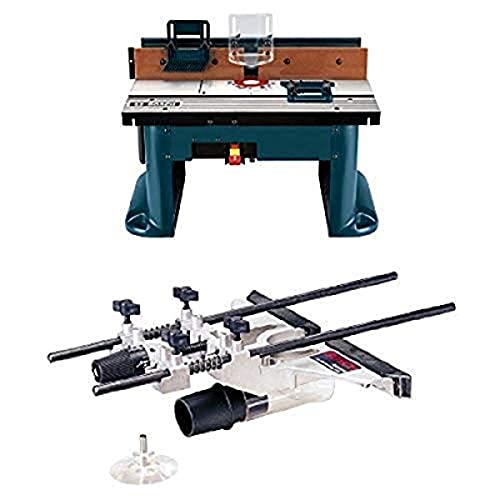
Bosch Benchtop Router Table with Edge Guide

Kreg PRS5000 Precision Router Lift System

Bosch RA1151 Router Subbase Centering Pin

32″ Anodized Aluminum Combo T-Track Rail


Bosch RA1152 Offset Router Bit Wrench Set

Kreg PRS4036 Insert Plate for Porter-Cable and Bosch

Kreg PRS1025 Router Table Top

O’SKOOL 24-Inch Router Table Fence System
More On The Choices That Made The List
This Bosch unit lands squarely in the “all-in-one” category. The aluminum fence and aluminum mounting plate pair with MDF face plates, while a dust collection port, two adjustable featherboards, and a dual outlet switch come included. For a hobbyist who already has a compatible Bosch router, that bundle means no separate shopping trip for the basics.
Compared to building a custom table from a raw top like the O’SKOOL MDF Router Table Top, the benchtop format gives you a smaller footprint that clamps to any workbench. The 6-foot power cord and dual outlet switch also let you run the router and a shop vac from one wall socket, which helps in a garage where outlets are scarce.
Practical Pluses
- Aluminum fence with MDF face plates gives a flat, replaceable reference surface
- Two adjustable featherboards help control workpiece pressure on small parts
- Dual outlet switch cuts power to router and vacuum from one spot
- Compatible with a long list of Bosch routers including 1617, 1618EVS, and MRF01
- Compact benchtop footprint fits shops without room for a full-size cabinet
Points To Keep In Mind
- Router is not included, so total cost depends on what you already own
- Benchtop clamping requires a sturdy workbench to prevent flex under heavy cuts
Made For
Hobbyists with a compatible Bosch router who want a turnkey benchtop setup without a full cabinet build.
Look Elsewhere When
The Kreg PRS1025 Router Table Top is a better match when you already have a stand and just need a heavy, vibration-resistant work surface.
The PRS5000 is the answer to one of the most annoying parts of table-mounted routing: bit changes. A router lift raises and lowers the bit from above the table through a hand-wheel mechanism, so you never have to crawl under the table to loosen the collet. Adjustments down to 1/64″ make fine height tuning more repeatable than eyeballing through a base opening.
The hard-anodized aluminum plate measures 3/8″ thick and resists sagging even with heavy 3.5″ routers, and the package is compatible with Kreg tables plus a number of competing brands. It is a more involved install than a basic insert plate like the Kreg PRS4036, but the time savings show up every time you swap a bit.
A Few Highlights
- Adjustments to 1/64″ make depth changes repeatable across long sessions
- Above-the-table operation removes the contortion of reaching under the table
- Hard-anodized 3/8″ plate resists sag and scratching
- Anti-backlash design keeps the bit locked at the chosen height
- Cross-brand compatibility covers most Kreg and many non-Kreg tables
Things To Weigh
- Heavier than a plain phenolic insert plate, so verify cabinet support
- Installation requires more precise leveling than a drop-in plate
Key Specs
Right Fit For
Woodworkers who change bits often and want precise, above-the-table height adjustments without disturbing the setup.
Consider Something Else When
The Kreg Precision Router Table Insert Plate PRS4036 is a simpler, more affordable option when you only need a rigid plate and do not need lift functionality.
Mounting a router in a new insert plate only works if the subbase opening is centered around the bit. The RA1151 is a small, two-piece tool that makes that step almost foolproof. You drop a pin in the collet, place a cone on the pin, then shift the subbase until the cone is centered in the opening. The result is a router that tracks true through the plate.
It works with both 1/4″ and 1/2″ collets and a long list of Bosch routers, including the 1617, 1618, 1619EVS, and MRF series. For someone installing a router into a plate for the first time, this little tool removes a lot of guesswork that would otherwise show up as wandering cuts.
What Pays Off
- Removes trial-and-error when fitting a subbase to a new plate
- Works with both common collet sizes
- Compatible with a wide range of Bosch router models
- Two-piece design stores flat in a drawer or bit case
Practical Considerations
- Only useful for Bosch routers on the compatibility list
- Process must be re-run any time you switch to a router with a different subbase
Best Suited To
First-time router-table builders with a compatible Bosch router who want a clean, centered install on their first try.
Swap It Out When
The Bosch RA1152 Offset Router Bit Wrench Set is the right call if you are already past setup and just need to speed up bit changes.
T-tracks are the unsung heroes of a router table: they hold featherboards, stops, and shop-made fixtures. This 32″ rail pairs a standard miter track on one side with a mini T-track on the other, so you can run a miter gauge and a bolt-down fixture at the same time. For shops that build jigs often, that dual profile is more useful than a single-size track.
The anodized aluminum body resists corrosion in humid shop environments, and the thicker-than-typical walls hold bolts without deforming. The piece is made in the USA, which is a small plus for shoppers who prioritize domestic production.
Strong Points
- Combines miter track and mini T-track in one rail
- Anodized finish resists shop moisture and corrosion
- Thicker walls hold fixtures without flex
- 32″ length suits most full-size router tables
Worth Noting
- Does not include mounting hardware, so plan for screws or bolts separately
- Only useful on tables with pre-cut T-track channels or a DIY build
Quick Facts
Perfect Match For
Shop owners who build their own fences and fixtures and want one rail that handles both miter gauges and bolt-on jigs.
Not Your Match When
The O’SKOOL Router Table Fence System already includes integrated T-tracks, making this rail a duplicate for O’SKOOL fence upgraders.
If you already have a stand or cabinet and just need a flat surface to drop a router into, the O’SKOOL MDF top is a straightforward starting point. The 1-11/32″ thick MDF core is laminated on both sides, which keeps the surface flat under temperature swings and gives a low-friction glide for workpieces. The 31-5/8″ x 23-3/4″ size is generous without eating the whole shop.
It is designed to accept the standard 11-3/4″ x 9-1/4″ router plate, so the Kreg PRS4036, O’SKOOL RTS02A, and RTS05 router lift all drop in. The trade-off is that MDF is heavier than aluminum-faced options and benefits from a solid base underneath.
Where It Helps
- Thick laminated MDF holds flatness across seasonal changes
- Standard plate opening fits most common insert plates and lifts
- Surface area handles wide workpieces like cabinet doors
- Melamine laminate reduces snipe and helps feeding
Honest Caveats
- Plate and router are not included, so factor those in for a full build
- MDF adds weight that smaller mobile stands may not love
Who Should Grab It
DIY builders with a sturdy stand who want a flat, plate-ready surface at a reasonable size for a home shop.
A Better Fit Elsewhere
The Kreg PRS1025 Router Table Top is the upgrade path when heavy 3.5+ hp routers and maximum vibration damping matter most.
Once a router is mounted in a table, changing bits usually means reaching under the table with two wrenches. The RA1152 set removes that step: the offset design reaches up through the plate to hold the armature shaft and loosen the collet from above. That alone can cut a bit swap from a two-minute, awkward job to a ten-second, controlled one.
The set includes a 16 mm wrench for the armature shaft and a 24 mm wrench for the collet, both forged with rounded edges that are easier on the hands than stamped wrenches. Pair this with the Kreg PRS5000 lift and the only reason to ever go under the table is for the occasional dust cleanup.
What Earns Its Place
- Removes the need to unmount the router for bit changes
- Forged wrenches with rounded edges feel better in the hand
- Includes both 16 mm and 24 mm sizes for common Bosch routers
- Works through standard insert plate openings
Trade-Offs
- Only fits Bosch routers using the listed wrench sizes
- No carrying case, so the two wrenches can drift around in a drawer
Built With In Mind
Shop owners who swap bits several times a session and want to avoid climbing under the router table for every change.
Reach For A Different Pick When
The Kreg PRS5000 Precision Router Lift already solves the height-change problem, so this wrench set adds less value for those users.
Insert plates are the bridge between your router and your table, and the PRS4036 is built around two of the most common routers in shops today: the Porter-Cable 690, the 890 series, and the Bosch 1617. The phenolic body is 3/8″ thick, which is enough to resist sag and vibration under heavy cuts, and the plate ships with the Level-Loc rings that set the bit height accurately.
Predrilled mounting holes save the awkward measuring step that often comes with blank plates, and built-in centering marks help position the router for balanced rotation. The trade-off is a fixed router list: if you upgrade to a different motor later, this plate may not fit it.
Positive Points
- Phenolic body resists sag and vibration better than plastic plates
- Predrilled holes for Porter-Cable 690/890 and Bosch 1617 cut install time
- Level-Loc rings simplify bit-height setup
- Centering marks help align the router quickly
Some Limits To Know
- Predrilled pattern only fits the listed Porter-Cable and Bosch models
- Level-Loc rings add cost if you already own alternative rings
Feature Snapshot
Whose Shelf It Belongs On
Owners of Porter-Cable 690/890 or Bosch 1617 routers who want a rigid, drop-in plate without drilling their own mounting holes.
Where Another Pick Suits Better
The Kreg PRS5000 Precision Router Lift is a better match when you want above-table height changes in addition to a rigid plate.
When the router mounted in the table is a 3+ hp beast, the surface underneath it has to absorb that energy. The PRS1025 uses an MDF core that dampens vibration from heavy routers, paired with a low-friction skin that lets stock glide along the fence. The insert plate handles large routers, and the included levelers keep the plate flush with the surrounding table.
Unlike the benchtop Bosch unit at the top of the list, this Kreg top is a workbench-mounted top designed for use with the broader Kreg router table system, including a steel stand and accessories. Shop owners running production cuts or hardwood shaping benefit from the heavier build.
Useful Strengths
- MDF body dampens vibration from heavy routers during long cuts
- Insert plate handles large 3.5″ router motors
- Levelers keep the plate flush with the table surface
- Low-friction surface feeds workpieces smoothly
Smaller Caveats
- Stand and fence are sold separately, raising total project cost
- Larger footprint needs a dedicated spot in the shop
Spec Overview
Who Will Love This
Production woodworkers and serious hobbyists running heavy routers who want a damped, full-size table top.
Skip It When
The Bosch Benchtop Router Table is a more compact, lower-cost option for small shops that do not need the full-size work surface.
A solid fence is what controls the cut, and the O’SKOOL system bundles a lot into one box: a 24″ aluminum fence, a featherboard, an adjustable stop, a bit guard, a dust port, and a measure tape. For someone upgrading an older table or building a custom one from the O’SKOOL MDF top, the package is convenient.
The aluminum-alloy body resists wear from repeated stock contact, and the integrated T-tracks on the front face accept stops, hold-downs, and shop-made fixtures. It is meant to be a universal fit, though exact mounting depends on the table it attaches to.
Notable Upsides
- Bundle includes featherboard, dust port, bit guard, and stop
- Aluminum-alloy body holds up to repeated stock contact
- Front T-tracks accept standard shop fixtures
- Works with many common router tables and DIY builds
Less-Strong Areas
- Some users may need to drill mounting holes to fit their specific table
- 24″ length is shorter than full-size fences on premium tables
The Right Fit
Shops upgrading an existing fence or building a DIY table who want a bundled kit with the common accessories included.
Another Choice May Suit
The Bosch Benchtop Router Table is the better path for anyone who needs the fence, table, and accessories as a single, integrated platform.
What To Weigh Before Choosing A Router Table Setup
A table-mounted router is really a system of parts, and each decision affects the others. The biggest fork in the road is whether you want a complete package or prefer to mix and match your own.
The Table Surface Itself
MDF cores, like the ones in the Kreg PRS1025 and the O’SKOOL MDF Router Table Top, dampen vibration and stay flat when properly supported. Laminated surfaces also feed workpieces more smoothly than raw wood. For larger or heavier routers, the thicker the table and the heavier the stand, the less chatter you will see at the bit. Compact benchtop units, like the Bosch Benchtop Router Table, trade some of that mass for portability, which is fine for lighter trim and profile work.
The Insert Plate And Lift
The insert plate is the ring the bit comes through, and a rigid plate like the Kreg PRS4036 keeps the cut stable. If you change bits often or want fine height control, a router lift like the Kreg PRS5000 moves that adjustment above the table. Match the plate to your router model first: a predrilled plate saves install time, while blank plates give flexibility for less common routers.
Fence, Tracks, And Accessories
The fence controls the cut, and a stiff aluminum fence with a dust port keeps both accuracy and cleanup in check. Integrated T-tracks on the fence (and on rails like the 32″ Anodized Aluminum Combo T-Track) hold featherboards, stops, and jigs. Small accessories like the Bosch RA1152 wrench set or the RA1151 centering pin look minor on their own but cut a lot of friction from routine bit changes and setup.
Key Considerations Across These Picks
Pitfalls Shoppers Hit
One of the most common mistakes is buying a fence or insert plate without checking router compatibility. Predrilled plates like the Kreg PRS4036 are tied to specific models, and an off-by-one collet size or a mismatched subbase can send the whole setup back to the drawing board. Another trap is underestimating the stand. A heavy router on a lightweight benchtop creates more chatter than the table can absorb, so matching table mass to router size matters as much as the surface itself.
Where The Extra Money Goes
Premium picks like the Kreg PRS5000 lift cost more because they remove recurring friction: every bit change becomes faster, and depth adjustments become repeatable. Hard-anodized plates and thicker phenolic bodies stay flat longer, which is worth paying for in production environments. For occasional hobby use, mid-tier plates and benchtop tables handle the same cuts at a lower entry point, and the upgrade path can wait until the workload justifies it.
Frequently Asked Questions
What size router plate should I look for?
The most common size is 11-3/4″ x 9-1/4″, which fits plates like the Kreg PRS4036 and slots in standard router tables. Smaller benchtop tables sometimes use compact plates, so match the plate to the specific table opening before ordering.
Can I mount any router in any table?
Not directly. Routers differ in subbase shape, collet size, and mounting hole pattern, so a predrilled insert plate only fits certain models. Blank plates and centering tools like the Bosch RA1151 give you flexibility for less common routers.
What is the benefit of a router lift over a fixed insert plate?
A router lift raises and lowers the bit from above the table through a hand wheel, so depth changes are precise and you do not need to reach under the table. For anyone swapping bits often, the time savings add up quickly.
Do I need a T-track if my fence already has one?
Most quality fences include T-tracks on the front face for stops and hold-downs, so an additional rail is only needed for a bare table or a DIY build. If the table has no tracks, the 32″ Anodized Aluminum Combo T-Track adds a lot of jig-friendly surface area.
How thick should a router table top be?
Aim for at least 1″ of rigid material for lighter routers and 1-1/2″ or more for heavier 3+ hp motors. Thicker tops resist flex, and a denser core like MDF absorbs vibration better than hollow-core options.




