A router plane is one of those quiet hand tools that separates casual woodworking from truly clean joinery. When an electric router leaves a step in a dado, when a tenon sits a hair proud, or when an inlay needs a perfectly flat-bottomed pocket, this is the tool that does the final pass. The picks below cover everything from dual-blade pro-grade planes to budget-friendly options for weekend projects, plus a small detour into travel routers for those who also work from the road.
An Overview Of The Picks
HONGDUI KM-17 PRO Router Plane Closed Throat/Open Throat

Taytools 777077 Number 71 Full-Size Router Plane

Cowryman 022 Router Plane Wide Base with Fence

HONGDUI Precision Groove Cleaning Router Plane

DDWT Router Plane with Depth Stop

Roam 7 BE3600 Wi-Fi 7 Travel Router

Roam 6 AX1500 Wi-Fi 6 Travel Router

Roam 6 AX3000 Wi-Fi 6 Travel Router

KH866 Mini Portable DIY Router Plane
More On The Choices That Made The List
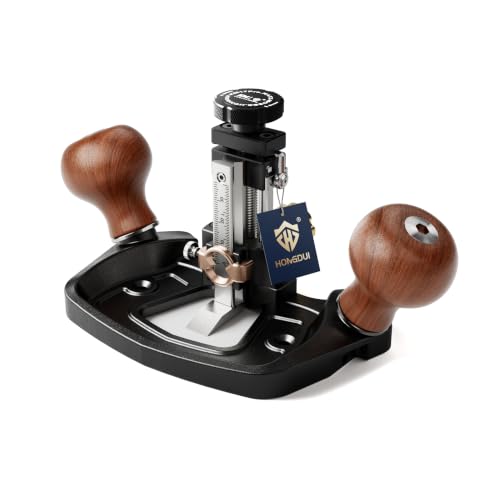
Few router planes in this price range ship with two blades in the box, and that alone is a meaningful upgrade. The HONGDUI KM-17 PRO comes with a straight cutter and a 45° blade that can also be installed on the handle as a carving chisel, which makes the tool pull double duty in the shop. The 1/2″ (12.7mm) wide blade lands clean cuts in standard joinery without wandering.
Where the KM-17 PRO really earns its place is the throat design. You can switch between closed and open configurations depending on whether you need chip clearance for deeper cuts or full support for fine trimming. For hobbyists splitting time between tenon fitting, hinge mortising, and inlay work, that flexibility removes the need to own a second specialty plane.
Noteworthy Benefits
- Dual-blade kit (straight plus 45°) covers most joinery tasks out of the box
- Switchable closed/open throat adapts to shallow trims and deeper cuts
- 1/2″ (12.7mm) blade width suits standard tenon and rabbet dimensions
- 45° blade doubles as a carving chisel when mounted on the handle
- Cast construction feels stable in the cut, which helps on longer passes
Things To Consider
- Out-of-box flatness may need a light lapping on the sole before fine work
- Adjustment screws can feel stiff until the tool is broken in
Key Specs
Who It Suits Best
Intermediate woodworkers who split time between furniture making and smaller detail work, and who appreciate having two cutting angles in one tool.
Consider Something Else When
You prefer the heft of a traditional cast iron body, in which case the Taytools Number 71 router plane reviewed below is the better match.
Modeled after the Stanley No. 71 that ran from 1884 to 1974, this Taytools plane carries the closed-throat silhouette serious woodworkers still look for. The ductile cast iron body is heavier than most modern alternatives, and that weight is the point: it stabilizes the cut on long trimming passes and gives the tool a planted feel.
The included 3/8″ square cutter handles the bulk of typical dado and rabbet refinement. For people restoring vintage furniture or building projects that call for traditional joinery, the form factor matches what older shop manuals and video tutorials reference.
Strong Points
- Seasoned ductile cast iron body resists warping and absorbs shop abuse
- Classic closed-throat design supports fine shavings without tear-out
- 3/8″ square cutter covers standard rabbet and dado cleanup
- Matches the footprint of the original Stanley No. 71 for jig compatibility
Worth Noting
- Heavier body may tire users during long sessions of overhead work
- Single cutter size means you may need aftermarket blades for wider cuts
- Closed throat requires more frequent clearing on deeper passes
- Classic look skips modern quick-adjust niceties
Best Suited To
Traditionalists and restoration woodworkers who want the heft and feel of a Stanley-era plane and don’t mind the extra weight.
Look Elsewhere When
You need guided edge work and prefer a fence right out of the box, where the Cowryman 022 router plane makes more sense.
The Cowryman 022 solves a specific problem that catches most beginners: keeping the plane registered to the workpiece edge. The wide stainless steel base spreads the load over more surface area, and the included adjustable fence lets you reference a board edge while trimming dados or grooves to a consistent offset.
The 8mm HSS (high-speed steel) cutter is a one-piece design that holds an edge through hardwoods and sheet goods. For shop workers leveling recessed joinery across wider panels, that added base surface keeps the tool from rocking mid-cut.
Positive Points
- Wide stainless base adds stability on shallow trims
- Adjustable fence enables consistent edge-referenced cuts
- One-piece HSS cutter resists wear on hardwoods and plywoods
- Setup is straightforward for first-time router plane owners
Trade Offs
- Stainless steel adds cost compared to basic cast tools
- Fence may need shimming to stay square on thinner stock
Quick Facts
Made For
Woodworkers who frequently clean up dadoes, rabbets, and grooves across full panels and want fence-guided accuracy without improvising a guide.
Skip It When
You mostly handle small tenons and inlay work where the dual-blade flexibility of the HONGDUI KM-17 PRO offers more value per dollar.
The second HONGDUI on this list takes a different angle: micrometer-style depth adjustment. That kind of fine-tuning dial matters when you are trimming grooves to a precise depth for inlay or for a sliding panel that has to fit a tolerance tighter than a human hair. The sole rests flat on the workpiece, and the blade cuts parallel to the surface for even floors on mortises.
Positioning flexibility is another quiet strength. The body can be oriented for edge work or for cleaning up the bottom of a stopped groove, which means fewer awkward grip changes mid-task.
Bright Spots
- Micrometer depth adjustment supports repeatable fine tolerances
- Flat sole produces clean, parallel groove floors
- Versatile positioning reduces grip changes between tasks
- Works well for inlay bottoms and tight mortise cleanup
Minor Gripes
- Depth mechanism has more parts to keep clean than a simpler screw
- Smaller cutter may mean more passes on wide dadoes
Whose Shelf It Belongs On
Detail-oriented furniture makers and inlay hobbyists who trim grooves to exact depths and prefer a dial over a freehand screw.
Another Choice May Suit
You mostly work on tenons and hinges where a heavier plane like the Taytools Number 71 feels more planted in the cut.
The DDWT router plane is built for the kind of cleanup most people actually do: shaving a tenon down a hair, leveling a high spot left by a dado blade, or getting a hinge mortise to sit perfectly flush. The quick-adjust depth and built-in depth stop let you set a target depth, then take repeated passes without overshooting.
For weekend projects and garage workshops, this plane covers the core use cases without the cost of a vintage-replica body. It also helps that the depth stop is repeatable, so a second pass on the next tenon matches the first.
Useful Highlights
- Quick depth adjustment speeds up repetitive trim work
- Integrated depth stop prevents overcutting on second passes
- Handheld form factor works in tight mortise spaces
- Cost sits well below vintage-replica planes
Points To Note
- Body finish may need a wipe-down to prevent surface oxidation over time
- Less mass than cast iron alternatives, so longer passes may need extra downward pressure
Right Fit For
Beginners and weekend woodworkers who want a capable router plane for tenon fitting and hinge cleanup without committing to a premium price.
Reach For A Different Pick When
You need a wide fence for full-panel dado cleanup, where the Cowryman 022 is the more capable shop tool.
Stepping away from the workbench for a moment, the Roam 7 BE3600 is what a travel router looks like when it leans into Wi-Fi 7. The dual-band setup pushes headline throughput up toward the high end of what portable devices can use, and the 2.5G wired port means a hotel room connection doesn’t bottleneck a fast home network back at the office.
Connection capacity is generous too. The router is rated to handle up to 90 devices simultaneously, which sounds like marketing until you remember how many phones, laptops, watches, and tablets a traveling family actually carries.
Reasons It Performs
- Wi-Fi 7 dual-band radio handles modern device mixes at speed
- 2.5G wired port preserves throughput from fast upstream links
- USB 3.0 port supports storage sharing or tethered WAN connections
- Multi-device capacity covers family or small-team travel setups
A Few Limitations
- Real-world throughput depends on the upstream network you connect to
- Wi-Fi 7 benefits only show on devices that support the standard
Feature Snapshot
Perfect Match For
Frequent business travelers and remote workers who already own Wi-Fi 7 devices and want the fastest portable router available.
Where A Sibling Pick Shines
You only need a compact travel router for occasional hotel use, where the smaller Roam 6 AX1500 below does the job at a lower cost.
The Roam 6 AX1500 is the pocket-friendly entry point. It runs Wi-Fi 6 across both bands, fits in a small pocket or bag sleeve, and turns a sketchy public hotspot into a private network with one cable. The USB-C power input is the right call for 2026 travel kits where most chargers already share that cable.
Capacity tops out around 60 connected devices, which is more than enough for a solo traveler plus work laptop, phone, tablet, and smartwatch. Actual throughput will land below the headline number on congested hotel networks, but the radio has headroom for typical use.
Notable Upsides
- Compact form slips into a jacket pocket or gear pouch
- Wi-Fi 6 dual-band covers typical travel device loads
- USB-C power matches modern travel chargers
- Quick setup gets a private network running in minutes
Where It May Fall Short
- No 2.5G wired port for ultrafast upstream connections
- Wi-Fi 6 tops out below Wi-Fi 7 for newer client devices
Built With In Mind
Solo travelers and remote workers who hop between hotels, Airbnbs, and cafes and want a private network without hauling a full home router.
A Better Fit Elsewhere
You regularly tether many devices at once, where the Roam 6 AX3000 below offers more throughput for the same travel-friendly form factor.
The Roam 6 AX3000 (model TL-WR3012X) sits between the AX1500 and the Wi-Fi 7 Roam 7 in this lineup. The 5 GHz band pushes headline speed up to 2,402 Mbps, which matters when you are pushing large files over a hotel network or streaming high-bitrate video to a travel monitor.
Device capacity lands at 80 simultaneous connections, a meaningful jump from the smaller Roam 6. For people who travel with a full kit (laptop, phone, tablet, earbuds, watch, e-reader, plus the occasional shared hotspot for a colleague), that headroom prevents the network from feeling stretched.
Real-World Strengths
- AX3000 5 GHz speed supports heavy single-user bandwidth tasks
- 80-device capacity handles multi-gadget and shared setups
- Compact travel form factor matches the smaller Roam 6
- USB-C power keeps cable needs simple
Honest Caveats
- Wi-Fi 6, not Wi-Fi 7, so newer clients may leave some throughput on the table
- Real-world speed depends heavily on the upstream network
Who Should Grab It
Travelers with a larger device load or anyone who moves large files on the road and wants more 5 GHz headroom than the AX1500 offers.
Swap It Out When
You want the latest radio standard for a future-proofed travel kit, where the Roam 7 BE3600 above is the step up.
The KH866 rounds out the list as a compact, handheld option for hobby shops where bench space is tight. The flat-bottom body and quick-adjust depth let you trim small joinery and surface-clean dados without dragging a full-size plane into a cramped corner.
For DIYers handling one-off builds, model making, or repair work, this kind of small-format plane earns its keep. The trade-off is shorter reference surfaces, so it shines on smaller workpieces rather than full panels.
Real Benefits
- Compact body fits small benches and tight mortise spaces
- Quick depth adjustment speeds up one-off tasks
- Flat-bottom design produces clean groove floors for its size
- Handheld format works well for repair and hobby projects
Soft Spots
- Smaller reference surface can rock on wider panels
- Less mass than full-size planes, so longer passes need firmer pressure
- Best suited to lighter-duty work than heavy furniture builds
Who Will Love This
Hobby woodworkers, repair-focused DIYers, and model makers who work on smaller pieces and value a compact tool over maximum stability.
Not Your Match When
You frequently trim full-width dadoes and rabbets, where the wider Cowryman 022 base provides better support for those cuts.
What To Weigh Before Choosing A Router Plane
Throat Design And Chip Clearance
A closed throat supports fine shavings and prevents tear-out on shallow trims, while an open throat clears chips faster for deeper cuts. If most of your work is hinge mortising and tenon fitting, closed works well. For deep dado cleanup, open or switchable designs pay off.
Blade Geometry And Material
HSS (high-speed steel) cutters hold an edge longer in hardwoods and abrasive sheet goods like plywood. Blade width matters too: a 1/2″ blade covers most standard tenons, while 3/8″ square cutters handle narrower rabbets. Carbide-tipped options exist for production work but are less common in this category.
Base Footprint And Reference Surface
A wider base prevents rocking on long, shallow passes across panels. Smaller handheld planes fit tight spaces but sacrifice stability on full sheets. Fence-equipped models add edge-referenced accuracy for dado work where consistent offset matters.
Weight And Handling
Heavier cast iron bodies feel planted and absorb vibration but tire the user during overhead work. Lighter handheld planes reduce fatigue on long sessions but require more downward pressure for clean cuts. The honest read is that hand fit matters as much as material here.
Key Considerations Across These Picks
Common Shopping Slip Ups
The most common mistake is buying a router plane to do the roughing work a power router should handle. This tool refines and trims; it isn’t a material-removal beast. Another trap is overlooking blade compatibility, since some planes ship with one cutter and require aftermarket blades for wider cuts. Finally, ignoring sole flatness leads to wavy floors in grooves, so plan a quick lapping session before fine inlay work.
What The Higher Tier Buys
Stepping up to a heavier cast iron body or a micrometer-style depth adjustment adds stability and repeatability, which matter for production joinery and fine inlay. The extra weight and cost pay off when you trim dozens of identical parts or hold tight tolerances across a project. For occasional tenon fitting, a mid-tier plane covers the use case without the premium price.
Frequently Asked Questions
What Is A Router Plane Used For?
A router plane trims and refines the bottoms of grooves, dadoes, rabbets, and mortises to a precise, consistent depth. It cleans up high spots left by power tools and adjusts joinery for a flush fit.
Can A Router Plane Replace A Power Router?
No. A power router removes bulk material quickly, while a router plane makes fine, controlled shaving passes. The two tools complement each other: use the power router for roughing, then the router plane to dial in the final fit.
What Is The Difference Between Open And Closed Throat?
A closed throat fully supports the cutter for fine shavings and tear-out control, while an open throat allows faster chip clearance for deeper cuts. Some planes offer both configurations for flexibility across tasks.
Do I Need A Fence On A Router Plane?
A fence helps maintain a consistent offset when trimming along a workpiece edge, especially for dadoes. For mortise and tenon work, a fence is less critical because the surrounding wood provides reference.
How Do I Maintain A Router Plane Blade?
Wipe the blade dry after use to prevent rust, store it lightly oiled, and touch up the edge with a honing stone when cuts start to drag. Sharpening frequency depends on the wood and how often you use the tool.