


Mounting a router upside-down in a table changes how the tool behaves, and the wrong fit makes for a frustrating afternoon. Plenty of people buy a handheld router expecting a clean table setup, only to discover the base doesn’t match common plate patterns, the motor gets stuck mid-adjustment, or the collet doesn’t hold smaller shanks well. A router that’s friendly on a bench needs a flat, drillable base, predictable speed control, and enough mass to stay planted during cuts.
The list below covers fixed-base, plunge, and combo kits from Bosch, DEWALT, Makita, and WORKPRO, plus one specialty plunge base for palm-router owners. Each pick pairs naturally with a router table, whether you build your own cabinet or buy a ready-made bench.
The Main Contenders

BOSCH Router 1617EVS 2.25 HP Fixed-Base

BOSCH 1617EVSPK 2.25 HP Variable-Speed Combo Kit

Bosch 1617EVSPK Router with RA1054 Edge Guide

DEWALT DWP611 Fixed-Base Variable-Speed Router
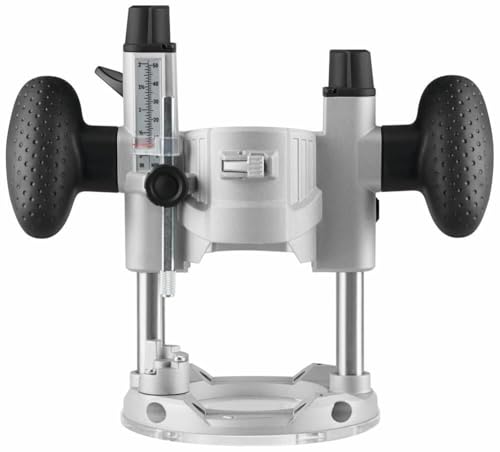
Bosch PR111 Plunge Base for GKF125CE

Makita RT0701C 1-1/4 HP Compact Fixed-Base Router

WORKPRO 6.5 Amp Corded Compact Router Kit

WORKPRO 20V Cordless Compact Router Kit

WORKPRO 6.5 Amp Compact Router Combo Kit
More On The Choices That Made The List
The 1617EVS has earned a long reputation as a go-to fixed-base router for table work, and the threaded three-hole base pattern is the reason. It drops into most aftermarket router table plates and locks down without adapter rings, which makes for a clean, rigid install under a phenolic top.
Power comes from a 12-amp motor paired with Bosch’s constant-response circuitry, which holds RPM steady when the bit is buried in dense hardwood. For cabinetmakers running raised-panel bits or deep profile cuts, that consistency shows up in cleaner edges. A bit-depth adjustment ring makes above-table height changes feel repeatable rather than fiddly.
Notable Gains
- Three-hole mounting pattern fits common router table plates straight out of the box.
- 12-amp motor with electronic speed control handles heavy profiling without bogging down.
- Solid depth ring allows repeatable above-table height settings from job to job.
- Wide collet compatibility covers common shank sizes for general woodworking.
Things To Consider
- Fixed-only base means you lift the router out of the table to switch to plunge cuts.
- Heavier than compact trim routers, so smaller benchtop tables may need extra bracing.
Key Specs
Made For
Woodworkers who want a dependable fixed-base router locked into a stationary table for profile and edge work.
Look Elsewhere When
You need plunge action from the same motor, in which case the BOSCH 1617EVSPK Combo Kit gives you the plunge base in the same tool family.
Where the 1617EVS is a dedicated table router, this kit adds a plunge base that uses the same motor. The motor clamps out of one base and into the other, so a single tool covers handheld work, table-mounted cuts, and plunge routing. For small shops where one router needs to do several jobs, that swap-friendly design earns real bench space.
On the table, the fixed base behaves the same as the standalone 1617EVS, so you keep the three-hole mounting pattern and depth ring. Off the table, the plunge base has a long plunge travel and a fine adjustment rod, which helps when you need controlled depth cuts in a workpiece rather than from below.
A Few Highlights
- One motor covers both fixed and plunge bases, reducing clutter in a small shop.
- Plunge base gives controlled depth cuts without lifting the workpiece over a table.
- Variable-speed dial lets you tune RPM for larger profile bits.
Trade Offs
- Clamp-style base swap takes a few minutes, so switching mid-session is not instant.
- Heavier than purpose-built trim routers, which may matter for extended handheld use.
Feature Snapshot
Right Fit For
Shop owners who want one router motor that handles table work, handheld trimming, and occasional plunge cuts.
Skip It When
You mostly work at a router table and rarely need plunge cuts, in which case the simpler BOSCH 1617EVS Fixed-Base Router saves you money and bench space.
This bundle is the same 1617EVSPK combo kit covered above, but it adds Bosch’s RA1054 deluxe edge guide and a dust extraction hood with vacuum adapter. If you build cabinets, sign frames, or anything with repeated flush-trim cuts, an edge guide turns the table router into a precision template tool rather than a freehand one.
The guide can run along a workpiece edge or ride against a straight reference up to 8 inches in from the edge. With the included mounting hardware, it also converts into a circle guide, supporting arcs and circles up to 32 inches across. The dust port is a quiet upgrade for indoor shops where MDF dust tends to linger.
Everyday Perks
- Edge guide rides up to 8 in from the workpiece, supporting bigger panels than a basic fence.
- Converts to a circle guide for arcs up to 32 in diameter.
- Dust hood keeps shavings off the bench and routes to a shop vacuum.
Honest Caveats
- Edge guide adds a setup step before each project, especially for circle cuts.
- Vacuum hose adapter adds bulk above the table, which can crowd smaller benchtop plates.
Who It Suits Best
Cabinet makers and sign builders who run repeated template cuts and want a cleaner shop environment.
A Better Fit Elsewhere
Casual hobbyists routing straight dadoes may find the Makita RT0701C Compact Fixed-Base Router easier to slot into a small benchtop without the guide clutter.
The DWP611 sits in a different size class than the Bosch 1617EVS, and that smaller footprint is its real table advantage. It drops into compact router plates designed for trim-style routers, opening up the option of a slim benchtop insert rather than a full-size phenolic plate. For shops working out of a smaller cabinet, the size difference matters.
A soft-start motor ramps up smoothly, which protects bearings during table cuts. Dual LEDs throw light onto the workpiece from below the base, a quiet but useful feature for detail cuts in a dimly lit shop. Variable-speed trigger lets you dial the bit down for larger profiles without changing the dial setting every time.
A Strong Showing
- Compact body fits trim-style router table plates.
- Soft-start electronics reduce jerky spin-ups that can shift workpieces.
- Dual LEDs brighten the cut line for detail routing.
Points To Keep In Mind
- 1-1/4 HP motor handles most trim work but feels underpowered on heavy raised-panel bits.
- Fixed base only; plunge cuts require a separate plunge base purchase.
Built With In Mind
Detail-oriented woodworkers who want precise cuts in trim-sized workpieces and value on-router lighting.
Where Another Pick Suits Better
You regularly run large profile bits in hardwood, where the BOSCH 1617EVS Fixed-Base Router delivers more torque and a longer table footprint.
The PR111 is not a standalone router. It’s a plunge base designed to accept the motor from Bosch’s GKF125CE palm router, which is a pick sold separately. If you already own that palm router, adding the PR111 turns it into a small plunge router that can mount in a compact router table.
A seven-step adjustable depth stop turret lets you preset common cut depths and rotate between them, while a microfine adjustment on the depth rod fine-tunes the final setting. The quick-clamp system releases the motor from the stock fixed base in seconds, so swapping between handheld and table use becomes a normal part of the workflow rather than a chore.
Positive Takeaways
- Lets an existing GKF125CE palm router double as a table-mounted plunge router.
- Seven-step turret speeds up repeated depth changes on production runs.
- Microfine depth rod gives fine control on the final fraction of a turn.
Practical Considerations
- Requires a separate GKF125CE motor purchase to function as a router.
- Plunge action is limited by the palm router’s motor size and lower torque envelope.
Feature Rundown
Whose Shelf It Belongs On
Palm-router owners who already have the GKF125CE and want a plunge option without buying a second full router.
Reach For A Different Pick When
You don’t own the matching palm router, in which case the WORKPRO 6.5 Amp Compact Router Combo Kit gives you fixed and plunge bases in a single box.
The RT0701C is a compact fixed-base router with a slim body and a wide speed range, going up to 30,000 RPM. That upper-end speed is useful for small-diameter bits used in inlay work, sign making, or fine trim cuts, where lower-RPM routers bog down and burn the workpiece.
A rack-and-pinion fine depth adjustment gives repeatable height changes through the table. The aluminum motor housing helps shed heat during extended table sessions, which is a real concern in a router trapped under a plate. Rubberized grip sections add comfort when you lift the router in and out for bit swaps.
Useful Strengths
- 10,000 to 30,000 RPM range covers small-diameter bits.
- Aluminum motor housing manages heat during long table sessions.
- Slim profile fits compact router table plates for trim work.
Worth Noting
- Fixed base only; plunge action requires a separately sold plunge base.
- 1-1/4 HP motor is more at home on trim bits than on large-diameter panel raisers.
Best Suited To
Makers running small-diameter bits for trim, inlay, or sign work who want a compact router that fits a tight table opening.
Not Your Match When
You need both bases out of the box, where the WORKPRO 6.5 Amp Compact Router Combo Kit includes fixed and plunge bases in one purchase.
This WORKPRO is the entry-level fixed-base option in the list, aimed at hobbyists who want a usable table router without the price of a Bosch or DEWALT. The 6.5 amp motor runs from 12,000 to 30,000 RPM across six speed settings, which is a broader top-end range than the more expensive picks, and that helps on smaller bits.
A rack-and-pinion depth adjustment gives consistent above-table height changes. Rubber-wrapped handles make above-table grip changes comfortable. The trade-off shows up in overall mass and refinement, where it feels lighter and less planted than the larger 1617EVS under heavy cuts.
A Few Strong Suits
- Accessible price point for hobbyists setting up a first router table.
- Top speed of 30,000 RPM supports small-diameter bits.
- Rubber-wrapped handles improve grip comfort.
Some Limits To Know
- Lighter overall mass can shift during aggressive cuts.
- Smaller collet options and accessories compared to established brands.
Perfect Match For
Weekend hobbyists who want a compact router that handles light to medium work on a budget-friendly bench.
Swap It Out When
You cut large raised-panel profiles regularly, where the BOSCH 1617EVS Fixed-Base Router provides the mass and motor torque those bits demand.
This is the cordless member of the WORKPRO router family, and it changes where you can use a trim router. Without a power cord, you can mount it in a portable table, take it onto a job site, or use it on a deck where running extension cords is awkward. The brushless motor extends runtime and reduces heat compared to brushed equivalents in the same class.
Six speed settings span 10,000 to 30,000 RPM, so the cordless version keeps the same broad top-end range as the corded WORKPRO. The catch is battery life, which depends on the amp-hour rating of the WORKPRO 20V battery you pair with it. Heavy hardwood cuts will drain packs faster than softwood trim work.
Key Advantages
- Cordless design frees you from outlet placement in a shop or on a job site.
- Brushless motor delivers stronger torque and longer runtime than brushed equivalents.
- Speed dial covers 10,000 to 30,000 RPM for small-diameter bits.
Points To Note
- Runtime depends on battery capacity, so heavy cuts require spare packs on hand.
- 20V platform torque is lower than corded 12-amp routers in this list.
Quick Technical Notes
Right Fit For
Tradespeople and remodelers who trim doors, cabinets, or countertops on job sites where a cord is impractical.
Where A Sibling Pick Shines
You mostly work in a fixed shop, in which case the corded WORKPRO 6.5 Amp Compact Router Kit provides uninterrupted runtime at a lower entry price.
The combo version of the WORKPRO compact router ships with both fixed and plunge bases in the box, sharing the same motor between them. For a beginner outfitting a small router table, that two-base approach mirrors the logic of the pricier Bosch 1617EVSPK at a more accessible price. The motor is the same 6.5 amp, 12,000 to 30,000 RPM unit covered in the fixed-base WORKPRO above.
The fixed base handles standard table cuts, while the plunge base covers stopped grooves, mortises, and other in-workpiece cuts. Rack-and-pinion depth adjustment on both bases keeps above-table height changes consistent. Owners commonly report the combo kit covers the same ground as the standalone fixed-base version, just with more flexibility for off-table work.
What Works In Its Favor
- Two bases in one box, covering table work and plunge cuts at a beginner price.
- Single motor swaps between bases, reducing overall kit weight.
- 30,000 RPM ceiling supports fine bit work.
Minor Gripes
- Swap time between bases interrupts workflow for quick job changes.
- Mass and refinement are below the more expensive 1617EVS under heavy profiling.
Who Should Grab It
First-time router-table builders who want both bases included and plan to expand their bit library over time.
Consider Something Else When
Your cuts lean toward heavy hardwood profiling, in which case the BOSCH 1617EVS Fixed-Base Router offers the higher torque envelope those bits need.
Matching The Right Base To Your Router Table
Choosing a router for table use starts with the table itself, not the tool. The plate cutout diameter and the mounting hole pattern dictate which routers drop in without an adapter. Most aftermarket plates are sized for either full-size fixed bases or compact trim bases, and not every router fits both categories.
For stationary table work, a fixed base provides the most rigidity. The motor locks into a solid ring with a depth adjustment, and there’s no wobble from a moving carriage. Plunge bases add a moving carriage that can shift slightly under load, which matters less when the bit is buried in the workpiece but can show up in shallow trim passes.
Horsepower ties directly to bit size. A 1-1/4 HP router handles most flush-trim and small profile bits comfortably, while a 2-1/4 HP router like the Bosch 1617EVS is the safer match for raised-panel and heavy door-lip bits. Speed range matters for small-diameter bits, which need higher RPM to cut cleanly without burning the workpiece.
Collet Compatibility
The collet is the part that grips the bit shank, and the two common shank sizes in woodworking are 1/4 inch and 1/2 inch. Larger bits with 1/2 inch shanks reduce deflection and run truer, so a router that accepts both collets gives you access to the wider bit catalog. The Bosch 1617 series and the Makita RT0701C both cover both sizes, while some compact routers ship with one collet and an optional second.
Base Swap Speed
If you want one motor to cover fixed and plunge work, the swap time between bases matters in a working shop. Quick-clamp systems release a motor in seconds, while threaded collars add a minute or more per swap. For occasional use, the time difference is minor, but for production routing it changes how the day flows.
Heat And Runtime
Routers mounted under a plate deal with limited airflow, and that pushes heat back into the motor. Aluminum motor housings and brushless designs manage heat better than plastic-bodied brushed equivalents. Cordless routers add a runtime ceiling, so heavy hardwood cuts drain packs faster than softwood trim work, depending on the amp-hour rating of the battery you pair.
Picking The Right Router For Your Bench
Common Shopping Slip Ups
The most frequent mistake is matching the router to the bit list rather than to the table opening. A powerful 12-amp router sounds appealing, but a too-large body may not fit the plate you already own. Measure the cutout and check the mounting pattern before anything else.
Another trap is buying a plunge base when the work happens below the table. Plunge bases shine for in-workpiece cuts from above, so if every cut comes from below, a fixed base is the simpler, more rigid choice. The extra cost of a combo kit only pays off when both styles of cut happen in the same shop.
Where The Extra Money Goes
Higher-priced routers in this list earn their place through motor torque, electronic speed control, and build rigidity. The constant-response circuitry on the Bosch 1617EVS holds RPM steady when the bit is buried, which translates to cleaner edges and less burning. A heavier casting reduces walking during aggressive cuts.
Cordless convenience carries a different premium. The 20V WORKPRO trades some torque for the freedom to work anywhere, and that trade makes sense on job sites but less so in a fixed shop where an outlet is always within reach. The upgrade payoff shows up where the tool’s extra capability matches a real workflow, not just a spec sheet.




