


Stripping paint and weathering off a reclaimed door, an antique chair, or rough cedar boards can take hours with a sander and still leave the grain uneven. A sandblaster cuts that work down by blasting fine media across the surface, lifting old finish without gouging the wood underneath. The trick is matching the tool to the job: cabinet-based work calls for containment, while open gun kits give you mobility for outdoor projects.
Below are seven options worth your attention in 2026, ranging from compact nozzle guns to a full enclosed cabinet. Each handles wood differently, so the right pick depends on whether you’re refinishing a single chair or running a steady stream of restoration jobs.
A Side-By-Side Look

Halfchet 7 Pcs Sand Blaster Gun Kit with Gloves and Siphon Sandblaster Kit
AMTOVL Sand Blasting Guns Sandblaster with 4 Ceramic Nozzles

Jewboer Sand Blaster Gun Kit with Hose and Nozzle Tips
Wogoboo Sandblaster Kit with Air Quick Adapter

VCT Abrasive Blaster Nozzle Gun with 4 Ceramic Tips

YaeKoo Sand Blaster Gun Kit with Hose and Ceramic Nozzles
Eastwood B60 Sand Blasting Cabinet
Why These Options Stand Out
Pulling a vintage oak doorframe clean of decades-old paint is the kind of project that punishes a weekend warrior. The Halfchet 7 Pcs Sand Blaster Gun Kit shows up in one box, which matters when you’re sourcing everything separately otherwise. It ships with the gun, both steel and ceramic nozzles, the suction hose, an American connector, and a pair of rubber gloves built for the task.
The pistol handle is comfortable enough for those first long sessions, and the dual material nozzles mean you swap between harder blasting and gentler surface work without buying extras. The gloves keep your hands shielded from ricochet when you angle into tight corners on a door panel. For anyone restoring a single furniture piece or testing the sandblasting waters, this bundle removes the guesswork.
Useful Highlights
- Complete kit removes the need to source parts individually
- Steel and ceramic nozzles handle different material hardness
- Rubber gloves included for direct-handle protection
- Comfortable grip suited to first-time operators
- Compact enough to use handheld outdoors
Things To Consider
- No dead-man trigger, so media keeps flowing when you set the gun down
- Open design means dust escapes into your workspace
- Gloves wear faster with aggressive media like aluminum oxide
Made For
First-time sandblasters tackling one-off furniture restoration or small outdoor projects.
Where Another Pick Suits Better
The Eastwood B60 Sand Blasting Cabinet is the better choice for anyone stripping multiple furniture pieces and needing a contained workspace.
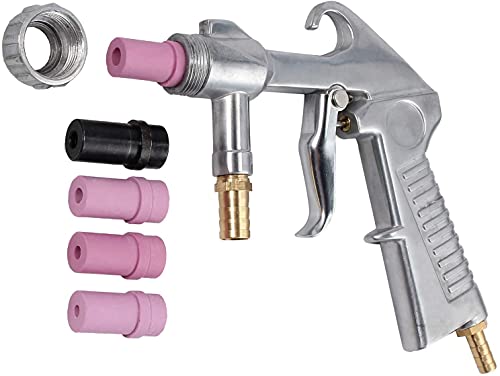
Workshop compressors already hum away in the corner, and the AMTOVL Sand Blasting Guns slides right in. The 6 CFM at 80 PSI minimum air requirement means most mid-range compressors keep up without strain. You get four ceramic nozzles in the box, which is more variety than the Halfchet kit supplies.
Unlike cast iron alternatives, the alloy steel nozzle body on this gun claims higher wear resistance, so the tip stays accurate through longer sessions on reclaimed beams. For woodworkers already comfortable around an air compressor, this gun delivers consistent flow without frills. Marble engraving work is also in the spec, giving you crossover for hobby projects beyond restoration.
The Value In It
- Alloy steel nozzle outlasts cast iron alternatives
- Four ceramic tips give you flow-rate flexibility
- Marble engraving adds craft versatility
- Suits a 6 CFM mid-range compressor setup
Points To Keep In Mind
- Requires a serious air compressor to hit the stated minimum
- No gloves or hose included, unlike complete kits
Built With In Mind
Shop owners running an existing compressor and wanting a dedicated blasting gun for mixed materials.
Look Elsewhere When
The Jewboer Sand Blaster Gun Kit suits a home user who wants a hose and gloves bundled in instead of buying separately.
Car wheels, fence rust, glass etching: the Jewboer Sand Blaster Gun Kit handles a long list of surface jobs. The cast aluminum pistol grip stays cool and stable through afternoon use, which is more than you can say for budget plastic-bodied alternatives. The kit ships with five nozzles total, mixing steel tips in 5mm and 6mm with ceramic 4.5mm and 7mm options.
That nozzle spread covers both delicate woodwork and tougher prep tasks. Working on a soft pine cabinet door calls for the smaller ceramic tip, while stripping bark and weather damage off cedar beams needs the larger bore. The included hose means you connect to a compressor and start blasting without hunting for fittings. For a hobbyist who wants one tool across many projects, this range earns its spot.
Useful Strengths
- Five nozzles cover fine woodwork and heavy rust removal
- Cast aluminum handle holds up to long sessions
- Hose included for fast compressor hookup
- Works in a cabinet or handheld outdoors
Honest Caveats
- Steel nozzles wear faster on abrasive media than ceramic equivalents
- No safety trigger, so you must shut off the air at the compressor
Best Suited To
Hobbyists who split time between wood restoration and metal cleaning without buying two separate kits.
Not Your Match When
The VCT Abrasive Blaster Nozzle Gun is a better fit for anyone prioritizing a dead-man trigger for long safety-conscious sessions.
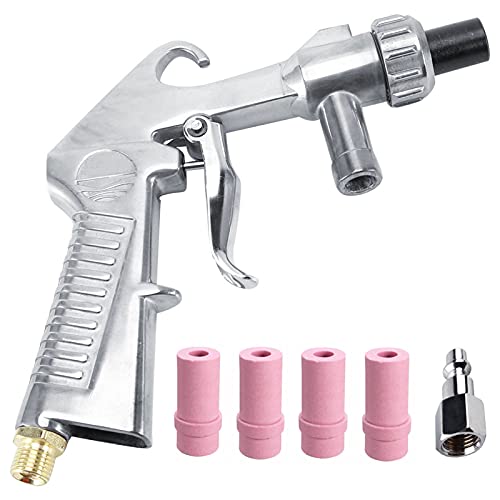
The air quick adapter is the small detail that changes the whole workflow. The Wogoboo Sandblaster Kit snaps onto a compatible compressor fitting without threading, which saves a few minutes every time you swap between tools. For someone bouncing between a brad nailer, paint sprayer, and sandblaster in the same shop session, that convenience adds up.
The cast aluminum pistol grip keeps the weight balanced, and the kit targets the same restoration work as the Jewboer and AMTOVL picks, from cleaning car rims to reviving brickwork. On wood, the moderate flow suits fence boards and outdoor furniture where aggressive blasting can shred softer grain. It’s a middle-ground pick for someone who values quick connections over maximum nozzle variety.
A Few Highlights
- Quick adapter cuts setup time between compressor tools
- Cast aluminum handle balances well during extended use
- Handles wood, metal, and masonry surface work
Some Limits To Know
- Nozzle selection isn’t as wide as comparable kits
- Adapter style may not match every compressor brand without a separate fitting
- Open gun design means outdoor use is the safer call
Right Fit For
Shops that rotate sandblasting in alongside other pneumatic tools and want fast changeovers.
Skip It When
The Halfchet 7 Pcs Sand Blaster Gun Kit is a better pick for first-timers who want gloves and steel nozzles bundled in.
Fatigue matters more than people expect on a sandblasting afternoon. The VCT Abrasive Blaster Nozzle Gun has a spring-loaded paddle trigger, often called a dead-man trigger because the media cuts off the moment you release it. That single feature saves abrasive media and keeps your workspace cleaner when you set the gun down between passes.
The carbon steel body gives the gun a solid feel in hand, and the nonslip vinyl grip prevents slips when gloves get dusty. Four ceramic nozzles at 2mm, 2.5mm, 3mm, and 3.5mm cover detailed wood etching through to faster stripping on a barn door. The 3/8 inch air inlet with 1/4 inch NPT threads fits standard shop setups. For anyone planning multi-hour sessions, the trigger design alone justifies the choice.
Where It Excels
- Dead-man trigger stops media flow on release
- Four ceramic tips span fine and aggressive blasting
- Carbon steel body handles workshop wear
- Vinyl grip stays secure with dusty gloves
Less-Strong Areas
- Gun only, so you supply your own hose and safety gear
- Carbon steel can show surface oxidation if stored damp
Who It Suits Best
Restorers planning long sessions where media waste and trigger fatigue are real concerns.
Another Choice May Suit
The YaeKoo Sand Blaster Gun Kit works better for budget-focused shoppers who want the hose and nozzles included.
You can spend a small fortune on blasting gear, or you can pick up the YaeKoo Sand Blaster Gun Kit and get to work. The siphon feed design pulls media from a connected hopper or container, and the cast-aluminum handle keeps the weight manageable for one-handed operation. The kit arrives with a hose and ceramic nozzles ready to install.
For furniture restoration on a budget, the trade-off versus the AMTOVL and VCT options is mostly in build refinement and trigger design. The YaeKoo lacks the dead-man safety mechanism, so you’ll shut off the compressor between passes. On softwoods and old finish removal, the siphon feed delivers consistent flow at a price that makes sense for a one-time project.
The Practical Payoff
- Affordable entry point for one-off restoration jobs
- Cast-aluminum handle keeps the gun light
- Ceramic nozzles included for replacement flexibility
- Compatible with sand blast cabinets and mobile setups
Trade-Offs To Consider
- No dead-man trigger, so media runs until you cut air supply
- Internal components wear faster than premium alternatives under heavy use
- Documentation tends toward minimal, so expect some trial and error
Whose Shelf It Belongs On
Shelf-starters and occasional users who want a usable sandblaster without overspending on features they may rarely use.
Where Another Pick Suits Better
The VCT Abrasive Blaster Nozzle Gun is a smarter pick for hobbyists upgrading to frequent sessions who need the safety trigger.
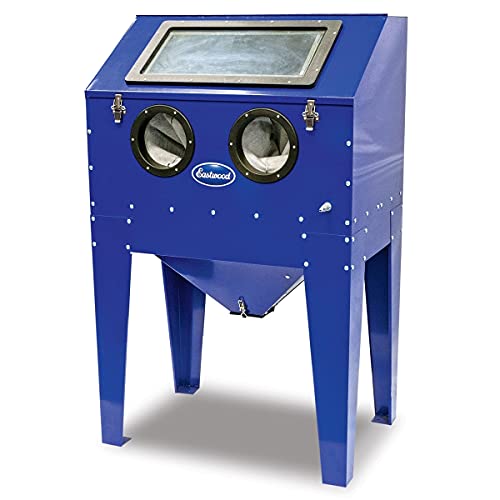
The other six picks are handheld guns. The Eastwood B60 Sand Blasting Cabinet is a different category entirely: a steel enclosure where you place the workpiece, slide your hands through grip-textured gloves, and blast inside a sealed view window. No dust billowing across the shop, no media recovery problem, no clear coat on the neighbor’s car.
The cabinet holds up to 120 pounds of abrasive media, which means long sessions before refilling. The large top opening eliminates the need for side doors, so you can push the unit against a workshop wall. Window liners protect the viewing glass from pitting. For someone running restoration as a side business or restoring a kitchen full of cabinet doors, the contained workflow justifies the jump in size and cost over any open gun.
Everyday Wins
- 120-lb media capacity supports extended sessions
- Enclosed design keeps dust contained in the shop
- Window liners extend viewing glass life
- Top-load opening fits bulky furniture pieces
- Steel construction handles daily shop use
Worth Bearing In Mind
- Floor footprint demands dedicated shop space
- Higher setup cost than any handheld gun on this list
- Gloves limit fine motor control on small carved details
Perfect Match For
Restorers handling multiple pieces in a fixed workshop where dust control and media efficiency matter.
Swap It Out When
The Halfchet 7 Pcs Sand Blaster Gun Kit is the right tool for outdoor work on large structural pieces that won’t fit through a cabinet opening.
What Matters Most Before Choosing a Sandblaster for Wood
Wood behaves differently under a blasting stream than metal does. The grain is softer and directional, so an aggressive media or high pressure can carve furrows that no sander will fully erase. Getting the right match means thinking about a few practical factors before you buy.
Air Compressor Compatibility
Every sandblaster pulls air from a compressor, and the minimum CFM (cubic feet per minute) rating tells you whether your existing unit can keep up. The AMTOVL gun calls for 6 CFM at 80 PSI, which sits in mid-range territory. A small pancake compressor struggles to maintain that flow, and you’ll see pressure drop the moment you pull the trigger. Underpowered air means inconsistent blasting, and inconsistent blasting on wood means uneven finish removal. Check your compressor’s CFM output before matching it to a gun’s stated requirement.
Media Type and Nozzle Size
Sand is the classic choice, but walnut shell, fine glass bead, and sodium bicarbonate media all behave differently on wood. Softer media like walnut shell removes paint without chewing the grain. Ceramic nozzles (the 2mm to 3.5mm range on the VCT gun) control flow rate for finer work. Steel nozzles cut faster but wear down and can leave more visible texture. Matching media to wood species saves rework later, especially on soft pine and reclaimed cedar.
Cabinet vs. Open Gun
Open gun kits are flexible and portable. You take them to the workpiece, which matters for fence panels, outdoor beams, and furniture too large to move. Cabinet units like the Eastwood B60 contain the mess and recover media for reuse, which pays off when you’re running repeat jobs. The honest read is that cabinet work makes sense for high-volume, indoor use, while open guns win for variable outdoor projects.
Safety and Trigger Design
A dead-man trigger cuts media flow the instant you release it. On a long restoration session, that saves media and prevents accidental blasting when you reposition. The VCT gun’s spring-loaded paddle trigger is the standout example in this list. Open guns without a safety trigger mean you shut off the compressor between every pass, which is workable but slower.
Things Worth Knowing Before You Buy
Pitfalls Shoppers Hit
The most common sandblaster mistake is buying a gun first and a compressor second. Many entry-level compressors simply cannot sustain the CFM these tools demand, and the result is a sputtering stream that damages wood unevenly. Another slip is assuming any media works on any wood. Hard media like aluminum oxide, the same abrasive used on metal, will chew soft grain into a fuzzy mess. Stick to walnut shell, glass bead, or fine garnet on softwoods. Finally, skipping a respirator and sealed eye protection turns a single session into a health complaint. Sandblasting dust is not the same nuisance as sawdust; the particles settle in lungs and don’t clear easily.
Where The Extra Money Goes
The jump from a basic siphon gun to the Eastwood B60 cabinet is significant, and the difference shows up in three places. First, the cabinet contains the dust, so your shop stays cleaner and the media stays usable for longer. Second, the steel construction and 120-lb media capacity handle hours of continuous work without refilling. Third, the enclosed workspace lets you see what you’re blasting without breathing it. For someone restoring one chair, the cabinet is overkill. For someone running restoration as a hobby with multiple pieces a month, the enclosed workflow pays for itself in media savings, time, and shop cleanliness. The premium tier buys efficiency, not just durability.
Frequently Asked Questions
Can any sandblaster be used on wood?
Most siphon-feed sandblasters handle wood, but the media and pressure make the difference. Soft media like walnut shell or fine glass at lower PSI removes paint without destroying the grain. Hard abrasive media at high pressure can carve soft pine, so matching the tool to the wood species matters.
What is the best media for blasting wood?
Walnut shell is widely used for wood because it lifts paint and finish without gouging the grain. Fine glass bead works on harder woods. Sand is cheaper but cuts faster and leaves a rougher texture. Sodium bicarbonate (baking soda) is gentle enough for delicate restoration work.
Do I need a special compressor for sandblasting?
You need a compressor that delivers the CFM and PSI the gun specifies, with a buffer tank large enough to avoid constant cycling. Many small compressors run below the minimum requirements of mid-range sandblasters, and an underpowered supply leads to inconsistent pressure and uneven blasting.
Are sandblasting cabinets worth the extra cost?
A cabinet makes sense for repeated indoor work because it contains dust and recovers media. For one-off outdoor projects on a fence or barn beam, a handheld gun is more practical. The enclosed workflow pays off when you have a queue of pieces and want to keep the shop clean.
How do I control dust when sandblasting wood outdoors?
A windscreen helps on breezy days, and working when air is still keeps media from drifting. A respirator and sealed goggles are still required because the dust cloud around you is unavoidable. Drop cloths or a tarp underneath catch media for reuse and simplify cleanup.




